


Sign up for workout ideas, training advice, reviews of the latest gear and more.
A strong, toned lower body starts with well-trained glutes. Whether your goal is muscle definition, fat loss, better posture, or improved athletic performance, glute training deserves a dedicated place in your routine. The good news is that you don’t need long gym sessions to see results. A 10 minute glute workout with dumbbells can effectively activate and strengthen your glute muscles when programmed correctly.
This short but powerful workout format is ideal for busy schedules, home workouts, or as a finisher after a longer strength session. With focused movement patterns, controlled resistance, and proper intensity, a 10-minute glute workout can deliver noticeable benefits while protecting joints and supporting long-term consistency.
Time efficiency is one of the biggest barriers to consistency. Many people skip lower-body training because they assume it requires long workouts or heavy gym equipment. In reality, targeted dumbbell glute exercises can produce meaningful muscle activation in a short time frame.
A 10 minute glute workout with dumbbells works because it eliminates distractions and focuses on compound lower-body movements that recruit multiple muscle fibers at once. When done with correct form and moderate load, these exercises stimulate the gluteus maximus, medius, and minimus while also engaging the hamstrings, core, and hip stabilizers.
Short workouts are also easier to recover from, making them perfect for beginners, women over 40, or anyone returning to exercise after a break.
Dumbbells provide an ideal balance between resistance and control. Unlike machines, dumbbells require stabilizing muscles to engage, improving overall movement quality.
Training glutes with dumbbells helps improve hip extension strength, posture, balance, and coordination. Strong glutes support the lower back, reduce knee strain, and enhance daily activities such as walking, lifting, and climbing stairs.
Because dumbbells allow unilateral and bilateral training, they are also excellent for correcting muscle imbalances and building symmetrical strength.
Understanding which muscles are activated helps improve mind-muscle connection and overall effectiveness.
The gluteus maximus is the largest muscle in the body and is responsible for hip extension and power generation. The gluteus medius stabilizes the hips and pelvis, especially during single-leg movements. The gluteus minimus assists with hip rotation and balance.
In addition to the glutes, this workout engages the hamstrings, quadriceps, adductors, core muscles, and lower back stabilizers.
This workout style is suitable for nearly everyone. Beginners can start with lighter dumbbells and slower tempo, while more advanced exercisers can increase resistance or intensity.
A 10 minute glute workout with dumbbells works well for women focused on toning and shaping, individuals short on time, people exercising at home, and anyone seeking joint-friendly strength training.
It can also be used as a warm-up, finisher, or standalone workout depending on your fitness goals.
Because time is limited, structure matters. The most effective approach is to use compound movements that emphasize hip hinge and squat patterns while minimizing rest.
A well-designed 10-minute workout typically includes four to five exercises performed in circuits or timed intervals. Each movement should be performed with control, focusing on squeezing the glutes at the top of each repetition.
Tempo and mind-muscle connection are more important than speed. Rushing through exercises reduces muscle engagement and increases injury risk.
Even for a short workout, warming up is essential. A brief warm-up improves muscle activation and reduces stiffness.
Spend one to two minutes performing bodyweight glute bridges, hip circles, bodyweight squats, or standing leg swings. The goal is to increase blood flow and prepare the hips for loaded movement.
The exercises below are ideal for short glute workouts because they provide high activation with minimal setup.
Goblet squats are one of the best glute-dominant lower-body exercises. Holding a dumbbell at chest level encourages proper posture and deeper range of motion, increasing glute engagement.
Lower into the squat with control, pushing hips back and driving through the heels as you stand. Focus on squeezing the glutes at the top.
Romanian deadlifts are essential for strengthening the posterior chain. This exercise targets the glutes and hamstrings while improving hip hinge mechanics.
Hold dumbbells in front of your thighs, hinge at the hips, and lower the weights while keeping your back neutral. Drive hips forward to stand tall, emphasizing glute contraction.
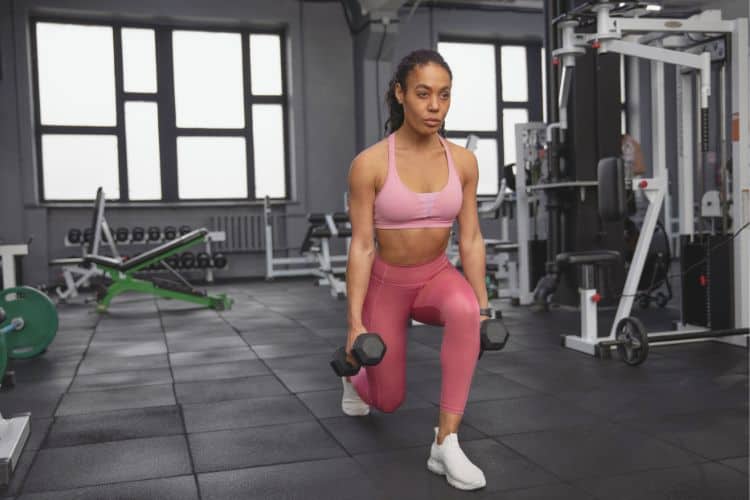
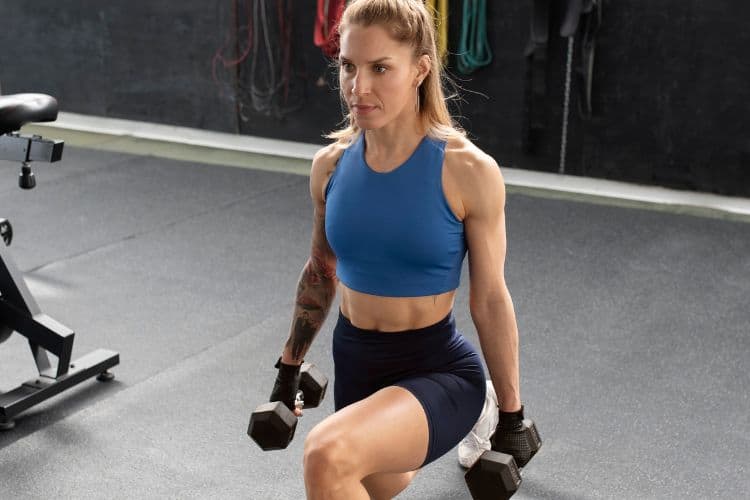
Reverse lunges are easier on the knees than forward lunges and place greater emphasis on the glutes. Holding dumbbells increases resistance without compromising balance.
Step back into a lunge, keeping your front heel planted. Push through the front foot to return to standing.
Glute bridges isolate the glutes and are excellent for beginners or those dealing with lower-back discomfort. Placing a dumbbell across the hips adds resistance without spinal load.
Lift hips toward the ceiling, squeeze the glutes at the top, and lower slowly for maximum activation.
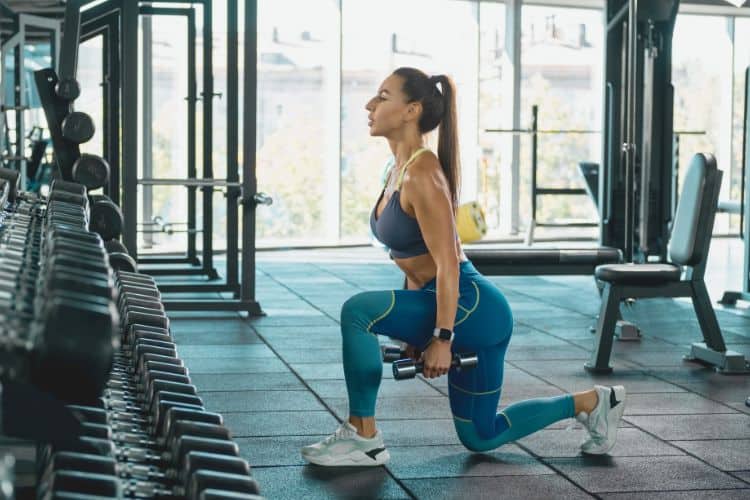
This variation adds a dynamic element while maintaining glute focus. Stepping back into a squat emphasizes hip extension and balance.
Hold dumbbells at your sides, step one foot back, squat, and return to center before switching sides.
This example shows how to structure your workout efficiently.
Perform each exercise for 40 seconds, resting for 20 seconds between movements. Complete two full rounds.
Begin with dumbbell goblet squats, focusing on depth and control. Move into dumbbell Romanian deadlifts, maintaining tension throughout the set. Continue with reverse lunges, alternating legs. Follow with dumbbell glute bridges, emphasizing a strong squeeze at the top. Finish with step-back squats to maintain glute activation until the end.
This structure keeps your heart rate elevated while maximizing muscle engagement.
Choose a weight that challenges you by the final 10 seconds of each interval while allowing you to maintain proper form. If you’re new, lighter weights with slower tempo are more effective than heavier weights with poor technique.
As you progress, gradually increase weight or extend time under tension to continue building strength.
One common mistake is using momentum instead of muscle control. Swinging weights or rushing reps reduces effectiveness and increases injury risk.
Another mistake is neglecting range of motion. Shallow squats and incomplete hip extension limit glute activation.
Finally, avoid arching the lower back during bridges or deadlifts. Maintain a neutral spine to protect your back and properly target the glutes.
Glutes can be trained two to four times per week depending on intensity and recovery. A 10-minute workout can be done more frequently because it places less overall stress on the body.
You can incorporate this workout as a standalone session, pair it with upper-body training, or add it as a finisher after cardio or full-body workouts.
Yes, when programmed correctly and performed consistently. Muscle growth depends on tension, volume over time, and recovery—not just workout length.
Short workouts performed regularly can be just as effective as longer sessions, especially when combined with progressive overload and proper nutrition.
Training alone isn’t enough to build strong glutes. Adequate protein intake supports muscle repair and growth, while balanced carbohydrates provide energy for workouts.
Staying hydrated and prioritizing recovery through sleep and mobility work further enhances results.
Beginners can reduce weight, increase rest, and focus on slower movement patterns. Advanced exercisers can increase dumbbell weight, reduce rest periods, or add pulse reps at the bottom of each movement.
This flexibility makes a 10 minute glute workout with dumbbells adaptable for all fitness levels.
A short workout doesn’t mean limited results. When executed with intention, proper technique, and consistency, a 10 minute glute workout with dumbbells can strengthen, shape, and activate your lower body effectively.
This workout is ideal for busy schedules, home fitness routines, and anyone seeking a practical approach to glute training without sacrificing results. By focusing on compound movements, controlled tempo, and progressive overload, you can build strong glutes in just minutes a day.
Consistency, not duration, is the key to long-term success.
For more ways to strengthen and sculpt your lower body, be sure to explore other effective routines on Women’s Fit Club. If you loved this 10 Minute Glute Workout with Dumbbells, check out our Best 30-Minute Dumbbell Glute Workout for Women for a longer, comprehensive glute session that also targets strength and toning goals. You can also build on your progress with our 30-Minute Dumbbell Glute Workout for Strength and Toning, perfect for home or gym training using only dumbbells. For balanced lower body strength, our Best 45 Minute Lower Body Dumbbell Workout for Legs & Glutes offers a deeper dive into compound movements that enhance stability and muscle growth. If you’re looking to expand beyond glutes, don’t miss our 25 Best Dumbbell Leg Workouts to Build Strength and Power, which provides versatile leg exercises using dumbbells.
Stay up to date on the latest women’s health, fitness and lifestyle trends and tips.
