


Sign up for workout ideas, training advice, reviews of the latest gear and more.

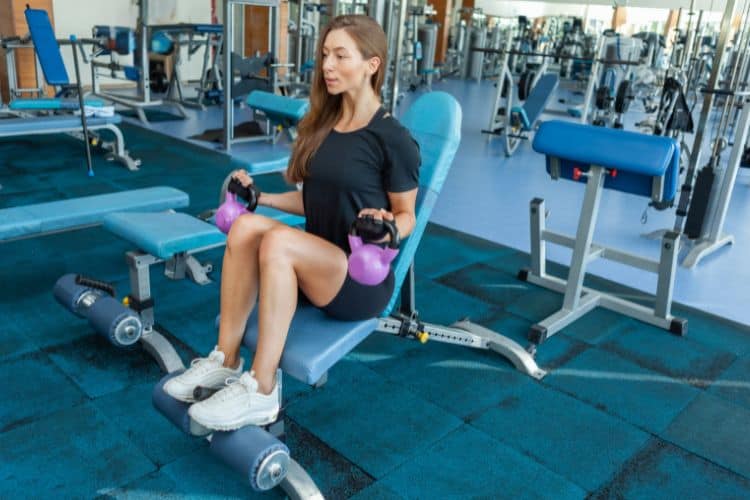
Finding time to train your arms doesn’t have to mean long gym sessions or complicated routines. A 10-minute kettlebell arm workout is one of the most efficient ways to build strength, tone muscles, and boost calorie burn in a short amount of time. Whether you’re training at home, squeezing in a quick session before work, or adding a finisher to a longer workout, kettlebells deliver serious results with minimal equipment.
In this guide, you’ll learn why kettlebells are so effective for arm training, how to structure a powerful 10-minute kettlebell arm workout, and how to scale it for beginners or advanced athletes. You’ll also find technique tips, common mistakes to avoid, and ideas for progression—so you can keep seeing results week after week.
A short kettlebell workout may seem too brief to be effective, but intensity and movement quality matter far more than duration. Kettlebells are uniquely designed to challenge your muscles through unilateral loading, offset weight distribution, and full-range control—all of which light up your arms fast.
With just one kettlebell and 10 focused minutes, you can create enough stimulus to support muscle tone, strength, and endurance.
A well-designed kettlebell arm session doesn’t isolate one muscle at a time—it trains the arms as an integrated system.
Responsible for elbow flexion and pulling movements. Kettlebell curls and cleans place the biceps under continuous tension.
The largest muscle group in the arms, crucial for pushing and elbow extension. Overhead extensions, presses, and push-style movements emphasize the triceps.
While technically not part of the arms, shoulders are heavily involved in kettlebell arm workouts—especially during presses, cleans, and holds.
The kettlebell handle constantly challenges grip strength, activating forearm muscles more than dumbbells or machines.
Kettlebells excel in short workouts because they demand stability, coordination, and control. Unlike dumbbells, the weight sits away from the handle, forcing your arms to work harder to stabilize every movement.
This makes kettlebells ideal for high-impact results in minimal time.
To get the most out of a short workout, structure matters. Instead of long rest periods, focus on work-to-rest ratios that keep intensity high while maintaining good form.
This workout hits biceps, triceps, shoulders, and forearms in a balanced, efficient way. Perform each exercise for 40 seconds, followed by 20 seconds of rest. Complete the full circuit twice for a total of 10 minutes.
Hold the kettlebell by the handle with palms facing up. Curl the weight toward your shoulders while keeping elbows close to your sides.
Benefits:
Form Tips:
Clean the kettlebell to shoulder height, then press it overhead until your arm is fully extended. Lower with control.
Benefits:
Form Tips:
Hold the kettlebell with both hands, lift it overhead, and bend your elbows to lower the weight behind your head. Extend arms back up.
Benefits:
Form Tips:
Hold the kettlebell vertically by the horns or handle. Curl upward with palms facing inward.
Benefits:
Form Tips:
Dip slightly at the knees, drive the kettlebell overhead, and hold at the top for a few seconds before lowering.
Benefits:
Form Tips:
If you’re new to kettlebells, start lighter and prioritize form over speed.
Even at a lower intensity, a 10-minute session can deliver noticeable arm fatigue and progress.
Once the workout feels manageable, increase the challenge to keep improving.
Progression ensures your arms continue adapting and growing stronger.
Short workouts are effective—but only when performed correctly.
Focusing on quality reps will give you better results than rushing through the workout.
Frequency depends on your overall training plan, but short kettlebell sessions are easy to fit in.
Allow at least 24 hours of recovery between intense arm-focused sessions.
Yes—especially when intensity, consistency, and progression are in place. While longer workouts allow more volume, short kettlebell sessions can still:
The key is challenging resistance and progressive overload, even in short time frames.
A 10-minute kettlebell arm workout is ideal for:
It’s adaptable, scalable, and effective across fitness levels.
A 10-minute kettlebell arm workout proves that you don’t need hours in the gym to see results. With smart exercise selection, controlled intensity, and consistent effort, kettlebells can help you build stronger, leaner, and more defined arms—even on the busiest days.
Whether you’re adding this routine to your weekly plan or using it as a quick standalone session, stay consistent, focus on form, and gradually increase the challenge. Ten minutes may be short—but the results can be powerful.
Ready to grab your kettlebell and get started? Your arms will thank you.
For readers who love kettlebell training, don’t miss our other resources to help you maximize your workouts and build total-body strength. Try our quick 10-Minute Full Body Kettlebell Workout for Strength and Fat Loss — perfect as a warm-up or finisher to your arm routine. Looking to commit to a longer kettlebell plan? Our 30-Day Kettlebell Challenge to Transform Your Body provides structured progression and fat-burning routines. If you want to double down on upper-body strength, check out our comprehensive 30-Minute Arm Workout: Build Strength and Definition, which blends dumbbell and bodyweight moves. You can also mix in our 20-Minute Full-Body Kettlebell Workout when you have more time to train multiple goals. Finally, for those days when extra core strength supports your arm work, our Best Kettlebell Core Exercises For Women offer excellent stability and functional benefits.
Stay up to date on the latest women’s health, fitness and lifestyle trends and tips.
