



Sign up for workout ideas, training advice, reviews of the latest gear and more.



Winter often brings colder temperatures, shorter days, and a natural drop in motivation to stay active. Between icy sidewalks, early sunsets, and cozy indoor temptations, it’s easy to let workouts slide during the colder months. That’s where a 30-minute bodyweight winter workout plan becomes a game-changer. It requires no equipment, can be done anywhere, and keeps your body warm, strong, and energized—even when it’s freezing outside.
This winter workout plan is designed to elevate your heart rate, build total-body strength, and boost metabolism while protecting joints and muscles from cold-related stiffness. Whether you’re exercising at home, in a small apartment, or traveling during the holidays, this routine delivers maximum results in minimal time.
Bodyweight workouts are especially effective during winter because they’re adaptable, efficient, and joint-friendly. Cold temperatures can increase muscle stiffness, which raises the risk of injury if workouts aren’t properly structured. Bodyweight exercises allow you to move naturally, gradually warm up, and control intensity without relying on heavy equipment.
Another benefit of winter bodyweight training is consistency. When you eliminate barriers like commuting to the gym or setting up equipment, you’re far more likely to stick to your routine. A structured 30-minute workout provides enough stimulus to maintain strength, burn calories, and support mental health throughout the colder months.
A short, focused workout can be just as effective as longer gym sessions when designed correctly. This winter bodyweight workout plan offers several key benefits that support both physical and mental wellness.
Cold weather slows circulation, making you feel sluggish and stiff. A dynamic bodyweight workout increases blood flow, warms muscles quickly, and helps maintain core temperature throughout the day.
High-engagement bodyweight movements activate multiple muscle groups at once, increasing calorie burn and metabolic demand. This is especially helpful during winter when daily movement often decreases.
Bodyweight exercises strengthen muscles in movement patterns you use every day, such as squatting, pushing, pulling, and rotating. This improves balance, coordination, and joint stability during winter conditions.
Exercise stimulates endorphins, reduces stress, and improves mood—critical benefits during months when seasonal fatigue and low motivation are common.
Before starting your 30-minute winter workout, preparation is essential. Cold muscles are more prone to strain, so your focus should be on gradual warm-up and controlled movement.
Wear layered, breathable clothing that keeps you warm without restricting movement. If you’re working out indoors, give yourself enough space to move freely. Keep water nearby, as hydration remains important even in colder temperatures.
A proper warm-up is non-negotiable during winter workouts. This five-minute warm-up gradually increases heart rate, loosens joints, and prepares muscles for more intense movement.
Start with marching in place while swinging your arms to get blood flowing. Transition into arm circles, shoulder rolls, and gentle torso twists to warm the upper body. Move into bodyweight squats with a slow tempo, followed by alternating reverse lunges to activate the lower body. Finish with inchworms or walkouts to wake up the core and posterior chain.
By the end of the warm-up, your body should feel noticeably warmer, your breathing slightly elevated, and your joints mobile.
This workout is divided into three main sections: a lower-body strength block, an upper-body and core block, and a metabolic conditioning finisher. Each section is designed to build intensity while maintaining safe movement patterns suitable for cold weather.
The lower body contains the largest muscle groups, making it ideal for generating heat and increasing calorie burn early in the workout.
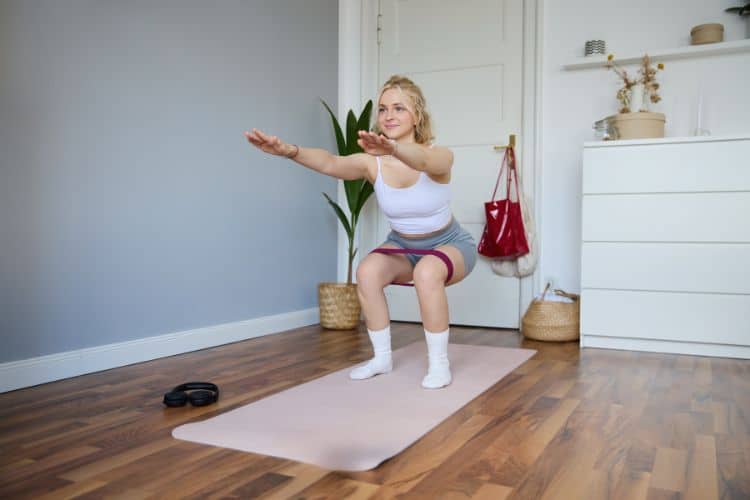
Bodyweight squats form the foundation of winter strength training. Stand with feet shoulder-width apart, push hips back, and lower into a squat while keeping your chest tall. Drive through your heels to stand. Perform controlled repetitions to maximize muscle engagement and joint safety.
Reverse lunges are joint-friendly and excellent for balance. Step one foot back into a lunge, lowering the knee toward the floor while keeping the front knee stable. Push through the front heel to return to standing before switching sides.
Glute bridges activate the posterior chain, which is often underused during colder months of sedentary behavior. Lie on your back with knees bent and feet flat on the floor. Press hips upward, squeeze the glutes at the top, and lower with control.
Wall sits build endurance and leg strength while elevating heart rate. Sit against a wall with knees bent at 90 degrees and hold the position, focusing on steady breathing.
Upper-body exercises keep circulation flowing and counteract the rounded posture that often develops during winter due to increased sitting.
Push-ups strengthen the chest, shoulders, triceps, and core. Perform them on the floor, on knees, or elevated on a bench or wall depending on fitness level. Maintain a straight body line and controlled tempo.
This movement challenges the core while engaging the shoulders. From a plank position, alternate tapping each shoulder while keeping hips stable and minimizing rotation.
The superman strengthens the lower back and improves posture. Lie face down, lift arms and legs slightly off the floor, and hold while squeezing the glutes and upper back.
Dead bugs are excellent for core stability. Lie on your back with arms extended and knees bent at 90 degrees. Slowly extend opposite arm and leg while keeping your lower back pressed into the floor.
The finisher elevates heart rate and maximizes calorie burn without high impact, making it ideal for cold conditions.
Step side to side while raising arms overhead to keep intensity moderate while staying joint-friendly.
Drive knees upward while maintaining upright posture. Choose a marching pace or light run depending on comfort and space.
From a plank position, alternate driving knees toward the chest at a controlled pace. This movement boosts cardiovascular endurance and core strength.
Perform a squat and reach arms overhead as you stand, mimicking a full-body stretch while keeping the heart rate elevated.
Cooling down helps prevent stiffness and supports recovery during winter. Focus on slow breathing and long, controlled stretches.
Stretch the hamstrings, quadriceps, calves, chest, shoulders, and hips. Gentle spinal twists and seated forward folds help release tension built up during the workout. Finish with deep diaphragmatic breathing to bring the heart rate down.
For best results, aim to complete this 30-minute bodyweight winter workout 3 to 5 times per week. On active recovery days, consider low-impact activities such as walking, yoga, or mobility work to maintain consistency without overtraining.
Consistency is often the biggest challenge during winter. Scheduling workouts at the same time each day builds routine. Exercising in the morning can boost energy and reduce the chance of skipping later.
Creating a dedicated workout space at home—even a small one—removes friction. Pair your workouts with a warm-up ritual like music or a cup of tea afterward to reinforce positive habits.
This winter workout plan is adaptable for all fitness levels. Beginners can reduce repetitions, slow the pace, or shorten work intervals. Advanced exercisers can add tempo changes, pauses, or additional rounds to increase intensity.
Listening to your body is especially important during winter. Focus on quality movement over speed, and prioritize recovery when needed.
This workout works because it combines strength, cardio, and mobility in a balanced format. It keeps your body warm, muscles engaged, and metabolism active while fitting seamlessly into a busy winter schedule.
By training consistently with bodyweight exercises, you maintain strength, improve endurance, and support overall wellness without relying on equipment or gym access.
Winter doesn’t have to derail your fitness routine. With a structured 30-minute bodyweight winter workout plan, you can stay strong, energized, and motivated all season long. This approach makes fitness accessible, flexible, and effective—no matter the weather.
Commit to moving your body, warming your muscles, and prioritizing your health. Spring will arrive, but the strength and habits you build during winter will last all year.
To help support your winter fitness goals, Women’s Fit Club offers a wealth of related workout resources you can explore alongside this 30-Minute Bodyweight Winter Workout Plan. For beginners looking for a simple structured routine, check out our 30‑Minute Winter Workout for Beginners: Stay Fit Inside to kickstart your seasonal exercise habit. If you’re interested in strength building, our Best 30‑Minute Full Body Routine for Women Over 40 to Stay Fit delivers a targeted approach that complements bodyweight training. Expecting moms can safely stay active year-round with our Bodyweight Workout for Pregnancy: A Safe Effective Guide, while those who prefer low-impact options will love the tips in Best Low Impact Exercises For Women that blend well with winter routines. Finally, for a bigger picture on fitness progression, explore The Best Workout Programs For Women – A Comprehensive Guide to tailor your long-term training goals.
Stay up to date on the latest women’s health, fitness and lifestyle trends and tips.
