


Sign up for workout ideas, training advice, reviews of the latest gear and more.

A 30-minute cardio workout for legs and glutes is one of the most effective ways to burn calories, boost heart health, and tone your lower body at the same time. By combining cardiovascular movement with lower-body–focused exercises, this style of workout delivers maximum results in minimal time. Whether your goal is fat loss, muscle definition, or improved endurance, a targeted leg and glute cardio routine can fit seamlessly into even the busiest schedule.
Unlike traditional steady-state cardio, a lower-body–focused cardio workout engages large muscle groups such as the glutes, quadriceps, hamstrings, and calves. Because these muscles demand more oxygen and energy, your body burns more calories during and after the workout. This makes a 30-minute cardio workout for legs and glutes an efficient, results-driven option for women at all fitness levels.
In this guide, you’ll learn the benefits of leg-focused cardio training, how to structure a balanced 30-minute workout, and which exercises deliver the best burn for sculpted legs and stronger glutes.
Lower-body cardio workouts are uniquely effective because they combine strength and endurance into a single session. The legs and glutes are the largest muscle groups in the body, meaning they require more energy to move and recover. Training them with a cardio emphasis increases calorie expenditure while also improving muscular tone.
A 30-minute duration is ideal because it is long enough to elevate your heart rate, stimulate fat loss, and activate muscle fibers without leading to excessive fatigue or overtraining. This makes it suitable for beginners, intermediate exercisers, and advanced athletes alike.
A dedicated leg and glute cardio workout delivers both immediate and long-term benefits. In just half an hour, you can experience improved circulation, increased heart rate, and a noticeable muscle burn that continues working long after the session ends.
Regular lower-body cardio training can improve muscle endurance, strengthen connective tissues, and enhance overall athletic performance. Over time, it also supports better posture, improved balance, and stronger hip stability, which are essential for daily movement and injury prevention.
Cardio workouts for legs and glutes rely on compound, dynamic movements that engage multiple joints at once. Exercises such as squats, lunges, step-ups, and glute bridges elevate the heart rate while placing continuous tension on the lower body.
Unlike isolated strength exercises, cardio-style leg movements are performed at a faster pace or in circuits. This sustained effort forces the muscles to work under fatigue, improving endurance and muscle definition while also supporting cardiovascular health.
Intensity plays a major role in the effectiveness of a 30-minute cardio workout for legs and glutes. By alternating moderate and high-intensity intervals, you can maximize calorie burn without needing extra time. Faster tempos increase heart rate, while controlled movements ensure the glutes and legs remain fully engaged.
This balance allows you to train both aerobic and anaerobic systems, resulting in better fat loss and improved muscular performance.
This workout style is suitable for a wide range of fitness levels and goals. Beginners can modify movements by reducing range of motion or slowing the pace, while advanced exercisers can increase intensity with added resistance or plyometric variations.
Women looking to tone their lower body without heavy weights often benefit from leg-focused cardio workouts. These routines build lean muscle, support fat loss, and create a sculpted appearance without excessive bulk.
To get the most from your workout, structure matters. A well-designed 30-minute routine includes a warm-up, a main cardio circuit, and a brief cool-down. Each phase plays a role in performance, safety, and recovery.
A proper warm-up prepares your muscles and joints for movement while gradually raising your heart rate. Dynamic stretches and light lower-body movements help improve mobility and reduce injury risk.
During the warm-up, focus on activating the glutes and loosening the hips, knees, and ankles. This improves movement quality during the main workout.
The main portion of the workout combines continuous lower-body movements performed in intervals or circuits. Exercises should alternate between strength-based cardio moves and dynamic cardio drills to keep the heart rate elevated.
This section is where calorie burn peaks and muscle fatigue develops, leading to improved endurance and strength.
Cooling down helps lower the heart rate gradually while reducing muscle stiffness. Stretching the glutes, hamstrings, quads, and calves promotes recovery and flexibility.
Choosing the right exercises ensures that your workout is effective and balanced. The following movements are staples in lower-body cardio training and can be performed with or without equipment.
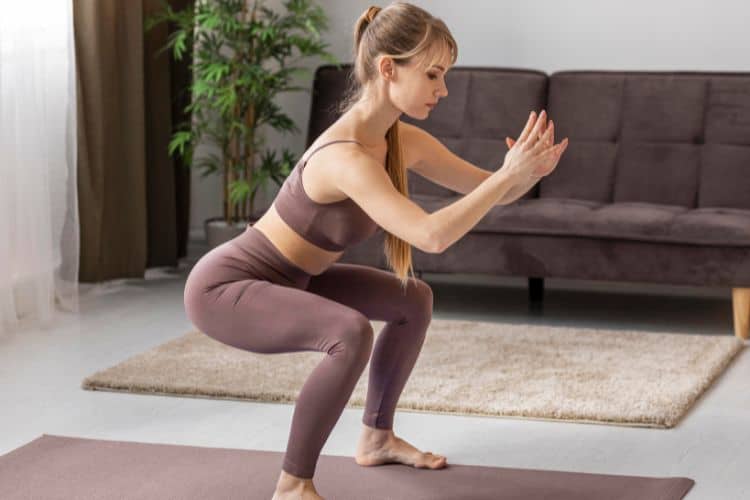
Squats are foundational for leg and glute workouts. When performed at a faster pace or with pulses, they become powerful cardio exercises. Squat variations engage the glutes, quads, and core while elevating the heart rate.
Continuous squat movements improve muscular endurance and strengthen the lower body without the need for heavy loads.
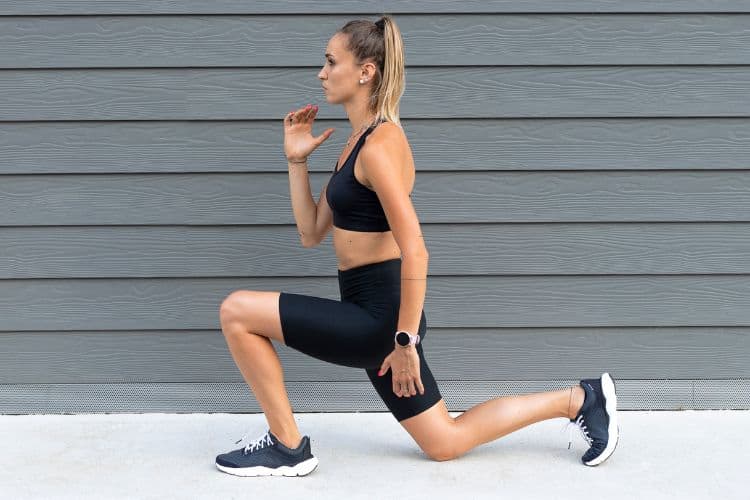
Lunges challenge balance while targeting the glutes and legs from multiple angles. Alternating lunges or walking lunges keep the heart rate elevated and promote functional strength.
Because lunges require coordination and control, they also enhance joint stability and muscle symmetry.
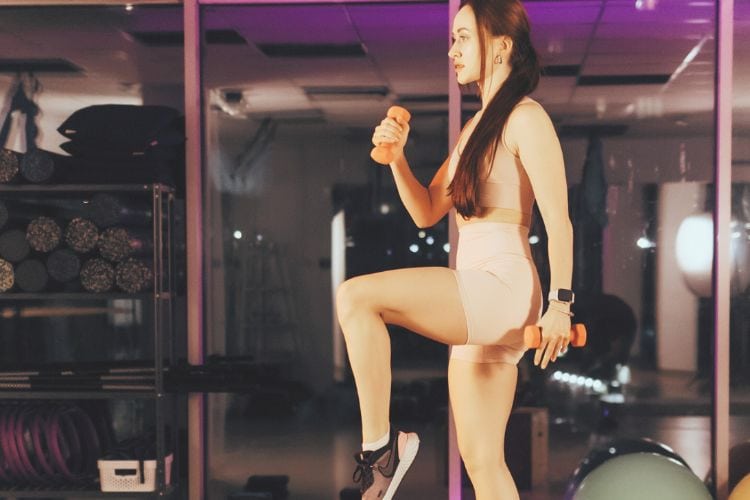
Step-ups mimic everyday movements like climbing stairs while placing significant emphasis on the glutes. Performing step-ups continuously or at a brisk pace turns them into an effective cardio exercise.
This movement strengthens the hips and improves unilateral leg strength, which is important for balance and injury prevention.
Glute bridges activate the posterior chain and strengthen the hips. When performed in high-rep sets or combined with pulses, they contribute to cardiovascular demand while isolating the glutes.
These exercises are especially beneficial for women who spend long hours sitting, as they help counteract hip tightness and glute inactivity.
A structured routine helps maintain intensity and focus throughout the session. This sample workout balances strength-based cardio with dynamic movement for optimal results.
Begin with a five-minute warm-up consisting of bodyweight squats, marching lunges, hip circles, and light cardio such as marching in place.
Move into a 20-minute circuit alternating between squats, lunges, step-ups, glute bridges, and dynamic cardio movements such as high knees or fast bodyweight squats. Perform each exercise continuously for timed intervals, resting briefly between rounds.
Finish with a five-minute cool-down focusing on stretching the glutes, hamstrings, quads, and calves.
A 30-minute cardio workout for legs and glutes can be performed two to four times per week depending on your fitness level and recovery. Because the lower body is heavily involved in daily movement, adequate rest between sessions is essential.
Pairing leg-focused cardio workouts with upper-body or full-body training creates a balanced weekly routine that supports overall strength and endurance.
While strength training builds muscle mass and power, cardio workouts improve endurance and calorie burn. A leg and glute cardio workout sits between the two, offering the benefits of both styles.
For optimal results, combining cardio-based lower-body workouts with traditional strength training leads to improved muscle tone, fat loss, and functional strength.
Consistency is key when it comes to cardio training. Performing your workout regularly and gradually increasing intensity ensures continued progress.
Focus on proper form to fully engage the glutes and legs. Mind-muscle connection plays a significant role in muscle activation, especially during high-rep or fast-paced movements.
Hydration, proper nutrition, and adequate sleep also support recovery and performance, allowing you to get the most out of each session.
One common mistake is rushing through movements without proper control. While speed increases heart rate, maintaining good form ensures that the glutes and legs do the majority of the work.
Another mistake is skipping the warm-up or cool-down. These phases are essential for injury prevention and long-term progress.
A 30-minute cardio workout for legs and glutes is an efficient, effective way to burn fat, build lower-body strength, and improve cardiovascular fitness. By targeting large muscle groups with dynamic, continuous movement, this workout style delivers maximum results in minimal time.
Whether you’re training at home or in the gym, this approach fits into any fitness routine and supports a strong, sculpted lower body. With consistency, proper form, and progressive intensity, a leg-focused cardio workout can become one of the most powerful tools in your fitness journey.
If you’re looking for a time-efficient way to tone your legs, lift your glutes, and boost overall fitness, a 30-minute leg and glute cardio workout is a smart, sustainable choice.
Ready to take your lower-body fitness to the next level? Alongside this 30-Minute Cardio Workout for Legs and Glutes, you’ll find even more targeted routines and tips on Women’s Fit Club to support your goals. For strength-building moves that complement cardio sessions, try the Best 30-Minute Leg Workout to Build Strength and Tone that focuses on quads, hamstrings, and glutes with dynamic exercises. If you’re short on time but still want fat-burning efficiency, our Best 10 Minute Leg Workout to Build Strength and Burn Fat delivers quick results you can squeeze into your day. Want to diversify your training with equipment? Check out the Best 45 Minute Lower Body Dumbbell Workout for Legs & Glutes for added resistance work, or switch up your routine with a longer challenge like the Ultimate 45-Minute Gym HIIT Leg Workout for Maximum Results to boost endurance and power. For more quick, effective lower-body workouts you can do anywhere, dive into Top 30 Minute Leg Workouts You Can Do at Home or the Gym and find variations that fit your lifestyle.
Stay up to date on the latest women’s health, fitness and lifestyle trends and tips.
