


Sign up for workout ideas, training advice, reviews of the latest gear and more.

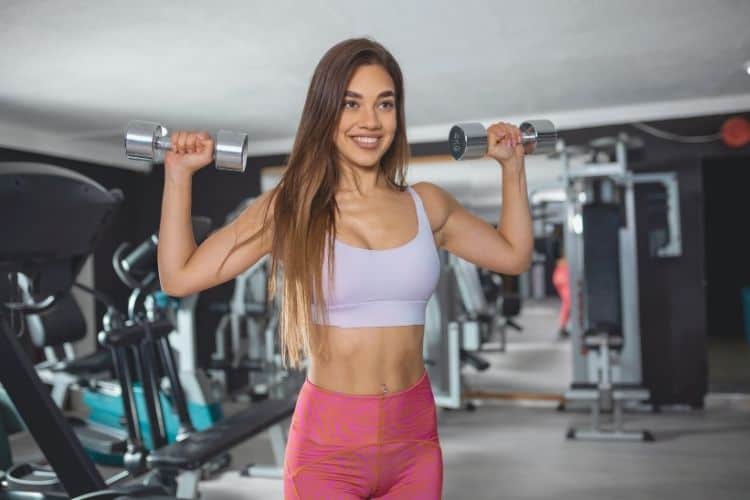
Functional strength training has become one of the most effective and sustainable ways to build muscle, improve mobility, and feel stronger in everyday life. A 30 minute functional strength training workout with dumbbells combines compound movements, core engagement, balance, and coordination into one efficient session. Instead of isolating muscles, this style of training teaches your body to move better as a whole.
Whether you’re short on time, training at home, or looking for a smarter way to build strength, a 30-minute dumbbell functional workout delivers powerful results without needing a gym full of equipment.
Functional strength training focuses on exercises that mimic real-life movements such as lifting, pushing, pulling, rotating, and squatting. The goal is to improve how your body performs daily activities, not just how it looks.
Unlike traditional bodybuilding workouts that isolate one muscle at a time, functional training uses multi-joint, multi-muscle movements that improve coordination, stability, and strength simultaneously.
Dumbbells are one of the most effective tools for functional strength workouts because they:
Using dumbbells also helps correct muscle imbalances because each side of the body must work independently.
A well-structured 30-minute workout can be just as effective as longer training sessions when intensity and exercise selection are optimized.
Functional dumbbell workouts prioritize compound movements that work multiple muscle groups at once. In just 30 minutes, you can train your legs, glutes, back, chest, shoulders, arms, and core without wasting time.
Many functional dumbbell exercises are performed unilaterally or in split stances, which improves balance and coordination. This translates directly to better posture, stability, and injury prevention.
Because functional workouts engage more muscle groups simultaneously, they elevate your heart rate and burn more calories than isolated strength training. This makes them effective for fat loss and body recomposition.
Almost every functional dumbbell movement requires core activation. Your abs, obliques, and lower back work continuously to stabilize your body, resulting in a stronger and more resilient core.
Functional strength training improves how you move in daily life—lifting groceries, climbing stairs, carrying children, or performing physical tasks with confidence and ease.
This workout style is ideal for:
With proper weight selection and movement control, this workout can be scaled for all fitness levels.
An effective functional workout follows a smart structure to maximize results while minimizing fatigue and injury risk.
The warm-up prepares your joints, muscles, and nervous system for movement. Focus on dynamic, full-body motions such as:
A good warm-up improves performance and reduces injury risk.
The core of the workout is built around functional circuits that combine strength, balance, and coordination.
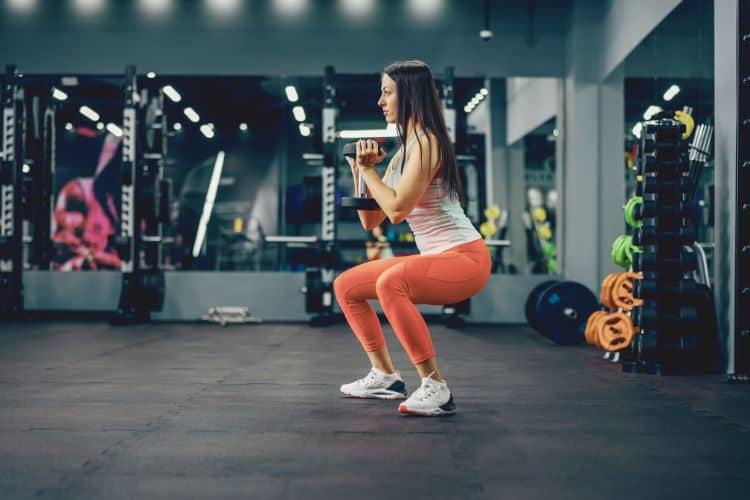
Dumbbell Squat to Press
This movement combines a squat with an overhead press, training the legs, glutes, shoulders, and core.
Reverse Lunge With Dumbbells
Stepping backward into a lunge reduces knee stress while strengthening the glutes and improving balance.
Perform these exercises back-to-back with minimal rest to keep your heart rate elevated.
Single-Arm Dumbbell Row
Rows strengthen the upper back, improve posture, and build functional pulling strength.
Dumbbell Romanian Deadlift
This hip-hinge movement targets the glutes and hamstrings while reinforcing proper lifting mechanics.
Move with control, focusing on muscle engagement rather than speed.
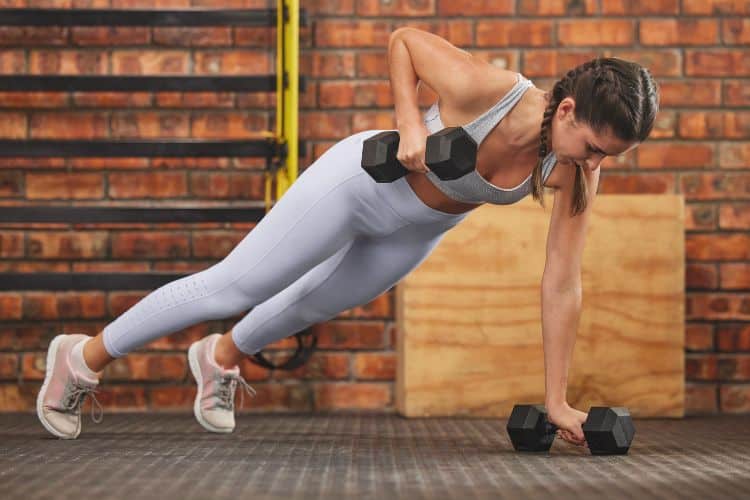
Dumbbell Plank Row
Also known as renegade rows, this exercise challenges the core, shoulders, arms, and back simultaneously.
Standing Dumbbell Woodchoppers
Rotational movements build functional core strength and improve torso mobility.
This circuit emphasizes stability and anti-rotation strength essential for daily movement.
Choosing the correct dumbbell weight is crucial for functional training success.
A good rule of thumb is to use a weight that allows you to complete all reps with solid form while still feeling challenged.
Functional training benefits from controlled movement tempo and short rest periods.
Controlled tempo improves muscle activation and reduces injury risk.
Cooling down helps your body recover and improves flexibility. Focus on:
Breathing deeply during the cool-down promotes relaxation and recovery.
For best results, aim for 2–4 functional strength workouts per week.
Pair Functional workouts well with low-impact cardio, walking, or mobility days.
Functional training differs from traditional lifting in several key ways.
Both styles have benefits, but functional dumbbell training offers superior movement quality and everyday strength.
Avoid these mistakes to get the most out of your workout:
Quality movement always beats heavier weights in functional training.
Progression keeps your workouts effective and prevents plateaus.
You can progress by:
Small changes lead to long-term strength gains.
Functional strength training supports long-term health, confidence, and independence.
It helps women:
This training style supports fitness goals at every stage of life.
Yes. Functional strength training increases calorie burn during and after workouts due to elevated metabolic demand. Combined with proper nutrition, it supports sustainable fat loss while preserving muscle.
Unlike excessive cardio, functional training helps reshape the body without burnout.
Day 1: 30 Minute Functional Dumbbell Workout
2: Low-Impact Cardio or Walking
3: Upper Body Functional Strength
4: Rest or Mobility
5: Full-Body Functional Dumbbell Workout
This balanced approach promotes recovery while maintaining consistency.
A 30 minute functional strength training workout with dumbbells proves that you don’t need long gym sessions to build real strength. With smart programming, compound movements, and intentional effort, you can transform your strength, mobility, and confidence in just half an hour.
Functional training isn’t about lifting the heaviest weight—it’s about moving better, feeling stronger, and supporting your body for life.
If you’re looking for a workout that fits into your schedule, builds practical strength, and delivers visible results, functional dumbbell training is one of the most powerful tools you can use.
To support you maximizing the benefits of a 30-minute functional strength training session, you can go to complementary resources on Women’s Fit Club that expand on dumbbell training and efficient workouts. For a related strength-building plan, go to our 30-Minute Full Body Dumbbell Workout for Functional Fitness, which focuses on real-world strength and balance using dumbbells. If you’re new to resistance training, our 30-Minute Beginner Dumbbell Workout: Full Body Tone is a perfect introduction to safe, effective full-body movements. For those wanting more variety, check out the30-Minute Full Body Dumbbell Circuit Workout to Build Muscle that adds muscle-building circuits to your routine. To make your strength training part of a weekly plan, our 3-Day Dumbbell Workout Plan: 30-Minute Full Body Training Guide gives structured workouts for multiple days.
Stay up to date on the latest women’s health, fitness and lifestyle trends and tips.
