


Sign up for workout ideas, training advice, reviews of the latest gear and more.


Staying active during pregnancy can feel more challenging as your body changes, especially in the third trimester. With a growing belly, shifting center of gravity, and increased fatigue, workouts need to be safe, supportive, and adaptable. The good news is that a 30-minute third trimester workout can help you stay strong, reduce discomfort, and prepare your body for labor and postpartum recovery—without overexertion.
This comprehensive guide walks you through everything you need to know about exercising in the third trimester, including safety guidelines, benefits, modifications, and a complete 30-minute prenatal workout routine designed specifically for late pregnancy. Whether you’re new to exercise or have been active throughout pregnancy, this plan focuses on strength, mobility, posture, and gentle cardio to support both you and your baby.
The third trimester is a time of rapid physical change. Your body is working harder to support your baby’s growth, which often leads to back pain, hip tightness, swelling, and reduced stamina. A well-designed third trimester workout can help counteract many of these challenges.
Regular prenatal exercise may help:
The key is choosing low-impact, pregnancy-safe exercises that respect your changing body and energy levels.
For most healthy pregnancies, 30 minutes of moderate exercise is considered safe and beneficial. In fact, many healthcare providers recommend staying active right up until delivery, as long as there are no medical restrictions.
However, always consult your healthcare provider before starting or continuing an exercise routine during pregnancy—especially in the third trimester.
Listening to your body is essential. Some days you may feel energized, while other days you may need to scale back—and that’s perfectly normal.
A structured workout helps ensure you’re training the right muscles while avoiding unnecessary strain. In the third trimester, the goal shifts away from intensity and toward functionality and comfort.
A 30-minute session is long enough to be effective but short enough to avoid excessive fatigue.
Knowing what not to do is just as important as knowing what to include.
Avoid:
Instead, focus on controlled strength, mobility, and gentle conditioning.
A balanced prenatal workout should include:
This structure helps prepare your body, reduce injury risk, and promote relaxation.
This workout can be done at home with minimal equipment. A chair, wall, and light dumbbells (or no weights at all) are optional.
The warm-up focuses on increasing circulation and gently mobilizing joints.
March in Place (1 minute)
Lift one foot at a time, keeping movements slow and controlled. Focus on posture and breathing.
Shoulder Rolls and Arm Circles (1 minute)
Relieve upper-body tension and encourage better posture.
Pelvic Tilts (1 minute)
Gently tilt the pelvis forward and back while standing or on hands and knees to reduce lower back stiffness.
Hip Circles (1 minute)
Slow, controlled circles to lubricate the hip joints.
Deep Breathing with Arm Raises (1 minute)
Inhale as arms lift, exhale as arms lower. This helps calm the nervous system and connect breathing to movement.
This circuit focuses on lower body strength, upper body posture, and core stability, all essential in the third trimester.
Chair Squats
Stand in front of a chair and lower down slowly, lightly touching the seat before standing back up. This strengthens the glutes and thighs, which support your pelvis and lower back.
Side Leg Raises
Holding onto a chair or wall, lift one leg out to the side. This strengthens the hips and improves balance.
Wall Push-Ups
Hands on the wall, lower your chest toward the wall and press back. This strengthens the chest, shoulders, and arms without placing pressure on the core.
Seated or Standing Rows
Using light weights or resistance bands, pull elbows back while squeezing the shoulder blades together. This supports upper-back posture as your belly grows.
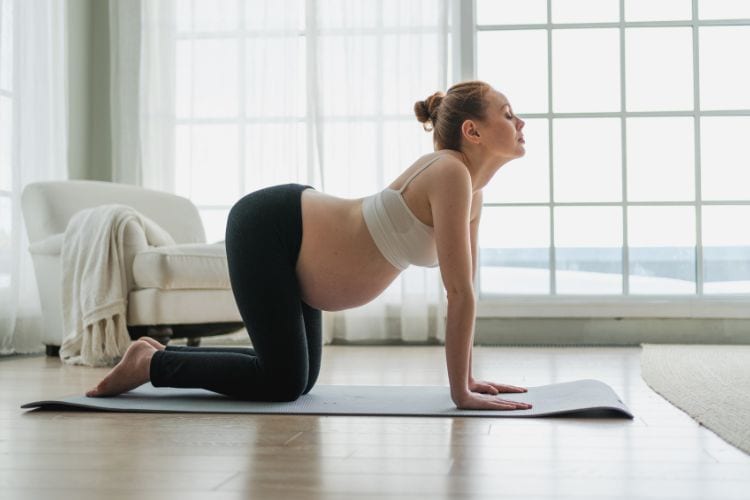
Bird Dog (Modified)
From hands and knees, extend one arm or one leg at a time rather than opposite limbs together. This improves core stability without excessive strain.
Standing Core Bracing
Place hands on your belly and gently engage your deep core muscles while breathing normally. This supports posture and prepares the core for labor.
Perform each exercise at a slow, controlled pace, resting as needed. The focus is quality of movement, not speed.
Cardio in the third trimester should feel smooth and comfortable.
Low-Impact Step-Backs
Step one foot back at a time, alternating sides. Keep movements controlled and upright.
Standing Side Reaches
Gently reach one arm overhead and to the side, opening the rib cage and improving breathing capacity.
Hip Flexor Mobility
Small, controlled lunges or step-backs help reduce hip tightness from prolonged sitting.
This portion of the workout should elevate your heart rate slightly while still allowing you to talk comfortably.
Cooling down helps reduce muscle tension and encourages relaxation.
Seated Forward Lean
Sit comfortably and hinge forward slightly, resting forearms on thighs to stretch the lower back.
Neck and Shoulder Stretch
Gently tilt your head side to side and roll shoulders to release tension.
Inner Thigh Stretch
Sit with feet wide and gently lean side to side.
Deep Breathing
End with slow, deep breaths—inhale through the nose, exhale through the mouth.
Most pregnant women can benefit from 3–5 sessions per week, depending on energy levels and medical guidance. Some days you may complete the full 30-minute workout, while other days a shorter or gentler session may feel more appropriate.
Consistency matters more than intensity during this stage.
As you get closer to delivery, you may notice:
These are normal. Adjust your workouts by:
Your body is preparing for birth—honor that process.
Stop exercising and contact your healthcare provider if you experience:
Safety always comes first.
Maintaining strength and mobility in the third trimester can make postpartum recovery smoother. Strong glutes, upper back, and deep core muscles support daily movements like lifting your baby, feeding, and carrying gear.
Exercise during pregnancy isn’t about “bouncing back”—it’s about supporting your body through one of its most demanding transitions.
A 30-minute third trimester workout is a powerful way to support your physical and mental health during the final weeks of pregnancy. By focusing on safe, low-impact strength, mobility, and breathing, you can stay active while honoring your body’s needs.
Remember, every pregnancy is different. Move at your own pace, rest when needed, and prioritize how you feel over rigid rules. With the right approach, exercise can be a source of comfort, confidence, and strength as you prepare to welcome your baby.
As you build out your 30-Minute Third Trimester Workout guide, don’t forget to link to complementary content on Women’s Fit Club to boost user engagement and SEO value. For example, include a link to your Cardio Workouts During Pregnancy: Complete Trimester Guide to help readers explore safe prenatal cardio options like walking, swimming, and low-impact machines beyond strength work. You can also reference the Full-Body Dumbbell Pregnancy Workout Plan for Moms-to-Be to offer strength training ideas that adapt well for late-stage pregnancy. To help readers with mobility and cool-downs during this phase, link to your Cat Cow Stretch: A Comprehensive Guide For Women for gentle spinal movement and relief. Within your broader fitness content, consider linking to the main Fitness category page so readers can explore other workouts tailored for women’s health and energy levels, as well as the Health category page to round out pregnancy-related wellness resources.
Stay up to date on the latest women’s health, fitness and lifestyle trends and tips.
