


Sign up for workout ideas, training advice, reviews of the latest gear and more.




A 35-minute weight lifting barbell challenge is the perfect blend of efficiency and effectiveness. In just over half an hour, you can train your entire body, stimulate muscle growth, increase strength, and elevate your metabolism—all without spending hours in the gym. For women especially, barbell training offers unmatched benefits: stronger bones, lean muscle definition, improved posture, and long-term fat-burning potential.
This guide breaks down everything you need to know about completing a 35-minute barbell workout challenge, including how to structure your session, choose the right weights, maintain proper form, and progress safely over time. Whether you’re training at home or in the gym, this challenge is designed to push you physically and mentally—while still being realistic for a busy schedule.
Barbell training is one of the most effective ways to build full-body strength. A 35-minute time frame is ideal because it allows you to work with meaningful loads while keeping intensity high and rest periods intentional.
A 35-minute barbell workout fits seamlessly into lunch breaks, early mornings, or evening routines without sacrificing training quality. Instead of isolating muscles, barbells encourage compound movements that recruit multiple muscle groups at once. This leads to better strength gains, higher calorie burn, and improved coordination.
For women, structured barbell workouts also help debunk the myth that lifting heavy leads to bulk. In reality, barbell training supports lean muscle tone, metabolic health, and functional strength that carries over into daily life.
A barbell challenge isn’t just about lifting weights—it’s about progression, consistency, and mental toughness. The challenge format pushes you to:
This 35-minute weight lifting challenge encourages you to focus, stay disciplined with rest times, and move with purpose. Each minute counts, which keeps intensity high while still prioritizing safety and technique.
This workout is suitable for a wide range of fitness levels.
The key is choosing a barbell weight that allows you to complete every rep with control and confidence. This challenge is especially effective for women looking to build total-body strength without excessive cardio or long gym sessions.
A successful 35-minute barbell challenge follows a clear structure to maximize efficiency and results.
This format ensures your muscles are prepared for heavy lifting while allowing enough working time to stimulate strength and muscle gains.
A proper warm-up is essential before any weight lifting session. It prepares your joints, activates your muscles, and reduces injury risk.
Focus on dynamic movements that mimic the exercises you’ll perform during the workout.
Your warm-up should include:
This short warm-up helps reinforce proper movement patterns before loading the barbell.
The heart of this workout is a full-body barbell circuit built around foundational compound lifts. These movements work multiple muscle groups simultaneously, making them ideal for strength and fat-burning.
Your goal is not speed—it’s quality strength work within a set time frame.
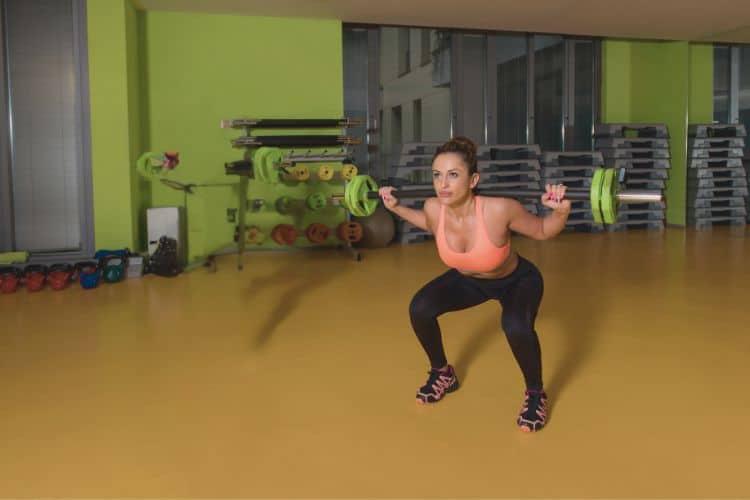
The barbell squat is one of the most powerful lower-body exercises available. It targets the glutes, quads, hamstrings, and core while also improving mobility and posture.
Focus on sitting back through the hips, keeping your chest lifted, and maintaining a neutral spine. Squats build lower-body strength that supports daily movement and athletic performance.
This lift sets the tone for the entire challenge by demanding full-body engagement and mental focus.
Deadlifts are a cornerstone of any barbell workout. They strengthen the posterior chain, including the glutes, hamstrings, lower back, and core.
In this challenge, deadlifts reinforce proper hip hinge mechanics while allowing you to lift heavier weights safely. Keep the bar close to your body, engage your core, and drive through your heels.
Deadlifts not only build muscle but also enhance functional strength for everyday activities.
The overhead press targets the shoulders, upper chest, triceps, and core. It’s a true test of upper-body strength and stability.
During this movement, brace your core, squeeze your glutes, and press the barbell overhead with control. Avoid arching your lower back and focus on moving the bar in a straight line.
Including overhead presses in your 35-minute barbell challenge improves posture and upper-body definition.
Rows balance out pressing movements and strengthen the upper back, lats, and biceps. A strong back supports shoulder health and posture, especially for women who spend long hours sitting.
Hinge forward at the hips, keep your spine neutral, and pull the barbell toward your torso. Controlled rows improve back strength while enhancing overall muscle symmetry.
This movement also reinforces core stability and grip strength.
If time allows, add a final barbell movement such as Romanian deadlifts, barbell lunges, or clean pulls. These exercises elevate heart rate while reinforcing strength under fatigue.
Finish strong while maintaining good form—this final push completes the challenge both physically and mentally.
Selecting the correct load is crucial for success. The ideal weight should feel challenging but manageable for all prescribed reps.
A good rule:
As your strength improves, gradually increase weight to continue progressing within the 35-minute time limit.
Rest is part of the challenge. Keep rest periods intentional and consistent.
Managing rest effectively helps maintain workout flow while keeping intensity high.
This workout delivers powerful results in a short time frame.
Barbell compound lifts stimulate multiple muscle groups, promoting lean muscle growth and definition without excessive volume.
Consistent barbell training improves neuromuscular efficiency, allowing you to lift heavier weights over time.
Heavy lifting increases calorie burn during and after your workout through the afterburn effect.
Weight lifting strengthens bones, which is especially important for women as they age.
A 35-minute workout fits into even the busiest schedules while still delivering meaningful results.
You can perform a 35-minute barbell workout 2–4 times per week depending on your recovery and goals.
Allow at least one rest day between heavy barbell sessions to support muscle recovery and strength gains. On off days, low-impact cardio or mobility work pairs well with barbell training.
Progression is what turns a workout into a challenge.
Ways to progress include:
Track your workouts so you can see improvements in strength, endurance, and confidence.
Even experienced lifters can fall into bad habits.
Avoid:
Prioritize quality movement over ego lifting for long-term success.
Cooling down helps reduce soreness and improve flexibility.
Focus on:
Recovery is where strength gains are solidified, so don’t skip this step.
Fueling your body properly enhances performance and recovery.
Prioritize:
Balanced nutrition supports strength gains and helps you feel energized during every session.
Barbell workouts empower women physically and mentally. Lifting heavier weights builds confidence, resilience, and a strong sense of capability that carries beyond the gym.
A 35-minute barbell challenge proves that strength training doesn’t require long sessions—just focus, consistency, and intention.
The 35-minute weight lifting barbell challenge is a powerful, time-efficient way to build full-body strength, burn calories, and boost confidence. By focusing on compound lifts, proper technique, and progressive overload, this workout delivers real results without unnecessary complexity.
Whether you’re lifting at home or in the gym, this challenge fits perfectly into a balanced fitness routine. Commit to showing up, lifting with purpose, and progressing week by week—and you’ll feel stronger, leaner, and more confident with every session.
As you take on this 35-minute weight lifting barbell challenge, be sure to complement your strength training with other effective routines and expert tips from Women’s Fit Club. If you’re new to barbell lifts, check out “The Best Barbell Exercises For Women” to learn proper form and variations that build confidence and results. Pair your challenge with a structured strength plan by exploring our “Best Weightlifting Routine for Women: Beginner to Advanced” to expand your weekly progress. For a broader strength approach, our “Best Strength Training Program For Women” offers balanced workouts designed to target multiple muscle groups. You might also enjoy “Barbell Workouts: A Guide to Strength and Empowerment” for ideas on mixing barbell complexes into your training. Finally, if you’re pressed for time but still want full-body strength gains, be sure to browse other Women’s Fitness Workouts for additional 20- to 45-minute routines you can rotate into your schedule.
Stay up to date on the latest women’s health, fitness and lifestyle trends and tips.
