


Sign up for workout ideas, training advice, reviews of the latest gear and more.



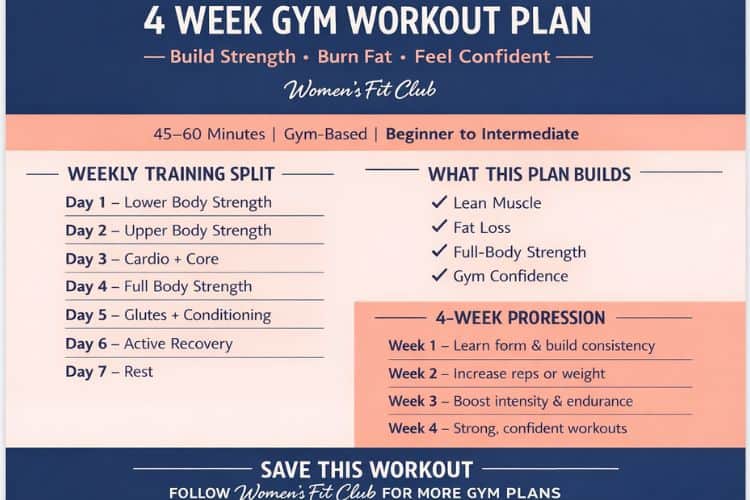

Starting a structured gym routine can feel overwhelming, especially if you’re unsure how to balance strength training, cardio, and recovery. A well-designed 4 week gym workout plan removes the guesswork by giving you a clear roadmap to follow. Whether your goal is fat loss, muscle toning, or building overall strength, a progressive four-week plan helps you stay consistent while maximizing results.
This 4 week gym workout plan is designed for women who want an effective, realistic, and sustainable routine. It combines compound lifts, isolation exercises, cardio conditioning, and rest days to support fat loss, muscle definition, and long-term fitness progress. Each week builds on the last, helping you improve strength, endurance, and confidence in the gym.
A four-week timeframe is ideal for creating momentum without burnout. It’s long enough to see measurable progress, yet short enough to stay mentally engaged. Instead of hopping between random workouts, following a structured plan ensures balanced training across all major muscle groups.
A 4 week gym workout plan also allows for progressive overload. This means gradually increasing weight, reps, or intensity so your body continues to adapt. Without progression, workouts become stagnant and results slow down.
Additionally, having a clear weekly schedule improves consistency. When you know exactly what to do each day, you’re far more likely to show up, train with purpose, and stay committed.
This plan is suitable for beginners to intermediate gym-goers. If you’re new to the gym, you’ll build a strong foundation using controlled movements and moderate weights. If you already have some experience, the structured progression and volume will challenge your muscles and push your fitness to the next level.
The workouts are designed to be efficient, typically lasting 45 to 60 minutes. This makes the plan realistic for busy women who want results without spending hours in the gym.
The program follows a 5-day training split with 2 rest or active recovery days each week. This structure balances strength training, cardio conditioning, and recovery.
Each week builds on the previous one by increasing either load, volume, or intensity.
Before starting any workout, warming up is essential for performance and injury prevention. Spend 5 to 10 minutes preparing your body.
Start with light cardio such as brisk walking, cycling, or rowing to increase blood flow. Follow with dynamic stretches targeting the muscles you’ll train that day. Hip circles, arm swings, bodyweight squats, and lunges are excellent options.
A proper warm-up improves mobility, activates key muscle groups, and helps you lift with better form.
Week 1 focuses on learning proper exercise technique and establishing a routine. Weights should feel challenging but manageable, allowing you to complete all reps with good form.
This workout targets the glutes, quads, and hamstrings using compound movements.
Start with squats to build total lower-body strength. Follow with leg presses and Romanian deadlifts to emphasize the quads and hamstrings. Finish with walking lunges and calf raises to improve balance and lower-leg strength.
Rest 60 to 90 seconds between sets to maintain good form.
Upper body day focuses on the chest, back, shoulders, and arms.
Begin with lat pulldowns or assisted pull-ups to strengthen the back. Move into dumbbell bench presses for chest development. Shoulder presses and seated rows add balance, while bicep curls and tricep pushdowns finish the workout.
Keep the weights moderate and focus on controlled movements.
This session improves cardiovascular fitness and core stability.
Choose a steady-state cardio activity such as treadmill walking, cycling, or elliptical training for 20 to 30 minutes. Follow with core exercises like planks, cable crunches, and dead bugs.
This day supports fat loss while giving your muscles a break from heavy lifting.
Full-body training reinforces movement patterns and boosts calorie burn.
Exercises include deadlifts, dumbbell rows, goblet squats, and push-ups. Each movement works multiple muscle groups, making the workout efficient and effective.
Use lighter weights than lower- or upper-body days and focus on smooth transitions.
This workout targets the glutes while increasing heart rate.
Hip thrusts, cable kickbacks, and step-ups build glute strength. Finish with short bursts of cardio such as sled pushes or incline treadmill walking.
In Week 2, you’ll slightly increase weights or reps while maintaining good form. This progression encourages muscle adaptation.
Add 5 to 10 pounds to major lifts if you completed all reps comfortably in Week 1. For smaller exercises, increase reps by 2 to 3 per set.
The weekly structure remains the same, but intensity increases slightly.
Week 2 is an excellent time to improve your mind-muscle connection. Slow down your reps, especially during the lowering phase, to increase muscle engagement and time under tension.
This approach improves muscle tone and control.
Week 3 introduces higher intensity to elevate calorie burn and push endurance.
Add one additional set to key exercises like squats, deadlifts, and bench presses. This increase in volume stimulates muscle growth and metabolic demand.
Rest times may shorten slightly, especially on conditioning days, to elevate heart rate.
Increase cardio sessions by 5 to 10 minutes or add short intervals. For example, alternate 1 minute of faster pace with 2 minutes of recovery.
This boosts cardiovascular fitness and supports fat loss.
Week 4 is about finishing strong. You’ll challenge yourself while maintaining proper form.
Use your heaviest manageable weights for compound lifts. The goal isn’t maximum weight but controlled strength and confidence in movement.
You should feel stronger and more capable compared to Week 1.
Add short finishers at the end of workouts, such as battle ropes, kettlebell swings, or sled pushes. These improve conditioning and leave you feeling accomplished.
Rest days are essential for muscle repair and long-term progress. On rest days, focus on light movement such as walking, stretching, or yoga.
Quality sleep, hydration, and proper nutrition play a huge role in recovery. Aim for at least 7 hours of sleep per night and fuel your body with balanced meals.
Training alone isn’t enough. Nutrition supports energy, recovery, and results.
Focus on lean protein sources to support muscle repair. Include complex carbohydrates for workout fuel and healthy fats for hormone balance.
Staying hydrated improves performance and reduces fatigue. Drinking water consistently throughout the day supports muscle function and recovery.
One common mistake is lifting too heavy too soon. Prioritize form over weight to avoid injury. Another mistake is skipping rest days, which can lead to burnout and stalled progress.
Consistency matters more than perfection. Missing one workout doesn’t ruin your progress, but giving up entirely does.
After completing four weeks, you can repeat the plan with heavier weights or transition into a new training split. Many women choose to move into a progressive overload program or add more targeted muscle-group training.
Tracking your workouts helps you see progress and stay motivated. Write down weights, reps, and how you feel after each session.
A structured 4 week gym workout plan provides clarity, motivation, and results. By following a balanced routine that includes strength training, cardio, and recovery, you set yourself up for long-term success.
This plan helps you build strength, burn fat, and develop confidence in the gym. Stick with it, focus on progress rather than perfection, and enjoy the transformation—both physically and mentally—that comes from consistent training.
To help you get even more out of your fitness journey, be sure to explore related articles on Women’s Fit Club that complement this 4-week gym workout plan. If you’re looking to deepen your strength routine, check out our Women Weightlifting Workout Routine: A Guide to Strength for tips on building muscle safely and effectively. For balanced full-body training ideas, our Best Full Body Workout Program for Women offers well-rounded sessions you can integrate into your week. On days you want higher intensity, the 30-Minute Full Body Metabolic Resistance Training Workout delivers fat-burning performance in just half an hour. If you need quicker workouts for active recovery or busy schedules, try the 25-Minute Functional Fitness Workout to build strength and endurance. And for cardio that boosts heart health alongside strength gains, explore our Best Workout Programs for Women page to find programs that keep your fitness routine fresh and effective.
Stay up to date on the latest women’s health, fitness and lifestyle trends and tips.
