


Sign up for workout ideas, training advice, reviews of the latest gear and more.
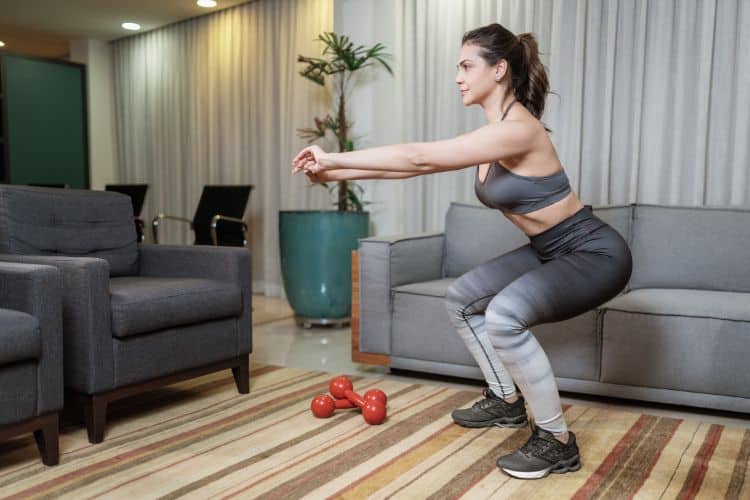
Winter has a way of slowing everything down. Cold temperatures, shorter days, and heavier routines often make it harder to stay active and motivated. That’s where a 30-minute winter yoga flow becomes a powerful tool. This style of yoga is designed to generate internal heat, improve circulation, and keep your body mobile and strong throughout the colder months—without requiring intense cardio or heavy equipment.
Unlike summer yoga flows that emphasize cooling and expansion, winter yoga focuses on warmth, grounding, and steady movement. A thoughtfully structured 30-minute flow can help relieve stiffness, reduce stress, support immune health, and maintain flexibility when cold weather encourages inactivity. Whether you’re practicing at home or in a studio, winter yoga provides balance for both body and mind during the most demanding season of the year.
Winter yoga is not about rushing through poses or chasing sweat for its own sake. Instead, it emphasizes intentional movement, controlled breathing, and poses that warm the muscles and joints safely.
Cold temperatures cause muscles to tighten, joints to feel stiffer, and circulation to slow down. Many people experience increased back pain, hip tightness, and reduced mobility during winter. A winter yoga flow counters these effects by gradually warming the body from the inside out, helping muscles move more freely while reducing the risk of strain.
Seasonal changes can also affect mental health. Shorter daylight hours and reduced outdoor activity can contribute to low energy and mood shifts. Yoga encourages mindful breathing and body awareness, helping regulate the nervous system and support emotional balance during winter.
A 30-minute session is ideal for winter because it’s long enough to fully warm the body while remaining accessible for busy schedules.
Steady transitions between poses increase blood flow and help generate heat naturally. This improves oxygen delivery to muscles and joints, reducing stiffness and cold-related discomfort.
Winter yoga flows often include longer holds and controlled movements that build strength while maintaining flexibility. This helps prevent muscle loss and joint stiffness caused by reduced activity in colder months.
Gentle twists, deep breathing, and mindful movement stimulate circulation and lymphatic flow, which can support immune function during flu season.
Winter can feel overwhelming due to holidays, travel, and disrupted routines. Yoga helps calm the nervous system, lower cortisol levels, and create a sense of grounded calm.
Preparation is especially important in colder weather to ensure comfort and safety.
Choose a room that can be comfortably heated. Wear layers at the beginning of your practice and remove them as your body warms. Socks or leg warmers can help keep feet and ankles warm during seated or standing poses.
Yoga blocks, blankets, and bolsters are particularly useful in winter. They provide insulation from cold floors and help support the body during longer holds.
Slow, steady breathing helps regulate body temperature and encourages mindful movement. In winter yoga, breath becomes a primary tool for warming the body and calming the mind.
A well-balanced winter yoga flow includes five key sections: grounding, warm-up, active flow, cooling integration, and relaxation.
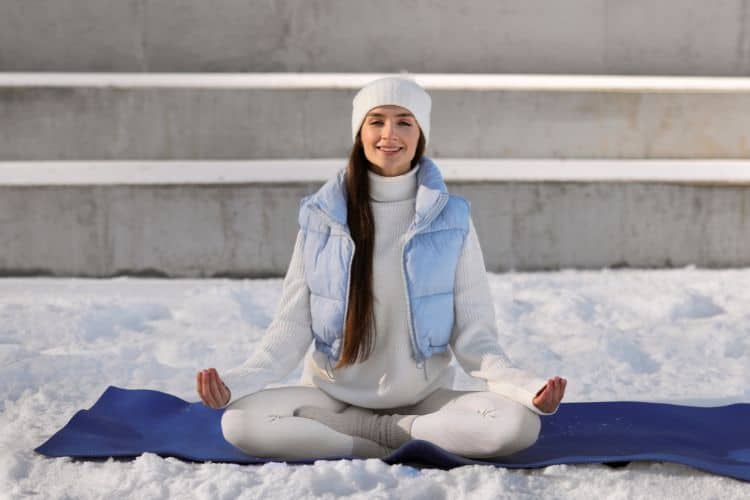
Begin seated in a comfortable position. Close your eyes and bring attention to your breath. Inhale deeply through the nose, feeling the chest and belly expand, then exhale slowly, releasing tension.
This grounding phase helps transition the body from cold, external conditions into a focused internal practice.
Slow neck rolls, shoulder shrugs, and seated twists gently awaken the upper body. These movements increase circulation and release common areas of winter tension.
Move through cat-cow poses slowly, coordinating breath with movement. These spinal waves warm the back, improve mobility, and prepare the body for deeper poses.
From a seated or kneeling position, flow through gentle side bends to open the ribs and encourage deeper breathing.
A slow, modified sun salutation helps elevate heart rate gradually while warming the entire body without strain.
The core of a winter yoga flow focuses on steady, warming movements that build strength and flexibility.
Flow through warrior variations, chair pose, and wide-leg stances. These poses activate large muscle groups, helping generate heat and improve lower-body strength.
Move intentionally between poses rather than rushing. Controlled transitions protect joints and allow muscles to stay warm throughout the flow.
Incorporate poses like cobra or low bridge to open the chest and counteract winter posture habits, such as hunching or prolonged sitting.
Standing or seated twists stimulate digestion, improve circulation, and help maintain spinal mobility during colder months.
Gentle forward folds help lengthen the hamstrings and lower back while calming the nervous system.
Poses like pigeon or seated figure-four release hip tension caused by inactivity or cold-induced stiffness.
Lie down with a blanket or bolster for warmth. Allow the body to fully relax while maintaining comfort and insulation.
Focus on slow, deep breathing to lower heart rate and integrate the benefits of the practice. This final phase helps transition the body back into daily activities feeling calm and refreshed.
Short, regular sessions are more effective than occasional long workouts. A 30-minute winter yoga flow fits easily into most schedules.
Cold muscles require patience. Avoid forcing stretches and prioritize comfort over depth.
Yoga pairs well with walking, light strength training, or indoor workouts to maintain overall fitness during winter.
A winter yoga flow is suitable for beginners and experienced practitioners alike. It’s especially helpful for individuals who experience joint stiffness, low energy, or stress during colder months. With modifications and props, it can be adapted for different fitness levels and mobility needs.
Cold muscles are more prone to injury. Always allow enough time to warm up gradually.
A cold environment makes it harder for muscles to relax and increases discomfort. Ensure your space is comfortably warm.
Flexibility may feel reduced in winter. Move slowly and respect your body’s limits.
You don’t need long, intense sessions to stay active during winter. A focused 30-minute yoga flow provides physical movement, mental clarity, and emotional balance without overwhelming the body. It’s an efficient, sustainable way to maintain health when motivation is low and conditions are challenging.
A 30-minute winter yoga flow is more than just exercise—it’s a way to care for your body and mind during a season that demands rest, warmth, and balance. By practicing intentionally, you can stay strong, flexible, and energized all winter long while honoring your body’s natural rhythms.
Winter doesn’t have to mean slowing down completely. With the right yoga flow, it can become a season of grounding, resilience, and renewed focus—one mindful breath at a time.
Integrating a 30-minute winter yoga flow into your wellness routine is a perfect way to stay active and centered during the colder months, especially when outdoor workouts feel less appealing. For women looking to build flexibility and inner peace, check out our guide on The Best Yoga Workout For Women Achieving Inner Peace, which breaks down essential yoga benefits and poses. If your fitness goals extend beyond yoga, our Best Workout Programs For Women The Ultimate Guide offers an overview of how yoga fits into a balanced training plan, and you can also explore a variety of Best Workout Exercises For Women of All Levels to complement your flow with strength and cardio. For gentle alternatives that support joint health and recovery, our Best Low Impact Workout Embrace the Grace of Fitness resource highlights low-impact movement options, while the Workouts ‑ Women’s Fit Club page helps you discover additional routines — from HIIT to calming sequences — that can be blended with your winter yoga practice.
Stay up to date on the latest women’s health, fitness and lifestyle trends and tips.
