




Sign up for workout ideas, training advice, reviews of the latest gear and more.



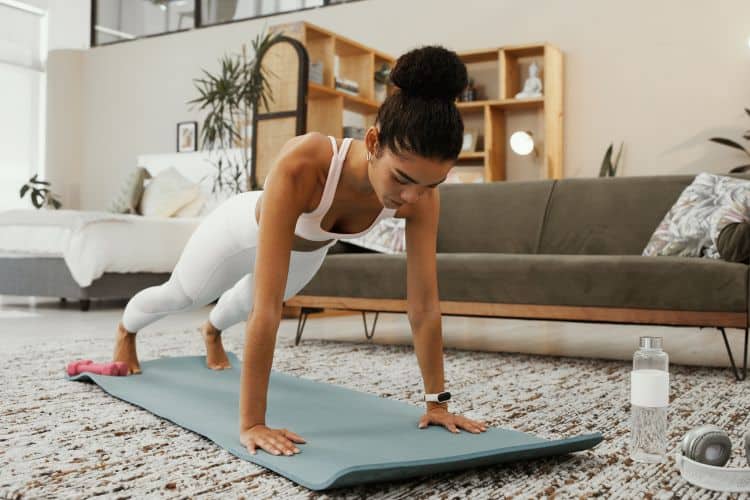
Finding time to exercise can be challenging when work, family responsibilities, and daily obligations take up most of your schedule. The good news is that you don’t need a gym membership, expensive equipment, or a dedicated workout space to improve your fitness. A 30 minute living room HIIT workout can help you burn calories, improve cardiovascular health, increase endurance, and strengthen your entire body without ever leaving your home.
High-Intensity Interval Training (HIIT) has become one of the most popular workout methods because it delivers maximum results in minimal time. By alternating short bursts of intense exercise with brief recovery periods, HIIT keeps your heart rate elevated and challenges multiple muscle groups simultaneously. Whether you’re a beginner looking to start a fitness routine or an experienced exerciser wanting a quick but effective workout, a living room HIIT workout is an excellent option.
In this guide, you’ll learn the benefits of HIIT, how to structure a 30-minute workout, tips for maximizing results, and a complete living room HIIT routine you can start today.
HIIT stands for High-Intensity Interval Training. This style of exercise alternates periods of intense effort with short recovery periods. Instead of maintaining a steady pace throughout the workout, HIIT challenges your body to work hard for a brief period and then recover before repeating the cycle.
For example, you may perform jumping jacks for 40 seconds, rest for 20 seconds, and then move to the next exercise. This interval format increases calorie burn and improves cardiovascular fitness while keeping workouts engaging and efficient.
One of the biggest advantages of HIIT is that it can be performed anywhere. Your living room provides plenty of space for bodyweight exercises that raise your heart rate and build strength simultaneously.
HIIT workouts are known for their ability to burn a significant number of calories in a short amount of time. The high-intensity intervals require substantial energy, helping you maximize calorie expenditure during and after the workout.
Because HIIT combines cardio and strength-based movements, it helps preserve muscle while encouraging fat loss. Many people find HIIT more effective than traditional steady-state cardio for reducing body fat.
A 30-minute workout fits easily into most schedules. You can complete an effective training session before work, during lunch breaks, or after dinner without spending hours exercising.
Many HIIT exercises use only body weight, making them perfect for home workouts. This eliminates barriers such as gym fees and transportation time.
HIIT challenges the cardiovascular system by repeatedly elevating and lowering heart rate. Over time, this can improve cardiovascular endurance and overall heart health.
Bodyweight movements such as squats, lunges, push-ups, and planks strengthen muscles while improving balance, coordination, and mobility.
HIIT workouts can increase your metabolic rate for hours after exercise. This phenomenon, often referred to as the afterburn effect, helps your body continue burning calories even after the workout ends.
Many people believe they need large spaces or expensive fitness equipment to achieve results. In reality, a small living room can provide enough room for a highly effective workout.
Living room workouts offer several advantages:
The ability to exercise whenever you have time significantly increases adherence to a fitness routine.
Before starting your workout, take a few minutes to prepare your space and body.
Move furniture and objects that could interfere with movement. Ensure you have enough space to extend your arms and perform basic movements safely.
Choose breathable workout attire that allows unrestricted movement.
HIIT sessions can be demanding, so staying hydrated is essential.
Never jump directly into high-intensity exercise. A proper warm-up prepares muscles, joints, and the cardiovascular system for the workout ahead.
Perform each exercise for 30 seconds.
Gradually increase your pace while swinging your arms naturally.
Perform small and large circles forward and backward.
Move through a comfortable range of motion.
Lift knees toward chest while engaging your core.
Increase heart rate and prepare the body for movement.
Loosen the hips and improve mobility.
Release tension in the upper body.
Increase blood flow and prepare for intense intervals.
This workout consists of five circuits. Perform each exercise for 40 seconds followed by 20 seconds of rest. Complete all exercises in a circuit before moving to the next one.
Jump feet apart while raising arms overhead.
Run in place while driving knees upward.
Jump side to side while maintaining balance.
Alternate knees toward the chest from a plank position.
Lower hips back and down while keeping your chest lifted.
Step backward and lower into a lunge.
Remain in a squat position and perform small controlled pulses.
Step laterally and push through the working leg to return.
Perform standard or modified push-ups.
Alternate tapping each shoulder while maintaining a stable plank.
Rotate through the torso while alternating knees and elbows.
Maintain a strong core and neutral spine.
Lower to the floor, return to standing, and jump.
Squat and then drive one knee upward as you stand.
Jump feet in and out while holding a plank.
Throw quick punches while engaging your core.
Move as quickly as possible.
Explode upward from a squat position.
Increase speed while maintaining proper form.
Perform controlled burpees for the final interval.
After completing your workout, spend five minutes cooling down.
Gradually lower your heart rate.
Stretch the back of each leg.
Hold each side for 20 to 30 seconds.
Open the shoulders and chest.
Lengthen the spine and relax the body.
Focus on slow, controlled breaths.
If you’re new to HIIT, don’t worry. The workout can be adjusted to suit your fitness level.
Start with 20 seconds of work and 40 seconds of recovery.
Replace jumping exercises with low-impact alternatives.
Perform push-ups from your knees or against a sturdy surface.
Pause when needed and focus on proper form.
Consistency is more important than intensity when starting.
If you’re ready for more challenge, try the following:
Move from 40 seconds to 50 or 60 seconds.
Lower recovery periods to 10 or 15 seconds.
Use dumbbells or resistance bands.
Repeat the entire workout twice.
Add more plyometric exercises to elevate intensity.
The exact number depends on body weight, fitness level, and exercise intensity. Most people can expect to burn between 250 and 500 calories during a 30-minute HIIT session.
Because HIIT increases post-workout oxygen consumption, calorie burn may continue after the session ends.
For most individuals, two to four HIIT workouts per week is ideal.
A sample schedule may look like:
30 Minute Living Room HIIT Workout
Walking or mobility work
HIIT Workout
Recovery or stretching
HIIT Workout
Light activity
Rest
This approach allows adequate recovery while maintaining progress.
Exercise and nutrition work together to achieve fitness goals.
Protein supports muscle repair and recovery.
Focus on vegetables, fruits, lean proteins, healthy fats, and complex carbohydrates.
Water supports performance and recovery.
Minimize foods high in added sugars and unhealthy fats.
Consume a balanced meal within a few hours after exercise.
Always prepare your body before intense exercise.
Proper technique reduces injury risk and improves effectiveness.
Recovery is essential for progress.
Dehydration can negatively impact performance.
Focus on your own progress and consistency.
Maintaining motivation can sometimes be difficult when exercising at home.
Strategies that help include:
Consistency ultimately produces the best long-term results.
A 30 minute living room HIIT workout is one of the most efficient ways to improve fitness, burn calories, and strengthen your entire body from the comfort of home. With no equipment required and minimal space needed, this workout removes many of the barriers that prevent people from exercising regularly.
Whether your goal is weight loss, fat burning, cardiovascular health, or overall conditioning, incorporating HIIT into your weekly routine can help you achieve measurable results. Start at your current fitness level, focus on proper form, and gradually increase intensity as your endurance improves. By committing to just 30 minutes a few times each week, you can build strength, boost energy, and create a healthier lifestyle without ever leaving your living room.
To continue building your fitness journey after this 30 Minute Living Room HIIT Workout, explore more workout plans and HIIT resources on Women’s Fit Club. If you’re just getting started, check out our 30 Minute Full Body HIIT Workout for Beginners at Home for a beginner-friendly routine that builds endurance and confidence. Looking for more calorie-burning workouts? Try the Best 30 Minute Full Body HIIT Workout to Burn Fat Fast for a challenging full-body session. If you want to improve exercise variety, our Best HIIT Exercises for Women to Tone and Burn Fat guide provides excellent movement ideas. Beginners can also benefit from HIIT Workouts at Home for Beginners, which includes simple modifications and workout plans. For those wanting a longer metabolic challenge, don’t miss the 40-Minute Full Body Bodyweight HIIT Workout for Max Results.
Stay up to date on the latest women’s health, fitness and lifestyle trends and tips.
