


Sign up for workout ideas, training advice, reviews of the latest gear and more.

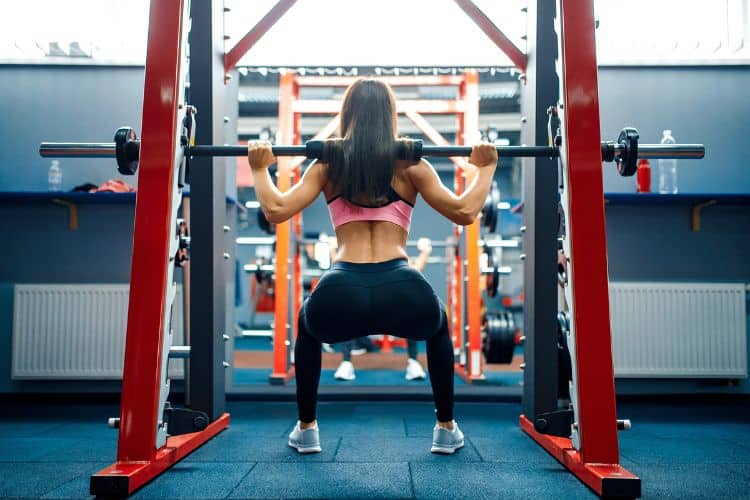
A Smith machine leg day workout routine is one of the most effective ways to build lower-body strength, improve muscle definition, and increase confidence in the gym. Whether you’re new to resistance training or an experienced lifter looking to add variety to your workouts, the Smith machine provides a controlled environment that allows you to focus on proper form while safely increasing resistance. Unlike free weights, the fixed bar path offers additional stability, making it easier to target specific muscle groups without worrying about balancing the barbell. This makes it an excellent choice for beginners learning movement patterns as well as advanced lifters performing higher-volume training sessions.
A well-designed Smith machine leg workout targets every major muscle in the lower body, including the quadriceps, hamstrings, glutes, calves, hip adductors, and core stabilizers. By combining compound exercises with isolation movements, you can maximize muscle growth, improve athletic performance, and develop balanced lower-body strength. This guide covers everything you need to know, from workout benefits and exercise technique to complete beginner, intermediate, and advanced workout routines.
Many people underestimate the effectiveness of the Smith machine, but it offers several advantages that can help improve workout quality and consistency.
Some of the biggest benefits include:
Because the bar follows a fixed path, lifters can concentrate on pushing through their heels, maintaining proper posture, and achieving full range of motion without worrying about stabilizing the weight.
A complete Smith machine leg routine trains nearly every lower-body muscle.
The quadriceps are located on the front of the thighs and are responsible for extending the knees. Squats, split squats, and lunges heavily recruit these muscles.
The gluteus maximus is the body’s largest muscle and plays a major role in hip extension. Deep squats, hip thrusts, and Romanian deadlifts activate the glutes throughout the movement.
Located on the back of the thighs, the hamstrings assist with knee flexion and hip extension. Romanian deadlifts and good mornings are excellent Smith machine exercises for hamstring development.
Standing calf raises performed on the Smith machine effectively strengthen the gastrocnemius and soleus muscles while improving ankle stability.
Although the machine provides stability, your abdominal muscles still work to maintain posture and spinal alignment throughout every exercise.
Progressive overload is essential for building muscle. Since the Smith machine provides consistent movement patterns, it’s easier to gradually increase weight while maintaining proper technique.
Many lifters feel more confident performing squats without needing a spotter. Safety stops can also be adjusted to prevent getting trapped beneath heavy loads.
Because balancing the bar requires less effort, many people experience improved muscle activation in the quads and glutes.
When performed correctly, Smith machine exercises can reduce unnecessary movement that sometimes contributes to poor lifting mechanics.
Never skip your warm-up.
Spend 8–10 minutes preparing your body with:
A proper warm-up improves flexibility, increases blood flow, and reduces injury risk.
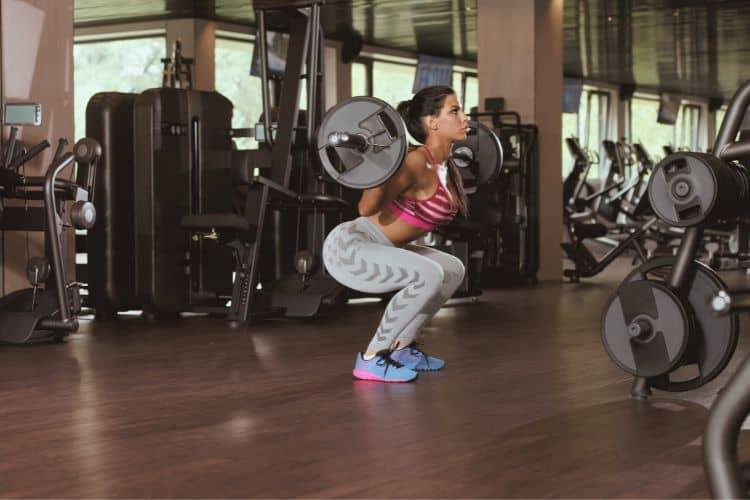
The Smith machine squat forms the foundation of nearly every leg workout.
Position the bar across your upper traps.
Stand with your feet slightly forward of the bar.
Lower until your thighs reach at least parallel.
Drive through your heels while squeezing your glutes at the top.
Sets: 4
Reps: 8–12
Front squats place greater emphasis on the quadriceps while reducing stress on the lower back.
Keep your torso upright throughout the movement and avoid letting your knees collapse inward.
Sets: 3
Reps: 10–12
Few exercises challenge the glutes and quads like Bulgarian split squats.
Place one foot behind you on a bench.
Lower under control until your front thigh reaches parallel.
Drive upward through the front heel.
Sets: 3
Reps: 10 each leg
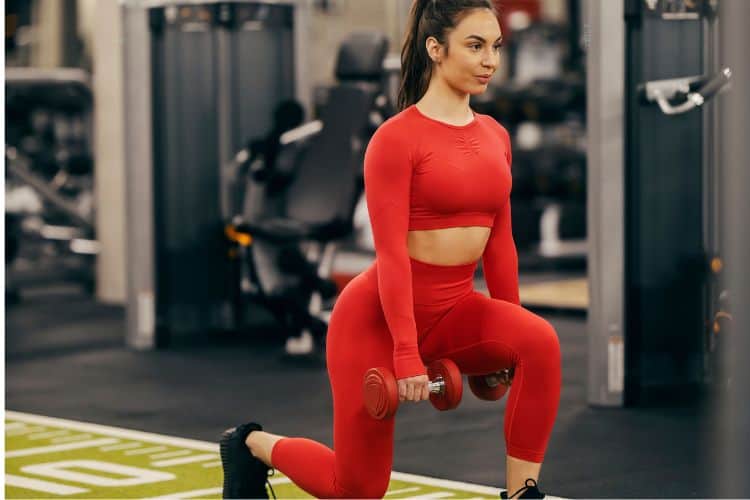
Reverse lunges improve balance while strengthening the glutes, hamstrings, and quadriceps.
Step backward slowly and lower until both knees reach approximately 90 degrees.
Push through the front heel to return.
Sets: 3
Reps: 12 each leg
Romanian deadlifts strengthen the posterior chain.
Keep a slight bend in the knees while pushing the hips backward.
Lower until you feel a deep hamstring stretch before returning to standing.
Sets: 4
Reps: 8–12
Hip thrusts are among the best glute-building exercises available.
Position your shoulders on a bench.
Drive the hips upward until your body forms a straight line.
Pause for two seconds before lowering.
Sets: 4
Reps: 10–15
This movement develops the lower back, glutes, and hamstrings.
Maintain a neutral spine while hinging at the hips.
Avoid rounding the back.
Sets: 3
Reps: 10–12
Stand on a platform with your heels hanging off the edge.
Raise onto your toes before lowering into a full stretch.
Pause briefly at both the top and bottom.
Sets: 5
Reps: 15–20
If you’re just starting resistance training, focus on learning proper movement patterns before lifting heavy.
Smith Machine Squats
3 sets × 10 reps
Romanian Deadlifts
3 sets × 10 reps
Reverse Lunges
2 sets × 10 each leg
Hip Thrusts
3 sets × 12 reps
Standing Calf Raises
3 sets × 15 reps
Rest 60–90 seconds between sets.
After several months of consistent training, increase both volume and intensity.
Smith Machine Squats
4 sets × 8 reps
Bulgarian Split Squats
3 sets × 10 each leg
Romanian Deadlifts
4 sets × 10 reps
Hip Thrusts
4 sets × 12 reps
Standing Calf Raises
4 sets × 20 reps
Finish with bodyweight walking lunges for two rounds.
Experienced lifters should focus on maximizing hypertrophy through higher volume and shorter rest periods.
Heavy Smith Machine Squats
5 × 6
Front Squats
4 × 10
Bulgarian Split Squats
4 × 10
Romanian Deadlifts
4 × 8
Hip Thrusts
4 × 12
Good Mornings
3 × 12
Standing Calf Raises
5 × 20
Finish with a burnout set of bodyweight squats performed to near muscular failure.
A balanced weekly routine might look like this:
Heavy Smith Machine Leg Workout
Upper Body
Light Cardio
Glute and Hamstring Focus
Upper Body
Mobility or Walking
Recovery
Training legs twice weekly often produces better muscle growth than training only once.
Partial repetitions limit muscle development.
Lower until your hips reach at least knee level whenever mobility allows.
Control every repetition.
Lower the weight over three to four seconds before driving upward.
This increases muscle tension and stimulates additional growth.
Gradually increase:
Small weekly improvements create significant long-term results.
Compound exercises generally require 90–120 seconds of recovery.
Isolation movements usually require only 45–60 seconds.
Muscle growth depends on nutrition.
Consume:
Aim for adequate protein intake throughout the day to support recovery and muscle repair.
Positioning your feet directly beneath the bar often places unnecessary stress on the knees.
A slightly forward foot position usually creates a more natural squat pattern.
Perfect technique should always come before heavier loads.
Poor form increases injury risk and reduces muscle activation.
Full-depth repetitions generally build more muscle than partial reps.
Unilateral movements help correct muscular imbalances while improving stability.
Muscles grow during recovery, not while training.
Get sufficient sleep, hydrate well, and allow at least 48 hours before training the same muscle group intensely again.
Absolutely. When combined with progressive overload, proper nutrition, and consistent effort, the Smith machine can produce impressive improvements in muscle size and strength.
Yes. The guided movement makes it one of the safest pieces of equipment for learning squat and lunge mechanics while building confidence.
Most people benefit from training legs one to two times per week. Advanced lifters may recover well enough to include additional lower-body sessions, provided volume and intensity are managed appropriately.
Both have advantages. Free weights require greater stabilization and coordination, while the Smith machine allows you to focus on muscle engagement and controlled movement. Incorporating both into your program can provide the best overall results.
For strength, perform 4–6 repetitions with heavier weights. And for muscle growth, aim for 8–12 repetitions. For muscular endurance, use 15–20 repetitions with lighter loads and shorter rest periods.
A Smith machine leg day workout routine is an excellent way to build stronger, more muscular legs while improving workout safety and consistency. By combining foundational exercises like Smith machine squats, Romanian deadlifts, Bulgarian split squats, hip thrusts, lunges, and calf raises, you can effectively target every major muscle in the lower body. Whether your goal is increasing strength, enhancing athletic performance, or developing lean muscle, following a structured plan with proper form, progressive overload, and adequate recovery will help you achieve lasting results. Stay consistent, challenge yourself gradually, and make each leg day count. Over time, you’ll build stronger quads, more powerful glutes, resilient hamstrings, and well-developed calves that support better performance both inside and outside the gym.
If you enjoyed this Smith machine leg day workout routine, explore more lower-body and machine-based workouts on WomensFitClub to keep progressing. Learn proper machine training with our 30 Minute Full Body Workout on Machines Only, increase strength with the Best Leg Machine Workout, follow a complete 4 Day Machine Only Workout for balanced muscle development, challenge yourself with the 45 Minute Machine Workout Plan, or improve overall fitness using our 40 Minute Full Body Machine Circuit Workout. These workouts complement your Smith machine training and provide fresh routines to help you build stronger legs, improve muscle definition, and avoid workout plateaus.
Stay up to date on the latest women’s health, fitness and lifestyle trends and tips.
