


Sign up for workout ideas, training advice, reviews of the latest gear and more.

A productive leg day should leave you with more than tired muscles. It should give you a clear way to build strength, practice better movement, and make measurable progress. This SplitLean leg day workout brings those goals together through a focused lower body session that trains your quadriceps, hamstrings, glutes, and calves without requiring a room full of machines.
For this article, SplitLean describes an original split training approach: dedicate one session to your lower body, give those muscles time to recover, and train other areas on separate days. The routine below is a standalone workout you can adapt to your schedule. It does not require following a particular commercial program.
With dumbbells, a stable chair or bench, and enough floor space to move comfortably, you can complete this leg workout at home or in the gym. The emphasis is on controlled repetitions, manageable training volume, and gradual progression. Whether you want stronger legs, more developed glutes, or greater confidence with everyday movements, this session gives you a practical starting point.
A SplitLean leg day workout organizes lower body training around several complementary movement patterns. Squats and lunges train knee bending and hip extension. Romanian deadlifts emphasize the hip hinge. Glute bridges provide another way to train hip extension, while calf raises target the lower legs. Together, these exercises create a more balanced session than repeating several nearly identical squat variations.
The word “lean” describes a common fitness goal, but a workout cannot selectively remove fat from your thighs or guarantee a particular appearance. Muscle development and changes in body composition depend on your overall training, nutrition, recovery, and individual starting point. This routine focuses on the part you can directly practice: becoming stronger through consistent resistance training.
This routine suits women who can perform basic squats, hip hinges, and floor transitions comfortably. Beginners can use lighter weights, fewer sets, and support during single leg exercises. More experienced lifters can increase resistance while maintaining the same exercise order and movement standards.
Age alone does not determine the right difficulty. A woman over 50 with years of lifting experience may need more resistance than a younger beginner. Choose your starting point according to your current strength, balance, exercise history, and recovery. If an injury or medical condition affects your movement, get individualized guidance before using exercises that provoke symptoms.
You will need one or two pairs of dumbbells, an exercise mat, and a secure support such as a sturdy chair, countertop, or bench. An adjustable dumbbell set makes progression convenient, although fixed weights work well. Avoid unstable furniture, rolling chairs, or improvised elevated platforms.
The standard session includes three sets of goblet squats, three sets of dumbbell Romanian deadlifts, two sets of reverse lunges, two sets of glute bridges, and two sets of calf raises. Beginners should start with two sets of the first two exercises and one set of each remaining movement. Add sets only after that smaller session feels manageable.
Rest approximately 90 to 120 seconds after squats, deadlifts, and lunges. Rest 60 to 90 seconds after bridges and calf raises. Take longer when needed to restore steady breathing and good technique. This is a strength session, so shortening every break is not the main goal.
Begin with two to three minutes of comfortable marching, walking, or gentle side steps. Gradually increase your movement until you feel warmer and your breathing becomes slightly more active. You do not need to turn the warmup into a demanding cardio workout.
Next, perform six to eight bodyweight squats to a comfortable depth, followed by eight unloaded hip hinges. During the hinge, soften your knees and move your hips backward while keeping your torso steady. These movements rehearse the positions you will use with dumbbells.
Complete eight easy glute bridges and several supported backward steps on each side. Finish with a light practice set of goblet squats. If your working dumbbells are relatively heavy, use another gradually heavier preparation set before beginning your recorded sets.
Spend roughly six to eight minutes warming up, extending that time when you need more practice. The goal is to feel prepared, not fatigued. If a movement feels painful or unusually restricted, adjust the exercise before adding weight.
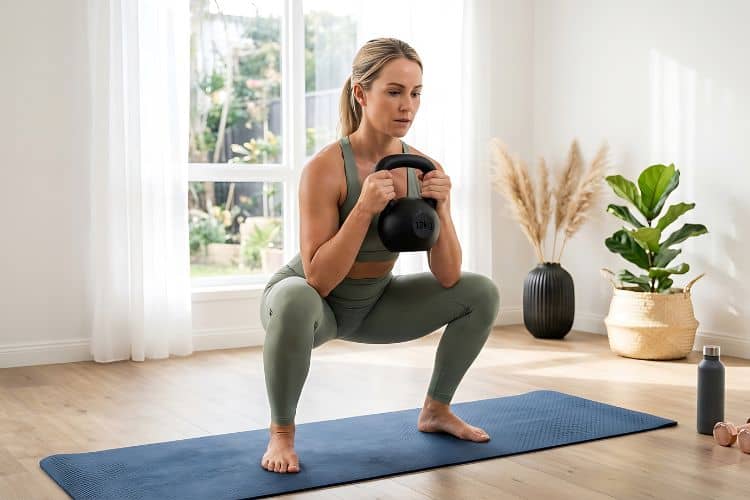
Perform three sets of eight to twelve repetitions. Hold one dumbbell close to your chest with both hands and stand with your feet approximately shoulder width apart. Adjust your stance slightly until you find a position that feels balanced. Keep your entire foot connected to the floor.
Bend your knees and hips together, lowering between your legs as far as you can control comfortably. Let your knees travel in the same general direction as your toes. Stand by pushing through your feet, keeping the dumbbell close and your torso steady. Your knees can move forward naturally; forcing them to remain behind your toes is unnecessary.
Use a controlled lowering phase and a smooth ascent. Finish the set while you could still perform about two additional good repetitions. If holding the dumbbell limits you before your legs do, use a lighter weight or an alternative loading position you already know well.
For a beginner modification, squat toward a sturdy chair and stand again without rocking. Touch the seat gently rather than dropping onto it. This gives you a repeatable depth and helps you practice balance before using more resistance.
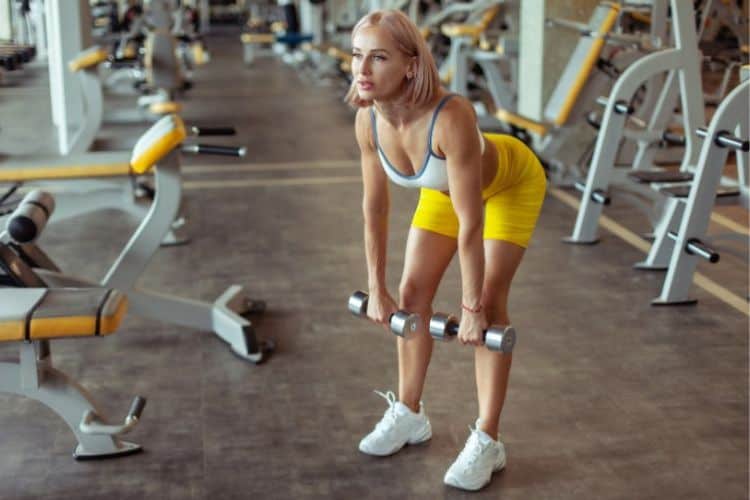
Perform three sets of eight to twelve repetitions. Stand with dumbbells in front of your thighs, feet roughly hip width apart, and knees slightly bent. Draw your hips backward while allowing the weights to move close to your legs. Keep your neck aligned with your torso.
Lower until you feel a comfortable hamstring stretch or reach the limit of your controlled hinge. You do not need to reach the floor. Stand by bringing your hips forward and returning to an upright position without leaning backward at the top.
The Romanian deadlift should look different from a squat. Your knee angle changes relatively little while your hips move backward. If you keep bending your knees deeply, reduce the weight and rehearse the hinge again. Think about maintaining space between your hips and the wall behind you.
Choose a load that lets you feel stable throughout the movement. If your lower back becomes the main limiting factor, shorten the range, reassess your technique, and use lighter dumbbells. Stop an exercise that causes pain rather than trying to finish the planned repetitions.
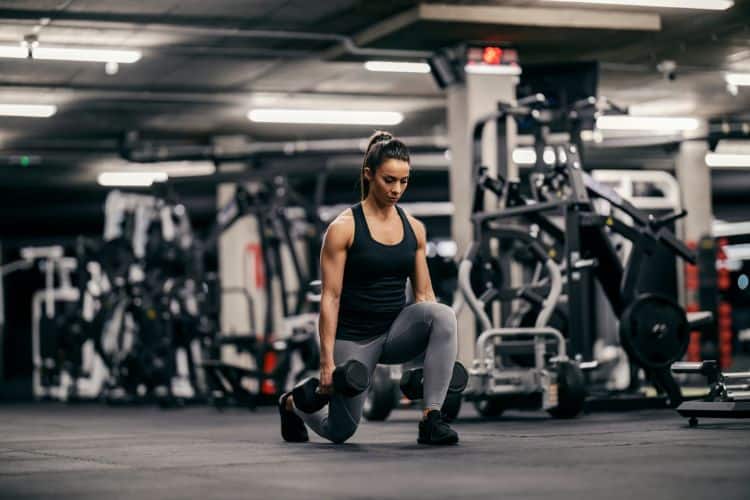
Perform two sets of six to ten repetitions per leg. Stand near a secure support, holding it lightly with one hand if needed. Step one foot backward and bend both knees to lower your body. Push through the front foot to return to standing.
Take a backward step that gives you room to lower without feeling stretched or unstable. Keep your front foot planted and your pelvis facing forward. Work through a comfortable range instead of forcing your rear knee to touch the floor.
You can complete all repetitions on one side before changing sides, allowing a brief pause between legs. Begin with the side that feels less coordinated, then match its repetitions on the other side. Avoid adding extra repetitions to your stronger leg.
If stepping backward feels awkward, use a supported static split squat. Set your feet in a staggered stance and bend your knees without repeatedly moving your feet. Start with bodyweight; add a dumbbell only when you can control the movement consistently.
Perform two sets of ten to fifteen repetitions. Lie on your back with knees bent and feet flat on the floor. Brace your midsection gently and lift your hips until your shoulders, hips, and knees form a comfortable line. Pause briefly, then lower with control.
Keep the movement centered at your hips. Avoid gaining extra height by arching your lower back. Adjust your foot position if you feel cramped or cannot maintain steady pressure through your feet. Your range may be smaller than someone else’s and still be useful.
Begin with bodyweight. When that becomes easy, place a dumbbell across your hips with appropriate padding and hold it securely. Add resistance gradually rather than balancing an awkwardly heavy weight that distracts you from the exercise.
Perform two sets of twelve to twenty repetitions. Stand beside a stable support with your feet about hip width apart. Rise onto the balls of your feet, pause briefly, then lower your heels slowly to the floor.
Keep your ankles moving smoothly and avoid bouncing through the bottom position. Start with both feet working together. Hold a dumbbell in your free hand when bodyweight repetitions become comfortable, keeping enough contact with your support to stay balanced.
You do not need an elevated step for this routine. Working from the floor keeps setup simple and lets you focus on control. Finish when you can no longer maintain a similar height and steady rhythm, even if you have not reached twenty repetitions.
The best starting weight allows you to complete the lower end of the repetition range with good form and a little effort left over. For most sets, aim to finish with about two or three repetitions in reserve. This means you believe you could complete a few more clean repetitions if required.
Use different weights for different exercises when possible. Your Romanian deadlift may require heavier dumbbells than your reverse lunge, while calf raises may begin with bodyweight. There is no single dumbbell size that makes the entire session equally challenging.
Use a simple double progression method. Start near the lower end of the prescribed repetition range and gradually add repetitions while keeping the same weight. When every set reaches the upper end with consistent technique and some effort remaining, try the smallest practical increase in resistance.
For example, your goblet squat might progress from three sets of eight repetitions to three sets of nine, then ten, over several workouts. Once you can complete three controlled sets of twelve, increase the dumbbell weight and return toward eight repetitions. Progress does not need to happen every session.
Avoid increasing weight, adding sets, and shortening rest periods simultaneously. Changing one factor makes it easier to identify what your body can recover from. It also keeps the workout focused on strength instead of turning every exercise into a test of exhaustion.
A simple three day schedule could include this leg workout on Monday, an upper body session on Wednesday, and a moderate full body workout on Friday. If Friday includes leg exercises, use fewer lower body sets than you performed on Monday and assess how well you have recovered.
A four day schedule can alternate lower and upper body sessions: lower body Monday, upper body Tuesday, lower body Thursday, and upper body Friday. Your second lower body workout should reflect your experience and recovery. Beginners may repeat a reduced version, while experienced lifters can vary the exercises or emphasis.
Leave at least a day between demanding lower body sessions, and allow more recovery when your performance or movement remains affected. Comfortable walking and easy mobility can fit between lifting days. Avoid scheduling challenging hill sprints or another intense leg workout simply because they use different equipment.
Beginners should use the reduced set prescription and spend extra time rehearsing each exercise. Take support during lunges, use a chair target for squats, and perform bridges without added weight. A shorter session that you can repeat is a useful foundation.
After several comfortable workouts, add one set to an exercise rather than expanding everything at once. Mild muscle soreness can occur, but severe soreness is not a target. Your next session should show that you can move well and perform the exercises with control.
Experienced lifters can challenge the same routine with heavier dumbbells and more precise execution. Before adding extra exercises, make the existing working sets productive. Record repetitions, resistance, and how difficult the final repetitions felt.
Recovery begins with a schedule you can sustain. Get adequate sleep, eat regular meals that support your activity, and drink according to your needs. Include protein containing foods throughout the day and enough overall food to train productively. No specific supplement is required to follow this workout.
Avoid judging the session by sweat, soreness, or how shaky your legs feel afterward. Better signs of progress include steadier lunges, improved squat control, and more repetitions with the same weight. Training hard matters, but consistent technique gives that effort direction.
Another common mistake is rushing unilateral exercises. Give each leg attention and use support when balance interferes with strength training. Also avoid adding a demanding finisher after every session. If the planned sets are already challenging, more fatigue may make recovery harder without helping your next workout.
Yes. Dumbbells, floor space, and a stable support are enough. Begin with bodyweight versions when necessary and increase resistance as your movement becomes more consistent. Keep your exercise area clear so stepping backward is comfortable.
It can help you train lower body strength and muscle, but it cannot target leg fat. Changes in appearance depend on your broader habits and individual physiology. Track strength and consistency alongside any body composition goals.
You can, provided the total workload suits your experience and you recover between sessions. Start with one focused leg day or two reduced sessions. Add training gradually when your performance, energy, and movement remain steady.
The most useful SplitLean leg day workout is one you can perform consistently and progress deliberately. Start with appropriate resistance, practice each movement, and record your sets. Over time, those simple habits turn a collection of exercises into a dependable lower body training plan.
Download The Free PDF SplitLean leg day workout
To complement your SplitLean leg day workout, explore our SplitLean 4-Day Strength Plan for a weekly upper and lower body schedule, or follow the SplitLean 8-Day Progressive Strength Plan for structured progression. Our SplitLean 8-Day Strength and Toning Workout includes dedicated glute and leg training, while the 45-Minute Dumbbell Leg Day Workout offers another lower body routine for home or gym. Short on time? Try our 20 Minute At Home Dumbbell Leg Workout for a shorter session targeting your legs and glutes.
Stay up to date on the latest women’s health, fitness and lifestyle trends and tips.
