


Sign up for workout ideas, training advice, reviews of the latest gear and more.

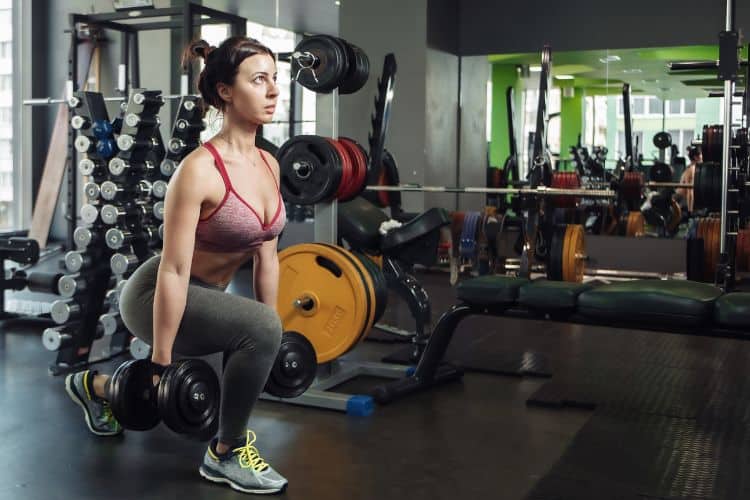

Finding time to exercise can be challenging when work, family responsibilities, errands, and everyday commitments fill your schedule. The good news is that an effective strength-training session does not have to last an hour. With the right exercises and a focused approach, 15 minute strength workouts for women can help build muscle, improve endurance, increase confidence, and support long-term health.
A short strength workout is especially useful for busy women who want an efficient routine they can complete at home or in the gym. These workouts use compound exercises that train several muscle groups at once, allowing you to accomplish more in less time. You can use dumbbells, resistance bands, kettlebells, or simply your body weight, depending on your fitness level and available equipment.
Consistency is more important than completing an occasional marathon workout. A focused 15-minute routine performed three or four times per week can provide a practical foundation for getting stronger. Whether you are a beginner, returning to exercise, or looking for quick sessions to supplement a longer training program, the workouts below can help you make strength training part of your regular routine.
A 15 minute strength workout can be effective when it is structured around purposeful movements, appropriate resistance, good technique, and gradual progression. While longer workouts provide room for additional exercises and recovery, short workouts eliminate wasted time and encourage you to concentrate on the movements that deliver the greatest benefit.
Compound exercises are particularly valuable in short sessions. A squat, for example, strengthens the quadriceps, hamstrings, glutes, and core. A dumbbell row works the upper back, shoulders, arms, and postural muscles. Combining these movements creates an efficient full-body workout without requiring a long list of isolation exercises.
The effectiveness of a short routine also depends on effort. The final repetitions of each set should feel challenging while still allowing you to maintain proper form. If every repetition feels easy, the resistance may be too light or the exercise may need to be progressed. When you consistently challenge your muscles, they receive a reason to adapt and become stronger.
Short sessions can also improve exercise adherence. It is often easier to commit to 15 minutes than to wait for a completely free hour. Once short workouts become part of your schedule, you can maintain momentum even during especially busy weeks.
Strength training offers benefits that extend far beyond appearance. It helps women develop the physical capacity needed for daily activities, recreational sports, and healthy aging. Carrying groceries, lifting children, climbing stairs, and completing household tasks may feel easier as muscular strength improves.
Resistance exercise supports muscle maintenance and development. Preserving lean muscle becomes increasingly important with age because muscle mass and strength can gradually decline when they are not challenged. Regular strength workouts can help women remain active, capable, and independent through different stages of life.
Strength training also supports bone health because resistance places controlled stress on the skeletal system. Weight-bearing exercises such as squats, lunges, presses, and loaded carries can be valuable components of a well-rounded fitness program.
Another important benefit is improved joint stability. Strong muscles help support the hips, knees, shoulders, and spine. Properly performed strength exercises can improve balance, coordination, posture, and overall movement quality.
Strength workouts may also contribute to healthy body composition. Building and preserving muscle supports an active metabolism, while the workouts themselves use energy. For sustainable fat loss, strength training should be combined with balanced nutrition, adequate sleep, stress management, and regular daily movement.
You do not need an elaborate home gym to complete a productive 15 minute strength workout. A pair of dumbbells is one of the most versatile options because dumbbells can be used for lower-body, upper-body, and core exercises. Ideally, you should have access to more than one weight so you can use heavier resistance for movements such as squats and rows and lighter resistance for shoulder exercises.
If you do not have dumbbells, resistance bands, a kettlebell, or carefully selected household objects can provide resistance. Bodyweight exercises are also effective, especially for beginners. Squats, reverse lunges, glute bridges, incline push-ups, planks, and controlled tempo exercises can all be challenging without weights.
You will also need a clear exercise area, comfortable clothing, supportive footwear when appropriate, and a timer. A chair or sturdy bench can be helpful for supported squats, incline push-ups, step-ups, and balance assistance.
Choose a weight that allows you to complete every repetition with controlled form but makes the final two or three repetitions challenging. The correct resistance will differ between exercises. Most women can use more weight for a squat or deadlift than for a lateral raise or overhead press.
If your form begins to break down early in a set, reduce the resistance or number of repetitions. If you finish every set and feel as though you could easily complete many more repetitions, consider using a heavier weight, slowing the movement, or adding repetitions during your next session.
Beginners should prioritize learning the movement patterns before trying to lift as much weight as possible. Strength training should feel challenging, but it should not produce sharp pain. Stop an exercise if it causes pain, dizziness, or unusual discomfort. Speak with a qualified healthcare professional before beginning a new program if you have an injury, medical condition, are pregnant or postpartum, or have concerns about whether an exercise is appropriate.
Even when time is limited, prepare your body before using challenging resistance. A warm-up does not need to be lengthy. Spend two or three minutes performing movements that raise your body temperature and rehearse the exercises in your workout.
Begin with marching in place, shoulder rolls, and gentle torso rotations. Continue with bodyweight squats, alternating reverse lunges, hip hinges, and arm circles. If you are performing a weighted exercise, complete several practice repetitions without weight or with a lighter weight.
You can include the warm-up within your 15-minute window by using the first two minutes for dynamic movement and completing a focused 12- or 13-minute strength circuit. Avoid long static stretches immediately before lifting. Save relaxed, sustained stretches for after the workout or a separate mobility session.
This full-body dumbbell routine trains the legs, glutes, back, shoulders, arms, and core. After a brief warm-up, set a timer for 12 minutes. Perform 10 repetitions of each exercise, moving with control. Rest as needed and repeat the circuit until the timer ends.
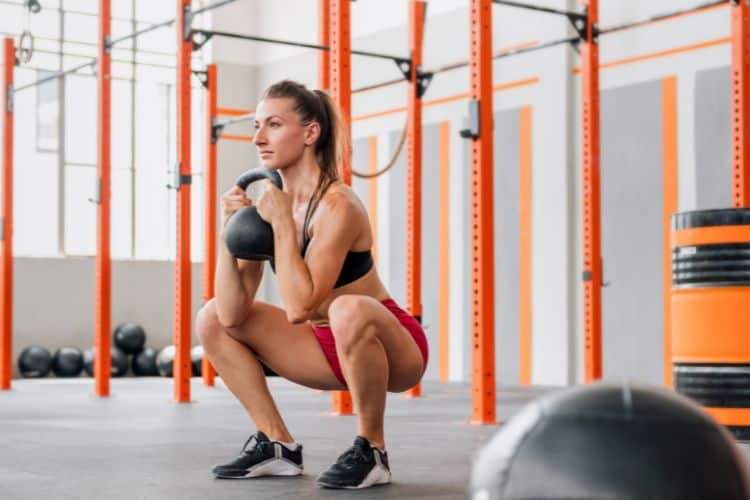
Hold one dumbbell vertically in front of your chest. Position your feet approximately shoulder-width apart and keep your chest lifted. Bend your knees and push your hips down and back as if sitting into a chair. Lower only as far as you can while maintaining a stable torso and comfortable foot position. Press through your feet to stand and squeeze your glutes at the top.
Hold the dumbbells in front of your thighs with your palms facing your body. Keep your knees slightly bent and send your hips backward while lowering the weights close to your legs. Maintain a neutral spine and stop when you feel tension in your hamstrings. Drive your hips forward to return to standing. The movement should come primarily from the hips rather than from squatting deeply.
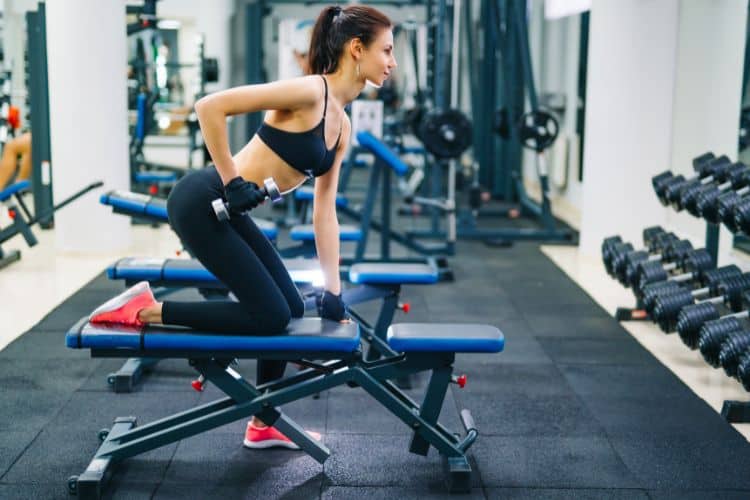
Hold the dumbbells with your arms extended and hinge forward at the hips. Brace your core and keep your back neutral. Pull the weights toward the sides of your torso while drawing your shoulder blades back. Lower the weights slowly until your arms are extended again. Avoid shrugging your shoulders or using momentum to lift the dumbbells.
Lie on your back with your knees bent and a dumbbell in each hand. Position your upper arms at a comfortable angle away from your body. Press the dumbbells above your chest until your arms are extended without forcefully locking your elbows. Lower the weights until your upper arms gently reach the floor, pause, and press again.
Lie on your back with your knees above your hips and your arms extended toward the ceiling. Brace your midsection and slowly lower one arm and the opposite leg without allowing your lower back to arch excessively. Return to the starting position and alternate sides. Use body weight or hold a light dumbbell with both hands if you need more resistance.
This beginner-friendly bodyweight workout is an accessible option when you do not have equipment. Perform each exercise for 40 seconds, followed by 20 seconds of rest. Complete three rounds of the five-exercise circuit.
Stand in front of a stable chair with your feet about hip- to shoulder-width apart. Push your hips backward and lower yourself toward the chair. Lightly touch the seat without completely relaxing, then press through your feet to stand. As your strength improves, use a lower chair or perform free-standing squats.
Place your hands on a wall, countertop, or sturdy bench. Walk your feet backward until your body forms a straight line. Bend your elbows and lower your chest toward the surface while keeping your core engaged. Push through your palms to return to the starting position. A higher surface makes the exercise easier, while a lower surface increases the challenge.
Stand tall and step one foot backward. Bend both knees while keeping most of your front foot firmly planted. Press through the front foot to return to standing and change sides. Hold a wall or chair for balance if needed. If lunges are uncomfortable, substitute supported split squats or additional chair squats.
Lie on your back with your knees bent and your feet planted on the floor. Brace your core, press through your feet, and lift your hips. Pause briefly while contracting your glutes, then lower your hips under control. Avoid excessively arching your lower back at the top.
Begin on your hands and knees with your hands beneath your shoulders and knees beneath your hips. Extend one arm forward and the opposite leg backward while keeping your hips level. Return to the starting position and alternate sides. Move slowly to challenge your core stability and coordination.
An upper-body routine can strengthen the chest, back, shoulders, and arms while supporting better posture and everyday lifting ability. Complete three rounds of the following exercises. Perform eight to 12 repetitions per movement and rest for approximately 20 to 30 seconds when needed.
Begin with a one-arm dumbbell row, completing all repetitions on one side before switching. Follow it with a dumbbell floor press or incline push-up. Next, perform a seated or standing dumbbell shoulder press while keeping your ribs stacked over your hips. Complete dumbbell biceps curls without swinging the weights, and finish with an overhead triceps extension using one dumbbell.
Select resistance based on the individual movement instead of expecting one pair of weights to be perfect for every exercise. Your back and chest muscles may handle considerably more resistance than your arms and shoulders.
This lower-body session focuses on the glutes, quadriceps, hamstrings, and calves. Perform 45 seconds of work followed by 15 seconds to transition. Complete three rounds of five exercises.
Start with goblet squats, followed by alternating reverse lunges. Perform dumbbell Romanian deadlifts as the third exercise and glute bridges as the fourth. Finish each round with standing calf raises. Hold dumbbells at your sides if bodyweight calf raises are too easy.
Move at a steady pace, but do not race. Strength exercises are most effective when you control both the lifting and lowering portions of each repetition. Rest briefly if fatigue prevents you from maintaining proper technique.
Women who enjoy faster-paced training can combine resistance exercises with low-impact cardiovascular movements. Perform each exercise for 40 seconds and rest for 20 seconds before moving to the next. Complete three rounds.
Use a dumbbell squat-to-press, alternating reverse lunges, bent-over rows, low-impact mountain climbers, and kettlebell or dumbbell deadlifts. Keep the resistance manageable because the continuous format will increase fatigue.
A strength-and-cardio circuit can raise your heart rate, but speed should never replace control. Use deliberate repetitions and modify high-impact movements when necessary. Fat loss cannot be targeted to one area of the body, so approach this workout as a way to improve total-body fitness rather than as a shortcut for losing fat from a particular location.
A practical starting point is three 15-minute strength workouts per week on nonconsecutive days. A beginner might perform full-body routines on Monday, Wednesday, and Friday, allowing time for recovery between sessions.
Women with more experience can train four or five days per week by alternating muscle groups. For example, you could perform an upper-body workout on Monday, a lower-body workout on Tuesday, rest or walk on Wednesday, and repeat the schedule on Thursday and Friday.
The best weekly schedule depends on training experience, workout intensity, recovery, and other physical activity. Muscles need time to adapt after challenging exercise. Persistent soreness, declining performance, sleep disruption, or unusually low motivation may indicate that you need additional recovery.
Progressive overload means gradually increasing the demands placed on your muscles. Without progression, the body becomes accustomed to the same routine and results may slow.
One simple method is to increase the weight when you can complete the top of your repetition range with consistent form. You could also perform one or two additional repetitions, add another round, shorten rest periods slightly, or choose a more difficult exercise variation.
Slowing the lowering phase is another effective option. Taking three seconds to lower into a squat or bring the dumbbells down during a press increases time under tension without requiring heavier equipment. Pausing at the most challenging portion of an exercise can produce a similar effect.
Change only one or two variables at a time. Progress should be gradual enough that technique remains stable. Keeping a workout log with the exercises, weights, repetitions, and rounds completed can make improvements easier to track.
One common mistake is moving so quickly that form deteriorates. A 15-minute time limit should create focus, not panic. Controlled repetitions allow the target muscles to work and may reduce unnecessary stress on the joints.
Another mistake is choosing weights that are either too light or too heavy. Extremely light resistance may not create enough challenge, while excessively heavy weights can shorten your range of motion and compromise technique.
Avoid performing the exact same routine indefinitely. Your body benefits from consistency, but exercises and resistance should gradually evolve as you become stronger. You do not need a completely new workout every day; instead, follow the same basic program long enough to measure progress and then make intentional adjustments.
Do not ignore recovery and nutrition. Strength development requires sufficient protein, balanced meals, hydration, and sleep. Exercise is the stimulus, while recovery provides the opportunity for your body to adapt.
A balanced eating pattern can support energy, performance, and muscle recovery. Build meals around a source of protein, nutrient-rich carbohydrates, vegetables or fruit, and healthy fats. Protein-rich choices may include eggs, Greek yogurt, cottage cheese, chicken, turkey, fish, lean meat, tofu, tempeh, beans, lentils, and protein-enriched foods.
There is no requirement to eat immediately after every short workout. However, having a balanced meal containing protein and carbohydrates within the next several hours is a practical approach for most women.
Hydration also affects exercise performance. Drink water regularly throughout the day rather than attempting to catch up immediately before training. After the workout, spend a few minutes walking slowly and allowing your breathing to return to normal. Gentle mobility work may feel helpful, particularly if you have been sitting for much of the day.
Sleep is equally important. Consistently getting adequate rest supports recovery, appetite regulation, energy, and training quality. When sleep has been poor, consider reducing the weight or intensity instead of forcing an all-out session.
A simple weekly structure can prevent uncertainty and help you train your whole body. On Monday, complete the full-body dumbbell workout. On Tuesday, take a walk or perform light mobility exercises. On Wednesday, complete the lower-body routine. Use Thursday as a recovery day, then perform the upper-body workout on Friday. On Saturday, choose the bodyweight or strength-and-cardio circuit if you feel recovered. Rest or enjoy gentle activity on Sunday.
This schedule is flexible. If three workouts fit your lifestyle better than four, complete three. If you miss a day, resume the schedule when you can instead of trying to compensate with an excessively long or punishing session.
Yes. A 15-minute session can help beginners practice foundational movements without becoming overwhelmed. Begin with bodyweight exercises or light resistance, allow adequate rest, and focus on consistent technique. Increase the challenge gradually as your coordination and strength improve.
It is possible to build muscle with short workouts when the exercises challenge the muscles, training is consistent, and the program includes progressive overload. Your results will also depend on nutrition, recovery, training experience, and total weekly exercise volume.
Strength workouts can support a weight-management plan by helping preserve or develop muscle and increasing physical activity. However, weight loss depends on overall energy balance and cannot be guaranteed by one type of workout. Combine strength training with balanced nutrition, regular walking or other enjoyable movement, adequate sleep, and sustainable lifestyle habits.
In most cases, completing a short, focused session is more beneficial than skipping movement because you do not have time for a long workout. Short workouts maintain consistency and reinforce the habit of exercising. Rest is still appropriate when you are ill, injured, or insufficiently recovered.
No. Dumbbells make it easier to adjust resistance, but bodyweight movements and resistance bands can also produce challenging workouts. You can progress bodyweight exercises through slower repetitions, pauses, additional repetitions, increased range of motion, and more advanced variations.
Fifteen minutes is enough time to complete a focused workout that strengthens major muscle groups and moves you closer to your fitness goals. The key is selecting efficient exercises, using an appropriate level of resistance, maintaining good form, and training consistently.
Start with two or three workouts each week and choose movements that match your current ability. Record your weights and repetitions so you can gradually increase the challenge. Some days you may have time for a longer session, while on other days 15 minutes may be all that fits. Both can contribute to meaningful progress.
The most effective workout plan is not necessarily the most complicated or time-consuming one. It is the plan you can perform consistently, recover from, and progress over time. With a pair of dumbbells, a small amount of space, and a focused quarter hour, women can build a practical strength-training routine that supports stronger muscles, healthier movement, and greater confidence.
For more ways to stay active on a busy schedule, try this Full Body Dumbbell Workout For Women or follow a Beginner Strength Training Routine For Women to master the basics. On days when equipment is unavailable, use this No Equipment Strength Training Workout to keep moving at home. You can also increase training intensity with a Full Body Superset Workout For Women and strengthen your midsection with this quick core workout.
Stay up to date on the latest women’s health, fitness and lifestyle trends and tips.
