


Sign up for workout ideas, training advice, reviews of the latest gear and more.

A low-impact dumbbell EMOM workout gives your training a clear rhythm: start an exercise, complete controlled repetitions, and recover before the next minute begins. You do not need jumping jacks, burpees, or complicated combinations to make a workout productive. With a pair of dumbbells, a timer, and a few carefully chosen movements, you can train your legs, back, chest, and core in one manageable session.
This routine is designed for women who want an organized home workout with strength and conditioning in the same session. It can also work for other adults who can comfortably perform the exercises. The movements stay grounded, the repetition targets are adjustable, and the built-in recovery gives you opportunities to reset your breathing and technique.
The complete session takes 30 minutes: five minutes to warm up, 20 minutes of EMOM training, and five minutes to cool down. Throughout the workout, the goal is consistent movement quality. Finish each set with enough energy to prepare calmly for the next exercise.
EMOM stands for “every minute on the minute.” At the start of each minute, you begin a prescribed exercise and complete a set number of repetitions. Whatever time remains becomes your rest period. When the next minute starts, you move to the next exercise.
For example, if eight goblet squats take 28 seconds, you have 32 seconds to recover. You do not keep squatting until the minute ends. That distinction makes an EMOM different from a continuous work interval and helps prevent the session from turning into a race.
Low impact refers to the absence of repeated jumping and hard landings. This workout uses squats, hinges, rows, presses, and a stationary loaded hold. Low impact does not mean low effort, and it does not guarantee that every exercise will suit every joint. Weight, technique, range of motion, and individual tolerance still matter.
EMOM describes how a workout is organized; HIIT describes an approach involving high-intensity intervals and recovery. An EMOM can be demanding, but it does not automatically qualify as HIIT.
This low-impact dumbbell routine is intended to feel moderately challenging and repeatable. You should finish most sets knowing you could perform another two or three good repetitions. If you are gasping, rushing transitions, or losing control of the weights, reduce the demand.
The appeal of this format is its simplicity. You always know when to start, what to perform, and when to rest. Instead of deciding your next move while tired, you follow the same five-minute sequence four times.
The exercise selection also spreads the work across different movement patterns. A squat challenges the lower body, a row trains pulling strength, a hinge emphasizes the back of the legs, a press works the upper body, and a loaded hold challenges your ability to maintain position. That variety makes the session practical for limited training time.
A small exercise area and a few dumbbells are enough for this routine. There are no jumps, running intervals, or overhead lifts. This makes the session convenient when noise, ceiling height, or personal preference limits your exercise choices.
However, you still need room to lie down and stand up safely. Place the timer where you can see it without twisting. Keep your floor clear, and set your dumbbells down deliberately rather than dropping them between exercises.
A repeatable workout creates a useful reference point. You can record your weights, repetitions, and remaining rest, then compare future sessions. Improvement might mean cleaner squats, steadier breathing, or completing the same work with less fatigue.
The timer also gives the session a defined endpoint. You can plan around a 30-minute appointment with yourself, making it easier to fit strength work into a busy week.
You will need one or two pairs of dumbbells, a timer that signals every minute, and an exercise mat if you prefer cushioning for the floor press. A sturdy chair or bench is optional for squat depth guidance and row support.
Ideally, have a lighter pair for rows and presses and a heavier option for squats and Romanian deadlifts. Using one pair is still possible, but select weights that suit your least confident movement. You can hold only one dumbbell for the goblet squat and suitcase hold.
Before starting the timer, rehearse the floor transition and decide where each weight will sit. If getting down and up takes longer than expected, use the standing alternative described below or add an extra transition minute. A slightly longer session is preferable to a hurried transfer.
Choose the load through a practice set rather than a universal weight recommendation. Perform the lower end of the prescribed repetitions with controlled technique. The last repetition should require attention without straining, swinging, or breath-holding.
If you could easily perform many more repetitions, the weight may be light for that movement. If you cannot finish within 35 seconds while moving comfortably, reduce the weight or repetitions. The right choice lets you repeat the set across all four rounds.
Spend the first minute walking around your room or marching gently in place. Keep the pace comfortable and let your arms move naturally. This is preparation, so there is no need to chase a high heart rate.
During the second minute, practice bodyweight squats to a comfortable depth. A chair behind you can provide a consistent target. Stand tall between repetitions and notice whether your feet feel stable.
Use the third minute for unloaded hip hinges. Soften your knees and move your hips backward while keeping your torso long. Return to standing by bringing your hips forward without leaning backward.
During the fourth minute, alternate gentle shoulder circles with unloaded rowing motions. Finish with a few wall push-ups if they feel comfortable. Use the fifth minute to rehearse several light repetitions of the main movements and check your equipment placement.
Complete the following five-minute sequence four times. Minute one is the goblet squat, minute two is the bent-over row, minute three is the Romanian deadlift, minute four is the floor press, and minute five is the suitcase hold.
Begin each exercise at the start of its assigned minute. For the repetition-based exercises, aim to finish in approximately 20–35 seconds, leaving at least 25 seconds for recovery and setup. Stop working at 35 seconds even if you have not completed the planned repetitions.
For the suitcase hold, work for 30 seconds total, including a careful side change, then rest for the remainder. If a transition requires more time, pause the timer. Never perform extra repetitions to make up for a missed target.
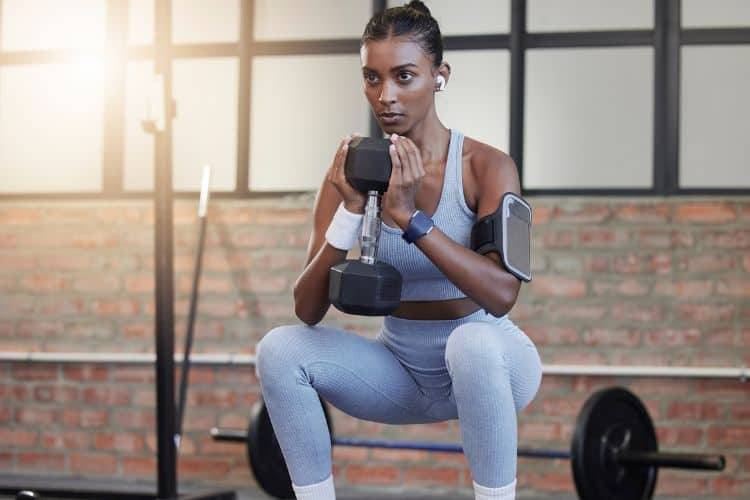
Hold one dumbbell vertically close to your chest, supporting it securely with both hands. Stand with your feet around shoulder width, adjusting slightly until the position feels natural. Sit down between your hips while bending your knees, then press through your feet to stand.
Perform six to eight controlled repetitions. Keep the weight close instead of letting it pull your torso forward. Your knees can travel forward naturally; concentrate on a stable foot position and a comfortable path.
Lower only as far as you can maintain control. Avoid forcing depth or letting the chair become a place to collapse. If using a chair, touch it lightly or sit under control and stand smoothly.
For an easier option, remove the dumbbell and perform bodyweight sit-to-stands. If eight repetitions leave little recovery time, complete six. Progress begins with a repeatable movement pattern.
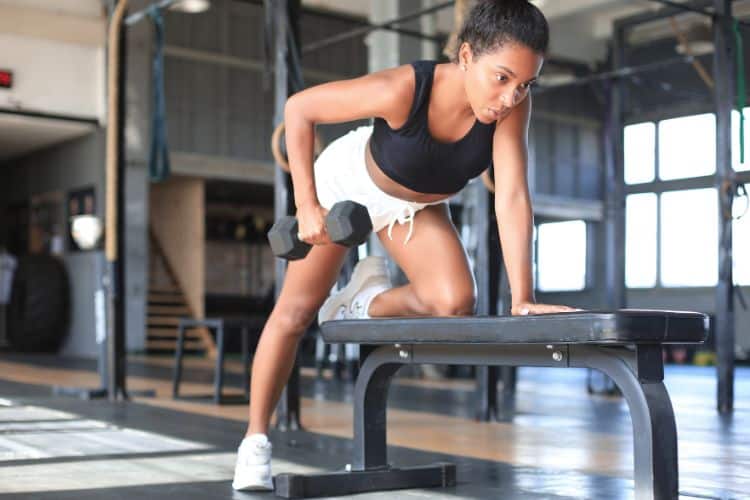
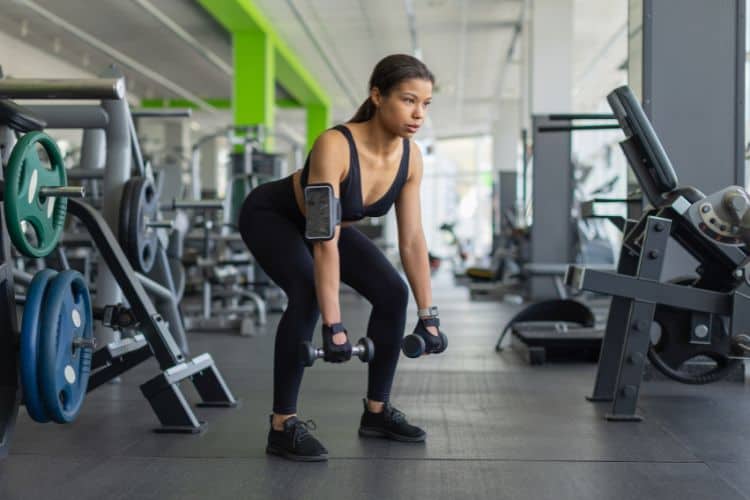
Hold a dumbbell in each hand, soften your knees, and hinge forward from your hips. Let your arms hang below your shoulders while maintaining a comfortable, stable torso position. Pull the weights toward your lower ribs, then lower them with control.
Complete six to eight repetitions. Keep your neck aligned with your torso and avoid lifting your chin to watch the timer. Think about moving your upper arms backward without jerking your shoulders or standing up between repetitions.
If holding the hinge becomes the limiting factor, use a supported one-arm row. Place one hand on a sturdy bench or chair that cannot slide. Perform four repetitions per side, allowing time to switch carefully.
The supported version is also useful if your lower back tires after the squats. Choose the variation that lets your back muscles do the pulling while the rest of your body remains steady.
Stand tall with the dumbbells in front of your thighs. Keep a small bend in your knees and move your hips backward. Allow the weights to travel close to your legs while your torso inclines forward.
Perform six to eight repetitions, lowering only until you feel a comfortable stretch through the backs of your thighs and can still maintain your position. Your dumbbells do not need to touch the floor. Bring your hips forward to return to standing.
Avoid turning the movement into a deep squat. Your knees remain softly bent while most of the motion comes from the hips. At the top, stand normally rather than pushing your hips forward excessively.
To simplify the exercise, use one light dumbbell held with both hands or practice without weight. A smaller hinge that you control is more useful than a deeper one that changes your spinal position.
Lie on your back with your knees bent and feet planted. Position the dumbbells beside your chest with your palms facing inward or slightly forward. Keep your upper arms at a comfortable angle from your torso.
Press the weights upward, then lower slowly until your upper arms touch the floor gently. Complete six to eight repetitions. Keep your wrists aligned with your forearms and avoid bouncing your arms off the ground.
Practice setting up and putting the weights down before the workout. Finish early enough to place them beside you, roll onto your side, and rise without rushing. Use a lighter load if handling the dumbbells feels awkward.
If floor transfers are uncomfortable, substitute six to eight wall or sturdy-counter push-ups. The session still includes an upper-body pushing movement, and you can remain standing throughout.
Stand with one dumbbell beside your right thigh, as if carrying a suitcase. Keep your shoulders level, feet planted, and torso upright. Hold for about 12 seconds, place the weight down carefully, switch sides, and hold for another 12 seconds.
Allow roughly six seconds for the side change, making the complete work period 30 seconds. Rest for the remaining half-minute. If changing hands takes longer, shorten the holds rather than rushing.
Avoid leaning away from the dumbbell or hiking the loaded shoulder. Breathe normally and keep the weight still. The purpose is to resist sideways movement while maintaining a balanced stance.
Use a lighter dumbbell if your grip fails or your posture shifts. You can also hold two light dumbbells evenly at your sides as a simpler starting option.
Beginners can start with two rounds instead of four. With the same warm-up and cooldown, that creates a 20-minute session containing 10 minutes of EMOM work. Build familiarity before adding more rounds.
Use six repetitions for the squat, row, deadlift, and press. Shorten each suitcase hold if needed. Keep the effort around five or six out of ten, with the sense that you could comfortably repeat each movement.
If every minute feels rushed, use a six-minute circuit by inserting a full recovery minute after the suitcase hold. Four rounds then provide 24 minutes of main training, making the entire session 34 minutes. Adjusting the schedule is a valid modification.
Age alone does not determine the right load or exercise variation. Training history, balance, recovery, symptoms, and confidence are more useful guides. An experienced lifter over 50 may use heavier weights than a beginner in her twenties.
Choose chair squats, supported rows, or wall push-ups when those variations improve control. If an exercise causes persistent joint pain, change the movement rather than repeatedly pushing through it. A qualified professional can help tailor training around an injury or diagnosed condition.
The most common EMOM mistake is treating every minute as a challenge to do more. Extra repetitions reduce your recovery and can make later rounds less controlled. Stick to the planned target and let the remaining seconds serve their purpose.
Another mistake is selecting one heavy pair of dumbbells for every movement. Your legs may tolerate more weight than your shoulders or arms. Set up different loads when available, or use a lighter pair and accept that some exercises will feel easier.
A fast timer does not require fast lifting. Lower the weights with control and use a smooth return. If you need to swing a row or bounce a squat to finish, reduce the repetitions.
Breathe through each set. A practical approach is to exhale during the lifting portion and inhale during the lowering portion. Mayo Clinic also emphasizes appropriate loads, controlled technique, and avoiding breath-holding during weight training.
Muscular effort can feel challenging, but sharp pain, dizziness, chest discomfort, or unusual shortness of breath are reasons to stop. Do not use the timer as a reason to continue through concerning symptoms.
Low impact is a description of the movements, not a promise that the workout is suitable for every medical condition. If you have exercise restrictions, adapt the session with guidance from someone familiar with your situation.
During week one, learn the sequence and identify loads that allow generous recovery. Start with two or three rounds if necessary. Record your repetitions and note which movements require a different variation.
During week two, build toward four rounds while keeping the same weights and repetition targets. If you already complete four rounds comfortably, focus on steadier technique rather than automatically adding work.
During week three, add one repetition to selected exercises, staying within the six-to-eight range. Keep the 35-second work limit. Leave movements unchanged if your rest time is already near the minimum.
During week four, consider the smallest available weight increase for one or two exercises. Return to six repetitions after increasing the load. If the heavier dumbbells reduce control or recovery, continue with the previous weight.
When equipment is limited, improve consistency first. A stable hinge, smoother squat, or supported row with less torso movement represents useful progress. You can also add a brief pause to an exercise, provided the set still fits the work window.
Avoid extending every lowering phase so much that the set fills the minute. If your weights eventually become too light, a traditional strength session with longer rests may offer more room to progress.
Start with two sessions weekly on nonconsecutive days. For example, train on Monday and Thursday, with walking or other comfortable activity between sessions. This gives you time to assess soreness and energy before repeating the workout.
Some people may eventually tolerate three weekly sessions, but additional frequency is optional. Account for other strength workouts, demanding sports, and your recovery. Mayo Clinic recommends allowing recovery between sessions that train the same muscle groups.
This routine can contribute to an active lifestyle and provide a structured strength-training stimulus. However, it does not guarantee a particular calorie burn or rate of fat loss. Body size, load, effort, eating patterns, and overall activity influence outcomes.
Track performance alongside any body-composition goals. Becoming stronger, feeling more capable, and completing workouts consistently are meaningful results even when the scale changes slowly.
Use the first two minutes to walk slowly and let your breathing settle. Put the dumbbells away once you feel steady, using the same careful lifting technique you practiced during training.
Spend the remaining three minutes on comfortable movements or gentle stretches for your chest, hips, calves, and thighs. Avoid forcing range or bouncing. The cooldown provides a calm transition back to your day; it does not need to become another workout.
Stop at the work limit and take your rest. Reduce the next round by one or two repetitions or use a lighter weight. Do not carry unfinished repetitions into the following minute.
Yes. Replace the floor press with wall or sturdy-counter push-ups. All other exercises are already standing. Keep the same minute order, repetition targets, and recovery rules.
Soreness is not the goal. Use consistent attendance, controlled repetitions, suitable effort, and gradual progress to judge your training. If soreness interferes with ordinary activities or your next session, reduce the workload.
It is a practical full-body session, but no single routine covers every goal. Combine it with activity you enjoy and consider more specialized programming if your priorities include maximal strength, endurance events, or sport performance.
A low-impact dumbbell EMOM workout makes training straightforward: perform a manageable set, recover, and repeat. Start with weights you control, protect your rest periods, and choose exercise variations that fit your body and space. With a repeatable plan and patient progression, these 30 minutes can become a dependable part of your weekly routine.
Looking for more ways to complement your low-impact dumbbell EMOM workout? Start with our Beginner Dumbbell Workout Plan for Women to practice foundational movements, or try our 15-Minute Low-Impact Dumbbell Workout when time is limited. For another interval format, explore our 20-Minute Low-Impact HIIT Workout With Dumbbells. Add variety with our 30-Minute Dumbbell Isometric Workout, and learn how to gradually increase your training challenge with our Progressive Overload Dumbbell Workout Plan.
Stay up to date on the latest women’s health, fitness and lifestyle trends and tips.
