


Sign up for workout ideas, training advice, reviews of the latest gear and more.

If you want an efficient workout that raises your heart rate, strengthens your entire body, and feels kinder to your joints, a 20 minute low impact HIIT workout with dumbbells is an excellent choice. This routine combines controlled strength exercises with short work intervals, allowing you to challenge your muscles and cardiovascular system without running, jumping, or performing high-impact moves. It is practical for beginners, busy women, people returning to exercise, and experienced exercisers who want a joint-friendly training day.
Low impact does not mean low effort. By using dumbbells, purposeful movement, and limited rest, you can create a demanding full-body workout in a small space. The key is to move with control, choose weights that match your ability, and maintain consistent effort through every interval. In just 20 minutes, you will train your legs, glutes, back, chest, shoulders, arms, and core while improving muscular endurance and overall conditioning.
High-intensity interval training, commonly called HIIT, alternates challenging work periods with easier recovery periods. Traditional HIIT often includes jumping jacks, burpees, sprinting, or jump squats. A low impact HIIT workout removes the jumping and keeps at least one foot connected to the floor, but it preserves the interval structure and energetic pace.
Adding dumbbells makes the workout especially effective because resistance training asks the muscles to produce more force. Exercises such as squats, rows, presses, and deadlifts can elevate your heart rate when performed in sequence while also supporting strength development. Instead of creating intensity through impact, you create it through resistance, range of motion, tempo, and exercise selection.
This approach can be useful if jumping bothers your knees, ankles, hips, or pelvic floor. It can also suit apartment workouts because it produces very little noise. However, low impact is not automatically appropriate for every injury or medical condition. If you have pain, a recent injury, balance limitations, or medical concerns, speak with a qualified healthcare professional before beginning a new workout program.
A short dumbbell HIIT session offers more than convenience. Compound movements train several muscle groups simultaneously, which makes each interval productive. A squat-to-press, for example, works the lower body, shoulders, arms, and core while requiring the cardiovascular system to support the entire movement.
The workout can also help build muscular endurance. Repeating controlled movements for timed intervals teaches the muscles to continue working as fatigue develops. Over time, this may make daily activities such as carrying groceries, climbing stairs, lifting household items, and maintaining good posture feel easier.
Low impact training can be easier to recover from than a workout filled with jumps, especially when the dumbbell load is appropriate. That makes it useful between heavier strength sessions or during weeks when you want to stay active without excessive pounding. The format is also highly adjustable. You can use lighter weights, shorten the work periods, reduce the range of motion, or complete the exercises without weights. To progress, you can gradually use heavier dumbbells, improve your technique, or complete more quality repetitions within each interval.
You need one pair of dumbbells and enough room to extend your arms and take a small step backward. An exercise mat is optional. Beginners may prefer light dumbbells that allow excellent control, while more experienced exercisers may need moderate weights. If you own several pairs, keep a lighter pair nearby for upper-body exercises and a heavier pair for squats or deadlifts.
Your ideal weight is challenging but manageable. The last several seconds of an interval should feel difficult, yet you should still be able to maintain stable posture and smooth movement. If you are swinging the weights, holding your breath, rushing repetitions, or losing your balance, reduce the load. Proper form matters more than the number displayed on the dumbbell.
This session includes a three-minute warm-up, a 15-minute main workout, and a two-minute cooldown. The main workout contains five exercises. Perform each exercise for 40 seconds, then use 20 seconds to rest and prepare for the next movement. One complete circuit lasts five minutes. Repeat the circuit three times.
During the first round, learn the movement pattern and establish a sustainable pace. In the second round, focus on consistency and muscular control. During the final round, increase your effort slightly if your form remains strong. You do not need to move as fast as possible. Aim for deliberate repetitions and steady breathing.
Spend the first minute marching in place while gently swinging your arms. Keep your chest tall, relax your shoulders, and gradually lift your knees a little higher. During the second minute, alternate bodyweight good mornings and shallow squats. For the good morning, place your hands behind your head, soften your knees, push your hips backward, and keep your spine long. For the squat, sit your hips down and back within a comfortable range before standing tall.
Use the third minute for alternating reverse toe taps with overhead reaches. Step or tap one foot behind you as you reach both arms upward, return to the center, and switch sides. Move smoothly rather than quickly. By the end of the warm-up, you should feel warmer, more mobile, and ready to handle your dumbbells.
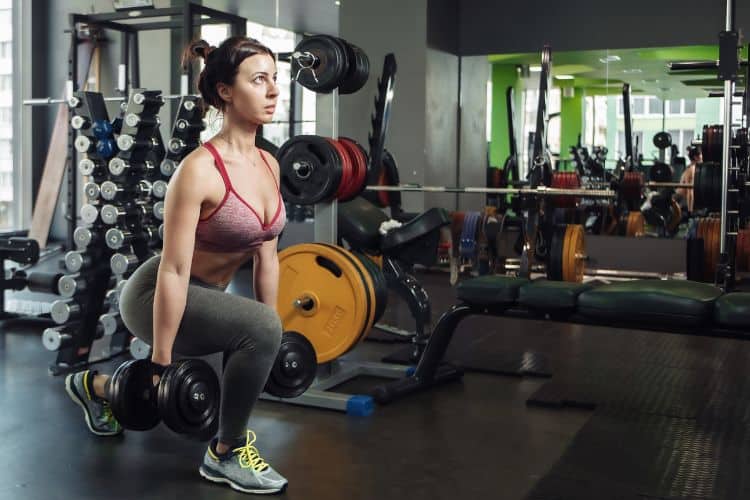
Stand with your feet approximately shoulder-width apart and hold the dumbbells at shoulder height. Brace your core, send your hips backward, and bend your knees to lower into a comfortable squat. Keep your chest lifted and your knees tracking in the same direction as your toes. Drive through your feet to stand, then press one dumbbell overhead. Lower it to your shoulder, perform another squat, and press with the opposite arm.
The alternating press reduces the load placed overhead at one time and requires your core to resist leaning. Exhale as you stand and press. If shoulder pressing is uncomfortable, keep the weights at shoulder level and perform only the squat. You can also squat to a sturdy chair, lightly touch the seat, and stand again. Avoid collapsing onto the chair or allowing your knees to cave inward.
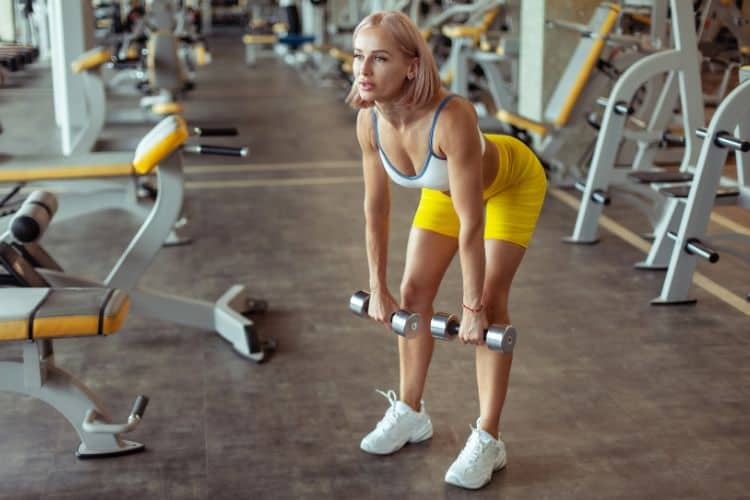
Hold the dumbbells in front of your thighs with your palms facing your body. Stand tall with soft knees. Push your hips backward as the dumbbells travel close to your legs. Stop when you feel tension in your hamstrings and can still maintain a neutral spine. From this hinged position, pull both dumbbells toward your ribs, squeeze your shoulder blades, and lower the weights with control. Drive your hips forward to stand.
This combination trains the hamstrings, glutes, back, arms, and core. Keep your neck aligned with your spine and avoid rounding your shoulders toward the floor. If combining the movements feels complicated, alternate them: perform one deadlift, stand, hinge again, complete one row, and stand. A lighter weight can also help you master the sequence safely.
Hold a dumbbell in each hand with your arms by your sides. Step your right foot backward and lower into a reverse lunge, keeping most of your pressure through the front foot. As you return to standing, bend your elbows and curl the dumbbells toward your shoulders. Lower the weights, then repeat with the left leg.
For a more accessible option, replace the lunge with an alternating backward toe tap. Keep your front knee softly bent, tap one foot behind you, return to the center, and switch sides while continuing the curls. This modification reduces the required range of motion while keeping the entire body active. Avoid rocking your torso during the curl; keep your elbows close to your sides and control the lowering phase.
Lie on your back with your knees bent, feet flat, and one dumbbell in each hand. Position your upper arms on the floor at a comfortable angle, with your forearms vertical. Press both dumbbells above your chest without allowing them to collide. Hold the weights steady, brace your abdomen, and slowly lift one foot a few inches from the floor. Lower it, switch feet, and then complete another chest press.
The press trains the chest, shoulders, and triceps, while the controlled march challenges core stability. Keep your ribs from flaring upward and move your legs slowly. If the march causes your lower back to arch, leave both feet on the floor and perform standard dumbbell floor presses. If getting down to the floor is not suitable, perform a standing dumbbell chest press by holding the weights in front of your chest and pressing them forward with control.
Stand tall with a dumbbell in each hand, arms extended by your sides. Pull your shoulders gently down and back, brace your core, and march in place. Lift one knee at a time without leaning away from the weights. Keep your steps controlled and land softly. Your grip, core, hips, and postural muscles will work together to keep your body stable.
To increase the challenge without adding impact, slow the march and pause briefly when each knee is raised. You can also hold one dumbbell on just one side for 20 seconds and then switch sides, which increases the anti-leaning demand on your core. For additional stability, reduce the knee height or perform alternating heel lifts instead of marching.
After the third circuit, place the dumbbells safely on the floor and walk slowly in place for about 30 seconds. Take deep breaths, allowing your heart rate to settle gradually. Spend the next 30 seconds in a gentle hamstring stretch by extending one foot forward, keeping the heel down, and hinging slightly at the hips before switching legs.
Use another 30 seconds for a chest and shoulder stretch. Clasp your hands behind your back if comfortable, or place one hand against a wall and gently turn your body away. Finish with slow breathing while reaching your arms overhead and lowering them. A longer cooldown is fine if your heart rate remains elevated or your muscles feel tight.
Use a perceived exertion scale from 1 to 10, where 1 feels extremely easy and 10 represents your maximum effort. Most work intervals should feel like a 6 to 8, depending on your training experience. You should be breathing faster and working hard, but you should not feel dizzy, unable to control the weights, or completely breathless.
Beginners can work for 30 seconds and rest for 30 seconds. Another option is to complete only two circuits, creating a shorter session, and gradually add the third circuit as fitness improves. Experienced exercisers can use moderately heavier dumbbells or emphasize slower lowering phases. Avoid sacrificing form simply to achieve a higher heart rate.
One common mistake is choosing weights that are too heavy for timed training. A load that feels appropriate for five repetitions may be excessive during a 40-second interval. Select dumbbells that let you maintain alignment from the first repetition to the last.
Another mistake is treating every exercise as a race. Speed can shorten your range of motion and reduce muscular control. Smooth repetitions with intentional tension are often more effective and safer than rushed movements. Continue breathing throughout each exercise, exhaling during the hardest part of the movement and inhaling during the return.
It is also important to respect pain signals. Muscular effort, warmth, and fatigue are expected, but sharp, pinching, or worsening pain is a reason to stop. Modify the movement or choose a different exercise rather than pushing through joint pain.
To make the workout easier, use one dumbbell instead of two, perform the routine with body weight, reduce each work interval, or extend the rest periods. Keep lunges shallow, use toe taps, and perform floor presses without the march. You may also hold a chair or wall for balance during lower-body movements.
To make it more challenging, increase the dumbbell load slightly while preserving good form. You can slow each lowering phase to three seconds, add a brief pause at the bottom of squats and lunges, or use a single-sided weight to increase core involvement. Progress only one element at a time. Adding weight, speed, range, and extra rounds simultaneously can create more fatigue than your technique can handle.
For many people, two or three low impact HIIT workouts per week is enough to improve conditioning while leaving time for recovery. Avoid training the same muscles intensely every day. A balanced weekly routine may include two dumbbell HIIT sessions, two dedicated strength workouts, several walks or other moderate cardio sessions, and at least one recovery day.
Your ideal schedule depends on your experience, workout intensity, sleep, stress, and other activity. If soreness remains significant or performance declines, add recovery time. Consistency matters more than completing the maximum possible number of sessions.
This workout can support a weight-loss goal by increasing activity, building or preserving muscle, and improving fitness. However, no single workout can guarantee fat loss or target fat from a specific body area. Long-term results depend on overall energy balance, food choices, sleep, stress management, and consistency.
Instead of judging the session only by calories burned, notice improvements in strength, stamina, movement quality, and confidence. Those changes can make it easier to remain active and follow a sustainable routine. Pair your training with balanced meals containing protein, fiber-rich carbohydrates, healthy fats, fruits, vegetables, and sufficient fluids.
A 20 minute low impact HIIT workout with dumbbells proves that an effective session does not require jumping, complicated equipment, or a large amount of time. This routine combines five full-body exercises in a simple interval format that can be adapted to your current fitness level. Focus on controlled repetitions, steady breathing, and weights you can manage safely.
Repeat the workout consistently and track small improvements, such as better balance, a deeper pain-free squat, more controlled repetitions, or slightly heavier dumbbells. Those gradual changes are signs that your body is becoming stronger and more capable. Start at the level that feels right today, recover well, and allow patient progression to turn a short workout into meaningful long-term results.
Continue building your fitness routine by exploring these Lower-Intensity Workouts For Women or learning How To Perform HIIT Workouts Safely As a Beginner. You can also improve your technique with these Full-Body Dumbbell Exercises For Women. When you are ready for another quick session, try this 20-Minute Full-Body HIIT Workout With Weights or progress to one of these 25-Minute Full-Body Dumbbell Circuits.
Stay up to date on the latest women’s health, fitness and lifestyle trends and tips.
