


Sign up for workout ideas, training advice, reviews of the latest gear and more.

A power workout should leave you feeling sharp, not simply exhausted. If you want to lift with more intent, move everyday loads more confidently, and make efficient use of a pair of dumbbells, this superset dumbbell power workout program gives you a clear place to start. It combines controlled strength work with a few fast, technically simple movements. You will train three nonconsecutive days each week for four weeks, repeating the main patterns while gradually improving your technique, load, or speed.
A superset pairs two exercises performed in sequence before a longer rest. In this program, most pairs combine a power-focused movement with a complementary strength or stability movement. For example, you might perform five quick, clean dumbbell push presses, take a brief transition, complete eight supported rows per side, then rest before repeating the pair. The exercises do not have to target the same muscles. In fact, pairing movements that do not compete heavily can help you maintain better technique.
Power depends on both force and speed. A heavier lift performed slowly can develop strength, while a light movement performed quickly may develop speed. For this program, use a manageable dumbbell and try to move the lifting phase quickly without sacrificing your setup, balance, or landing. The lowering phase remains controlled. A rep that gets slower, wobbly, or sloppy is a signal to stop that set, even if a prescribed rep remains.
Complete Workout A on Monday, Workout B on Wednesday, and Workout C on Friday, or choose any three days separated by at least one recovery day. Each session takes roughly 35 to 45 minutes including warm-up and cooldown. On the other days, an easy walk or gentle mobility work is optional. Recovery is part of the program: the goal is to bring good movement quality to the next session.
During week one, learn the pairings and choose weights that allow every rep to look alike. In week two, add one rep to the strength movements where a range is given, or increase the load slightly if the upper end already feels comfortable. In week three, add a set to the first superset of each workout if your form and recovery remain solid. In week four, keep the set count from week three and try a small weight increase on one or two exercises, or use the same weight with cleaner, more decisive repetitions. Change one variable at a time. Never force speed with a weight that makes the movement unpredictable.
For each pair, move from exercise 1 to exercise 2 after roughly 20 to 40 seconds—enough time to get set up, especially if changing weights. Rest 90 to 150 seconds after the second exercise. Repeat the pair for the stated number of rounds before moving on. Take more rest when breathing or technique requires it. This is training, not a race against the clock.
Spend six to eight minutes gradually preparing to move. Begin with one or two minutes of comfortable marching or walking, then make slow shoulder circles and hip circles. Perform eight bodyweight squats to a chair, eight unloaded hip hinges, and six alternating reverse lunges per side, using support if needed. Finish with one light rehearsal set of the first power exercise in that day’s workout. Practice its path and starting position before trying to move quickly.
This session pairs a lower-body power move with upper-body pulling, then builds a controlled squat and press. Allow enough rest after each round to make the next squat-to-stand crisp.
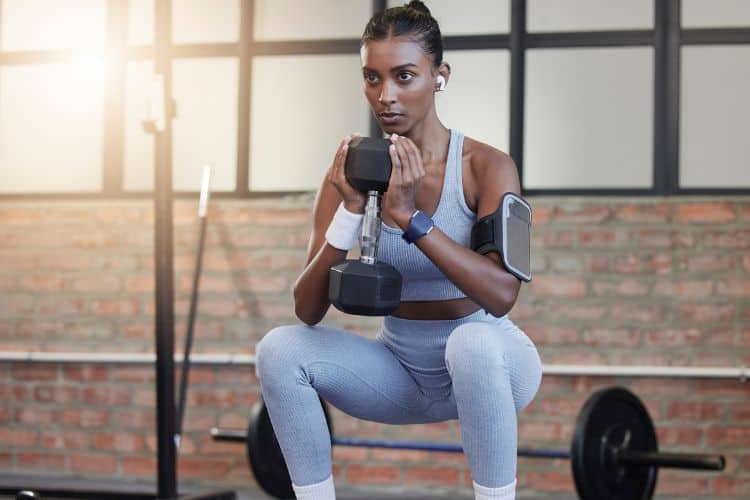
Hold one light dumbbell at your chest. Lower into a goblet squat in two controlled counts, pause briefly if needed, then stand up quickly without leaving the floor. Perform 4 to 6 reps. The movement should feel springy but stable; keep your whole foot connected to the ground. If depth or balance is a challenge, squat to a sturdy chair and rise decisively. Do not collapse onto the seat.
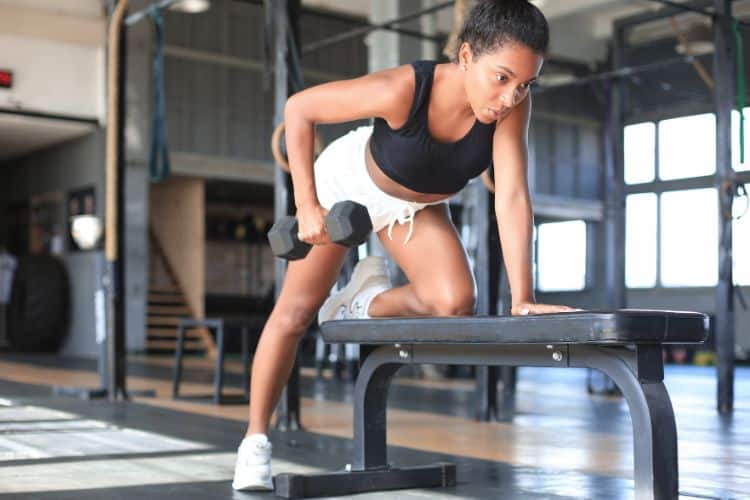
Then place one hand on a secure bench or sturdy surface and perform a one-arm dumbbell row for 8 to 10 reps per side. Pull your elbow toward your hip while keeping your shoulders approximately level. Lower the weight under control. Complete three rounds in weeks one and two and, if ready, four rounds in weeks three and four. Rest 90 to 150 seconds after each row set.
Lie on your back with knees bent, a dumbbell in each hand, and upper arms resting lightly on the floor. Press up with control for 8 to 10 reps, then lower until your upper arms touch down gently. The floor limits the bottom range, which some people find more comfortable than a deep bench press. Keep wrists stacked above elbows and avoid bouncing.
Next, perform 6 to 8 reverse lunges per leg, holding dumbbells at your sides if bodyweight reps feel steady. Step backward far enough to bend both knees comfortably, then push through the front foot to stand. Use a hand on a wall or switch to split squats if balance is limiting. Complete three rounds, resting about 90 seconds after the lunges. Keep these reps controlled; the first superset already provides the power emphasis.
Hold one moderate dumbbell at your side and walk for 30 to 40 seconds per side. Stand tall without leaning toward or away from the weight. Make two passes on each side with enough rest to maintain an even gait. In a small room, march slowly in place while keeping your hips and shoulders level.
Workout B emphasizes a strong hinge and a coordinated press. Set up in an area with clear space around your arms. Start lighter than you think you need for the push press; timing and a stable overhead finish matter more than load.
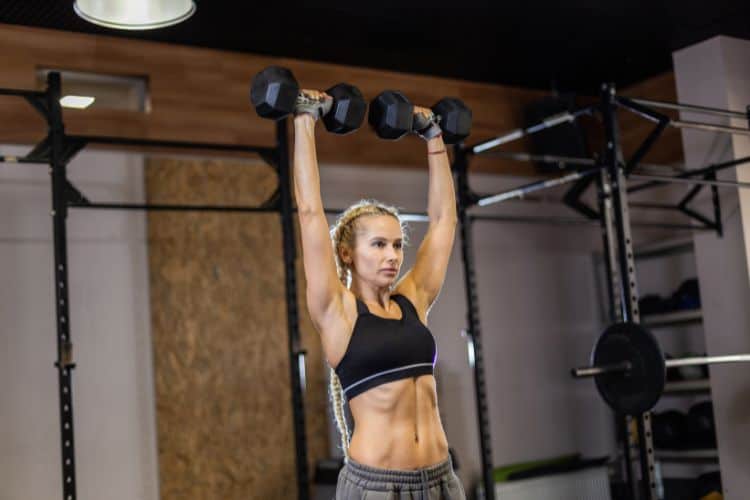
Hold light dumbbells at shoulder height with palms facing in. Bend your knees a few inches while keeping your torso upright, then drive through your feet and press the dumbbells overhead as you stand. Finish with straight arms only if that position is comfortable and controlled. Lower to your shoulders before the next repetition. Perform 4 to 6 reps. This is a small dip and drive, not a deep squat or a backward lean.
Then hold moderate dumbbells at your sides or in front of your thighs and perform 8 to 10 Romanian deadlifts. Soften your knees, move your hips backward, and lower until you feel a comfortable stretch in your hamstrings while maintaining a long spine. Stand by pressing through the floor and bringing your hips forward. Complete three rounds in weeks one and two, progressing to four rounds in weeks three and four if quality holds. Rest 90 to 150 seconds between rounds.
Lie chest down on an incline bench and row two dumbbells for 8 to 12 reps, pausing briefly near your ribs. Without a bench, use a supported one-arm row as in Workout A. Then perform 8 split squats per side, keeping your feet planted in a staggered stance. Lower vertically through a comfortable range and stand with control. You may use bodyweight, hold one dumbbell at your chest, or hold a dumbbell at each side. Complete three rounds and rest 90 to 120 seconds after each pair.
The final training day revisits the hinge and adds a single-leg challenge. You can keep this session entirely low impact. Place an emphasis on repeatable, confident reps instead of trying to finish faster than on earlier days.
Stand with a light or moderate dumbbell in each hand. Hinge to lower the bells along your legs to a comfortable height, bend your knees as needed, and stand quickly while keeping the weights close. Return them to the start under control. Perform 5 to 6 reps. Think of pushing the floor away; do not snap your back or shrug the dumbbells. This is a brisk, grounded deadlift, not a swing.
Lie down for an alternating dumbbell floor press. Press one dumbbell while the other remains near the top or rests in the bottom position according to your control; alternate sides for 6 to 8 reps per arm. Keep your ribs and hips steady. Complete three rounds in weeks one and two, with an optional fourth round in weeks three and four. Rest 90 to 150 seconds between rounds.
Hold one light dumbbell at your chest or leave the weight aside. Step sideways, sit back over the stepping leg, then push off that foot to return to center. Perform 6 to 8 lateral steps per side. Keep the planted knee tracking in line with the toes and choose a small range at first. This strengthens your ability to shift weight sideways, a useful complement to forward and backward exercises.
Follow with a supported one-arm row for 10 to 12 reps per side. If you rowed comfortably earlier in the week, you may use a slightly different elbow path or a slower lowering phase, but avoid twisting to lift a heavier dumbbell. Complete three rounds with about 90 seconds of rest after each pair.
The biggest mistake in a dumbbell power workout is turning every superset into a breathless endurance test. Shorter rest may make a session feel harder, yet it can reduce the speed and precision that give the power exercises their purpose. If your first round is crisp and the next one is slow, recover longer, lower the load, or trim a rep. A consistent set of five is more useful here than a ragged set of ten.
Record the dumbbell weight, completed reps, and a brief note after each exercise. For example, “goblet squat to stand: 20 lb, 3 × 5, all reps quick” tells you more than recording weight alone. Once every set feels controlled and you still have room to move faster, increase the dumbbell by the smallest available step. If the next weight is too large a jump, hold the load steady and improve your squat depth, row control, or press path. Progress does not have to mean adding weight every workout.
Your strength supersets can follow a simple double-progression method. If an exercise calls for 8 to 10 reps, begin with eight good reps per set. Over subsequent sessions, work toward ten at the same load. Once you can do ten across all three sets while leaving a couple of reps in reserve, increase the weight and return to eight. Keep the power movements in the lower rep range and choose quality rather than chasing the highest number.
On each rep, set your feet first, gently brace your midsection, and breathe out through the effort. You do not need to hold your breath for a long time or rush from one exercise to the next. For a squat, keep pressure across your foot and let the knees bend naturally. For a hinge, send the hips back and keep the dumbbells close to the body. For rows, move at the shoulder and elbow without swinging the trunk. For presses, use a path that feels comfortable at the shoulder and finish without flaring the ribs.
Finally, distinguish ordinary effort from pain. Working muscles and elevated breathing are expected; a sharp pain, dizziness, or unusual symptoms are reasons to stop the session. Adjust the range, use the listed substitution, or obtain professional advice when needed. Power training should make you feel capable of repeating the session, not as though you barely survived it.
A beginner can use the schedule after becoming comfortable with basic dumbbell technique. For the first two weeks, use two rounds per superset, omit the optional fourth round, and perform the power exercises with an intentionally quick but modest upward phase. Start with a chair squat, supported row, floor press, and unloaded hinge. A beginner does not need an explosive jump or a heavy push press to benefit from practicing a deliberate, coordinated movement.
Use a weight you can accelerate with control and finish in a stable position. The best load depends on the movement and your experience, so there is no universal number. Use lighter dumbbells for the push press and fast squat or deadlift; choose a moderate load for the slower rows, lunges, and carries. Stop a power set when speed or coordination visibly drops.
They can be, provided the exercise selection and rest periods let you perform strong, consistent sets. This program pairs different movement demands and allows a substantial rest after each round. If maximum strength is your sole goal, longer rest and more focused heavy sets may suit that goal better. Here the emphasis is on combining practical strength, movement speed, and efficient training.
No. Every power exercise in this plan can be performed with both feet grounded. The intent to stand or press quickly, together with a controlled return, creates a useful speed emphasis without requiring a jump. Choose a range of motion you can repeat safely and confidently.
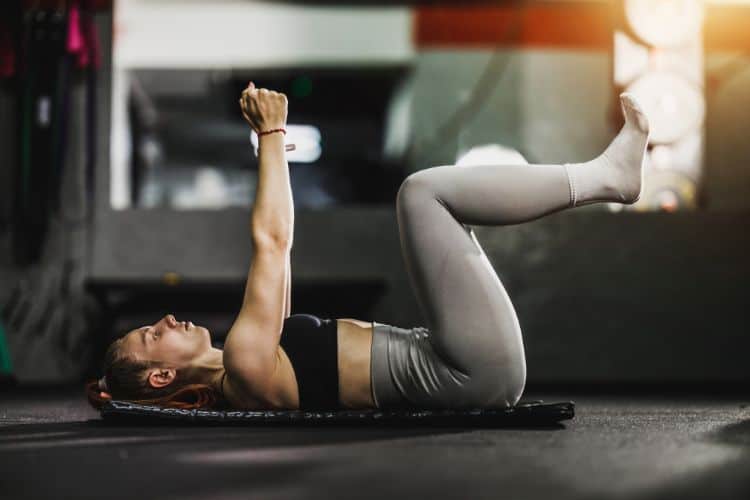
Yes. You need dumbbells, a clear patch of floor, and a sturdy support for rows. An exercise mat is helpful for floor pressing and dead bugs, and an adjustable bench is optional. Check that any chair or support will remain stable before using it. Give yourself enough space to set down weights safely after each pair.
Review your notes. If movement quality improved and recovery was manageable, repeat the program using slightly heavier dumbbells on selected strength exercises or more consistent speed on the power sets. You can also switch to a different plan for a few weeks before returning. Keep the basic rhythm of practice, gradual challenge, and recovery.
For another way to pair exercises, try the Full Body Dumbbell Superset Workout. If you want a shorter session, follow the 35-Minute Full-Body Dumbbell Superset Workout. To practice the speed-focused side of this plan, explore the 35-Minute Dumbbell Power Training Workout. For ideas on adding weight or reps over time, read the Progressive Overload Dumbbell Workout Plan. You can also give your lower body extra attention with the Glute And Hamstring Dumbbell Superset Workout.
A well-designed superset dumbbell power workout program balances effort with precision. Three weekly sessions give you repeated practice in squatting, hinging, pressing, rowing, lunging, carrying, and stabilizing your trunk. The power movements ask you to move with intent, while the strength exercises give that intent a solid foundation. Begin with weights you can control, rest enough to keep your repetitions crisp, and build from the quality of the previous session. Four steady weeks can teach you far more than one exhausting workout.
Stay up to date on the latest women’s health, fitness and lifestyle trends and tips.
