


Sign up for workout ideas, training advice, reviews of the latest gear and more.

A good workout plan gives you a reason to return to the same movements. This 2-week full-body superset dumbbell power workout plan does exactly that: three strength sessions each week, repeated with a modest progression in week two. You will squat, hinge, press, row, carry, and train your core with a pair of dumbbells. The first exercise in each pairing gets your best effort; the second adds useful strength work without turning every set into a race.
You do not need a large weight rack or a long workout window. Each session takes about 35 to 45 minutes, including a warm-up. A lighter pair is helpful for presses and fast movements, while a heavier pair can serve squats, hinges, and carries. One adjustable pair also works. The goal is to finish each repetition with control and enough energy to move well on the next one.
A superset pairs two exercises performed back to back before a longer rest. In this plan, complete exercise A1, take roughly 15 to 30 seconds to set up, perform A2, then rest 75 to 120 seconds. Repeat the pair for the prescribed rounds before moving to B1 and B2. Use the same order every time so you can compare your performance from week one to week two.
Power means producing force quickly. Here, you lower a dumbbell under control and lift it with crisp intent while keeping your body stable. It does not mean throwing the weight, rushing the lowering phase, or chasing fatigue. For a squat, stand up decisively; for a floor press, press smoothly but promptly. If the weight slows noticeably or your form changes, end the set or use a lighter load. The fast intent matters more than a dramatic-looking movement.
A traditional heavy strength workout might require longer recovery between every set. Pairing different movement patterns, such as a squat with a row, gives one area a brief break while another works. Still, a power-focused superset needs more rest than a nonstop conditioning circuit. Keep the transitions tidy and take the full rest after each pair.
This program suits adults who know the basic dumbbell squat, hinge, press, and row and want a short, structured strength block. Beginners can follow it with lighter weights, two rounds per pair, and deliberate technique before adding speed. Experienced lifters can use challenging but manageable loads and track performance across the six sessions. No jumping or overhead ballistic lift is required.
If you are returning after an injury, have symptoms with exercise, or have been told to restrict certain movements, get individual guidance before starting. Stop any movement that causes sharp pain, dizziness, or unusual shortness of breath. Muscle effort is expected; pain is a signal to adjust. A chair, bench, or wall can help with balance, but make sure any support is stable.
Set out two dumbbells, water, and a mat if you like one for floor work. A sturdy step or chair is optional for modifications. Choose a weight that lets you perform every rep without twisting, holding your breath excessively, or losing your preferred range of motion. For the first power exercise in a pair, leave about three clean repetitions in reserve. For the second exercise, leave roughly two or three. These are practical starting targets, not a test of maximum strength.
A lighter pair often makes the most sense for a press or a fast squat-to-stand. A heavier pair may be appropriate for Romanian deadlifts, rows, and suitcase carries. It is normal to change dumbbells between exercises. Write down the weights, reps, and how the final round felt. That log tells you whether to add a rep, choose a heavier pair, or maintain the load next week.
Train on Monday, Wednesday, and Friday, or use any three nonconsecutive days. Day 1 emphasizes a squat and horizontal push, Day 2 emphasizes a hinge and vertical push, and Day 3 brings the patterns together. On the days between, walk, do comfortable mobility work, or rest. There is no need to squeeze another hard leg session between these workouts.
Repeat Day 1, Day 2, and Day 3 in the same order, again leaving at least one day between sessions. Keep the exercises and round count consistent. Progress only one variable when the week-one version felt solid: add one rep to an accessory exercise within its stated range, increase a dumbbell by the smallest available increment, or improve the speed and consistency of the lifting phase at the same weight. Do not increase load and volume everywhere at once.
This schedule provides three weekly muscle-strengthening sessions. U.S. physical activity guidance recommends muscle-strengthening activity on at least two days a week; regular walking or other aerobic activity can round out the week. Two weeks are enough to practice and measure improvement, but substantial body-composition or strength changes usually require continuing the habit beyond this block.
Spend five to seven minutes gradually preparing to lift. March briskly in place or walk for two minutes. Then perform eight unloaded squats, eight hip hinges with hands on hips, six gentle reverse lunges per side, ten shoulder circles in each direction, and six controlled reaches or torso rotations per side. Finish with one easy practice set of the first two exercises using lighter dumbbells or no weight.
The warm-up should make the first working set feel familiar. If your hips or shoulders need more time, add another easy set. Do not turn the warm-up into a workout. During the power movements, think “controlled down, decisive up.” Breathe out through the effort and keep your ribs stacked over your pelvis rather than arching your lower back to move a heavier weight.
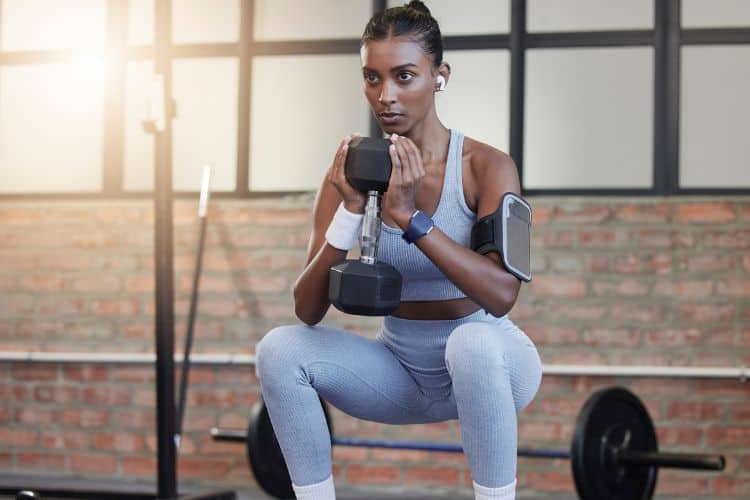
A1. Goblet squat: Hold one dumbbell vertically at chest height. Perform 3 rounds of 6 to 8 reps, lowering for about two seconds and standing up with intent. Keep your feet planted and let your knees follow your toes. Use a depth that lets your torso stay controlled. A chair behind you can mark a comfortable range without dropping your weight onto it.
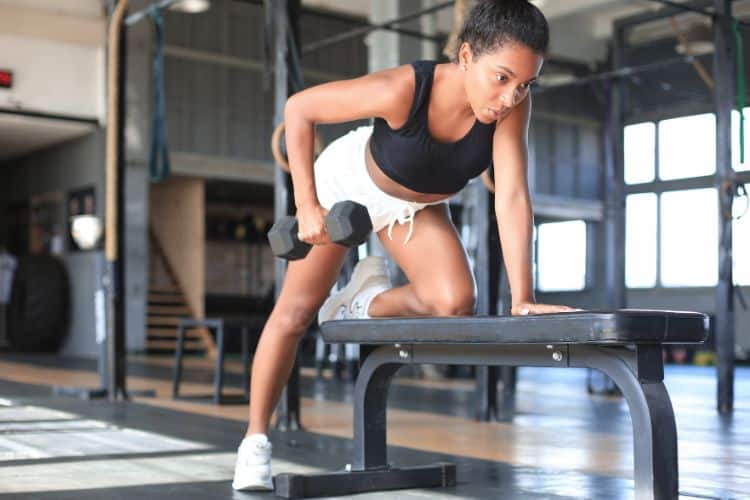
A2. One-arm dumbbell row: Perform 3 rounds of 8 to 10 reps per side. Place your free hand on a stable support or brace your forearm against your thigh. Pull the weight toward your hip without rotating your trunk. Do both sides before resting 90 to 120 seconds. Start the row with a load that allows the last rep to look like the first.
This pairing balances a lower-body drive with upper-back work. The squat is the power emphasis: the standing phase is quick, while the descent remains measured. If your legs need more recovery, rest 30 seconds after A1 before you begin the row, then take the normal rest after A2.
B1. Neutral-grip floor press: Lie on your back with knees bent, palms facing each other, and elbows about 30 to 45 degrees from your sides. Do 3 rounds of 6 to 8 reps. Let your upper arms touch the floor softly, pause briefly, and press up with speed you can control. Avoid bouncing your elbows off the floor.
B2. Reverse lunge: Hold the dumbbells by your sides and do 3 rounds of 6 to 8 reps per leg. Step back far enough to bend both knees comfortably, then push through the front foot to stand. You can alternate legs or complete one side and switch. Rest 75 to 120 seconds after both movements.
For a more stable version, use a split squat while holding a chair with one hand. The lunge is accessory strength work, so keep its tempo steady. If the floor press feels awkward on the floor, a stable bench press with the same neutral grip works, provided you can set up safely.
Carry one dumbbell at your side for 30 to 40 seconds, switch hands, and repeat for two rounds. Stand tall without leaning away from the weight. Walk slowly in a clear space; if space is limited, march in place. Rest about 45 seconds between rounds. The carry trains your grip and your ability to resist side bending after the larger lifts are done.
A1. Dumbbell Romanian deadlift: Hold two dumbbells in front of your thighs and perform 3 rounds of 6 to 8 reps. Soften the knees, send your hips backward, and keep the weights close to your legs. Lower until you feel a stretch in the backs of your thighs while maintaining a comfortable back position. Drive the floor away and stand tall with intent; do not lean back at the top.
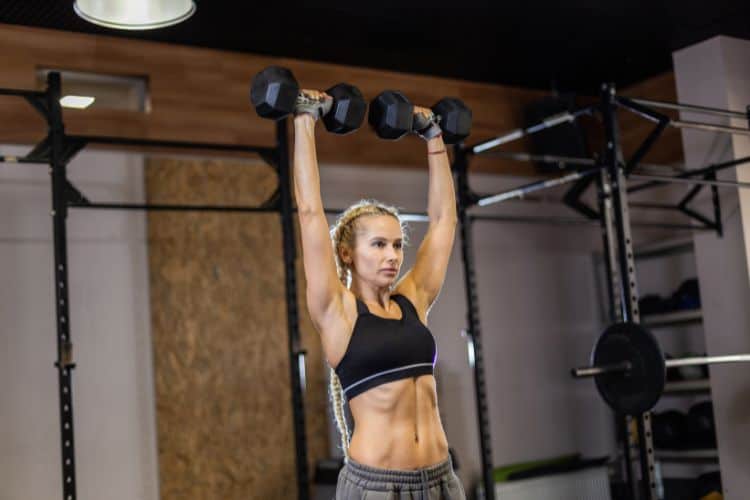
A2. Half-kneeling single-arm press: Do 3 rounds of 6 to 8 reps per arm. Kneel on a mat with one foot forward and the opposite knee down, or use a standing staggered stance if kneeling is uncomfortable. Press the dumbbell overhead only through a pain-free range, with your ribs quiet and wrist stacked over the elbow. Rest 90 to 120 seconds after both sides.
The hinge is the primary fast lift in this pair. The press is controlled strength work rather than a push press. If an overhead press bothers your shoulder, substitute a neutral-grip floor press and record the change so you can repeat it in week two.
B1. Alternating step-back squat: From a standing position, take a small step back into a shallow lunge, return to center, then repeat on the other side. Do 3 rounds of 8 total reps, or 4 per side. Hold light dumbbells at your sides and move with balance. If you prefer a simpler pattern, do 8 regular goblet squats instead.
B2. Two-dumbbell bent-over row: Hinge at the hips and row both weights toward your lower ribs for 3 rounds of 8 to 10 reps. Keep your neck in line with your torso. If holding the hinge irritates your back, switch to a supported one-arm row. Rest 75 to 120 seconds after the pair. Use a controlled lowering phase and avoid jerking the weights upward.
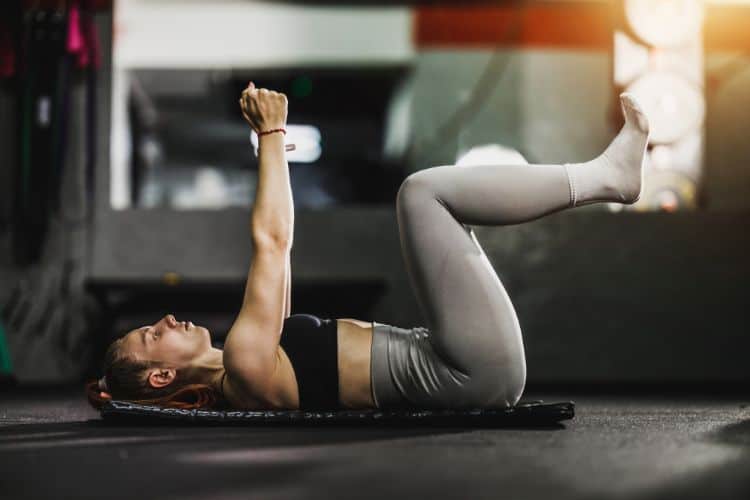
Lie on your back, lift your arms toward the ceiling, and position your knees over your hips. Slowly extend your right leg and left arm without letting your lower back arch, then return and switch sides. Do two sets of 6 to 8 reps per side, resting about 30 to 45 seconds. Keep the range small if you cannot maintain control. This is a deliberate core exercise, not a speed challenge.
A1. Dumbbell front squat: Hold two manageable dumbbells at shoulder height or one at your chest. Do 3 rounds of 6 reps. Lower under control and stand up promptly, keeping your heels down and your torso steady. If the front rack tires your wrists or shoulders, switch to a goblet hold.
A2. Alternating floor press: Lie on your back with both dumbbells overhead. Lower and press one arm while the other stays extended, then switch. Do 3 rounds of 6 reps per arm. Use a moderate load and keep your torso from rolling toward the moving arm. Rest 90 to 120 seconds after both arms. The alternating pattern asks your trunk to stay steady while the arms work independently.
B1. Kickstand Romanian deadlift: Place most of your weight on the front leg and rest the other toes slightly behind you for balance. Holding dumbbells at your sides, hinge for 3 rounds of 8 reps per leg. Keep your hips mostly square and move slowly on the way down. This is a supported single-leg pattern, not a balance competition.
B2. Rear-delt row: With lighter dumbbells and a gentle hip hinge, pull your elbows outward rather than tight against your ribs. Perform 3 rounds of 10 to 12 reps. Keep your shoulders away from your ears and stop before you need to swing. Rest 75 to 120 seconds after the pair. If this angle feels uncomfortable, substitute the regular supported row from Day 1.
Carry a dumbbell in each hand for two rounds of 40 to 60 seconds. Walk with short, controlled steps, relaxed shoulders, and even breathing. Set the weights down between rounds and rest 45 to 60 seconds. Choose a load that challenges your grip without making you hunch or hurry. If walking space is limited, alternate slow marching steps in place.
Use your notes from each matching session. If all three sets of a power exercise were crisp, keep the reps the same and consider a small weight increase. If the next available weight feels too heavy, repeat the original load and focus on a steadier descent and more decisive rise. Quality is a valid progression. A missed rep, a loss of balance, or a grind means the load is already challenging enough.
For accessory exercises with a range, move from the lower to the upper end before adding weight. A Day 1 row logged as 8, 8, and 8 per side might become 9, 9, and 9 in week two. A lunge might stay at 6 per side while you improve your balance. For carries, add five to ten seconds only if your posture remains tall. These small changes make the plan repeatable without making the second week an all-out test.
If soreness from the prior session is still limiting your movement, keep the next session easy or take another day of recovery. You can also use two rounds rather than three. More work is only useful when you can recover and return with sound technique. After the two weeks, repeat the block with modest progressions or move to a longer program that gradually develops the same movement patterns.
A beginner can complete two rounds of each superset, use 5 to 8 comfortable reps, and rest up to two minutes after each pair. Keep the lifting phase smooth rather than deliberately fast until the patterns feel consistent. Replace reverse lunges with sit-to-stands, half-kneeling presses with a standing or floor press, and kickstand hinges with regular two-leg hinges. A smaller pain-free range of motion is more useful than forcing a deeper rep.
For a low-impact approach, keep both feet in contact with the floor during squats and hinges. This plan does not require jumps. If balance is a concern, position yourself near a stable counter for lunges and carries, or choose marching in place without weights. At home, clear the floor of bags, cords, and pets before carrying or stepping backward. Put each dumbbell down deliberately rather than dropping it when a set ends.
With only one dumbbell, use a goblet squat, single-arm floor press, one-arm row, and single-dumbbell Romanian deadlift. Complete both sides of one-arm exercises before taking the scheduled rest. For the two-dumbbell front squat, return to a goblet squat; for the farmer carry, use a suitcase carry with equal time on each side. Consistency matters more than owning a matching pair.
The first mistake is turning every superset into cardio. If you are gasping after A1, give yourself extra time before A2 and take the full rest afterward. The second is choosing a load that forces slow, grinding power reps. Save harder sets for conventional strength work; the main fast movements in this plan should stay sharp from start to finish.
Another mistake is treating the lowering phase as free fall. Control the descent so you can reverse direction in a stable position. Do not snap your knees or elbows straight at the top. Finally, avoid comparing a week-two workout with a different exercise or different range of motion. The repeatable structure is what makes your log meaningful. A modest, clean improvement beats a heavier rep completed with shortcuts.
Eat regular meals that support your training and include a source of protein, carbohydrates, and produce across the day. Drink water according to thirst and your conditions, and allow time for sleep. There is no need for a special supplement or a punishing “burnout” session to make six workouts worthwhile. A short walk between sessions can feel good, but an easy day should actually be easy.
Expect the first week to teach you how the exercises feel and where your weights belong. Some muscle soreness can occur when you try unfamiliar movements. If soreness alters your gait or makes the next session hard to perform well, scale back a round or postpone it. Record energy and recovery along with reps; they help explain whether an apparent plateau is really a training problem or simply a tired day.
No. The three weekly lifting sessions are designed to be separated by recovery days. You may walk or do gentle mobility work on other days. Repeating the same challenging full-body supersets daily can make it harder to keep the main lifts crisp and recover between efforts.
There is no universal number. Choose a load that lets you finish the target reps with steady posture and a few good reps left in reserve. You may need different weights for a squat, row, and overhead press. Begin lighter than you think you need for movements that are new to you.
It can be, especially when the main movement gets enough rest and you progress over time. Supersets organize complementary exercises efficiently. For this plan, the fast lifting phase trains power intent while the moderate rep ranges build a foundation of strength. Two weeks are a starting block; repeat and progress the work to pursue longer-term gains.
You can use it as part of an overall activity routine, but no two-week lifting plan guarantees a specific change in body weight. Its main purpose is to improve your practice, strength, and movement quality. Nutrition, total activity, recovery, and a longer time frame affect changes in body composition.
Put the six sessions on your calendar, choose an achievable starting weight, and keep a simple workout log. On each power rep, lower with control and lift with clear intent. Rest enough to repeat that effort. By the final session, you should know which weights suit each exercise, which movements you want to refine, and how to continue progressing after day 14. That is a useful result from a short, focused full-body dumbbell plan.
If you enjoy this two-week plan, try the 30-Minute Full-Body Dumbbell Superset Workout for a shorter paired session, or the 35-Minute Full-Body Dumbbell Superset Workout for another strength-focused option. To explore faster lifting patterns, see Dumbbell Power Strength Training For Women Over 40. When you are ready to build on your workout log, use the Progressive Overload Dumbbell Workout Plan for longer-term progression, or the 5-Day Upper And Lower Body Dumbbell Superset Workout for a different weekly split.
Stay up to date on the latest women’s health, fitness and lifestyle trends and tips.
