


Sign up for workout ideas, training advice, reviews of the latest gear and more.

A superset dumbbell power HIIT workout gives you a practical way to train strength, speed, and conditioning in one session. You pair two exercises, move between them with a short transition, and then take a planned recovery break. The result feels athletic without requiring a crowded gym or complicated equipment. A pair of dumbbells, a little floor space, and a timer are enough.
This full-body session takes about 30 minutes. It emphasizes controlled, forceful lifts rather than racing through every repetition. The “power” portion means you drive the weight with intent while keeping the movement clean; the HIIT portion comes from intervals of work and recovery. You will squat, hinge, push, pull, and carry or brace, so the workout reaches more than one muscle group. You can make it lower impact, increase the rest, or use a lighter pair of dumbbells whenever needed.
A superset combines two exercises performed consecutively before a longer rest. In this workout, each pair uses different movement patterns so one area can partly recover while another works. For example, a squat variation pairs with a row, while a hinge pairs with an overhead press. You will complete three rounds of each pair before moving to the next.
HIIT stands for high-intensity interval training. Here, “high intensity” describes a challenging personal effort during a short work interval, followed by recovery. It does not mean every exercise must be an all-out sprint. In fact, with dumbbells, preserving technique matters more than squeezing in one extra rep. Aim for an effort of about seven or eight out of ten on most work intervals, where you could say a short sentence but would prefer to catch your breath.
Power training adds another layer: on the lifting phase of a suitable exercise, move the dumbbell or your body upward promptly and deliberately. Lower the weight under control, reset your position, and repeat. A fast lift with a shaky back or swinging arms is not useful power work. Quality repetitions and sufficient rest help you maintain the speed that makes the session different from a standard circuit.
This plan suits women who already know the basic dumbbell squat, hinge, row, and press. Beginners can use the modifications below, keep both feet planted, and extend the recovery intervals. Experienced lifters can select a challenging weight and focus on crisp repetitions rather than adding frantic movement. If you are returning after a break, treat the first session as practice and stop each set before your technique changes.
You need one or two pairs of dumbbells if available: a moderate pair for lower-body work and a lighter pair for pressing or faster movements. One pair is workable, though it may feel easier on some exercises. Choose a clear, non-slip area and keep the weights where you will not trip over them during transitions.
Spend five minutes warming up. Then complete four supersets, allowing about five minutes for each pair. Finish with three to five minutes of easy movement and breathing. The exact clock may vary slightly because the plan prioritizes safe transitions.
For each exercise, work for 30 seconds. Move to its paired exercise with about 15 seconds to set up. After the second interval, rest for 45 seconds. Repeat that sequence for three total rounds. That is roughly four minutes per superset including transitions; allow another minute to change weights and prepare for the next pair. If you need more recovery, rest 60 to 75 seconds after each pair and let the workout run longer.
The four pairs are: goblet squat and bent-over row; alternating reverse lunge and push press; Romanian deadlift and floor press; and squat-to-calf raise and suitcase march. The squat-to-calf raise is a low-impact athletic finisher, while the suitcase march adds trunk control under load. The program alternates lower-body and upper-body demands rather than stacking four exhausting jumps or presses.
Set a repeating sequence of 30 seconds work, 15 seconds transition, 30 seconds work, and 45 seconds rest. Count controlled reps only while the timer is running. At the end of the interval, finish the rep you are on and set down the weights safely. Do not rush an awkward final repetition just because the timer beeps. During rest, breathe slowly, check your posture, and decide whether the same weight still makes sense for the next round.
Start with one minute of relaxed marching or walking. Gradually swing your arms and let your breathing rise. Follow with 45 seconds of bodyweight squats, reaching your hips back and standing tall. Spend 45 seconds on hip hinges: put your hands on your hips, soften your knees, and push the hips backward while keeping your back long.
Next, alternate gentle reverse steps for one minute. Step back only as far as you can control, then return to a balanced stance. Use another minute for arm circles, shoulder blade squeezes, and slow reaches overhead. Finish with 30 seconds of light, unloaded squat-to-stand movements. If the overhead press is new to you, practice several presses with no weight before starting the timer.
A warm-up should make the first working set feel familiar. If your joints still feel stiff, add another minute of easy motion. The session begins with a squat and a row, so you should be able to brace your torso, hinge, and move your shoulders comfortably before lifting.
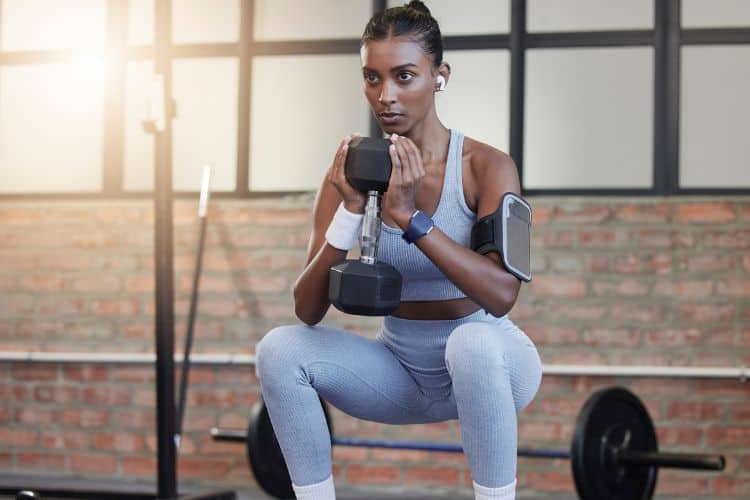
Hold one dumbbell vertically at your chest, with elbows pointing down. Stand with feet around shoulder width apart and find a stance that allows your heels to stay grounded. Breathe in, brace your midsection, and sit between your hips. Drive through the floor to stand with intent. Keep the weight close and lower for about two seconds before the next strong ascent.
Work for 30 seconds. Most people will land somewhere around eight to twelve steady repetitions, but the timer and form decide the count. If your knees or hips prefer a shallower range, squat to a sturdy chair or bench and stand up without collapsing onto it. Avoid bouncing out of the bottom to create artificial speed.
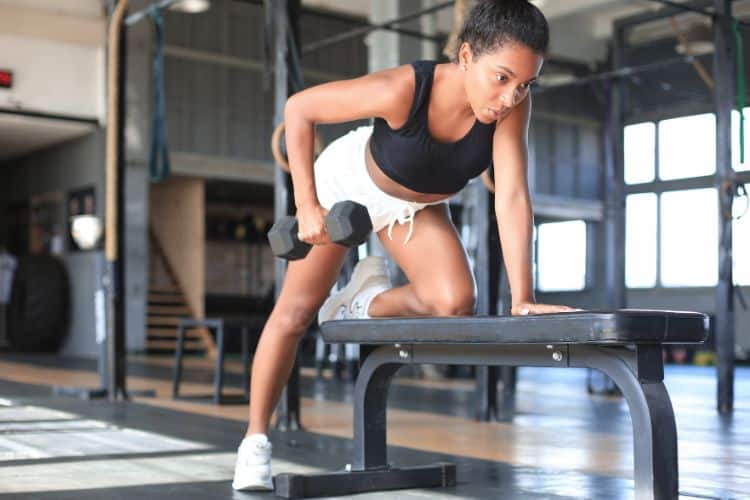
Hold a dumbbell in each hand, soften your knees, and hinge until your torso angles forward. Keep your neck in line with your back and your ribs steady. Pull the dumbbells toward your lower ribs, pause briefly, and lower them with control. You can row both arms together or alternate arms if that helps you keep your torso still.
The row balances the squat by shifting work to your upper back. It is tempting to jerk your shoulders upward as you tire; instead, reduce the load or shorten the interval. The challenge should come from your back muscles and your stable hinge, not a swing of the spine. After the row, take the full 45-second rest and repeat the pair twice more.
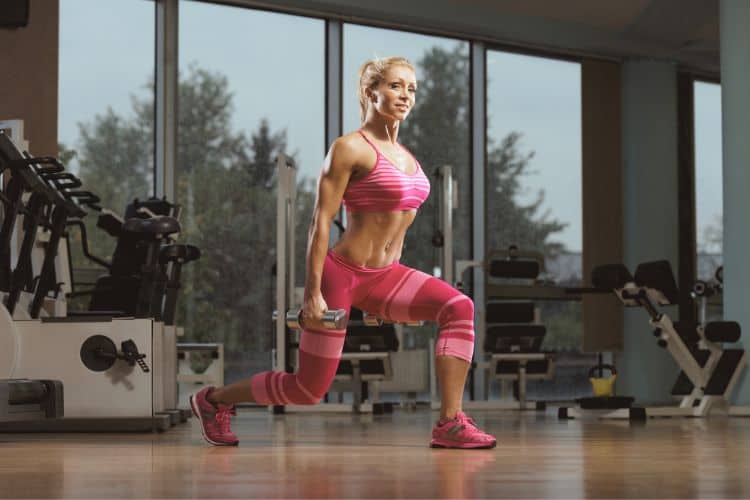
Hold the dumbbells at your sides and stand tall. Step one foot backward, lower into a comfortable split stance, and press through the front foot to return to standing. Alternate legs for 30 seconds. Keep your front foot planted and your torso relatively upright. Make the return decisive, but do not push off so aggressively that you lose balance.
A reverse lunge trains each leg separately and raises the cardiovascular demand without requiring jumping. If balance is the limiting factor, hold one dumbbell at your chest and use the free hand near a wall or railing. You can also replace the lunge with a step-back tap or a static split squat. Choose a range in which your front knee tracks comfortably over your foot.
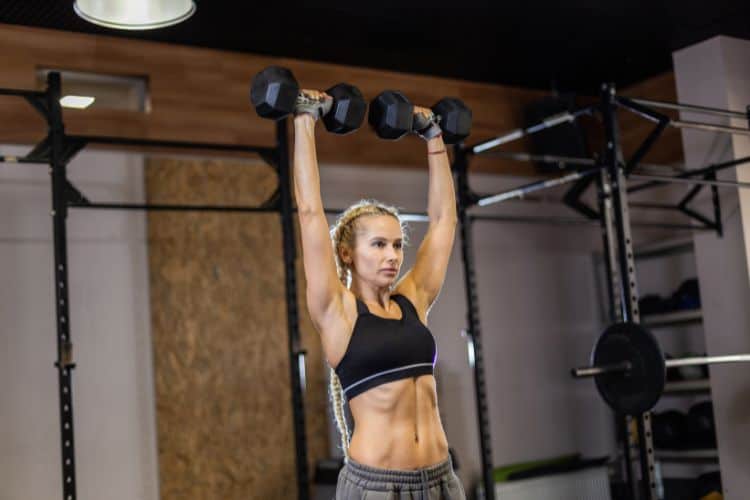
Start with a lighter pair of dumbbells at shoulder height and your palms turned toward each other. Bend your knees and hips slightly, then drive through your legs to help press the weights overhead. Finish tall with the dumbbells over your shoulders and lower them under control before the next repetition. Your torso stays braced; avoid leaning backward to get the weight up.
This is the main power exercise of the session. Each repetition should have a sharp, coordinated leg drive followed by a smooth lockout. If your pressing speed fades, use lighter weights or take a few breaths instead of forcing the interval. If overhead work is uncomfortable, substitute a neutral-grip floor press and keep the rest of the schedule the same. Perform three rounds of the lunge and press pair.
Stand with a dumbbell at each side of your thighs. Keep a slight bend in your knees and move your hips backward while the weights travel close to your legs. Stop when you feel a manageable stretch in the backs of your thighs or before your back position changes. Push the floor away and bring your hips forward to stand tall. Do not throw your lower back into an exaggerated arch at the top.
The lowering phase should be controlled; the upward phase can be purposeful and strong. A Romanian deadlift is a hinge, not a squat, so your hips travel back more than your knees travel forward. If you feel the exercise mainly in your lower back, lighten the load and rehearse the hip motion before continuing. Aim for clean repetitions throughout the 30-second interval.
Sit down with the weights close to your body, then roll carefully onto your back with knees bent and feet flat. Begin with elbows lightly touching the floor and forearms near vertical. Press the dumbbells upward until your arms are extended without slamming the weights together. Lower until your upper arms touch the floor gently.
Set your weights down in a controlled way before getting up. The floor limits the depth of the press, which many people find comfortable for the shoulders. If getting down and up repeatedly is awkward, use an incline push-up against a sturdy counter instead. Give yourself a few extra transition seconds if needed; a smooth setup matters more than strict adherence to the clock. Repeat the deadlift and press pairing for three rounds.
Hold one or two light dumbbells at your sides. Lower into a comfortable squat, then stand strongly and rise onto the balls of your feet for a brief calf raise. Set both heels down before beginning the next squat. Think of this as a controlled, low-impact expression of power. Keep your torso upright enough to maintain balance, and never turn the top of the movement into a rushed hop.
If you want a higher-impact version and already tolerate jumping well, you may swap in a small squat jump with no dumbbells. Land quietly, reset fully, and stop jumping when the landings become heavy. The weighted squat-to-calf raise is the default because it is easier to repeat with sound mechanics during an interval workout.
Hold one moderate dumbbell at your side as if carrying a suitcase. Stand tall and march in place, lifting one knee at a time without tipping toward or away from the weight. Switch the dumbbell to the other hand halfway through the 30 seconds. Keep your ribs over your pelvis, shoulders level, and breathing steady. A deliberate march challenges your grip and trunk while letting your heart rate settle slightly.
If marching makes balance difficult, stand in place and perform a suitcase hold for 15 seconds on each side. If you have space, walk slowly instead of marching. The goal is resisting sideways lean, not carrying the heaviest dumbbell you own. Complete three rounds, then set the weights down and walk easily for a moment.
Spend three to five minutes bringing your breathing back toward normal. Walk around the room for a minute, then gently stretch your calves, front of the hips, chest, and upper back. Hold each position at an easy intensity; there is no need to force a deep stretch immediately after a demanding interval. Drink water according to thirst and make a note of which weights let you move well.
The workout combines lifting with conditioning, so allow time to recover before repeating it. Two sessions a week with at least one day between them is a sensible starting point. On other days, choose easy walking, mobility, or a separate strength session that does not leave the same muscles constantly fatigued. Sleep, food, and manageable weekly training volume matter more than trying to turn every day into maximum intensity.
Use a load that makes the last few seconds of a work interval challenging without changing your posture or range of motion. You may need heavier dumbbells for deadlifts and rows than for push presses. If you have just one pair, choose weights that you can press safely and slow the lower-body movements to make them more demanding. The goblet squat can use one dumbbell even when the pair is too much.
For the first workout, take a conservative approach. Record the load, approximate reps, and how the final round felt. If all three rounds remain crisp and you finish with several good repetitions in reserve, consider a modest weight increase next time. If the first round is already sloppy, decrease the load or extend the rest period. Power is best expressed when you can actually move quickly on the lifting phase.
In week one, learn the exercise order and use 30-second intervals with 45 to 60 seconds of rest after each pair. In week two, keep the same weights and try to make the three rounds more consistent. In week three, increase one or two dumbbells slightly where your form is solid, particularly on the squat, row, or deadlift. Keep the lighter press weight if needed. In week four, maintain the loads and improve the quality of your strong lifting phase or shorten rest modestly only if you recover well.
Change one variable at a time. Adding weight, doing more repetitions, and reducing rest in the same week makes it harder to tell what helped and can turn the power work into survival. A better result may be eight crisp push presses in every round instead of twelve hurried ones in round one and five poorly aligned reps in round three.
For a beginner version, work for 20 seconds per exercise, allow 20 seconds to transition, and rest for 60 to 75 seconds after each pair. Complete two rounds rather than three. Use a chair squat, supported row, step-back tap, and standing suitcase hold where appropriate. That still provides a complete full-body session. Build skill and consistency before adding a third round.
For a low-impact version, keep both feet grounded throughout. The default plan already avoids mandatory jumping, burpees, and running. Use a comfortable lunge depth or replace lunges with a static split squat. Keep the squat-to-calf raise deliberate and use a standing chest press against a wall if floor transitions are inconvenient. You can raise your heart rate with controlled strength work without pounding the floor.
For an advanced version, select appropriately heavier weights for the squat, row, and hinge while preserving fast, clean concentric phases. You may work for 35 to 40 seconds, but only if the additional time does not turn the push press into slow grinding. Another option is a fourth round of one or two supersets instead of extending every interval. Power benefits from enough recovery to repeat a good effort.
It can help build strength, especially for someone newer to resistance training, because it includes repeated loaded squats, hinges, rows, and presses. The short rests and 30-second intervals also make conditioning a major part of the session. If maximal strength is your main goal, add separate sessions with heavier sets and longer rest. Use this workout as one part of a balanced training week.
Yes. You need dumbbells, a timer, and enough room to step backward safely for a lunge. A mat may make the floor press more comfortable. Check that the surface is stable and that furniture will not interfere with a press or march. If you have limited space, do the suitcase march in place and keep all exercises stationary.
Start with twice weekly on nonconsecutive days. If you are doing other hard strength or HIIT sessions, count those when planning recovery. More sessions are not automatically better. The right frequency lets you arrive at the next workout able to perform strong repetitions with good form.
A superset dumbbell power HIIT workout works best when the intervals are structured and the lifts stay sharp. Warm up, complete three rounds of each of the four exercise pairs, and give yourself enough rest to make the next round count. Begin with manageable weights, learn how the movements feel, and progress one variable at a time. The most effective workout is one you can repeat with good technique and enough energy to improve.
To explore the training styles behind this session, read our Full-Body Dumbbell Superset Workout for more exercise pairings and the top 15 Dumbbell Power Moves for movement ideas. When you want a different interval session, try the 30-Minute Full-Body Dumbbell HIIT Workout or its 20-Minute Full-Body Dumbbell HIIT Alternative. For a longer weekly structure built around paired lifts, follow the 5-Day Upper And Lower Body Dumbbell Superset Workout.
Stay up to date on the latest women’s health, fitness and lifestyle trends and tips.
