


Sign up for workout ideas, training advice, reviews of the latest gear and more.


Starting a strength-training routine can feel intimidating, especially when you are unsure which exercises to perform, how much weight to use, or how often you should work out. The good news is that you do not need a complicated program or a gym full of equipment to become stronger. A pair of dumbbells and a small amount of open space are enough to train every major muscle group. This beginner dumbbell workout plan for women is designed to build total-body strength, improve muscle tone, support healthy weight management, and make everyday activities feel easier. The program uses simple movements that can be performed at home or in the gym. You will gradually learn proper exercise form, develop confidence with weights, and create a foundation for more advanced strength training.
Whether you are completely new to resistance exercise or returning after a long break, this plan gives you a practical starting point. Focus on consistency, controlled movement, and gradual progress instead of trying to lift the heaviest dumbbells possible during your first few workouts.
Dumbbells are among the most versatile pieces of fitness equipment available. They allow you to perform exercises for your legs, glutes, back, chest, shoulders, arms, and core without moving between multiple machines. You can also adjust exercises to match your current strength and mobility.
Unlike fixed gym machines, dumbbells require your stabilizing muscles to help control each movement. This can improve coordination, balance, and overall body control. Because each arm holds its own weight, dumbbell exercises can also reveal and gradually reduce strength differences between your left and right sides.
Dumbbell training is easy to scale. A beginner might perform a goblet squat with one light dumbbell, while an experienced exerciser can perform the same movement with a much heavier weight. This makes dumbbells useful throughout every stage of your fitness journey.
Regular strength training may help preserve lean muscle, support bone health, improve physical function, and make daily tasks such as carrying groceries, climbing stairs, or lifting household items easier. For women who want to feel stronger without following a complicated gym routine, dumbbell workouts provide an accessible and effective option.
You can complete this program with one or two pairs of dumbbells. Ideally, have a lighter pair for upper-body exercises and a moderately heavier pair for lower-body movements. Adjustable dumbbells are convenient because they allow you to increase or decrease the resistance without storing several separate pairs.
You may also want an exercise mat for floor movements and a stable chair or bench for support. The chair should not roll, slide, or tip when you place your hand on it.
Wear comfortable clothing and supportive athletic shoes. Keep water nearby and make sure your workout area is clear of objects that could cause you to trip. If you have a medical condition, persistent pain, a recent injury, or concerns about beginning an exercise program, consult a qualified healthcare professional before starting.
The correct dumbbell weight should challenge your muscles while allowing you to maintain good form. If the workout calls for 10 repetitions, the first few repetitions should feel manageable, while the final two or three should require noticeable effort. You should still be able to complete every repetition without swinging the weights, rushing the movement, or changing your posture.
If you could easily perform five or more additional repetitions, the weight may be too light. If you cannot complete the recommended repetitions with controlled form, select a lighter weight.
Many women need different weights for different exercises. Your legs and glutes can generally handle more resistance than your shoulders or arms. You might use a heavier dumbbell for squats and deadlifts but switch to lighter weights for lateral raises or overhead presses.
Do not worry about using a specific starting weight. One beginner may need three-pound dumbbells, while another may be comfortable with 10 or 15 pounds. Your appropriate resistance depends on your exercise experience, current strength, movement quality, and the exercise being performed.
Follow this plan three nonconsecutive days per week. A Monday, Wednesday, and Friday schedule works well, but you can select any days that fit your routine. Leave at least one recovery day between strength workouts during the first several weeks.
The plan includes Workout A and Workout B. During the first week, perform Workout A, Workout B, and then Workout A again. During the following week, perform Workout B, Workout A, and Workout B. Continue alternating the workouts in this manner.
On recovery days, you can rest completely or perform gentle activities such as walking, mobility work, stretching, or easy cycling. Beginners do not need to train intensely every day to make progress. Your muscles need time between workouts to repair and adapt.
Each workout should take approximately 30 to 40 minutes. If this feels too demanding initially, complete one set of every exercise and gradually work toward two or three sets.
Begin every workout with five to eight minutes of light movement. A proper warm-up gradually increases your heart rate, raises muscle temperature, and prepares your joints for the exercises ahead.
Start by walking or marching in place for two minutes. Continue with controlled arm circles, shoulder rolls, bodyweight squats, alternating reverse lunges, hip hinges, and gentle torso rotations. Perform each movement for approximately 30 seconds.
Your warm-up should make you feel more mobile and prepared, not exhausted. Avoid turning it into a high-intensity workout. You can also perform the first set of an exercise with lighter dumbbells before moving to your regular working weight.
Complete two sets of each exercise during your first two weeks. Aim for 8 to 12 controlled repetitions per set and rest for approximately 60 to 90 seconds between sets. When you can finish every exercise comfortably, progress to three sets.
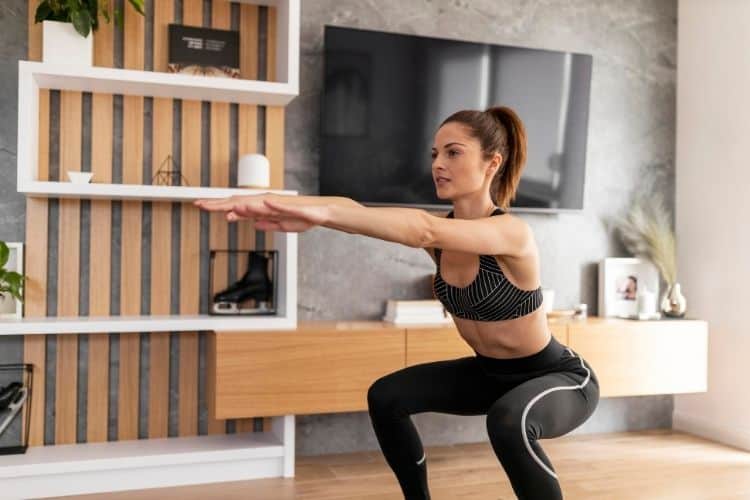
Stand with your feet approximately shoulder-width apart and hold one dumbbell vertically in front of your chest. Keep your chest lifted and gently brace your core. Push your hips back and bend your knees as if you were sitting into a chair. Lower yourself as far as you can while keeping your heels planted and your knees aligned with your toes.
Press through your feet to return to standing and squeeze your glutes without forcefully pushing your hips forward. Perform 8 to 12 repetitions. The goblet squat strengthens your quadriceps, hamstrings, glutes, and core while teaching an important movement pattern used in daily life.
Lie on your back with your knees bent and feet flat on the floor. Hold a dumbbell in each hand with your elbows resting near the floor. Position your palms forward or slightly inward, depending on what feels comfortable for your shoulders.
Press both dumbbells upward until your arms are extended without forcefully locking your elbows. Slowly lower your upper arms until they gently touch the floor. Perform 8 to 12 repetitions. This exercise works your chest, triceps, and shoulders while the floor limits the range of motion, making it a beginner-friendly alternative to a bench press.
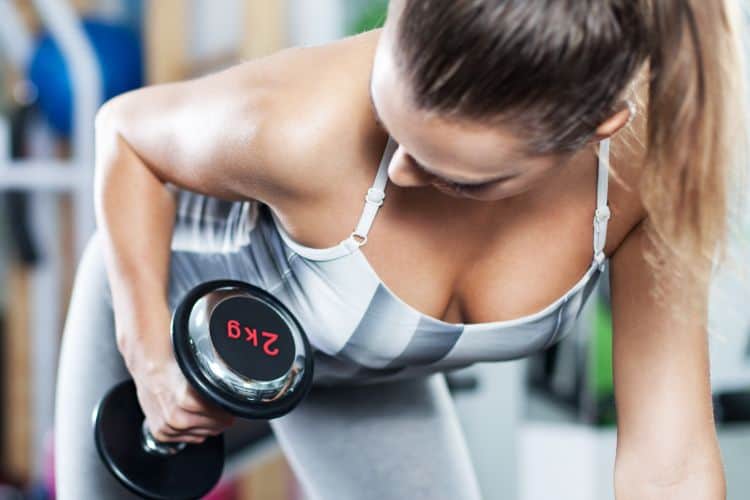
Place one hand on a stable chair or bench and step the foot on the same side slightly forward. Hold a dumbbell in your opposite hand and hinge forward from your hips while maintaining a neutral spine. Allow the weight to hang beneath your shoulder.
Pull the dumbbell toward your hip by driving your elbow backward. Pause briefly, then lower it with control. Avoid rotating your torso or shrugging your shoulder toward your ear. Perform 8 to 12 repetitions on each side. Rows strengthen the upper back, rear shoulders, and arms while helping support better posture.
Stand with your feet about hip-width apart and hold the dumbbells in front of your thighs. Soften your knees, brace your core, and push your hips backward. Keep the weights close to your legs as you lower them toward your shins.
Stop when you feel tension through the backs of your thighs or when you can no longer maintain a neutral spine. Drive through your feet and extend your hips to stand. Perform 8 to 12 repetitions. This hip-hinge exercise primarily works the hamstrings and glutes.
Sit upright on a stable chair with your feet planted on the floor. Hold the dumbbells near shoulder height with your palms facing forward or slightly inward. Brace your core and press the weights overhead.
Lower the dumbbells slowly to the starting position. Avoid arching your lower back or leaning backward. If necessary, use one dumbbell at a time. Perform 8 to 10 repetitions to strengthen your shoulders and triceps.
Lie on your back with your knees bent above your hips. Hold one light dumbbell over your chest with both hands. Gently press your lower back toward the mat and slowly lower the dumbbell behind your head while extending one leg.
Return to the starting position and alternate legs. Only move as far as you can without your lower back lifting excessively. Perform 6 to 10 repetitions per side. This exercise develops core stability without requiring repeated spinal bending.
Use the same general structure for Workout B. Complete two sets of 8 to 12 repetitions and gradually progress to three sets. Rest long enough to regain control of your breathing before starting the next set.
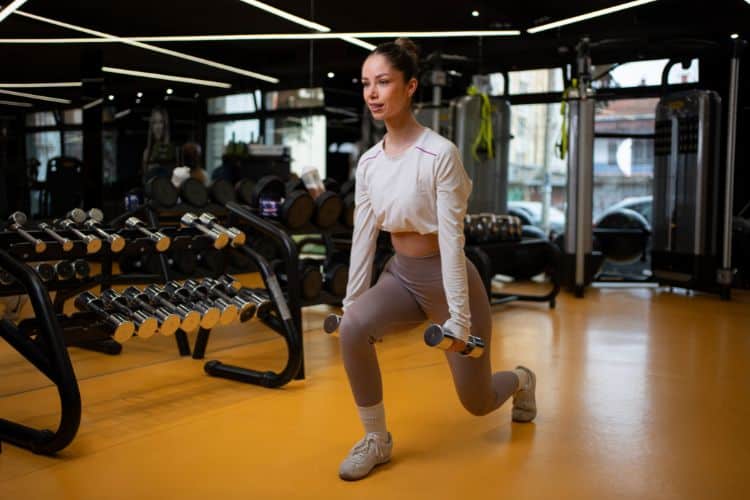
Stand tall with a dumbbell in each hand and your arms at your sides. Step one foot backward and lower your back knee toward the floor. Keep most of your weight through the front foot and maintain an upright torso.
Push through the front foot to return to standing, then repeat on the other side. Perform 6 to 10 repetitions per leg. If balance is difficult, hold one dumbbell in one hand and lightly support yourself with the other. You can also replace lunges with stationary split squats or chair-assisted squats.
Lie on your back with your knees bent and feet flat on the floor. Place one dumbbell across the front of your hips and hold it securely. Brace your core, press through your feet, and lift your hips.
Pause when your body forms a relatively straight line from your shoulders to your knees. Squeeze your glutes and lower your hips under control. Avoid excessively arching your lower back at the top. Perform 10 to 15 repetitions.
Hold a dumbbell in each hand, push your hips back, and lean forward while maintaining a long spine. If needed, rest your chest against an incline bench for additional support. Pull both weights toward the sides of your torso and bring your shoulder blades gently together.
Lower the dumbbells without allowing your shoulders to collapse forward. Perform 8 to 12 repetitions. Keep your neck aligned with your spine instead of looking straight ahead throughout the set.
Perform this movement on the floor or on a stable exercise bench. Hold the weights above your chest, bend your elbows, and slowly lower them until your upper arms reach a comfortable position. Press the dumbbells upward while keeping your wrists aligned over your elbows.
Complete 8 to 12 repetitions. If using a bench is uncomfortable or unavailable, the dumbbell floor press remains an effective option.
Stand tall with your arms at your sides and palms facing forward. Keep your elbows close to your torso as you bend them and raise the dumbbells toward your shoulders. Lower the weights slowly until your arms are extended.
Perform 10 to 12 repetitions. Avoid swinging your torso to create momentum. If you need to rock backward to lift the weights, choose lighter dumbbells.
Hold one dumbbell at your side as if you were carrying a suitcase. Stand tall, brace your core, and walk slowly for 20 to 40 seconds. Keep your shoulders level and resist leaning toward or away from the weight.
Switch hands and repeat. If your workout space is limited, march in place. The suitcase carry strengthens your grip, core, shoulders, and postural muscles while closely resembling an everyday task.
During the first week, learn the movements and complete one or two sets per exercise. Use conservative weights and stop each set before your form begins to break down. Muscle fatigue is expected, but sharp pain is a signal to stop.
In the second week, aim to complete two full sets of every exercise. Try to make each repetition smooth and consistent. If you started with eight repetitions and your form is stable, work toward 10.
During the third week, increase selected exercises to three sets. You do not necessarily need to add a third set to everything at once. Begin with large movements such as squats, deadlifts, rows, and presses.
In the fourth week, try to reach the top of the repetition range with your current weights. Once you can perform three sets of 12 controlled repetitions, consider increasing the resistance by the smallest available amount. After increasing the weight, you may return to eight repetitions and gradually build back toward 12.
This approach is a simple form of progressive overload. Progress can come from lifting slightly more weight, completing additional repetitions, improving your range of motion, or performing the exercise with better control.
One common mistake is progressing faster than your technique allows. Heavier dumbbells are useful only when you can control them. Rushing to increase the weight may shift stress away from the intended muscles and toward vulnerable joints.
Another mistake is holding your breath. Exhale during the more difficult portion of an exercise and inhale during the easier portion. For example, exhale as you stand from a squat and inhale as you lower yourself.
Avoid racing through repetitions. Lowering the dumbbells under control helps keep your muscles working and gives you time to notice changes in your form. A useful starting tempo is approximately two seconds to lift the weight and two seconds to lower it.
Finally, do not assume that every workout needs to leave you exhausted or extremely sore. Productive strength training should be challenging, but excessive soreness can interfere with consistency and daily activities.
Strength improves when training is combined with adequate recovery. Try to maintain a consistent sleep schedule and include rest days between full-body workouts. Gentle movement can reduce stiffness, but you do not need to perform intense cardio after every dumbbell session.
Eat balanced meals that include protein, carbohydrates, healthy fats, fruits, and vegetables. Protein supplies amino acids that support muscle repair, while carbohydrates provide energy for training. Helpful protein sources include poultry, fish, eggs, Greek yogurt, cottage cheese, beans, lentils, tofu, and lean meat.
Stay hydrated throughout the day, particularly when exercising in a warm environment. You do not need specialized supplements to begin a dumbbell program. Consistent workouts, nutritious meals, sufficient water, and quality sleep will have a greater influence on your early progress.
Two or three full-body strength workouts per week are enough for most beginners. Three sessions provide regular practice, while two sessions may be more manageable if you have a busy schedule or need additional recovery. Consistency matters more than following a perfect calendar.
Dumbbell training can support weight loss by helping preserve or build lean muscle and increasing overall activity. However, changes in body weight are also influenced by nutrition, sleep, stress, hormones, and daily movement. Combine strength training with sustainable eating habits and regular walking or other enjoyable cardiovascular activities.
Building a large amount of muscle generally requires years of specialized training, progressive resistance, sufficient food, and intentional programming. A beginner dumbbell plan is more likely to improve strength, muscle definition, posture, and body composition gradually.
A productive workout can take 25 to 45 minutes. The duration depends on the number of exercises, sets, and rest periods. A shorter workout performed consistently is more valuable than an overly long routine that is difficult to maintain.
Increase the weight when you can perform every planned set at the top of the repetition range with controlled technique and could still complete a few additional repetitions. Make a small increase and confirm that your form remains consistent.
The best beginner dumbbell workout plan for women is one that feels challenging, manageable, and realistic enough to repeat every week. You do not need to master every movement immediately or use heavy weights to benefit from strength training. Begin with basic exercises, practice your form, and allow your body time to adapt.
Follow Workout A and Workout B on alternating days, leave recovery time between sessions, and track the weights and repetitions you complete. Over the next four weeks, aim for small improvements instead of dramatic daily changes. An extra repetition, a slightly heavier dumbbell, or better control is meaningful progress.
With patience and consistency, this beginner routine can help you develop total-body strength, improve confidence, and establish exercise habits that support your long-term health and fitness goals.
Continue building strength and confidence with these helpful WomensFitClub resources. Review the Best Full Body Dumbbell Exercises For Women to learn more essential movements, or try this 15 Minute Full Body Dumbbell Workout when you need a quicker session. You can also develop your lower body with this 30 Minute Dumbbell Leg Workout. Once your fitness improves, progress to a Full Body Dumbbell Workout For Strength And Fat Loss or explore these 10 Strength Workouts For Women for more ways to keep your weekly routine challenging and effective.
Stay up to date on the latest women’s health, fitness and lifestyle trends and tips.
