


Sign up for workout ideas, training advice, reviews of the latest gear and more.


A 30 minute dumbbell isometric workout can challenge your entire body without requiring fast repetitions, complicated equipment, or a large training space. Instead of repeatedly lifting and lowering the weights, isometric training asks you to hold a demanding position while your muscles continue producing force. A squat held near the bottom, a dumbbell paused halfway through a curl, or a weight maintained in a steady front-rack position may look simple, but the tension builds quickly.
This full-body session combines static dumbbell holds with controlled recovery periods to train the legs, glutes, back, chest, shoulders, arms, and core. It is a practical option for women who want to add variety to a home strength routine, improve control at difficult points of an exercise, or create a meaningful workout without jumping. You need only a pair of dumbbells, a clear area, and 30 minutes.
Isometric work is demanding in a different way from a conventional set of repetitions. Good alignment and breathing matter more than holding a position for as long as possible. Choose weights you can control, stop before your posture deteriorates, and adjust the hold time whenever necessary. The goal is productive muscular tension, not pain or a contest of willpower.
An isometric exercise creates muscular tension with little or no visible movement at the working joint. During a wall sit, for example, the hips and knees remain relatively still while the lower-body muscles work to maintain the position. In a dumbbell curl hold, the elbow stays fixed while the biceps resist gravity. The muscle is working even though the dumbbell is not traveling through a full range of motion.
A dumbbell isometric workout uses external resistance to make these static positions more challenging. The dumbbells can be held beside the body, at the shoulders, in front of the chest, overhead, or at another carefully selected position. Changing the position changes the demand. A weight held close to the torso usually feels more manageable than the same weight held at arm’s length because the longer lever increases the challenge.
Isometric training should not completely replace dynamic strength exercises. Moving through a comfortable range of motion remains important for building broadly useful strength and practicing everyday movement patterns. Static holds work best as one part of a balanced routine. They can supplement regular squats, rows, presses, hinges, carries, and other controlled exercises.
Every lift has positions that feel harder than others. Pausing in those areas removes momentum and requires the muscles to maintain force. Holding the bottom portion of a squat can strengthen control in a deep knee and hip position, while pausing a row with the elbow pulled back can teach you to keep the shoulder blade stable instead of quickly dropping the weight.
Strength gained through isometrics tends to be most specific to the trained joint angle and nearby positions. That is one reason this workout uses several different movement patterns and holding positions. For complete development, combine static training with exercises that move through a full, comfortable range.
Static holds require the body to resist unwanted motion. During a suitcase hold, the dumbbell pulls the torso toward one side, so the core must work to keep the ribs and pelvis level. During a split-squat hold, the hips and legs stabilize the body while you maintain balance. These exercises train bracing and positional awareness that can carry over to dynamic lifting and daily activities.
This workout contains no jumping and requires little floor space. It can be useful when you want a quieter apartment-friendly session or prefer to reduce impact. Low impact does not mean low effort: the muscles can work intensely even while the body remains nearly motionless. However, anyone with joint pain, an injury, balance concerns, uncontrolled high blood pressure, or another relevant medical condition should seek individualized guidance before beginning a new routine.
Use one or two dumbbells, depending on the exercise. Ideally, have access to a lighter pair for upper-body holds and a moderately heavier pair for lower-body positions. If you own only one pair, shorten the hold or bring the weight closer to your body when an exercise becomes too difficult. You can also use one dumbbell instead of two.
Wear supportive footwear if that helps you feel stable. A mat is optional for the floor exercises, and a sturdy chair or wall can provide balance assistance during split-squat holds. Keep water nearby and clear enough room to extend your arms without contacting furniture.
Choose a load that lets you finish each interval with steady breathing and recognizable form. For the first round, the effort should feel challenging but controlled, with the sense that you could hold the position for several more seconds if required. Because fatigue accumulates, starting conservatively usually produces a better final round.
The session consists of a five-minute warm-up, twenty minutes of full-body isometric work, and a five-minute cool-down. The main workout contains ten exercises. Perform each hold for 30 seconds, then use 30 seconds to release the position, reset, and prepare for the next movement. Completing all ten exercises takes ten minutes. Repeat the circuit once for two total rounds.
Beginners can hold for 15 to 20 seconds and use the remainder of each minute for recovery. Experienced exercisers can work for 35 to 40 seconds, but only if they can preserve alignment and breathe normally. The transition is part of the workout, so move deliberately rather than rushing to pick up or set down the dumbbells.
Use the warm-up to raise your body temperature and rehearse the positions you will hold. Complete each movement for approximately one minute.
Begin with a relaxed march in place while swinging your arms naturally. Gradually lift the knees a little higher without turning the warm-up into a sprint. Next, perform controlled bodyweight good mornings by softening the knees, sending the hips backward, and standing tall. Keep the spine long and feel the hamstrings engage.
For the third minute, perform unweighted squats to a comfortable depth. Let the knees track in the same general direction as the toes and keep your full foot connected to the floor. During the fourth minute, alternate reverse lunges or supported split-stance knee bends. Make the range shallow if needed.
Finish with upper-body preparation. Roll the shoulders, reach the arms forward and overhead, and perform gentle standing rotations through a comfortable range. Add several slow practice rows without weights, drawing the elbows back while keeping the shoulders away from the ears. You should feel warmer and more mobile, not tired.
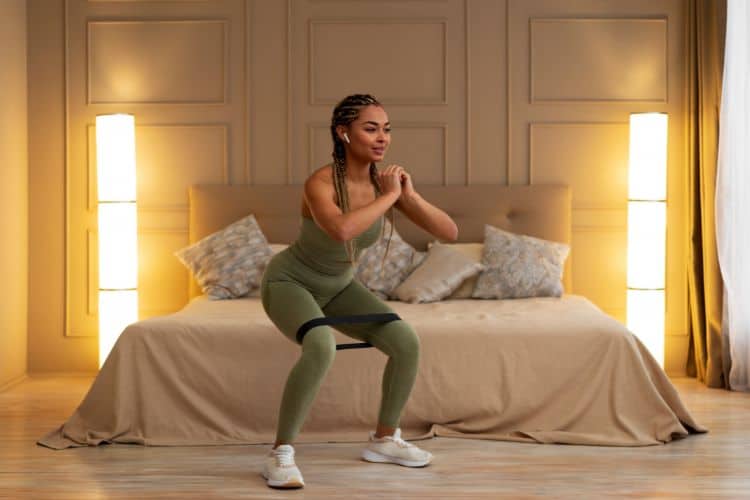
Hold one dumbbell vertically at your chest with both hands. Set your feet about shoulder-width apart, brace your midsection, and bend the knees and hips as if sitting into a chair. Stop at a depth you can maintain without the heels lifting or the knees collapsing inward. Hold for 30 seconds, then stand smoothly.
Keep the chest comfortably lifted without aggressively arching the lower back. The dumbbell should remain close to your body. To modify the exercise, hold higher in the squat or lightly touch your hips to the edge of a sturdy chair. To increase the challenge, lower the hold slightly while maintaining the same strong foot pressure and knee alignment.
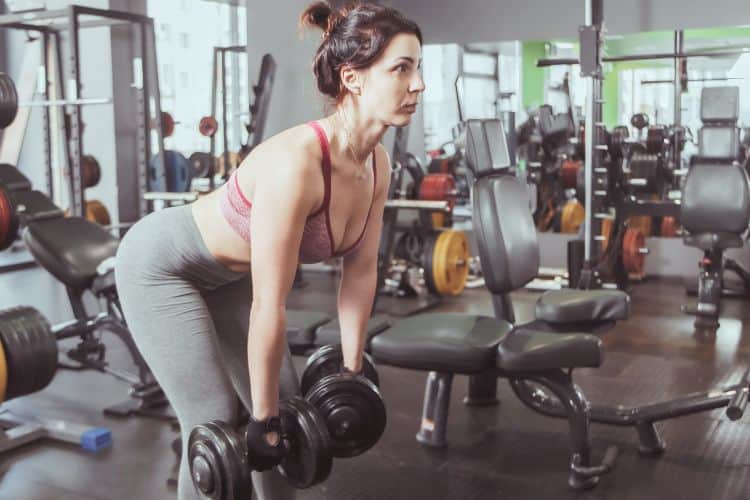
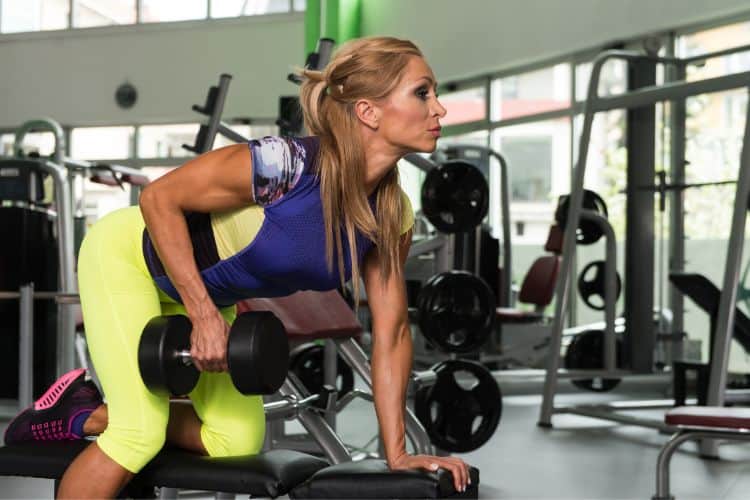
Hold a dumbbell in each hand and hinge forward by pushing the hips behind you. Keep a small bend in the knees and maintain a long, neutral spine. Pull the dumbbells toward the sides of your ribs, then pause with the elbows behind the torso for the full interval.
Think about drawing the shoulder blades gently toward one another without shrugging. Keep the neck aligned with the spine and the abdominal muscles braced. If the lower back tires before the upper back, reduce the hinge, use lighter weights, or perform a one-arm hold with the free hand supported on a chair.
Hold the dumbbells at your sides and step your right foot forward into a comfortable staggered stance. Lower both knees until you reach a stable position, keeping most of the front foot planted. Hold without bouncing. Your torso may lean slightly forward, but it should remain long and controlled.
Choose a depth that allows the front knee to track with the toes. If balance is a concern, use one dumbbell and place the free hand on a wall or sturdy chair. A shorter range is still effective when you maintain tension and alignment.
Switch the stance so the left foot is forward and repeat the hold. Try to match the position you used on the first side, but do not force perfect symmetry if one hip or ankle has a different comfortable range. Keep the front heel grounded and distribute your weight with control.
Avoid holding your breath as the legs begin to shake. Small muscular tremors can occur with fatigue, but end the interval if you lose balance, experience sharp pain, or can no longer control the knee and hip position.
Stand tall or sit upright and hold one dumbbell horizontally between both palms at chest height. Press your palms inward against the ends of the dumbbell while keeping the shoulders down. Maintain that inward pressure for the entire interval. The chest, shoulders, and arms should feel engaged.
Do not push so forcefully that your neck tenses or your shoulders rise. Keep the ribs stacked over the pelvis. If holding the dumbbell horizontally feels insecure, hold it vertically by one end with both hands and create gentle inward pressure. Grip safety always takes priority over intensity.
Hold the dumbbells in front of your thighs. Soften the knees and hinge the hips backward until the weights reach roughly knee or upper-shin level, depending on your mobility. Pause there while keeping the dumbbells close to the legs and the spine neutral.
You should feel the hamstrings, glutes, back, and core working together. Press the feet firmly into the floor and keep the shoulders pulled away from the ears. If you mainly feel the lower back, reduce the depth, lighten the load, and practice moving the hips farther behind you rather than bending through the waist.
Stand with a dumbbell in each hand, palms facing forward or slightly inward. Bend the elbows to approximately 90 degrees and hold the weights still. Keep the elbows close to your sides and the wrists straight. Avoid leaning backward to counterbalance the dumbbells.
Use a lighter weight than you might use for ordinary curls because the continuous hold becomes difficult quickly. For an easier version, alternate arms so one side works while the other rests. You can also hold the dumbbells slightly higher, closer to the shoulders, if the halfway position is too demanding.
Bring the dumbbells to shoulder height with the elbows angled slightly forward. Hold the weights close to the body while standing tall. Brace the core as if preparing for a gentle push against your torso, keep the ribs controlled, and maintain even pressure through both feet.
This position trains the shoulders, arms, upper back, and trunk without requiring an overhead hold. If the weights press uncomfortably into the shoulders, use one dumbbell held vertically at the center of the chest. Do not force the wrists into an awkward angle.
Lie on your back with the knees bent and feet planted about hip-width apart. Place one dumbbell securely across the front of your hips and hold it with both hands. Press through the feet and lift the hips until the torso forms a comfortable line from the shoulders toward the knees. Maintain the top position while keeping the ribs controlled.
Squeeze the glutes without pushing the hips so high that the lower back overarches. Keep the knees from drifting far inward or outward. For a bodyweight modification, set the dumbbell aside. If floor work is uncomfortable, replace this exercise with another standing Romanian deadlift hold.
Stand with one dumbbell in your right hand, arm extended beside your body. Keep both shoulders level and resist leaning toward or away from the weight. Hold for 15 seconds, switch hands carefully, and complete 15 seconds on the left side.
Imagine balancing a glass of water on your head while the core prevents side bending. Keep the weighted arm long without locking the elbow aggressively. For more stability, widen your stance slightly. The goal is an upright torso, not the heaviest dumbbell you can grip.
After the suitcase hold, rest only as long as needed to reset safely, then begin the circuit again. In round two, use the same weights unless the first round felt clearly too easy and your technique remained strong. Reducing the load is always appropriate if fatigue affects posture.
Begin the cool-down with slow walking or marching for one minute. Let your breathing gradually settle rather than dropping immediately to the floor. Follow with a gentle standing quadriceps stretch or a supported heel-to-glute position, spending about 30 seconds on each side.
Next, perform a relaxed hamstring stretch with one heel slightly forward and the hips moving back. Keep the spine long instead of forcing the chest toward the knee. Switch sides after 30 seconds. Open the chest by placing the hands behind the back or against a wall and gently turning away, keeping the shoulder in a comfortable position.
Finish with slow nasal breathing if comfortable. Inhale without lifting the shoulders, then use a longer, relaxed exhale. Stretching should feel mild and calming. Avoid forcing a joint deeper because the muscles are warm.
The correct load depends on the exercise, your experience, the length of the hold, and the position of the weight. Lower-body holds may accommodate more resistance than curl or chest-squeeze holds. Using one pair for every movement is convenient, but it may require modifications.
Judge the load by form and effort. During a 30-second interval, the first 10 seconds should feel controlled, the middle should demand focus, and the final portion should be challenging without forcing you to hold your breath or abandon the position. If you could easily continue for another minute, the weight or position may be too easy for your current goal. If your posture fails within 10 seconds, reduce the load, shorten the lever, or choose a less demanding angle.
Never use pain as evidence that an exercise is effective. Normal muscular effort may include warmth, fatigue, or shaking. Sharp, sudden, pinching, electrical, or joint-centered pain is a reason to stop and reassess.
Breath-holding is a common mistake during static strength work. The effort can make you want to brace as hard as possible and stop breathing, but sustained breath-holding may produce an unnecessary blood-pressure response. Maintain abdominal tension while continuing to take controlled breaths.
Try inhaling gently through the nose and exhaling through pursed lips. Count the exhalations instead of staring at the timer if that helps you stay relaxed. People with cardiovascular concerns, high blood pressure, pregnancy-related considerations, or other health conditions should ask an appropriate healthcare professional whether this style of training and its intensity are suitable for them.
One simple progression is to add five seconds to selected holds while keeping the total minute unchanged. For example, move from 30 seconds of work and 30 seconds of transition to 35 seconds of work and 25 seconds of transition. You could also increase the dumbbell weight slightly while returning to the original 30-second interval.
Train this workout once or twice per week with rest between sessions, depending on the rest of your program and how well you recover. A complete routine should also include dynamic strength work, aerobic activity, mobility suited to your needs, and rest.
Thirty minutes is enough for a focused full-body session when the holds are challenging, the exercise selection is balanced, and the workout matches your ability. Results depend on consistency, progression, recovery, nutrition, and the rest of your activity—not simply the length of one workout.
Isometric exercises can contribute to muscular strength and growth when they provide sufficient tension and are progressed over time. However, dynamic resistance training through a suitable range of motion offers benefits that angle-specific static holds do not fully duplicate. Use both approaches for a more complete program.
This workout can support an active lifestyle and help preserve or build strength, but no single routine guarantees weight loss. Long-term changes in body weight are influenced by overall energy intake, total activity, sleep, stress, health conditions, and consistency. Choose a sustainable combination of resistance training, cardiovascular movement, and eating habits appropriate for you.
Mild shaking can happen as muscles fatigue and coordinate the effort. Shorten the hold or reduce the load if the shaking makes your posture unstable. Stop immediately if it is accompanied by pain, dizziness, numbness, unusual shortness of breath, or loss of control.
This 30 minute dumbbell isometric workout proves that effective strength training does not always require constant motion. Ten purposeful holds can challenge the major muscle groups, improve awareness of difficult exercise positions, and create a quiet full-body routine with minimal space and equipment.
Start with manageable weights and shorter intervals, breathe throughout every hold, and make posture the priority. As your control improves, progress one variable at a time by extending selected holds, adding a small amount of resistance, or pairing static positions with slow dynamic repetitions. Used alongside full-range strength exercises and adequate recovery, dumbbell isometrics can become a valuable and engaging part of a balanced workout plan.
Build on this 30-minute dumbbell isometric workout with our 30 Minute Full Body Dumbbell Workout Plan for a dynamic strength session. You can also follow this complete Dumbbell Workout Plan For Women, try a Full Body Dumbbell Workout For Women, or increase the intensity with a Full Body Dumbbell Complex Workout. To develop the core control needed for stronger static holds, add this 30 Minute Anti Rotation Abs Workout to your weekly routine.
Stay up to date on the latest women’s health, fitness and lifestyle trends and tips.
