


Sign up for workout ideas, training advice, reviews of the latest gear and more.

A 30 minute reverse pyramid workout gives your strength training a clear direction: complete your heaviest working set while you feel fresh, then reduce the weight and perform more repetitions. Instead of collecting exercises or racing through a circuit, you focus on a few productive movements and give each set a specific purpose. The result is a practical session for busy women who want to train consistently at home or in the gym.
This workout combines a squat, a floor press, and a row. Together, these movements train your legs, chest, back, shoulders, and arms while requiring your trunk to maintain position. You need adjustable dumbbells or several pairs of different weights, a mat, and enough space to move comfortably. The routine works best when you already know the basic exercises and can judge when a set is becoming challenging.
The goal is controlled strength work within a manageable schedule. You will warm up, complete nine working sets, and finish with a short cooldown. There are no jumps, complicated combinations, or timed repetition races. Your progress comes from improving your lifting performance over several weeks.
Reverse pyramid training organizes working sets from heavier to lighter. Your first working set uses the greatest resistance and the lowest repetition target. After resting, you reduce the weight and perform a slightly longer set. You lower the weight again for the final set, allowing another small increase in repetitions.
For this routine, use six to eight repetitions on the first working set, eight to ten on the second, and ten to twelve on the third. These ranges are a practical programming choice, rather than a universal rule. Your equipment, experience, and technique determine the resistance you use.
The phrase “heaviest set first” refers to working sets. It does not mean picking up your heaviest dumbbells immediately after arriving. General movement and lighter rehearsal sets prepare you to lift. Those lighter sets should feel easy enough that they do not tire you before the main work begins.
For example, you might rehearse several bodyweight squats, perform a light goblet squat set, and then complete a few repetitions with an intermediate weight. Only afterward would you attempt your first challenging set. Treat that preparation as part of the workout, even when your schedule is tight.
In a traditional ascending pyramid, the weight increases across sets while repetitions usually decrease. A reverse pyramid switches that working-set order. Both structures can organize resistance exercise effectively. Neither structure removes the need for appropriate resistance, sound technique, recovery, and a repeatable training schedule.
This article presents reverse pyramid training as one useful option. It does not assume that reversing set order automatically creates more muscle growth or faster fat loss. Your ability to repeat quality sessions matters more than giving a workout an impressive name.
The main appeal is focus. You know which exercises matter, how many sets to complete, and what each set should accomplish. That makes it easier to record your performance and return to the same movements with a clear plan.
After warming up, you approach your most demanding set before accumulating substantial exercise-specific fatigue. This can help you concentrate on the load and repetition target that matter most to that session. The lighter sets then provide additional practice and training volume.
However, “heavy” is relative. A challenging goblet squat for one person may be another person’s warm-up. Choose resistance according to your current capacity instead of copying someone else’s dumbbell weight.
Three exercises reduce the number of stations and setups you need. At home, place your dumbbells beside the mat before starting. In a gym, choose equipment that is readily available, and avoid building the session around several occupied machines.
The structure also makes tracking straightforward. Each exercise has three working sets, with separate weight and repetition entries. You can see whether performance improves without relying on soreness or how sweaty you feel afterward.
Use adjustable dumbbells or several pairs that allow meaningful reductions between sets. A mat cushions the floor press, and a sturdy bench provides an optional supported-row alternative. Do not use a rolling chair, unstable table, or slippery furniture for support.
For your first working set, select a load that allows six to eight controlled repetitions while leaving approximately two good repetitions available. This is often described as two repetitions in reserve. You should feel challenged without needing to twist, bounce, shorten the movement, or hold your breath through the entire set.
If you cannot complete six clean repetitions, lower the weight. If you reach eight and could easily perform several more, record that observation and consider a modest increase next time. During the first session, it is reasonable to underestimate your starting load.
Begin with a reduction of roughly 10–15 percent after the first working set, and reduce again after the second. Treat those percentages as starting estimates. Dumbbell increments are often larger than ideal, and fatigue varies by exercise.
For example, a floor press might use a pair of 20-pound dumbbells for six to eight repetitions, a pair of 17.5-pound dumbbells for eight to ten, and a pair of 15-pound dumbbells for ten to twelve. Those numbers illustrate the structure; they are not recommended starting weights for every reader.
If the lighter load still prevents you from reaching the next repetition range with good technique, reduce it further. The final set should remain purposeful and controlled rather than becoming a struggle to satisfy a number.
Reserve approximately five minutes for warming up, seven minutes for each of the three exercise blocks, and four minutes for cooling down and recording results. That adds up to thirty minutes, including rest and equipment changes.
Within each exercise block, complete one short rehearsal set if needed, followed by three working sets. Rest approximately 90–120 seconds between working sets. With controlled repetitions and prepared equipment, this can fit into seven minutes. Use any remaining time to change weights and get ready for the next movement.
The schedule is a framework, not a deadline that overrides technique. If you need longer preparation or rest, complete two working sets per exercise or extend the session. Do not rush a heavy set to stay on the clock. Experienced lifters using substantially heavier loads may need a longer session.
Start with approximately one minute of comfortable marching or brisk walking. Follow with bodyweight squats, gentle hip hinges, shoulder circles, and easy arm reaches. Move through comfortable ranges while gradually increasing your pace.
Spend the remaining time preparing for the squat. Complete six to eight easy goblet squats with a light dumbbell, rest briefly, and perform three to five repetitions with a moderate load if needed. Keep both sets well short of fatigue.
The general warm-up does not replace practicing each loaded exercise. Before the floor press and row, use the opening portion of that exercise’s block for one easy set of five to eight repetitions. Add preparation if you need it, and reduce working sets when necessary to preserve the thirty-minute limit.
Stop and reassess if a movement produces sharp pain, dizziness, or unusual symptoms. Familiar muscular effort is different from pain that changes how you move. If an injury or health condition affects lifting, get individualized guidance before loading the movement heavily.
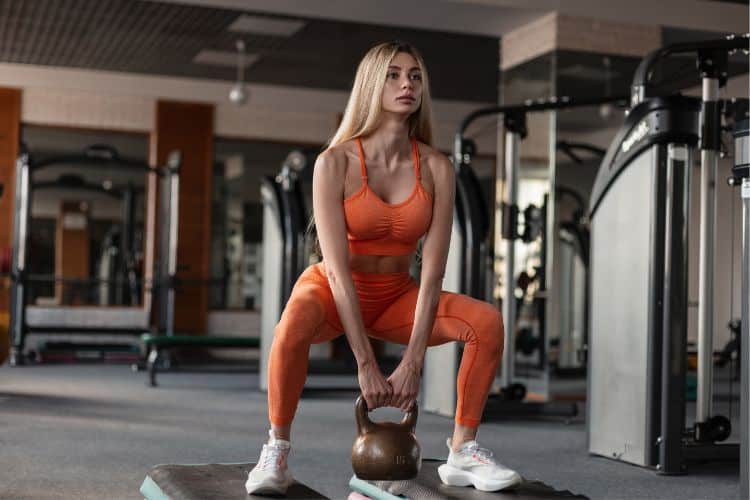
The goblet squat trains the thighs and glutes while requiring you to hold an upright, controlled position. Holding one dumbbell at your chest also makes weight changes relatively simple.
Stand with your feet approximately shoulder-width apart, adjusting the width and toe angle to suit your hips. Hold the dumbbell securely near your chest. Brace your midsection, keep your whole foot grounded, and bend your knees and hips together.
Lower to a depth you can control without your heels lifting or your lower back rounding noticeably. Allow your knees to travel in line with your toes. Stand by pushing through the floor and extending your hips and knees together. Finish tall without leaning backward.
Use a steady descent and a smooth upward effort. Avoid dropping quickly into the bottom or bouncing to escape the hardest part. The movement should look similar from the first repetition to the last.
Complete six to eight repetitions with your heaviest working weight. Rest 90–120 seconds, lower the resistance, and perform eight to ten repetitions. Rest again, reduce the weight, and complete ten to twelve repetitions.
If holding the dumbbell becomes the main limitation before your legs are challenged, a familiar leg press is a gym alternative. A squat to a stable bench can provide a consistent depth target. Select one version and keep it consistent when tracking progress.
The floor press provides an upper-body pushing exercise without requiring a bench. It trains the chest, triceps, and front shoulders, while the floor limits how far the upper arms descend.
Sit on your mat with the dumbbells close, then carefully position yourself on your back with your knees bent and feet planted. Hold the weights above your chest, using palms facing forward or slightly inward according to comfort.
Lower the dumbbells with your elbows angled moderately away from your torso. Let the backs of your upper arms contact the floor gently. Press upward smoothly, keeping your wrists stacked over your forearms and your shoulders controlled.
Avoid slamming your arms into the floor, arching aggressively, or allowing one dumbbell to drift away from the other. Choose weights you can position and put down safely without assistance. If setup feels uncertain, reduce the load before beginning.
After your light rehearsal set, perform six to eight repetitions with the first working load. Rest 90–120 seconds. Reduce the weight and complete eight to ten repetitions, then rest and reduce again for ten to twelve.
An accessible chest press machine can replace the floor press at the gym. Keep the same descending-load structure and use the machine’s setup instructions. If getting down to the floor is difficult, choose that alternative rather than making transitions a struggle.
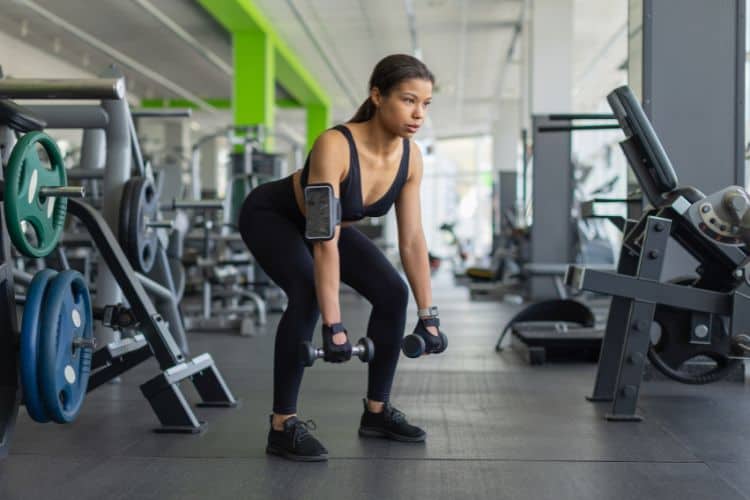
A row supplies the upper-body pulling movement. It trains the back and arms while requiring you to keep your trunk stable. Use a bilateral dumbbell row for a compact session, provided you can maintain the hinge position comfortably.
Stand with your feet approximately hip-width apart and hold the dumbbells beside your legs. Soften your knees, move your hips backward, and tip your torso forward. Maintain a comfortable neutral spine with your neck following the line of your back.
Pull the dumbbells toward your lower ribs while keeping your elbows reasonably close to your sides. Lower them under control and allow your arms to straighten without losing your torso position. Avoid jerking your chest upward to move the weights.
Your back muscles should drive the pull. If your lower back tires before the intended muscles, use a chest-supported row on a stable incline bench or a seated row machine. Those alternatives reduce the demand of holding a bent-over position.
Perform one easy rehearsal set before starting the heavier work. Complete six to eight working repetitions, rest 90–120 seconds, then reduce the load for eight to ten. Rest again and finish with a lighter set of ten to twelve repetitions.
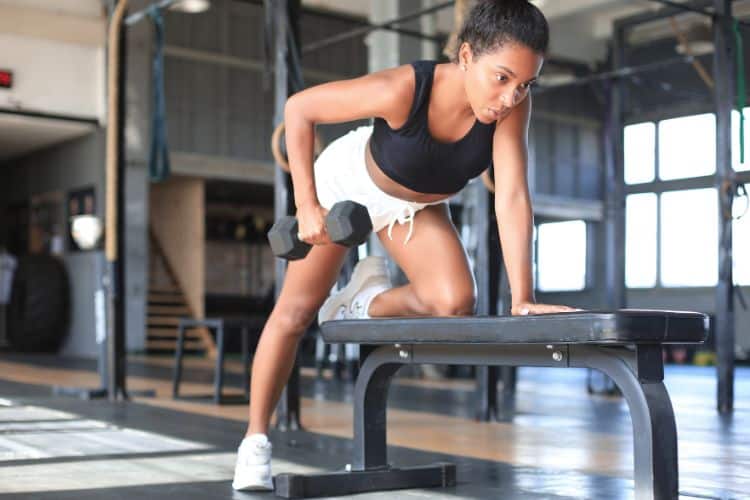
If you choose a one-arm supported row, perform the prescribed repetitions on both sides to complete each set. This variation takes longer, so allow additional time or use two working sets. Do not omit rest simply to fit both sides into the original block.
Walk slowly around the room and let your breathing settle. If comfortable, add a gentle chest stretch, relaxed upper-back reach, and light hip movement. Avoid forcing a deep stretch or treating the cooldown as another demanding exercise block.
Record the weight, repetitions, and approximate repetitions in reserve for every working set. A useful entry might read: “Goblet squat, 25 pounds, eight repetitions, two remaining.” Include a brief note if grip, balance, or equipment affected the result.
This information helps you distinguish a real improvement from a change in technique. Eight controlled repetitions at the same depth provide more useful feedback than ten rushed repetitions with a shorter movement.
Use the same basic routine twice weekly on nonconsecutive days to begin. For example, train on Monday and Thursday, with walking or comfortable mobility work between sessions. Your recovery, other exercise, and lifting experience should guide whether that frequency suits you.
Learn the timing and identify appropriate weights for all three exercises. Keep approximately two or three repetitions in reserve and prioritize consistent movement. The first week is successful when you finish with useful training notes and confidence about repeating the session.
Keep the weights unchanged and try to add one controlled repetition to a set that previously finished below the top of its range. You might move from six to seven on the first set without changing the later sets. Progress does not need to happen everywhere simultaneously.
When you repeatedly reach the top of a set’s range with the intended reserve and reliable technique, increase that set’s weight by the smallest practical increment. Repetitions may return toward the bottom of the range. Adjust subsequent loads so the descending pattern remains appropriate.
Compare your notes with week one. Look for better control, additional repetitions, or a manageable weight increase. If performance is declining and fatigue is accumulating, use lighter loads or fewer working sets for a week before resuming progression.
The most disruptive mistake is making the first set too heavy. Grinding through a near-maximal effort can reduce the quality of everything that follows. Leave a small reserve, and treat technique as part of the repetition target.
Reverse pyramid working sets include meaningful rest. Immediately switching to lighter dumbbells and continuing without recovery turns the sequence into a drop-set approach. That changes the session’s demands and makes the heavier sets harder to compare between workouts.
Reduced resistance should allow more good repetitions. It should not encourage sloppy movement or distraction. Maintain the same range of motion and concentration throughout all three sets, adjusting the load when necessary.
Extra curls, lunges, shoulder presses, and finishers can quickly push this session beyond thirty minutes. Keep the core routine intact while learning it. If you want broader weekly coverage, place a hip hinge, overhead press, or additional movement in another appropriately planned session.
Beginners can learn the structure, but should first become comfortable with the exercises and effort estimates. Start with lighter loads and two working sets if needed. Straight sets with one consistent weight are also a sensible introduction when weight changes feel distracting.
One fixed pair cannot provide true descending external loads for the same exercise. You can still use it for useful strength training with straight sets. For this reverse pyramid routine, use adjustable dumbbells, multiple weights, or gym machines with selectable resistance.
It is a compact strength session covering a squat, push, and pull. It does not include every movement pattern or replace aerobic activity. Build your broader week around your goals, including suitable walking or other conditioning and complementary strength exercises.
No exercise arrangement selectively removes belly fat. This routine can contribute to a broader fitness and weight-management plan, but visible body changes depend on multiple factors. Evaluate the workout first by improvements in strength, control, consistency, and recovery.
A 30 minute reverse pyramid workout works best when you keep its priorities clear: prepare properly, perform your heaviest working set with control, rest, and reduce the load for additional quality repetitions. Three familiar movements give you enough structure to train purposefully without filling the session with constant transitions.
Begin with manageable weights, record your performance, and repeat the routine consistently. Over time, those small improvements can turn a short workout into a dependable part of your strength-training week.
Build on this 30-minute reverse pyramid workout with our Progressive Overload Dumbbell Workout Plan for guidance on gradually increasing your training challenge. For more workout options, explore our 35-Minute Progressive Dumbbell Routine or 30 Minute Full Body Dumbbell Workout. When you have extra time, try our 40 Minute Full Body Dumbbell Workout, which includes familiar squat, row, and floor press movements. To explore a structured weekly schedule, read our SplitLean 4-Day Strength Plan.
Stay up to date on the latest women’s health, fitness and lifestyle trends and tips.
