


Sign up for workout ideas, training advice, reviews of the latest gear and more.

You do not need to train every day to become stronger, build lean muscle, and improve your overall fitness. A well-designed 2-day full-body dumbbell workout plan can produce meaningful results while fitting into a busy schedule. By training all the major muscle groups during both weekly sessions, you give your body a consistent strength-building stimulus without spending most of your week in the gym. The plan is especially practical for beginners, home exercisers, busy professionals, parents, and anyone who wants a simple routine that is easier to maintain.
This two-day workout uses dumbbells to train the legs, glutes, back, chest, shoulders, arms, and core. Each session includes compound exercises that work several muscles together, followed by targeted movements that help create a balanced program. You can complete the workouts at home or in a gym with a pair of adjustable dumbbells, a stable chair or bench, and enough floor space to move safely. The objective is not to rush through as many repetitions as possible. Instead, focus on controlled technique, a suitable weight, and gradual progress from week to week.
A two-day routine works because each major muscle group is trained twice per week. Rather than dedicating an entire session to one body part, full-body training distributes the weekly workload across two balanced workouts. This approach gives you repeated practice with important movement patterns, including squatting, hinging, pushing, pulling, carrying, and stabilizing. It also provides several recovery days between sessions, which can be valuable when you are new to resistance training or balancing exercise with work, family, sports, or other responsibilities.
Dumbbells make the plan flexible. They allow each side of your body to work independently, which may help reveal and gradually reduce strength imbalances. They also permit a natural range of motion and offer many exercise variations without requiring a large collection of machines. Although two weekly sessions are a relatively low time commitment, the workouts can still become challenging as your strength improves. Heavier dumbbells, additional repetitions, slower lowering phases, pauses, and more difficult variations all provide ways to progress.
Consistency remains the most important part of the plan. Two purposeful workouts completed every week will generally be more useful than an ambitious five-day schedule that is frequently skipped. Treat these sessions as appointments, record your performance, and give the program several weeks before judging your results.
Separate the workouts by at least two days whenever possible. A Monday-and-Thursday or Tuesday-and-Friday schedule works well because it provides time for your muscles to recover. Avoid performing both sessions on consecutive days, especially when you are using challenging weights. Recovery time helps you return with better energy and maintain proper form.
Each workout should take approximately 45 to 60 minutes, including the warm-up. Beginners can start with two sets per exercise and longer rest periods. More experienced trainees can complete three or four sets depending on their recovery and available time. On nonlifting days, you may walk, stretch, perform gentle mobility work, or do moderate cardio. Keep the extra activity manageable so it does not interfere with your strength sessions.
Select a load that allows you to complete the target repetition range with good technique while making the final two or three repetitions feel demanding. You should finish most sets feeling that you could perform approximately two more controlled repetitions if necessary. If you can easily exceed the top of the repetition range, the weight is probably too light. If your posture breaks down or you cannot reach the bottom of the range, reduce the load.
You may need different weights for different exercises. Most people can use more weight for goblet squats, Romanian deadlifts, and rows than for lateral raises or curls. Adjustable dumbbells are convenient, but multiple fixed pairs also work. Never sacrifice range of motion or joint position simply to lift a heavier number.
Begin with five to eight minutes of movement that gradually raises your body temperature and prepares the joints you will use. March briskly in place or take a short walk, then perform bodyweight squats, hip hinges, alternating reverse lunges, arm circles, and gentle torso rotations. Complete about eight to ten controlled repetitions of each drill. Before the first demanding strength exercise, perform one lighter practice set to rehearse the movement.
A warm-up should help you feel more prepared rather than tired. Avoid turning it into a separate high-intensity workout. Use the time to check how your body feels and adjust the day’s weights if you are unusually stiff or fatigued.
The first workout emphasizes the squat pattern, horizontal pushing and pulling, hip extension, shoulder strength, and trunk stability. Complete all sets of one exercise before moving to the next. Rest for approximately 60 to 90 seconds between sets and up to two minutes after demanding compound exercises.
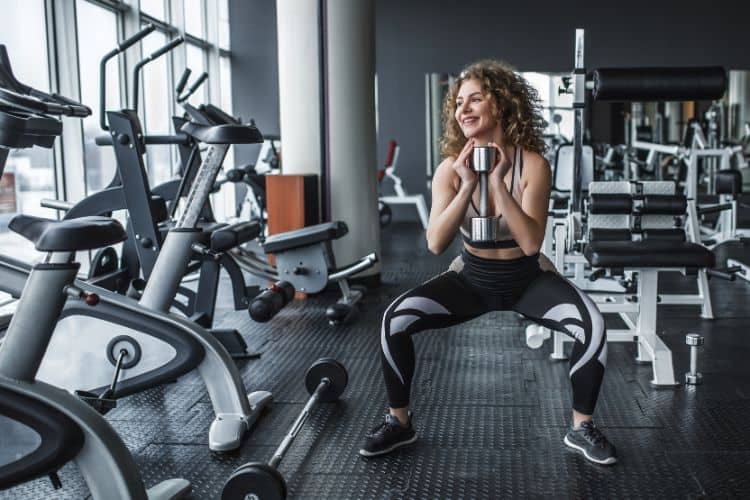
Hold one dumbbell vertically against your chest, stand with your feet around shoulder-width apart, and keep your ribs stacked over your pelvis. Sit your hips down between your legs while allowing your knees to track in the same direction as your toes. Descend only as far as you can while keeping your heels grounded and spine controlled. Push the floor away to stand and squeeze your glutes without leaning backward.
The goblet squat strengthens the quadriceps, glutes, inner thighs, and core. If depth is difficult, squat to a stable chair and lightly touch it before standing. If one dumbbell eventually becomes too light, hold two dumbbells at your shoulders or use a slower three-second lowering phase.
Lie on your back with your knees bent and feet planted. Hold a dumbbell in each hand with your upper arms angled slightly away from your torso. Brace your midsection, press the weights over your chest, and avoid allowing them to collide at the top. Lower slowly until your upper arms gently contact the floor, pause briefly, and press again.
This exercise trains the chest, front shoulders, and triceps while the floor limits excessive shoulder extension. A bench press is an appropriate alternative if you have a secure bench and can use it safely. Keep your wrists stacked over your elbows and choose a load you can control throughout every repetition.
Place one hand on a sturdy bench or chair and step the opposite foot slightly back. Keep your spine long and pull the dumbbell toward your hip, leading with your elbow. Pause when your upper arm is near your torso, then lower the weight under control until your arm is extended. Avoid twisting your shoulders or jerking the weight upward.
Rows strengthen the upper back, lats, rear shoulders, and biceps. Complete all repetitions on one side before switching, or alternate sides between sets. Think about moving your shoulder blade toward your spine rather than simply lifting the dumbbell with your hand.
Stand tall with a dumbbell in each hand in front of your thighs. Soften your knees, brace your core, and push your hips backward while keeping the weights close to your legs. Lower until you feel a strong but comfortable stretch through your hamstrings and can maintain a neutral spine. Drive your feet into the floor and bring your hips forward to stand.
The Romanian deadlift develops the hamstrings, glutes, back-body strength, and grip. It is a hip hinge, not a squat, so the hips should travel backward while the shins remain relatively vertical. Stop the descent before your lower back rounds.
Sit upright on a stable chair with a dumbbell in each hand at shoulder height. Brace your abdomen and press the weights overhead without aggressively arching your lower back. Lower them until your elbows return just below shoulder level. If overhead pressing causes pain, use a neutral grip with your palms facing each other, reduce the range of motion, or substitute an incline press.
Hold one heavy dumbbell at your side and stand tall as though balancing a glass of water on your head. Keep your shoulders level and resist leaning toward or away from the weight. Breathe normally while maintaining abdominal tension. This simple exercise trains grip strength and challenges the core to prevent side bending. If space allows, turn the hold into a slow suitcase carry.
The second session changes the exercise angles and includes more single-leg work. It complements Day 1 while again training every major area of the body. Use controlled repetitions and rest for 60 to 90 seconds between sets. Take additional rest when needed to preserve technique.
Stand with a dumbbell in each hand and step one foot backward. Lower your back knee toward the floor while keeping the front foot planted and the front knee tracking over the toes. Push through the front foot to return to standing, then repeat on the same side or alternate legs. Keep the step long enough that you can control the bottom position without the front heel lifting.
Reverse lunges train the glutes, quadriceps, hamstrings, balance, and core. Beginners may perform bodyweight repetitions while holding a wall or chair for support. If lunges do not feel comfortable, replace them with split squats to a limited depth or dumbbell step-ups onto a low, stable platform.
Lie on your back with your knees bent and place one dumbbell securely across the front of your hips. Brace your abdomen, press through your feet, and lift your hips until your body forms a straight line from shoulders to knees. Pause and squeeze your glutes, then lower with control. Avoid pushing so high that your lower back overarches.
The glute bridge adds focused hip-extension work without repeating the exact hinge used on Day 1. Place a folded towel under the dumbbell if needed for comfort. As the movement becomes easier, add weight, lengthen the pause at the top, or progress to a staggered-stance version.
Perform this press on the floor or a secure bench with your palms facing each other. Keep the dumbbells above your chest, lower them smoothly, and press without bouncing. The neutral grip offers a different angle from Day 1 and is often comfortable for the shoulders. Maintain firm feet and a stable torso throughout the set.
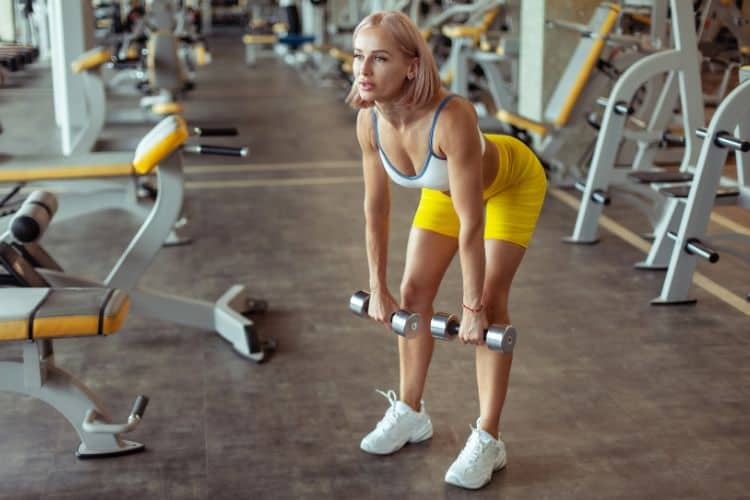
Hold a dumbbell in each hand, soften your knees, and hinge at the hips until your torso is inclined forward. Maintain a long spine and pull both weights toward the sides of your waist. Pause briefly, lower until your elbows are straight, and repeat without using momentum. If holding the hinged position fatigues your lower back, perform chest-supported rows on an incline bench or repeat the supported one-arm row from Day 1.
Stand with light dumbbells at your sides, soften your elbows, and raise your arms outward until they approach shoulder height. Lower slowly and keep your shoulders away from your ears. Lateral raises target the side deltoids and usually require much less weight than presses or rows. Control matters more than load, so avoid swinging your torso to create momentum.
For hammer curls, hold the dumbbells with your palms facing inward, keep your elbows near your ribs, and bend your elbows without rocking. Lower the weights fully under control. For the triceps extension, hold one dumbbell with both hands overhead, bend your elbows to lower it behind your head, and extend your arms while keeping your ribs controlled. You may perform the exercises separately or alternate them as a time-saving superset.
Lie on your back with your arms extended toward the ceiling and your hips and knees bent to about 90 degrees. Gently press your lower back toward the floor, then slowly extend the opposite arm and leg without losing trunk position. Return to the start and switch sides. Hold a very light dumbbell only after mastering the bodyweight version. The dead bug trains core control without requiring repeated spinal flexion.
Follow the routine for at least six to eight weeks and record the weights, sets, and repetitions you complete. Use a double-progression method: begin with a weight you can manage at the bottom of the target range, then gradually add repetitions. Once you can complete the top number of repetitions for every set with clean technique, increase the weight slightly and return to the lower end of the range.
For example, if you perform goblet squats for three sets of 8, 8, and 8 repetitions, try to add one or two total repetitions the following week. Over time, work toward three sets of 12. When you reach that goal without grinding or losing form, choose a heavier dumbbell and begin again around eight repetitions. Small, sustainable improvements are enough; you do not need to set a personal record during every session.
If your available dumbbells are limited, make an exercise harder by lowering the weight for three seconds, pausing in the most challenging position, improving the range of motion, or adding one set. Change only one variable at a time so you can tell whether you are progressing. More work is not automatically better if it reduces your recovery or technique.
Strength improves during training, but adaptation also depends on recovery. Aim for consistent sleep, eat balanced meals, and include a useful source of protein throughout the day. Carbohydrates can support training energy, while fruits, vegetables, healthy fats, and adequate fluids contribute to overall nutrition. Your exact calorie and protein needs depend on factors such as body size, activity level, health, and goals, so personalized guidance from a qualified professional may be appropriate when needed.
Cardio can complement the plan. Add two or three easy-to-moderate sessions of walking, cycling, swimming, or another enjoyable activity if your schedule and recovery permit. You can also take short walks on most days. If building strength is the priority, avoid exhausting cardio immediately before lifting and increase weekly activity gradually.
Expect some mild muscle soreness when beginning a new routine, but sharp, worsening, or joint-focused pain is a reason to stop the exercise. Modify movements to suit your mobility and training history. If you have an injury, medical condition, are pregnant or recently postpartum, or have been advised to limit exercise, consult an appropriate healthcare professional before starting.
One common mistake is beginning with weights that are too heavy. A challenging load should not force you to shorten every repetition, hold your breath excessively, or use momentum. Another mistake is racing through the workout. Controlled repetitions keep the intended muscles working and make it easier to notice when technique changes.
Do not add large amounts of extra volume simply because the plan has only two training days. The routine already covers all major movement patterns twice each week. Start with the recommended workload, monitor your recovery, and make gradual adjustments. Finally, avoid changing the exercises every week. Repeating the core movements gives you the practice needed to improve coordination and provides a clear way to measure progress.
Yes, two well-structured full-body sessions can support muscle growth, particularly for beginners and people returning after a break. Results depend on consistent effort, progressively challenging the muscles, sufficient recovery, and supportive nutrition. Experienced lifters may eventually benefit from more weekly volume, but two days can remain productive when the sets are performed with focus.
Yes. Beginners should start with light dumbbells, complete two sets instead of three when necessary, and prioritize technique. During the first few weeks, leave several repetitions in reserve and learn how each exercise should feel. Increase the challenge only after the movements become consistent.
Rest about 60 to 90 seconds for most exercises and up to two minutes after demanding squats, lunges, deadlifts, presses, and rows. Longer rest is useful when it allows you to complete the next set with better form. Isolation exercises such as curls and lateral raises may require only 45 to 75 seconds.
Keep the main plan for six to eight weeks or longer if you continue making progress. You do not need to replace an exercise simply because the routine feels familiar. Consider a variation when progress has stalled for several weeks, your equipment changes, or a movement remains uncomfortable despite appropriate adjustments.
This 2-day full-body dumbbell workout plan offers a realistic way to build strength, support muscle development, and improve total-body fitness without a complicated weekly schedule. Day 1 centers on goblet squats, floor presses, rows, Romanian deadlifts, shoulder presses, and loaded holds. Day 2 uses reverse lunges, glute bridges, neutral-grip presses, bent-over rows, shoulder and arm work, and core training to provide a balanced second stimulus.
Commit to two nonconsecutive sessions each week, use weights that challenge you without compromising form, and track your repetitions. As the weeks pass, add small amounts of weight or complete more controlled repetitions. A simple plan performed consistently can deliver far more value than a complex routine that does not fit your life.
Continue building your routine with the Best Full-Body Dumbbell Exercises For Women to learn additional movements for every major muscle group. When you need a faster training option, try these Full-Body Dumbbell Exercises For a 15-Minute Workout. You can also increase your weekly training volume with this One-Hour Full-Body Dumbbell Strength Workout or combine resistance training and conditioning with the Best Full-Body Dumbbell Workout For Strength And Fat Loss. For extra lower-body work, add this 30-Minute Functional Dumbbell Leg Workout to a future training week.
Stay up to date on the latest women’s health, fitness and lifestyle trends and tips.
