


Sign up for workout ideas, training advice, reviews of the latest gear and more.

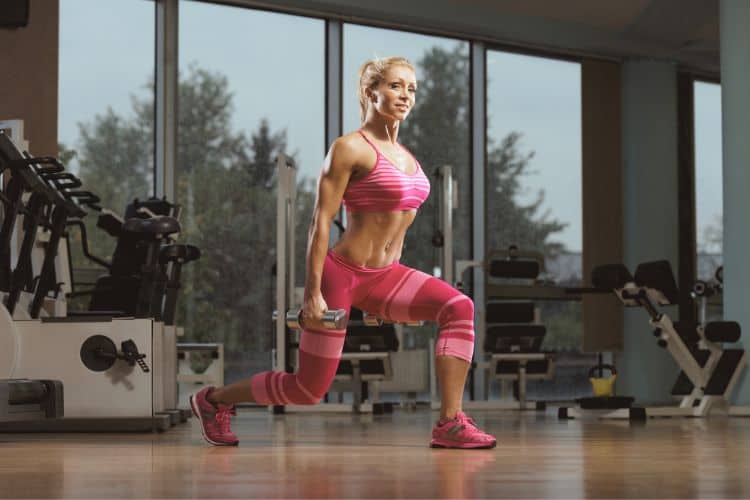



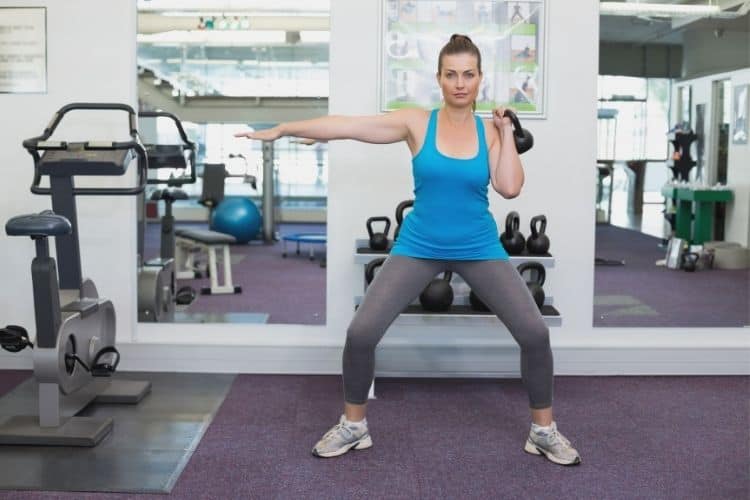
When you want an efficient workout that challenges your entire body without spending an hour exercising, a 20 minute HIIT ladder workout can be an excellent option. Ladder workouts combine the intensity of high-intensity interval training with a simple progression system that keeps the workout interesting from beginning to end. Instead of performing the same number of repetitions for every exercise, you gradually increase or decrease the workload as you move through the workout.
This style of training can help improve cardiovascular fitness, muscular endurance, coordination, and overall conditioning in a relatively short amount of time. Because the workout uses mostly bodyweight exercises, it can also be performed at home, in a hotel room, outdoors, or at the gym without requiring complicated equipment.
The following 20 minute HIIT ladder workout combines squats, push-ups, mountain climbers, reverse lunges, plank movements, and other full-body exercises into an efficient routine. You can adjust the repetitions, pace, and exercise variations to match your current fitness level.
A HIIT ladder workout is a form of interval training where the number of repetitions, seconds, or rounds changes progressively throughout the workout. Instead of completing three traditional sets of 10 repetitions, for example, you might perform 2 reps during the first round, 4 during the second, 6 during the third, and continue climbing until reaching the top of the ladder.
You can also perform a descending ladder where repetitions gradually decrease. Another popular option is an up-and-down ladder. You climb to a predetermined number of repetitions and then work your way back down.
Combining the ladder format with high-intensity interval training (HIIT) creates a workout that continuously changes. The easier early rounds help you establish your technique and rhythm, while the higher-repetition rounds create the greatest conditioning challenge.
Because your workload changes throughout the session, ladder workouts can feel more engaging than repeatedly performing identical sets.
A major advantage of a 20 minute HIIT ladder workout is efficiency. You can challenge multiple muscle groups while simultaneously increasing your heart rate without spending a long time training.
Compound bodyweight exercises such as squats, lunges, push-ups, and mountain climbers recruit several muscle groups at once. This allows you to train your legs, glutes, chest, shoulders, arms, and core within the same short workout.
HIIT ladder workouts can also improve muscular endurance. As the repetitions increase, your muscles must continue producing force while becoming increasingly fatigued. Over time, consistent training can help you perform more work before needing to rest.
The interval structure also provides cardiovascular conditioning. Moving quickly between exercises can elevate your heart rate, while brief recovery periods allow you to partially recover before beginning another round.
Another benefit is flexibility. You can make the workout easier or harder simply by changing the repetition ladder, exercise variations, rest periods, or pace.
This workout is divided into four sections: a short warm-up, an ascending ladder, a descending ladder, and a final conditioning ladder.
You will primarily use repetitions instead of timed work intervals. The goal is to complete each exercise with controlled technique before progressing to the next rung.
For the ascending ladder, begin with 2 repetitions of each exercise. During the next round, complete 4 repetitions. Continue with 6, 8, and finally 10 repetitions.
Your ladder looks like this:
Round 1: 2 reps
Round 2: 4 reps
Round 3: 6 reps
Round 4: 8 reps
Round 5: 10 reps
For exercises that naturally alternate sides, complete the prescribed repetitions on each side unless otherwise noted.
The goal isn’t to race through every movement. Move quickly enough to maintain intensity while keeping your technique controlled.
Before beginning the HIIT ladder, spend approximately three minutes preparing your muscles and joints for faster movement.
Begin with 30 seconds of marching or lightly jogging in place. Keep your posture tall while allowing your arms to swing naturally.
Gradually increase your pace as your body begins warming up.
Perform bodyweight squats for approximately 30 seconds. Stand with your feet around shoulder-width apart and sit your hips backward and downward.
Keep your chest lifted and drive through your feet to return to standing.
Perform alternating reverse lunges for approximately 30 seconds. Step one foot backward and lower your body until both knees comfortably bend.
Push through your front foot to return to standing before switching legs.
Perform arm circles for approximately 30 seconds, gradually increasing the size of each circle. Reverse direction halfway through.
This helps prepare your shoulders for push-ups and plank exercises.
Spend approximately 30 seconds performing controlled inchworms. Hinge forward, place your hands on the floor, and walk them forward until reaching a plank position.
Walk your hands back toward your feet and stand.
Finish with 30 seconds of jumping jacks. Beginners can perform step jacks by stepping one foot outward at a time rather than jumping.
After the warm-up, transition directly into the first ladder.
The first working section uses five exercises. Complete 2 repetitions of each movement, followed by 4, 6, 8, and 10 repetitions.
Continue moving through the ladder for approximately seven minutes.
Stand with your feet approximately shoulder-width apart. Brace your core and push your hips backward as you bend your knees.
Lower until you reach a comfortable depth before driving through your feet to stand.
Bodyweight squats primarily train the quadriceps and glutes while also requiring your core to stabilize your torso.
Place your hands slightly wider than shoulder-width apart and extend your legs behind you.
Lower your chest toward the floor while maintaining a straight line from your head through your hips. Press through your palms to return to the starting position.
If standard push-ups are too difficult, perform them with your hands elevated on a sturdy bench or countertop.
Stand tall and step your right foot backward. Lower your body under control and push through your front foot to return to standing.
Alternate legs with every repetition.
Reverse lunges train the glutes, quadriceps, and hamstrings while challenging balance and coordination.
Begin in a high plank position. Bring one knee toward your chest before switching legs.
Keep your hips relatively stable and your abdominal muscles engaged.
You can perform mountain climbers quickly for a greater cardiovascular challenge or slowly for more core control.
Begin standing before squatting down and placing both hands on the floor. Step or jump your feet backward into a plank.
Return your feet toward your hands and stand.
A squat thrust resembles a burpee without the push-up or vertical jump, making it a useful full-body conditioning exercise.
Complete the 2-4-6-8-10 ladder while maintaining controlled technique. If you reach 10 repetitions before seven minutes have passed, begin working back down the ladder.
After completing the first ladder, take approximately one minute to recover.
Walk around rather than immediately sitting down. Take controlled breaths and allow your heart rate to gradually decrease.
Drink a small amount of water if needed.
The next section reverses the ladder structure.
For the descending ladder, begin with 10 repetitions and gradually decrease the workload.
Your repetition sequence is:
10 reps → 8 reps → 6 reps → 4 reps → 2 reps
This section includes four exercises designed to continue challenging your lower body, upper body, and core.
Stand with your feet together and step your right foot outward. Push your hips backward while bending your right knee and keeping your opposite leg relatively straight.
Push through your working foot to return to standing before switching sides.
Lateral lunges introduce movement in a different direction and challenge the inner thighs, glutes, and quadriceps.
Begin in a high plank position with your feet slightly wider than hip-width apart.
Lift one hand and gently tap the opposite shoulder. Return your hand to the floor before switching sides.
Try to prevent your hips from rotating excessively.
For an easier variation, perform shoulder taps with your hands elevated on a sturdy surface.
Perform a bodyweight squat and return to standing. As you stand, drive one knee toward your chest.
Perform another squat and switch knees.
This exercise combines lower-body strength with balance and core engagement.
Run in place while lifting your knees toward your hips. Keep your chest upright and use your arms naturally.
For a low-impact alternative, perform fast alternating knee drives without jumping.
Continue through the descending ladder until reaching 2 repetitions.
The final three minutes are designed to finish the workout with a short conditioning challenge.
Use three exercises:
Jumping jacks
Mountain climbers
Bodyweight squats
Begin with 5 repetitions of each exercise.
Then complete 10 repetitions.
Finish with 15 repetitions.
If time remains, work backward through 10 and 5 repetitions.
Move quickly but avoid sacrificing your technique simply to finish more repetitions.
Beginners can replace jumping jacks with step jacks and perform mountain climbers at a slower pace.
HIIT is intended to be challenging, but every interval does not need to be performed at absolute maximum intensity.
During the hardest portions of this 20 minute HIIT ladder workout, you should feel like you are working significantly harder than during steady walking or light cardio. Your breathing will increase and talking in complete sentences may become more difficult.
However, intensity is individual.
A beginner performing step jacks, elevated push-ups, and controlled mountain climbers may experience a similar relative training challenge as an experienced exerciser performing faster, more advanced variations.
Focus on challenging yourself relative to your current fitness level.
If you’re new to HIIT training, begin with lower-impact exercise variations and allow yourself additional recovery when necessary.
Replace jumping jacks with alternating step jacks. Instead of jumping your feet backward during squat thrusts, step one foot backward at a time.
Perform push-ups against a wall, countertop, or sturdy bench. The higher your hands are positioned, the easier the exercise generally becomes.
You can also reduce the ladder.
Instead of progressing through 2, 4, 6, 8, and 10 repetitions, perform a shorter 2-4-6-8 ladder.
Another option is taking approximately 15 to 30 seconds of additional rest between rounds.
Your goal should be to build consistency and movement quality before increasing intensity.
Once the standard workout becomes manageable, there are several ways to increase the difficulty.
The simplest method is moving more efficiently between exercises. Reducing unnecessary transition time increases the amount of work you can complete within 20 minutes.
You can also extend the repetition ladder. Instead of stopping at 10 repetitions, climb to 12 or 14 before descending.
Another option is choosing more challenging exercise variations. Standard squats can become squat jumps, reverse lunges can become jumping lunges, and regular push-ups can be replaced with more demanding push-up variations.
Advanced exercisers can also incorporate dumbbells into appropriate exercises such as squats, lunges, or presses. However, resistance should never be so heavy that it prevents you from maintaining proper technique during a fast-paced workout.
Ladder workouts can create a temptation to race against the clock. However, completing more repetitions isn’t beneficial if your technique deteriorates.
During squats, keep your knees tracking comfortably in line with your feet and maintain control throughout the movement.
During lunges, focus on balance and avoid rushing between repetitions.
For push-ups and plank exercises, brace your abdominal muscles and avoid allowing your hips to sag toward the floor.
If your technique begins breaking down significantly, slow your pace or take a short recovery period.
Quality repetitions should remain the priority.
HIIT can contribute to a fitness program designed to support fat loss because it provides cardiovascular activity and increases overall energy expenditure. However, no single workout can guarantee fat loss or selectively remove fat from one particular area.
Long-term changes in body composition depend on several factors, including overall activity, nutrition, resistance training, sleep, recovery, and consistency.
A practical weekly routine might combine HIIT with strength training, walking, and other forms of moderate-intensity activity.
The advantage of a 20 minute HIIT workout is that it can make consistent exercise easier for people with busy schedules.
More isn’t necessarily better with high-intensity training.
For many recreational exercisers, approximately two or three HIIT sessions per week may provide plenty of challenging conditioning when combined with other forms of exercise.
Recovery needs vary depending on your fitness level, workout intensity, sleep, stress, and other training.
Avoid treating every workout as a maximum-effort HIIT session. Easier strength workouts, walking, mobility work, and moderate cardio can complement higher-intensity training.
If your legs remain unusually fatigued or your performance consistently declines, additional recovery may be useful.
A balanced routine can combine this 20 minute HIIT ladder workout with strength training and lower-intensity movement.
For example, you could perform full-body strength training on Monday, complete the HIIT ladder on Tuesday, and use Wednesday for walking or mobility work.
Thursday could include another strength workout, followed by a second HIIT session on Friday.
The weekend can include recreational activity, walking, stretching, or recovery depending on how you feel.
You don’t need to follow an identical schedule every week. The most effective training schedule is one you can consistently maintain while allowing adequate recovery.
Consistency should be your first priority. One extremely difficult workout is unlikely to transform your fitness, while months of regular training can produce meaningful improvements.
Track your workouts so you can measure progress. You might record how far you climbed through the ladder, which exercise modifications you used, or how much rest you needed.
Over several weeks, you may notice that you complete more repetitions within the same 20-minute period.
Also avoid increasing every variable simultaneously. If you decide to increase repetitions, don’t necessarily increase exercise difficulty and decrease recovery during the same workout.
Gradual progression gives your body time to adapt.
Although the workout lasts only 20 minutes, HIIT can create significant fatigue because of its intensity.
Give yourself adequate time to recover between demanding sessions. Sleep, hydration, balanced nutrition, and lower-intensity movement can all support recovery.
A short cool-down after training may also help you transition gradually from intense exercise to rest.
Spend several minutes walking slowly and allowing your breathing to return toward normal. Gentle mobility movements can be included if they feel comfortable.
One reason ladder workouts work particularly well at home is their simplicity.
You don’t need multiple machines, complicated equipment, or a large training area. A small open space is enough for most bodyweight exercises included in this routine.
The repetition structure also removes the need to constantly design new workouts. Once you choose several exercises and establish your ladder, the progression automatically creates the workout structure.
That makes a 20 minute HIIT ladder workout at home useful for busy mornings, lunch breaks, travel days, or evenings when getting to the gym isn’t practical.
A 20 minute HIIT ladder workout offers an efficient way to combine cardiovascular conditioning, muscular endurance, core training, and full-body movement in one short session. The changing repetition structure keeps the workout challenging while allowing you to easily adjust the intensity to your fitness level.
Start with the three-minute dynamic warm-up before progressing through the ascending 2-4-6-8-10 ladder. After a short recovery, challenge yourself with the descending 10-8-6-4-2 ladder before finishing with the three-minute conditioning ladder.
Remember that HIIT doesn’t have to mean moving as fast as physically possible. Controlled technique, appropriate exercise selection, and consistent training are more important than racing through repetitions.
Beginners can use low-impact variations, shorter ladders, and longer rest periods. More experienced exercisers can increase repetitions, introduce challenging variations, or reduce transition times.
Whether you’re training at home or simply need a workout that fits into a busy day, this 20 minute full-body HIIT ladder workout provides a straightforward routine that can be repeated, modified, and progressively challenged as your fitness improves.
For more fast-paced workouts to pair with this 20 minute HIIT ladder workout, explore our 20 Minute HIIT Full Body Workout for a quick total-body session, or try the 20 Minute Full Body HIIT Home Workout when you want an equipment-free routine you can do at home. For even more variety, check out our 20 Minute No Repeat Full Body HIIT Workout, add resistance with the 20 Minute Full Body Dumbbell HIIT Workout, or discover additional interval-training ideas in our Best HIIT Workouts for Maximum Fat Burn guide, which also includes a bodyweight HIIT ladder workout.
Stay up to date on the latest women’s health, fitness and lifestyle trends and tips.
