


Sign up for workout ideas, training advice, reviews of the latest gear and more.

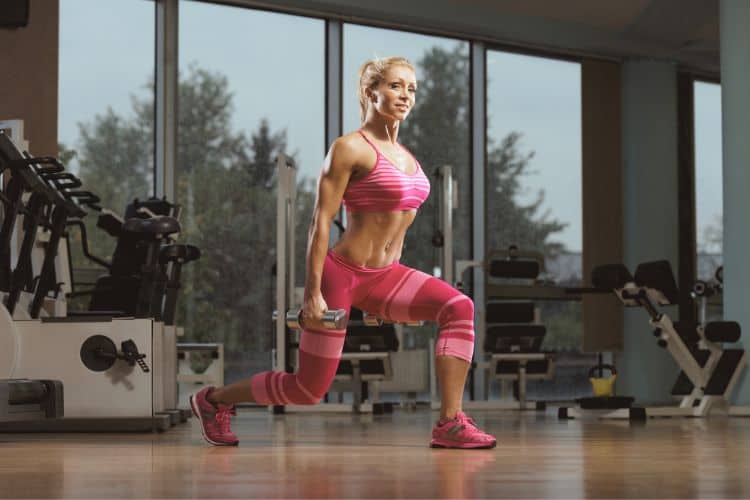




When you want a fast, challenging workout that combines strength, cardio, muscular endurance, and full-body conditioning, a 30 minute full body AMRAP HIIT workout can deliver an efficient training session without requiring hours in the gym. AMRAP stands for “as many rounds as possible” or, depending on the workout, “as many reps as possible.” The concept is simple: you are given a group of exercises and a specific amount of time, and your goal is to complete as many quality rounds as possible while maintaining good exercise form.
Combining AMRAP training with high-intensity interval training creates a workout that keeps your entire body moving while allowing you to control the intensity according to your fitness level. Instead of trying to match someone else’s speed, you work through each exercise at a challenging but sustainable pace. This makes AMRAP workouts adaptable for beginners, intermediate exercisers, and experienced athletes.
This 30-minute routine targets the legs, glutes, chest, shoulders, arms, back, and core while incorporating cardiovascular movements that increase the overall intensity. It can be performed at home or in the gym, and most exercises require little or no equipment.
A full body AMRAP HIIT workout combines two popular training methods. AMRAP training gives you a fixed period to complete repeated rounds of several exercises. HIIT, or high-intensity interval training, alternates demanding periods of exercise with lower-intensity recovery.
The combination creates a structured workout where you perform several short AMRAP circuits separated by recovery periods. Rather than exercising continuously for 30 minutes without a break, dividing the workout into smaller blocks allows you to maintain better technique and a higher-quality effort.
For example, an AMRAP circuit might include squats, push-ups, mountain climbers, and reverse lunges. You complete the prescribed repetitions of every movement before returning to the first exercise. You continue repeating the circuit until the timer ends.
The objective is not simply to move as quickly as possible. Your goal should be completing controlled, technically sound repetitions while maintaining an intensity that challenges your cardiovascular and muscular endurance.
One of the biggest advantages of AMRAP training is efficiency. Instead of spending separate workout sessions training cardio, strength, and muscular endurance, a well-designed AMRAP routine can challenge several components of fitness within the same workout.
Full-body exercises also recruit multiple muscle groups simultaneously. Squats and lunges challenge the lower body, push-ups train the chest, shoulders, triceps, and core, while movements such as mountain climbers increase cardiovascular demand while requiring trunk stability.
Another advantage is easy progression. You can repeat the same workout several weeks later and compare the number of rounds completed. If you perform more high-quality repetitions while maintaining proper form, that can indicate improved work capacity.
AMRAP workouts are also highly adaptable. Beginners can use modified exercises and longer recovery periods, while advanced exercisers can increase repetitions, use more challenging variations, or add resistance.
This workout consists of a short warm-up followed by four AMRAP circuits. Each circuit emphasizes slightly different movement patterns so that your entire body receives attention.
Use the following 30-minute structure:
5 minutes: Dynamic warm-up
5 minutes: AMRAP Circuit 1
1 minute: Recovery
5 minutes: AMRAP Circuit 2
1 minute: Recovery
5 minutes: AMRAP Circuit 3
1 minute: Recovery
5 minutes: Final AMRAP Circuit
2 minutes: Cool-down
During every five-minute AMRAP, complete the listed repetitions for each exercise before moving to the next movement. When you finish the final exercise, immediately return to the beginning of the circuit.
Keep track of your completed rounds if you want to measure progress, but never sacrifice proper exercise technique simply to increase your score.
A proper warm-up prepares your muscles and joints for the faster movements coming later in the workout. Rather than holding long static stretches, use controlled dynamic movements that gradually increase your heart rate.
Begin with a comfortable march before progressing into a light jog if appropriate. Swing your arms naturally and gradually increase your pace.
Stand with your feet approximately shoulder-width apart. Push your hips backward, bend your knees, and lower into a comfortable squat. Drive through your feet to return to standing.
Step one foot backward and lower your body under control. Push through your front foot to return to standing before switching sides.
Perform controlled arm circles followed by gentle torso rotations. These movements prepare the shoulders and upper body for push-ups and plank exercises.
Start in a high plank position and alternate bringing each knee toward your chest. Keep the movement controlled before gradually increasing the pace.
You should finish the warm-up feeling prepared rather than exhausted.
Set your timer for five minutes and complete:
12 bodyweight squats
10 alternating reverse lunges
8 squat-to-knee drives
20 high knees
Repeat the sequence for as many quality rounds as possible.
Squats primarily train the quadriceps, glutes, hamstrings, and core. Keep your chest lifted and knees tracking in the same general direction as your toes. Stand tall at the top before beginning the next repetition.
Reverse lunges provide unilateral lower-body training, meaning each leg must work independently. This helps challenge balance, coordination, and muscular control.
Complete five repetitions per leg for a total of ten.
Perform a regular squat. As you stand, drive one knee upward toward your torso. Squat again and repeat with the opposite knee.
The movement combines lower-body strength with balance and core engagement.
Finish each round with 20 alternating high knees. Pump your arms and maintain a pace appropriate for your conditioning level.
For a lower-impact option, perform fast standing knee drives without jumping.
After your one-minute recovery, begin the second five-minute AMRAP:
8 push-ups
12 shoulder taps
10 plank knee drives
20 seconds fast punches
Repeat continuously until five minutes have passed.
Push-ups train the chest, shoulders, triceps, and core. Begin in a high plank with your hands slightly wider than shoulder-width apart. Lower your chest toward the floor while maintaining a strong body position, then press upward.
Beginners can perform push-ups with their hands elevated on a sturdy bench or other stable surface.
Remain in a high plank and touch your right hand to your left shoulder. Return your hand to the floor and repeat on the opposite side.
Try to minimize excessive hip rotation. A slightly wider foot position can make the exercise more stable.
From your plank position, bring one knee toward your chest before switching legs. Move faster for additional cardiovascular intensity or slow the movement down to emphasize core control.
Stand in an athletic position with your knees slightly bent. Alternate straight punches quickly while keeping your core engaged.
After another one-minute recovery, start your third AMRAP:
10 squat thrusts
12 alternating lateral lunges
8 push-up shoulder taps
10 skater steps or jumps
This circuit brings the upper body and lower body together while increasing the cardiovascular challenge.
Begin standing. Place your hands on the floor and step or jump your feet backward into a plank. Bring your feet forward again and stand.
Unlike a traditional burpee, you do not need to perform a push-up or jump at the top.
Step sideways and bend the knee of your working leg while pushing your hips backward. Keep the opposite leg relatively straight. Return to the starting position and switch sides.
Lateral lunges introduce side-to-side movement, complementing the forward and backward patterns used earlier.
Perform one push-up followed by one shoulder tap on each side. This combination challenges the chest, shoulders, triceps, and core simultaneously.
If necessary, use an elevated surface to make the movement easier.
Move laterally from one side to the other. Beginners can step rather than jump. More experienced exercisers can use larger lateral jumps to increase the intensity.
Focus on controlled landings instead of simply trying to cover maximum distance.
The final AMRAP combines several exercises from the workout into one demanding finishing circuit:
8 squats
6 push-ups
10 mountain climbers per side
8 reverse lunges
6 squat thrusts
Continue completing rounds until the five-minute timer ends.
Because fatigue will have accumulated, technique becomes especially important during this final circuit. You may naturally move slower than you did earlier in the workout. That is completely acceptable.
Think about maintaining consistent movement rather than sprinting through the first minute and becoming exhausted before the circuit ends.
AMRAP does not mean you must exercise at maximum effort from beginning to end. Starting too aggressively is one of the easiest ways to make the later rounds unnecessarily difficult.
During a five-minute circuit, choose a pace you believe you can maintain for the entire interval. The first round should feel challenging but controlled.
As the timer progresses, fatigue will naturally increase. Your breathing should become heavier, but you should still be capable of maintaining good movement mechanics.
Take short breaks whenever necessary. A five- or ten-second pause can be more productive than continuing with poor technique.
Beginners can perform this workout by reducing impact and repetitions.
Instead of jumping during high knees, march quickly. Replace skater jumps with lateral steps. Perform squat thrusts by stepping one foot backward at a time instead of jumping both feet into the plank.
Push-ups can be performed against a wall, sturdy countertop, bench, or another elevated surface.
You can also reduce each five-minute AMRAP to three or four minutes and increase recovery periods. Over several weeks, gradually increase the working intervals as your conditioning improves.
The goal is to find an intensity that challenges you without causing your exercise form to deteriorate.
Once the standard routine becomes manageable, there are several ways to progress it.
The simplest progression is trying to complete slightly more work within the same five-minute interval. If you previously completed three rounds plus five repetitions, try to exceed that total the next time you perform the workout.
The increase does not need to be dramatic. Even a few additional technically sound repetitions can represent progress.
Selected movements can be performed with dumbbells if you want a greater strength challenge. Goblet squats, dumbbell reverse lunges, and weighted lateral lunges can increase muscular demand.
Choose resistance that still allows you to maintain proper technique throughout the circuit.
Bodyweight squats can become squat jumps. Reverse lunges can become alternating jumping lunges, while squat thrusts can progress into full burpees.
Higher-impact variations should only be used when you can perform the standard exercises comfortably and with control.
AMRAP workouts reward consistency. Starting at an unsustainable pace may result in long breaks later, reducing the overall quality of your workout.
Instead, think about finding a rhythm.
During the first round, learn how the exercises flow together. During the middle rounds, maintain a steady effort. During the final minute, you can increase your pace if you still have enough energy to maintain proper form.
This approach can help you complete more consistent work while keeping the workout manageable.
One common mistake is treating every AMRAP like a race. Although completing more rounds provides an easy performance metric, repetition quality matters more than your final number.
Another mistake is using exercises that are too difficult. If you cannot perform a movement correctly when rested, it will probably become even harder when fatigued.
Skipping the warm-up can also reduce workout quality. Even though this is only a 30-minute session, spending several minutes preparing your body can help you transition into higher-intensity movement.
Finally, avoid comparing your AMRAP score directly with another person’s. Fitness level, exercise experience, body size, movement range, and chosen modifications can all affect how quickly someone completes a round.
High-intensity workouts do not necessarily need to be performed every day. Many people can incorporate AMRAP HIIT alongside strength training, walking, mobility work, and lower-intensity cardiovascular exercise.
For example, you might perform this workout once or twice per week while using other days for resistance training or moderate exercise.
Recovery needs vary depending on training experience, workout intensity, sleep, nutrition, and overall activity levels. If your muscles remain unusually fatigued, allow additional recovery before repeating another demanding full-body session.
Once the final AMRAP ends, spend the remaining two minutes gradually lowering your intensity.
Walk slowly around the room while taking controlled breaths. Allow your heart rate to begin settling rather than stopping suddenly.
You can then perform gentle stretches for the quadriceps, hamstrings, glutes, chest, shoulders, and hip flexors if desired. Longer mobility or stretching sessions can be performed separately when you have additional time.
One of the best features of AMRAP training is that progress can be easy to record.
Write down how many complete rounds you performed in each five-minute circuit. If you did not finish a complete round when the timer ended, record the additional repetitions.
For example, your score might be 3 rounds + 14 reps.
Repeat the workout after a few weeks and compare your performance. However, remember that progress does not only mean completing more rounds. Using better form, taking fewer breaks, choosing a more challenging variation, or feeling more controlled during the workout can also represent improvement.
AMRAP HIIT can contribute to a fitness program designed around fat loss because it combines resistance-style movements with cardiovascular activity. However, no single workout can guarantee fat loss or determine where body fat is lost.
Changes in body composition depend on factors including overall calorie intake, nutrition habits, daily activity, resistance training, sleep, recovery, and consistency.
Rather than viewing HIIT as a shortcut, use it as one component of a balanced exercise routine.
A 30 minute full body AMRAP HIIT workout provides a practical way to challenge your strength, cardiovascular fitness, core stability, muscular endurance, and coordination within a relatively short training session. Because AMRAP workouts are self-paced, the same basic routine can be adjusted for different fitness levels.
Start with the five-minute dynamic warm-up, move through the four AMRAP circuits, and finish with a short cool-down. Concentrate on quality repetitions rather than rushing to achieve the highest possible score.
As your fitness improves, track your rounds, gradually increase your pace, use more challenging exercise variations, or incorporate appropriate resistance. Small improvements made consistently can transform a simple 30-minute AMRAP into a useful benchmark for measuring your conditioning over time.
Whether you perform this workout at home, at the gym, or while traveling, the basic formula remains the same: set the timer, maintain good form, control your pace, and complete as many quality rounds as you can.
To build out your 30-minute full body AMRAP HIIT workout, explore more training options from Women’s Fit Club. Try this 30-Minute Full body HIIT Workout for a balanced mix of strength and cardio, or challenge yourself with a 30-Minute Full Body HIIT Circuit Workout. For additional workout variety, check out the Best HIIT Workouts For Maximum Fat Burn, follow this structured HIIT Workout Plan For Women, or build consistency with the 4-Week HIIT Workout Plan, which even includes an AMRAP challenge. These workouts can help you add variety, adjust intensity, and continue progressing your full-body HIIT training.
Stay up to date on the latest women’s health, fitness and lifestyle trends and tips.
