


Sign up for workout ideas, training advice, reviews of the latest gear and more.

When you want to challenge your entire body without spending hours in the gym, a 30 minute full body drop set dumbbell workout can deliver an intense combination of strength training, muscular endurance, and efficient total-body exercise. With nothing more than a few pairs of dumbbells, this workout targets your legs, glutes, back, chest, shoulders, arms, and core while using drop sets to increase training volume and keep your muscles working hard.
Drop sets are a strength-training technique in which you perform an exercise with a challenging weight, immediately reduce the weight, and continue performing additional repetitions. Instead of taking a traditional rest period after your first set, you extend the set with lighter resistance. This makes drop sets especially useful when you have limited workout time but still want a demanding resistance-training session.
This 30-minute dumbbell workout combines compound exercises with strategically placed drop sets so you can train multiple muscle groups efficiently. Whether you exercise at home or in a gym, the routine can be adjusted to your current strength level by changing your dumbbell weights, repetitions, and rest periods.
A dumbbell drop set begins with a weight that feels challenging for a predetermined number of repetitions. Once you complete those reps, you immediately switch to lighter dumbbells and continue the same exercise. Depending on the workout, you may make one weight reduction or several reductions before resting.
For example, you might perform 10 dumbbell squats using 25-pound dumbbells, immediately switch to 15-pound dumbbells for another 10 repetitions, and then complete several additional bodyweight squats. Your muscles continue working even though the resistance decreases.
The goal is not simply to perform as many repetitions as possible. Good drop-set training requires controlled movement, appropriate resistance, and consistent exercise technique. The lighter weight allows you to extend the working set after the heavier resistance has become difficult.
Because drop sets can create considerable muscular fatigue, they do not need to be used for every exercise in every workout. This 30-minute routine balances intensity with short recovery periods to make the workout challenging while still allowing you to concentrate on proper form.
One of the biggest advantages of full-body dumbbell training is efficiency. Compound exercises such as squats, rows, presses, lunges, and deadlifts recruit several muscles simultaneously. Adding drop sets allows you to perform additional training volume without dramatically extending the length of your workout.
Busy schedules can make long gym sessions difficult. A structured 30-minute workout gives you enough time to warm up, train your major muscle groups, and finish with a brief cooldown.
The workout targets your lower and upper body during the same session. Your quadriceps, hamstrings, glutes, chest, shoulders, back, biceps, triceps, and core all receive work within one routine.
Training volume is an important component of resistance training. Drop sets provide a convenient way to accumulate additional repetitions because you continue exercising after reducing the resistance.
Instead of completing your challenging set and immediately resting, you transition to lighter dumbbells. The result is an extended working set that can create a strong muscular challenge.
If you have been following traditional three-set workouts for months, drop sets can provide a different stimulus. The technique changes the structure of your workout without requiring complicated equipment.
This can be particularly useful for home workouts. A small collection of dumbbells can provide many exercise combinations when you manipulate repetitions, tempo, rest periods, and drop sets.
The additional repetitions performed during a drop set challenge your muscles to continue producing force while fatigued. Over time, properly programmed resistance training can help improve muscular endurance and your ability to complete demanding sets.
Ideally, you should have three different dumbbell weight options: heavy, medium, and light. However, the exact weights will depend on the exercise and your individual strength.
Your heavy dumbbells should allow you to complete your target repetitions with good technique while making the final few repetitions challenging. Your medium dumbbells should be noticeably lighter, while your light dumbbells should allow you to continue moving safely after fatigue develops.
Remember that one pair of dumbbells will not necessarily be appropriate for every exercise. You may be able to squat or deadlift substantially more weight than you can use for lateral raises or shoulder presses.
If you only own one pair of dumbbells, you can still use the drop-set concept. After completing your weighted repetitions, put the dumbbells down and immediately perform a bodyweight variation whenever appropriate. You can also increase or decrease repetition speed to modify the difficulty.
Selecting appropriate weights is essential for getting the most from this workout. Your first weight should feel challenging without forcing you to sacrifice technique.
If the workout calls for 8 to 10 repetitions, choose a resistance that makes those final repetitions difficult while still allowing controlled movement. Once you finish the heavy portion, reduce the resistance by roughly 20 to 30 percent as a starting point and continue with the lighter set.
These percentages do not need to be exact. Dumbbells often increase in fixed increments, so use the weights available to you.
If your technique begins to deteriorate, stop the set rather than forcing additional repetitions. Quality movement should take priority over hitting an arbitrary repetition target.
Spend approximately five minutes preparing your body before beginning the drop sets. Start with 30 to 45 seconds of marching or jogging in place to gradually increase your heart rate.
Follow with bodyweight squats, alternating reverse lunges, arm circles, hip hinges, shoulder rolls, and controlled torso rotations. Finish with several slow repetitions of the main movement patterns you will use during the workout.
The purpose of your warm-up is preparation rather than exhaustion. You should feel warmer and more mobile when you finish, but you should still have plenty of energy for the resistance portion of the workout.
The main workout consists of five drop-set blocks. Each block emphasizes a major movement pattern while involving several supporting muscles.
Perform the heavy portion first, immediately transition to the lighter weight, and then rest for approximately 30 to 60 seconds before repeating the block. Complete two rounds of each block unless you need additional recovery.
Adjust the repetitions or resistance whenever necessary.
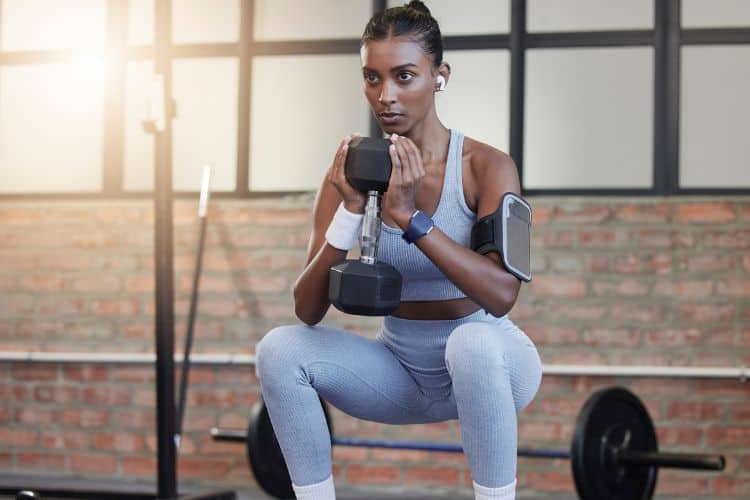
Begin with 8 to 10 heavy goblet squats. Hold one dumbbell vertically against your chest and stand with your feet approximately shoulder-width apart.
Brace your core and lower your hips while keeping the dumbbell close to your torso. Push through your feet to return to standing.
Immediately switch to a lighter dumbbell and perform 10 to 15 additional goblet squats.
Rest for approximately 45 seconds before completing the second round.
Goblet squats primarily challenge the quadriceps and glutes while also requiring your core and upper body to stabilize the weight.
Hold your heavier dumbbells in front of your thighs and perform 8 to 10 Romanian deadlifts.
Keep a slight bend in your knees and push your hips backward as you lower the dumbbells along your legs. Maintain a controlled spine position and lower only as far as your mobility allows without losing your position.
Drive your hips forward to return to standing.
Immediately switch to lighter dumbbells and perform 10 to 12 additional repetitions.
Rest for approximately 45 to 60 seconds and repeat.
The Romanian deadlift emphasizes your hamstrings and glutes while also requiring your back and core muscles to stabilize your torso.
Lie on a bench or the floor with a dumbbell in each hand. Perform 8 to 10 dumbbell chest presses using your heavier weight.
Lower the dumbbells under control before pressing them upward. Avoid aggressively bouncing your arms off the floor if you are performing a floor press.
After your final heavy repetition, immediately switch to lighter dumbbells and perform 10 to 15 repetitions.
Rest for approximately 45 seconds before repeating.
This drop set primarily trains your chest while your triceps and shoulders assist with each pressing repetition.
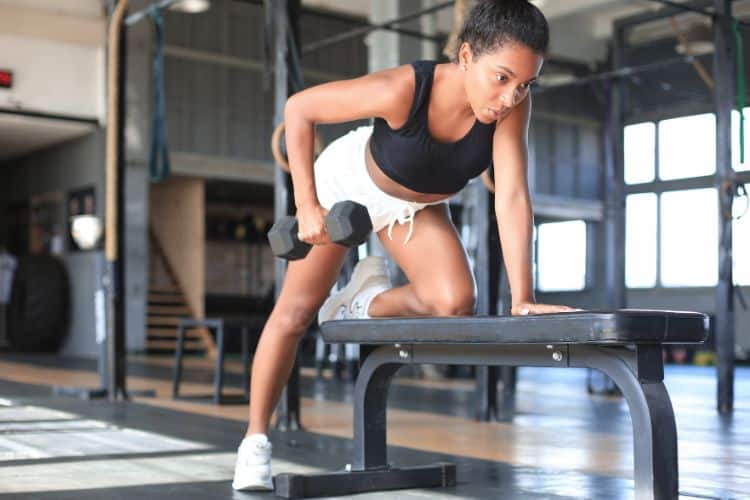
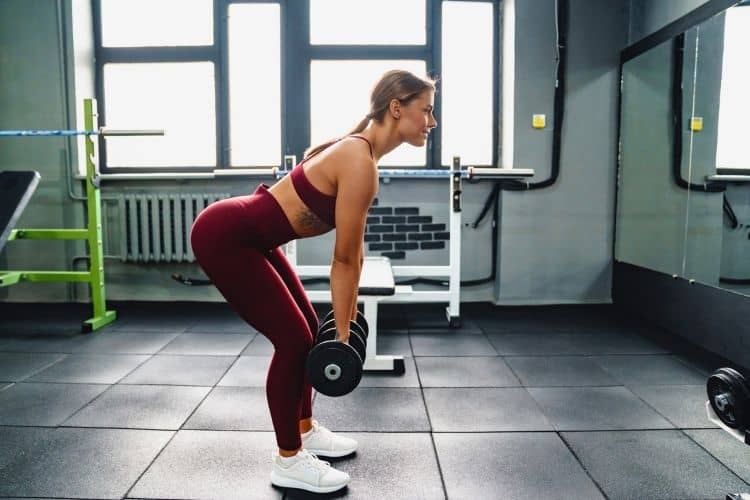
Stand with your dumbbells and hinge forward from your hips while keeping your torso controlled. Perform 8 to 10 heavy bent-over rows.
Pull the dumbbells toward your sides while keeping your shoulders controlled rather than aggressively shrugging them upward.
Lower the weights slowly.
Switch immediately to your lighter dumbbells and complete 10 to 15 additional rows.
Rest for approximately 45 seconds and repeat.
Rows help train the major muscles of your upper and mid-back while also involving your biceps, rear shoulders, forearms, and core.
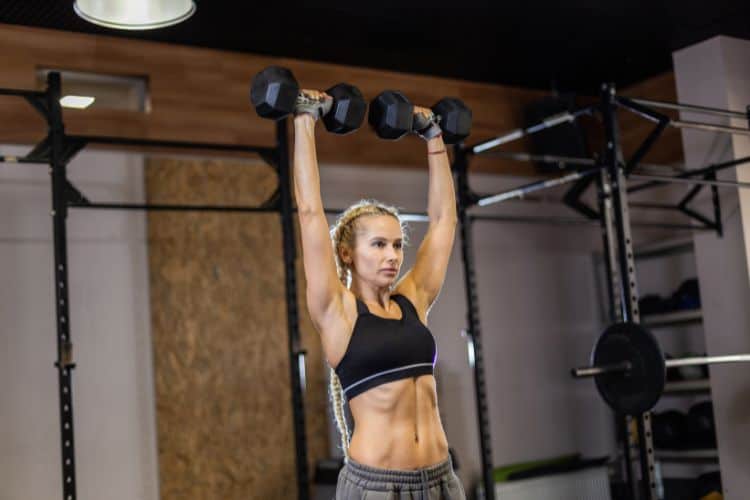
Finish the main workout with an upper-body pressing movement. Begin with 8 to 10 dumbbell shoulder presses using a challenging weight.
Keep your core braced and press the dumbbells overhead without excessively arching your lower back.
Switch to lighter dumbbells and immediately perform another 8 to 12 repetitions.
If your shoulders become too fatigued to maintain proper technique, stop the set.
Rest for approximately 45 to 60 seconds before performing your final round.
If you still have approximately three minutes remaining, finish with a simple total-body circuit.
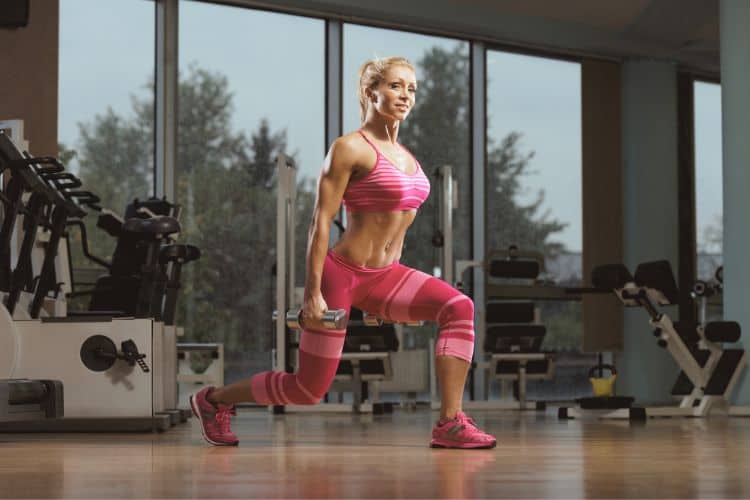
Perform 10 dumbbell reverse lunges, 10 dumbbell rows, 10 dumbbell squats, and 10 alternating dumbbell shoulder presses. Move steadily rather than racing.
Rest for 20 to 30 seconds and repeat as time allows.
The finisher is optional. If you are already significantly fatigued from the drop sets, use the remaining time for your cooldown instead.
Good time management prevents a 30-minute workout from turning into a 45-minute session. Aim to spend approximately five minutes warming up, 20 to 22 minutes completing the resistance blocks, and three to five minutes cooling down.
Prepare your dumbbells before starting so you do not waste time searching for lighter weights between sets.
A timer can also help. Keep your rest periods relatively consistent, but remember that rest should be adjusted according to your fitness level and the difficulty of the exercise. Taking another 20 or 30 seconds to recover is preferable to beginning a heavy compound movement before you are ready.
For many people, two or three full-body resistance-training sessions per week can provide a practical training schedule, but your ideal frequency depends on your overall program, experience, recovery, and goals.
Drop-set sessions can be demanding, so avoid assuming that more is automatically better. Your muscles need adequate recovery between challenging resistance workouts.
You can also alternate this workout with traditional strength training. For example, one weekly session might emphasize heavier conventional sets with longer rest periods, while another uses moderate weights and drop sets.
Progression is essential if you want your workouts to remain challenging over time. However, increasing weight is only one way to progress.
When you can comfortably complete every prescribed repetition with consistent technique, consider increasing your starting dumbbell weight slightly.
Small increases are often enough. You do not need to make dramatic jumps in resistance.
Another option is to increase your repetitions within the recommended range. If you initially perform eight heavy repetitions, work toward nine and eventually ten before increasing your weight.
Slower eccentric repetitions can make exercises significantly more challenging without requiring heavier dumbbells. Try taking two or three seconds to lower the weight during squats, Romanian deadlifts, presses, and rows.
Controlled repetitions can also help you concentrate on technique rather than rushing through the workout.
Shorter rest periods can increase workout density, but they should not interfere with your ability to perform the next exercise safely.
Reduce your recovery gradually rather than eliminating rest entirely.
If you are new to dumbbell training, start conservatively. You do not need to perform every drop set exactly as written during your first session.
Complete one round of each exercise instead of two, use lighter resistance, and take 60 to 90 seconds of rest when needed. You can also perform traditional sets for the first few weeks before gradually introducing drop sets.
Beginners should spend time learning the squat, hip hinge, row, and press patterns before emphasizing training intensity.
If an exercise causes pain rather than normal muscular effort, stop and choose a comfortable alternative. Anyone with an injury, medical concern, or significant exercise limitation should consider obtaining appropriate professional guidance before beginning a new training program.
A drop set is already demanding because the set continues after the initial repetitions. Beginning with an excessively heavy dumbbell can cause your technique to deteriorate before the lighter portion even begins.
Choose challenging resistance, not maximum resistance.
Drop sets create fatigue quickly, which can tempt you to speed through your repetitions. Maintain control during both the lifting and lowering phases.
Fast repetitions are not automatically more effective.
Drop sets are a useful training technique, but they are not the only way to build a productive resistance program. Traditional sets, heavier strength work, moderate-repetition hypertrophy training, and other methods can all have a place in a balanced routine.
Your workout is only one component of your fitness routine. Sleep, nutrition, hydration, and rest days all influence your ability to recover between training sessions.
If your performance continually decreases from workout to workout, consider whether you are allowing enough recovery.
A well-designed 30-minute resistance workout can contribute to muscle development when it provides sufficient challenge and is combined with consistent training and appropriate nutrition.
Workout duration alone does not determine effectiveness. What matters more is how you use the available time.
Compound dumbbell exercises allow you to train multiple muscle groups efficiently, while drop sets provide additional volume within a relatively short period. Consistent progression is also important. As you become stronger, gradually increase the resistance, repetitions, or difficulty of your exercises.
Protein intake, overall nutrition, sleep, and recovery also play important roles in supporting training adaptations.
Resistance training can be part of a fat-loss program because it helps you stay active and supports the maintenance of muscle while you pursue changes in body composition.
However, no individual dumbbell workout can guarantee fat loss. Changes in body fat are influenced by your overall energy balance, nutrition, daily activity, training program, sleep, and other individual factors.
Instead of treating the workout as a quick calorie-burning solution, use it as part of a sustainable exercise routine that combines resistance training with regular movement and nutrition appropriate for your goals.
After completing the final set, spend several minutes gradually bringing your workout to an end.
Walk slowly around the room while taking controlled breaths. You can follow with gentle stretches for your quadriceps, hamstrings, glutes, chest, shoulders, and back.
Avoid forcing yourself into uncomfortable positions. The goal is simply to transition from intense exercise into recovery.
If you enjoy this 30-minute full-body workout, you can incorporate it into a broader weekly routine.
For example, perform the drop-set workout on Monday, use Tuesday for light activity or recovery, complete another resistance-training workout on Wednesday or Thursday, and perform the drop-set session again later in the week if you have recovered sufficiently.
Walking, mobility training, Pilates, yoga, or moderate cardio can be included between strength-training days according to your preferences and goals.
Your schedule does not need to be complicated. Consistency with a manageable routine is generally more useful than constantly changing workouts.
A 30 minute full body drop set dumbbell workout is an efficient way to challenge your major muscle groups when your training time is limited. By beginning each drop set with challenging resistance and immediately transitioning to lighter dumbbells, you can accumulate additional repetitions while keeping the workout compact.
The goblet squat trains your lower body and core, Romanian deadlifts emphasize the posterior chain, chest presses develop your pushing muscles, bent-over rows target your back, and shoulder presses complete the routine with additional upper-body work. Together, these exercises create a balanced full-body dumbbell session that can be performed at home or in the gym.
Start with weights you can control, prioritize proper exercise technique, and adjust the workout according to your current fitness level. As the routine becomes easier, progressively increase your dumbbell weight, repetitions, movement control, or training density.
Most importantly, treat drop sets as one tool within a complete fitness program. Combine consistent resistance training with adequate recovery, everyday physical activity, and supportive nutrition. With a smart approach and gradual progression, this 30-minute dumbbell drop-set routine can become an effective addition to your weekly strength-training schedule.
For more ways to build strength and keep your dumbbell training varied, explore our 30-Minute Full Body Dumbbell Workout for a muscle-focused session, try the Full Body Dumbbell Superset Workout for another high-intensity training method, or follow our Progressive Overload Dumbbell Workout to keep increasing your training challenge over time. You can also add variety with this 25-Minute Full Body Dumbbell Workout or build a longer-term routine with our 4-Week Dumbbell Workout Plan. These workouts pair well with a 30-minute full body drop set dumbbell workout and give you several ways to progress your strength, endurance, and total-body training.
Stay up to date on the latest women’s health, fitness and lifestyle trends and tips.
