


Sign up for workout ideas, training advice, reviews of the latest gear and more.

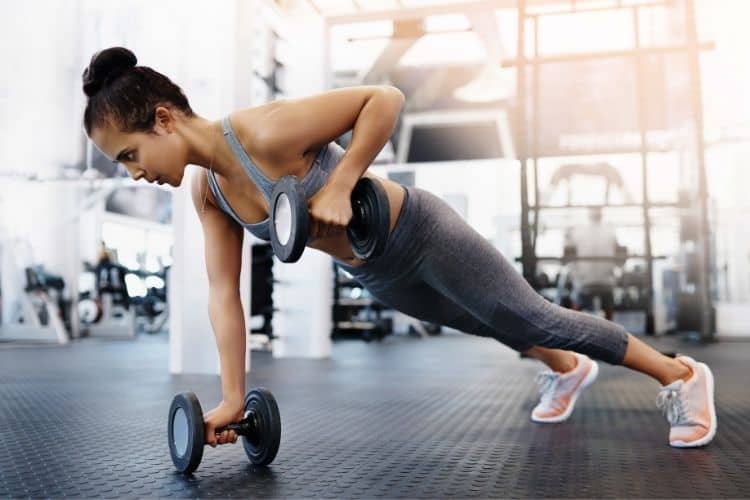
A 30 minute HIIT circuit workout with weights is an efficient way to combine strength training and cardiovascular conditioning in one fast-paced workout. Instead of spending separate sessions lifting weights and doing cardio, weighted high-intensity interval training allows you to challenge multiple muscle groups while keeping the workout moving. With the right exercise selection, a pair of dumbbells, and just half an hour, you can train your legs, glutes, back, shoulders, arms, and core while improving overall fitness.
Weighted HIIT is different from simply performing traditional strength exercises faster. The goal is to choose manageable resistance, maintain controlled form, and organize exercises into intervals that alternate intense effort with brief recovery periods. You should feel challenged, but you should never sacrifice technique simply to complete more repetitions.
This 30 minute HIIT workout with weights is designed as a full-body circuit that can work well at home or in the gym. All you need is a pair of dumbbells, enough room to move safely, water, and a timer. Beginners can use lighter weights and longer recovery periods, while experienced exercisers can increase the resistance or intensity.
A weighted HIIT circuit combines resistance exercises with interval-style training. Rather than completing several sets of one exercise before moving to the next, you rotate through multiple movements with limited rest. Exercises may include squats, rows, presses, lunges, deadlifts, and other compound movements.
For this workout, you will use dumbbells to create additional resistance. Adding weight increases the muscular challenge compared with a bodyweight-only HIIT workout and makes it possible to incorporate traditional strength-training patterns into your circuit.
The 30-minute format includes a warm-up, several working circuits, short recovery periods, and a cool-down. The workout should feel demanding without becoming uncontrolled. Choosing weights you can confidently handle throughout every interval is more important than choosing the heaviest dumbbells available.
One major advantage of a HIIT circuit workout with weights is efficiency. Compound exercises allow several muscles to work simultaneously, while the circuit format keeps downtime relatively short. This makes it possible to accomplish a substantial amount of training within 30 minutes.
Weighted circuits can also help improve muscular endurance. Your muscles repeatedly produce force while recovering during relatively short breaks. Over time, this style of training can make longer sets and demanding workouts feel more manageable.
Another benefit is versatility. Dumbbells are easy to incorporate into squats, lunges, rows, presses, deadlifts, carries, and core exercises. Changing your weight, repetitions, work-to-rest ratio, or exercise selection allows you to continually modify the workout.
Traditional resistance training typically emphasizes strength and muscle development, while cardiovascular workouts emphasize sustained movement and aerobic conditioning. Weighted HIIT can bring elements of both into the same session.
During exercises such as dumbbell thrusters, reverse lunges, bent-over rows, and Romanian deadlifts, your muscles work against resistance. Because these exercises are performed consecutively with limited recovery, your cardiovascular system is also challenged.
That combination makes this workout particularly useful on days when you want full-body training but do not have enough time for separate lifting and cardio sessions.
You only need a few basic items. The most important is a pair of dumbbells. Ideally, select a weight that allows you to perform approximately 8 to 15 controlled repetitions of most exercises without losing proper form.
If you have several dumbbell pairs available, you can use heavier weights for lower-body movements such as deadlifts and squats and lighter weights for shoulder presses and upper-body exercises.
You will also need an exercise mat if you prefer additional cushioning for floor exercises. Keep water nearby and use an interval timer or smartphone timer to track each working period.
Wear supportive athletic shoes and make sure the floor is dry, stable, and free of obstacles before beginning.
Choosing the right dumbbell weight is important because HIIT circuits can create fatigue quickly. A weight that feels comfortable during your first exercise may become significantly harder later in the circuit.
Beginners may want to start conservatively and focus on learning each movement. Intermediate exercisers can choose moderate resistance that makes the final repetitions challenging while still allowing controlled technique.
Advanced exercisers can use heavier dumbbells, but heavier is not automatically better. You should remain capable of controlling every repetition throughout the complete working interval.
If your back starts rounding, your shoulders lose position, or you are using momentum to finish repetitions, reduce the weight or slow your pace.
Spend approximately five minutes preparing your muscles and joints before starting the weighted portion of the workout. Begin with marching or light jogging in place for about one minute. Gradually increase your pace as your body warms up.
Next, perform alternating reverse lunges without weights. Keep your chest upright and step backward under control. Follow the lunges with bodyweight squats, focusing on comfortable depth and smooth movement.
Add arm circles and shoulder rolls to prepare your upper body. Finish the warm-up with alternating knee drives or controlled jumping jacks.
The goal of the warm-up is preparation rather than exhaustion. By the end, you should feel warmer and ready to train while still having plenty of energy for the main workout.
The main portion of this workout is divided into full-body circuits. Perform each exercise for approximately 40 seconds, followed by 20 seconds of recovery or transition time. Complete the exercises in order and rest briefly between circuits when needed.
Move at a pace that allows you to maintain good form. HIIT does not require performing every exercise as quickly as physically possible. Controlled repetitions with appropriate resistance will usually provide a better weighted workout.
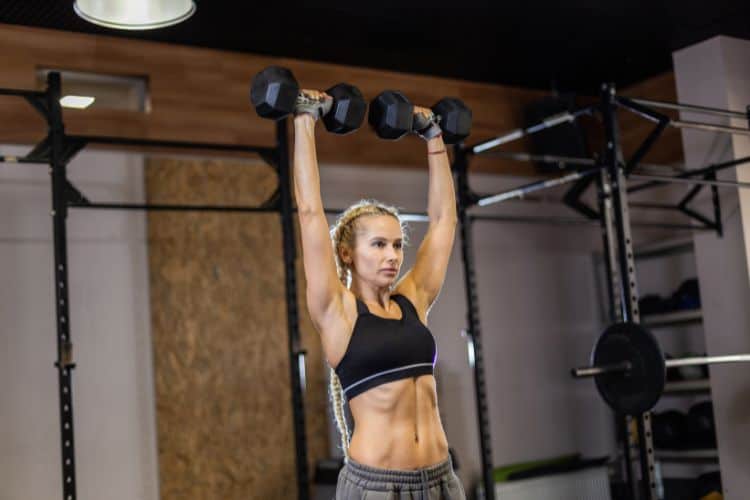
Hold one dumbbell in each hand at approximately shoulder height. Stand with your feet around hip-to-shoulder width apart. Push your hips back and bend your knees as you lower into a squat.
Drive through your feet to return to standing. As you reach the top, press both dumbbells overhead. Lower them carefully back toward your shoulders before beginning the next squat.
The squat-to-press, often called a thruster, combines a lower-body squat with an upper-body press. Your quadriceps, glutes, shoulders, triceps, and core all contribute to the movement.
Keep the dumbbells relatively light because repeated overhead pressing can become demanding quickly.
Stand tall while holding your dumbbells in front of your thighs. Keep your knees slightly bent and brace your core.
Push your hips backward while lowering the weights along the front of your legs. Keep your spine neutral and stop when you feel tension through your hamstrings. Drive your hips forward to return to standing.
The dumbbell Romanian deadlift emphasizes the hamstrings, glutes, and posterior chain. Avoid turning the exercise into a squat. Most of the movement should come from pushing the hips backward rather than deeply bending the knees.
Move slowly enough to maintain tension and control.
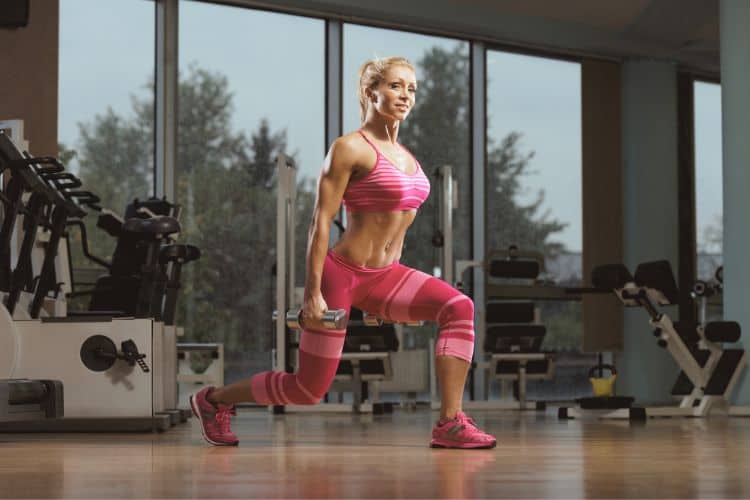
Hold your dumbbells by your sides and stand tall. Step one foot backward and lower into a reverse lunge. Keep your front foot firmly planted and your torso upright.
Push through the front foot to return to your starting position and repeat with the opposite leg.
Continue alternating sides throughout the interval.
Reverse lunges train the quadriceps and glutes while also challenging balance and coordination. If holding two dumbbells is too difficult, use one dumbbell at your chest or perform the exercise without additional weight.
After completing the lower-body-focused exercises, shift your attention toward your back, shoulders, chest, and arms.
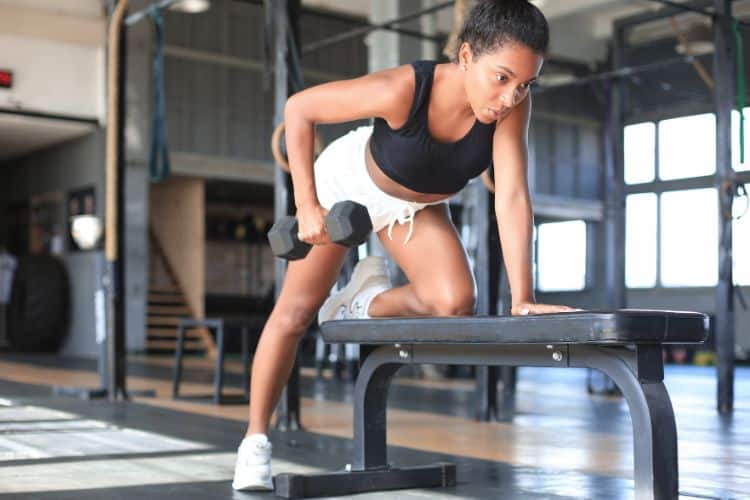
Hold a dumbbell in each hand and hinge forward from your hips. Keep your back neutral and your knees slightly bent.
Allow the dumbbells to hang beneath your shoulders. Pull them toward your torso while keeping your elbows relatively close to your sides. Pause briefly and lower the weights under control.
Rows primarily train the muscles of your upper and middle back while also involving your biceps and rear shoulders.
Avoid repeatedly jerking the dumbbells upward. If you cannot maintain your hip-hinge position, decrease the weight.
Lie on your back with your knees bent and your feet firmly planted on the floor. Hold one dumbbell in each hand.
Position your upper arms comfortably against the floor and press the weights upward until your arms are extended. Lower the dumbbells under control until your upper arms gently contact the floor.
The floor press targets your chest, shoulders, and triceps while limiting how far your elbows can travel behind your torso.
Keep your wrists relatively straight and avoid letting the dumbbells drift excessively toward your head.
Begin in a high plank position with your hands supported on dumbbells. Position your feet wider than normal for additional stability.
Brace your core and pull one dumbbell toward your torso. Return it to the floor and repeat with the opposite side.
Try to minimize excessive rotation through your hips.
If the full renegade row is too difficult, perform it with your knees on the floor or substitute a standard bent-over dumbbell row.
The final working section combines several muscle groups and adds a stronger conditioning element.
Hold the dumbbells in front of your body and perform a controlled hip hinge. Drive your hips forward as you return to standing, then guide the weights upward toward your upper torso while keeping the movement controlled.
Use lighter weights for this exercise and avoid aggressively pulling the dumbbells with your shoulders.
If the high pull feels uncomfortable, simply perform repeated dumbbell deadlifts instead.
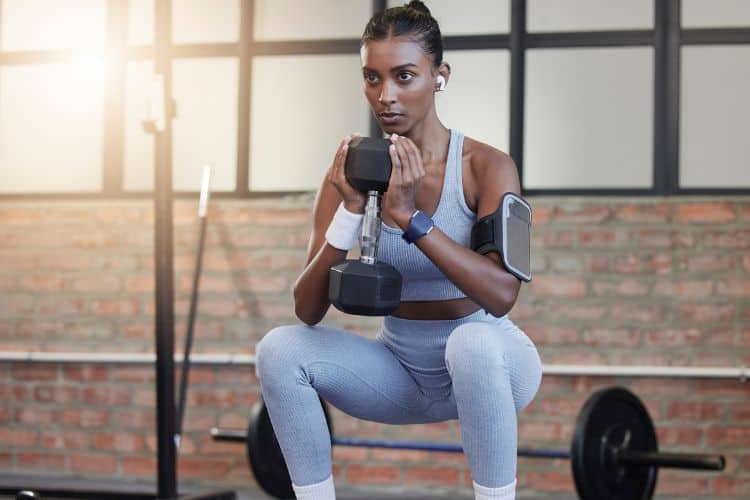
Hold the dumbbells at shoulder height and stand with your feet in a comfortable squat stance.
Brace your abdominal muscles and lower into a squat while keeping your chest lifted. Drive through your feet to return to standing.
Maintain a steady rhythm throughout the interval rather than rushing your repetitions.
The front-loaded position increases the demand on your core while your quadriceps and glutes perform much of the lower-body work.
Hold one dumbbell in each hand and stand tall. Keep your shoulders down and back while maintaining a strong grip.
Slowly lift one knee and then the other as though marching in place. Avoid leaning from side to side.
Although this exercise appears simple, carrying the weights while marching challenges your grip, core stability, hip flexors, and posture.
Finish the interval with controlled movement rather than racing.
If you are new to weighted HIIT, reduce the working intervals to approximately 30 seconds and increase your recovery periods to 30 seconds. This provides additional time to reset your position between exercises.
Start with light dumbbells and learn the exercises individually before combining them into a fast-moving circuit.
You can also eliminate complicated combination movements. For example, replace the squat-to-press with a regular goblet squat, replace renegade rows with standing bent-over rows, and replace weighted dynamic exercises with slower strength movements.
Taking additional rest is completely acceptable. Quality repetitions should remain the priority.
Once the workout becomes easier, there are several ways to progress without completely changing your routine.
One option is gradually increasing your dumbbell resistance. Even a small increase can significantly change exercises such as squats, rows, deadlifts, and lunges.
You can also increase the work interval or slightly decrease your recovery period. For example, an experienced exerciser might progress from 40 seconds of work and 20 seconds of rest toward 45 seconds of work and 15 seconds of rest.
Another progression strategy is improving movement quality. Greater control, better range of motion, and smoother transitions can make your workout more productive without simply trying to move faster.
Change only one or two variables at a time so you can track your progress.
Weighted HIIT can be included in a fitness program designed to support fat loss because it combines physical activity with resistance training. However, no single workout can specifically remove fat from the stomach, thighs, arms, or another particular area.
Changes in body composition depend on multiple factors, including overall activity, nutrition, sleep, recovery, training consistency, and individual differences.
Resistance training is especially valuable during a fat-loss program because it provides a stimulus for maintaining and developing muscle. Combining resistance exercise with regular movement and appropriate nutrition can create a more balanced long-term approach than relying exclusively on intense cardio.
For many people, two or three weighted HIIT workouts per week can provide plenty of challenging training. The appropriate frequency depends on your fitness level, exercise intensity, recovery, and other workouts.
HIIT should not necessarily be performed every day. Your muscles and connective tissues need adequate recovery, particularly when weights are involved.
On days between intense workouts, you might perform lower-intensity activities such as walking, mobility training, easy cycling, or traditional strength sessions depending on your overall program.
Pay attention to performance. If your strength consistently declines, soreness remains excessive, or your technique suffers, additional recovery may be beneficial.
One of the biggest mistakes is choosing weights that are too heavy. The resistance should challenge your muscles without making proper technique impossible.
Another mistake is moving too quickly. HIIT describes training intensity and interval structure; it does not mean every repetition needs to be performed at maximum speed.
Poor transitions can also reduce workout quality. Before starting the next interval, make sure your dumbbells are positioned safely and you understand the upcoming movement.
Finally, avoid treating rest periods as wasted time. Recovery allows you to perform the next exercise more effectively. Use your rest to breathe, reset your posture, and prepare for the following interval.
After completing the final circuit, gradually bring your intensity down rather than stopping abruptly.
Walk slowly around the room or march gently in place while allowing your breathing to settle. Follow this with comfortable stretches for your quadriceps, hamstrings, glutes, chest, shoulders, and back.
Avoid forcing yourself into deep stretches while your muscles are fatigued. Gentle movement and relaxed breathing are sufficient.
The cool-down is also an opportunity to evaluate the workout. Think about which weights felt appropriate and which exercises became difficult. These observations can help you select better resistance during your next session.
Consistency is more valuable than making one workout excessively difficult. Establish a training schedule you can realistically maintain and gradually improve your performance.
Track the dumbbell weights you use for major movements such as squats, rows, lunges, presses, and deadlifts. As you become stronger, gradually increasing resistance can provide continued challenge.
Prioritize sleep and recovery between demanding sessions. Your body adapts to exercise during the recovery process, not simply while you are completing the workout.
Nutrition also plays an important role. A balanced eating pattern that provides adequate protein, carbohydrates, healthy fats, fruits, vegetables, and fluids can support training and recovery.
Most importantly, focus on movement quality. Completing fewer technically strong repetitions is usually preferable to rushing through additional repetitions with poor form.
A balanced weekly routine might include this 30 minute HIIT circuit workout with weights twice per week with at least one recovery day between sessions. Additional days can include traditional resistance training, walking, mobility work, or moderate cardiovascular exercise.
For example, you might perform weighted HIIT early in the week, use the following day for walking or recovery, complete a strength-focused workout later in the week, and repeat the HIIT circuit after sufficient rest.
Your ideal schedule will depend on your goals and experience. Someone primarily focused on building maximal strength may perform fewer HIIT sessions, while someone interested in general conditioning may include them somewhat more frequently.
Compound movements involve multiple joints and muscle groups, making them especially useful when workout time is limited.
A dumbbell squat trains the hips and knees while requiring your core to stabilize your torso. A row trains your back while involving your arms and shoulders. A squat-to-press combines lower- and upper-body movements into one exercise.
Because multiple muscle groups participate simultaneously, compound exercises allow you to create a comprehensive full-body workout without needing dozens of individual movements.
Isolation exercises still have value, but compound exercises are particularly practical for a short 30-minute circuit.
A 30 minute HIIT circuit workout with weights can deliver a challenging combination of resistance training and cardiovascular conditioning without requiring a long gym session. Dumbbell squats, Romanian deadlifts, reverse lunges, rows, floor presses, renegade rows, front squats, and loaded carries allow you to train nearly every major muscle group within one workout.
The key is balancing intensity with control. Choose dumbbells appropriate for your fitness level, use good technique, respect your recovery periods, and avoid turning every exercise into a race.
As your fitness improves, gradually increase your resistance, work intervals, or movement quality rather than dramatically increasing everything at once. With consistent practice and adequate recovery, this 30 minute weighted HIIT workout can become an effective addition to a well-rounded fitness routine.
To complement this 30 minute HIIT circuit workout with weights, explore more strength and conditioning routines from Women’s Fit Club. Try the 30-Minute Dumbbell HIIT Workout for a Full Body Burn for another fast-paced weighted session, or challenge yourself with the 35-Minute Full Body Dumbbell HIIT Workout when you have a little more time. For more strength-focused training, add the 30-Minute Full Body Dumbbell Workout for Strength and Fat Loss to your weekly routine. You can also explore the Ultimate Dumbbell HIIT Strength Training Guide for more ideas on combining resistance training with intervals, or use the 20-Minute Full Body Dumbbell Workout when you need a shorter full-body workout.
Stay up to date on the latest women’s health, fitness and lifestyle trends and tips.
