


Sign up for workout ideas, training advice, reviews of the latest gear and more.

Starting a new fitness routine does not have to mean spending hours at the gym or investing in expensive exercise equipment. A 30 minute HIIT workout for beginners at home can provide an efficient way to improve cardiovascular fitness, build strength, increase endurance, and create a consistent exercise habit without leaving your living room. High-intensity interval training, commonly called HIIT, combines relatively short periods of challenging exercise with recovery periods that allow you to catch your breath before beginning the next movement.
For beginners, however, HIIT should not mean exercising as hard as physically possible. The goal is to alternate manageable periods of effort and recovery while learning proper exercise technique. A beginner can use slower movements, low-impact modifications, longer recovery intervals, and a comfortable range of motion while still enjoying the benefits of interval training.
This 30 minute HIIT workout at home for beginners requires no complicated equipment and can be adjusted to suit different fitness levels. Whether you are returning to exercise after a long break or simply want an efficient home workout, the routine below provides a practical starting point.
A 30 minute HIIT workout alternates periods of physical activity with periods of lower-intensity movement or rest. Instead of performing the same activity continuously for 30 minutes, you divide your workout into intervals.
For example, you might exercise for 30 seconds and recover for 30 seconds before moving to another exercise. As your conditioning improves, you could eventually increase the working period or decrease the recovery period.
The word “high-intensity” can sometimes intimidate beginners, but intensity is relative. A challenging interval for an experienced athlete may look completely different from a challenging interval for someone exercising for the first time.
Your goal should be to work at an intensity that feels challenging but controlled. You should still be able to maintain good exercise form throughout every interval.
A beginner HIIT workout can include familiar movements such as squats, marching, knee drives, modified jumping jacks, step-back lunges, punches, and standing core exercises. These movements can raise your heart rate without requiring advanced coordination or gym equipment.
One of the greatest advantages of 30 minute HIIT workouts for beginners at home is convenience. You do not need to commute to a gym, wait for equipment, or organize your entire day around exercising. A relatively small area in your bedroom, living room, garage, or another safe exercise space can be enough.
HIIT also provides variety. Because you regularly switch exercises and alternate between working and recovering, a 30-minute session can feel more engaging than repeating one movement for the entire workout.
Interval workouts can combine cardiovascular and muscular exercises in the same session. Squats and lunges emphasize the lower body, modified push-ups can strengthen the upper body, and knee drives or standing cross-body movements challenge the core while increasing your heart rate.
Another advantage is adaptability. Beginners do not need to jump or perform extremely fast movements. Nearly every exercise can be modified according to your current fitness level.
If regular jumping jacks feel uncomfortable, perform step jacks. If floor push-ups are too difficult, use wall push-ups. If deep squats bother your knees or affect your form, reduce your range of motion.
The best beginner workout is not necessarily the hardest workout. It is one you can perform safely and consistently while gradually becoming stronger.
HIIT workouts should feel challenging during the working intervals, but beginners should avoid treating every interval as an all-out sprint.
Think about your effort on a scale from one to ten. One represents extremely easy movement, while ten represents your maximum possible effort. Beginners might aim for approximately a five to seven during most working intervals.
During recovery periods, your effort should decrease enough that you feel prepared for the next exercise.
You may initially need longer rest periods. That is perfectly reasonable. Taking additional recovery time is usually more productive than continuing with poor technique because you are exhausted.
As your cardiovascular fitness improves, you can gradually make the workout more challenging by moving slightly faster, increasing your range of motion, performing more repetitions, or shortening selected recovery periods.
One of the best features of this routine is that very little equipment is necessary. You primarily need enough open space to move comfortably.
Wear supportive athletic shoes if appropriate for your exercise surface and clothing that allows unrestricted movement. Keep water nearby, particularly if your home environment is warm.
An exercise mat is optional for floor exercises. You can also keep a sturdy chair nearby for balance assistance or exercise modifications.
Before beginning, remove objects that could create a tripping hazard. Make sure the floor is dry and that you have enough room to extend your arms and step backward comfortably.
This workout is divided into a 5-minute warm-up, 20-minute HIIT circuit, and 5-minute cool-down.
For the main workout, perform each exercise for approximately 30 seconds followed by 30 seconds of recovery. There are five exercises in each circuit, creating a five-minute round. Complete the four rounds described below for approximately 20 minutes of interval training.
Beginners can use the recovery interval for complete rest or gentle marching. If 30 seconds of exercise feels too difficult initially, perform approximately 20 seconds of movement followed by 40 seconds of recovery.
Spend the first five minutes gradually preparing your body for exercise. Avoid beginning your workout with your most challenging movements immediately.
Start with approximately one minute of easy marching in place. Keep your shoulders relaxed and allow your arms to swing naturally.
During the second minute, add alternating arm reaches. Continue marching while reaching your arms overhead or forward at a comfortable pace.
For the third minute, perform gentle bodyweight good mornings. Place your hands on your hips, soften your knees, push your hips backward, and return to standing. This movement prepares your hamstrings, glutes, and hips.
During minute four, perform controlled half squats. Sit your hips backward while keeping your chest lifted, then stand tall.
Finish the warm-up with step jacks. Step one foot sideways while raising your arms, return to the center, and alternate sides.
You should feel warmer and slightly more energized at the end of the warm-up without feeling exhausted.
Begin with marching high knees. Stand upright and alternate bringing one knee toward your torso while swinging your opposite arm forward.
You do not need to bring your knees extremely high. Concentrate on maintaining an upright posture and finding a comfortable rhythm.
As your conditioning improves, increase your marching speed or raise your knees slightly higher.
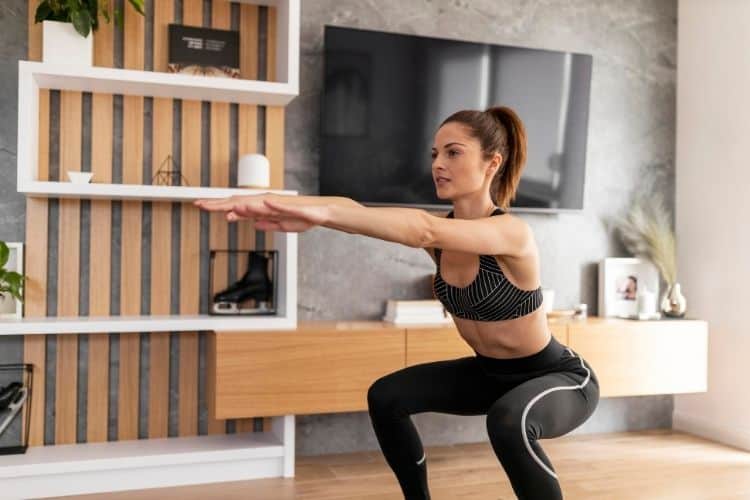
Stand with your feet approximately hip- to shoulder-width apart. Push your hips backward as though you were sitting into a chair while bending your knees.
Keep your chest lifted and maintain control throughout the movement. Push through your feet to return to standing.
Beginners can perform shallow squats until their mobility and strength improve.
Step jacks are an excellent low-impact alternative to jumping jacks.
Step your right foot sideways while raising your arms overhead. Return to the starting position and repeat with your left foot.
Maintain a steady rhythm for the entire interval. You can gradually increase your speed without adding jumping.
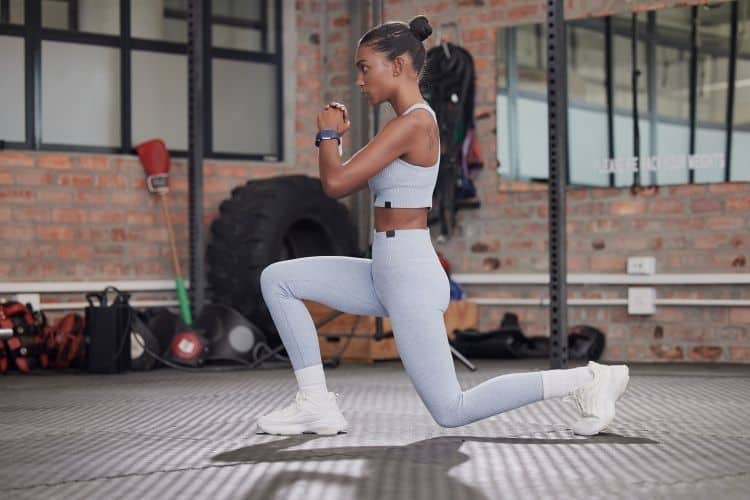
Stand tall and carefully step one foot backward. Bend both knees comfortably before pushing through your front foot to return to standing.
Alternate legs.
If reverse lunges feel unstable, hold a sturdy chair or countertop for balance. You can also reduce the depth of your lunge.
Stand with your knees slightly bent and your hands near your chest. Alternate punching forward while keeping the movements controlled.
Rotate gently through your torso rather than simply moving your arms.
Avoid aggressively locking your elbows at the end of each punch. The movement should be quick but controlled.
After completing your first five-minute round, begin the second circuit using the same 30-seconds-on and 30-seconds-recovery structure.
Step your right foot sideways, bring your left foot toward it, and then move in the opposite direction.
Allow your arms to swing naturally. Increase your pace slightly if you want more cardiovascular intensity.
Perform a comfortable bodyweight squat. As you stand, reach both arms overhead.
Combining upper- and lower-body movements can increase the cardiovascular demand without requiring jumping.
Keep the movement smooth instead of rushing through repetitions.
Stand upright and bring one knee toward your torso while pulling your hands downward toward the knee.
Return your foot to the floor and repeat on the opposite side.
Engage your abdominal muscles and avoid excessively rounding your back.
Step one foot backward and lightly tap the floor before returning to the starting position. Alternate sides.
This is simpler than a full reverse lunge but still encourages lower-body movement while elevating your heart rate.
Finish the second circuit with a brisk march.
Move your arms purposefully and maintain an upright posture. Beginners who want more intensity can increase their speed without transitioning into running.
The third round introduces more strength-focused movements while maintaining the interval format.
Stand in front of a sturdy chair with your feet around shoulder-width apart. Push your hips backward and gently lower toward the chair.
You can lightly touch the chair before standing again.
The chair provides a useful depth reference for beginners learning proper squat mechanics.
Place your hands against a sturdy wall approximately shoulder-width apart. Step your feet backward slightly so your body forms a straight line.
Bend your elbows and bring your chest toward the wall before pushing yourself away.
To increase the difficulty, move your feet farther from the wall while maintaining good alignment.
Raise one knee while bringing the opposite elbow toward it. Return to standing and switch sides.
Move slowly enough to control the rotation through your torso.
This exercise combines cardiovascular movement with standing core engagement.
Step your right foot sideways and push your hips backward while bending your right knee. Return to the center and repeat on the opposite side.
Keep your movements relatively shallow if you are still developing lower-body mobility.
Complete the round with another energetic march. Drive your arms forward and backward and maintain a consistent pace.
Try to make this interval slightly stronger than the marching intervals earlier in the workout while maintaining control.
Your final five-minute round brings together several movements you have already practiced.
Perform a shallow or moderate squat. As you stand, lift your right knee. Perform another squat and lift your left knee.
Continue alternating sides.
Return to step jacks and try to maintain a slightly quicker rhythm than during the first round.
Remember that increasing intensity does not require jumping.
Step one foot backward while reaching your arms overhead. Return to the center and alternate sides.
Keep your abdominal muscles gently engaged to help maintain balance.
Instead of performing traditional mountain climbers on the floor, remain standing.
Bring one knee upward while driving the opposite arm forward, then quickly switch sides.
This modification provides a similar alternating pattern without requiring a plank position.
Finish your 20-minute interval section with a strong march.
Maintain good posture and move at the fastest controlled pace that still allows you to maintain proper form.
When the interval ends, gradually slow down rather than stopping abruptly.
Use the final five minutes to gradually lower your exercise intensity.
Begin with one or two minutes of slow walking or marching in place. Allow your breathing to settle naturally.
Follow with gentle lower-body stretches for your calves, hamstrings, quadriceps, and hips. Stretch your shoulders and upper back as well, particularly after the punching and reaching exercises.
Avoid aggressively forcing stretches. The cool-down should feel comfortable and relaxing.
Use slow breathing as your heart rate gradually returns toward its normal resting level.
Beginners do not need to perform HIIT every day. Your body needs time to recover from challenging exercise.
Starting with approximately two HIIT workouts per week can provide a manageable introduction. You can combine these sessions with walking, mobility exercises, beginner strength training, or other lower-intensity activities.
As your fitness improves and you recover comfortably between sessions, you may eventually perform HIIT more frequently. However, additional sessions are not automatically better.
Recovery supports training quality. Give yourself enough time between demanding workouts, particularly if your muscles remain noticeably fatigued.
The easiest way to modify a beginner HIIT workout is to adjust the work-to-rest ratio.
Instead of working for 30 seconds and recovering for 30 seconds, try 20 seconds of activity followed by 40 seconds of rest.
You can also reduce the range of motion. Perform shallower squats, smaller lunges, slower knee drives, and more controlled steps.
Another option is completing only two or three rounds initially. You can gradually build toward the entire 30-minute session.
There is no requirement that your first workout must match what you will eventually be capable of doing after several months of consistent training.
Progress gradually.
After several weeks, you may notice that exercises that initially felt challenging have become easier. That is a positive sign that your fitness is improving.
Instead of immediately switching to extremely advanced exercises, make small adjustments.
You could increase the working interval to 35 or 40 seconds while shortening recovery. You could perform bodyweight movements at a slightly faster tempo or increase your range of motion.
Eventually, you might introduce traditional jumping jacks, faster high knees, mountain climbers, or light resistance exercises if they are appropriate for your fitness level.
Changing only one or two variables at a time makes it easier to monitor your progress without dramatically increasing workout difficulty.
One common mistake is starting too aggressively. If you exhaust yourself during the first few minutes, maintaining proper exercise technique throughout the remaining workout becomes much harder.
Another mistake is sacrificing form for speed. HIIT does not mean performing sloppy repetitions as quickly as possible. Controlled movement should remain a priority.
Skipping the warm-up is another unnecessary shortcut. Your warm-up gradually prepares your muscles and joints for more demanding activity.
Beginners should also avoid comparing themselves with experienced exercisers. Fitness levels differ considerably, and the appropriate intensity is highly individual.
Finally, do not assume that every HIIT workout must leave you completely exhausted. A successful workout can be challenging without making you feel destroyed afterward.
HIIT can contribute to a weight-management program because it provides structured physical activity and can increase overall energy expenditure. However, no single workout automatically produces fat loss.
Long-term weight management depends on multiple factors, including nutrition, total physical activity, sleep, recovery, consistency, and individual circumstances.
Rather than treating HIIT as a shortcut, consider it one component of an active lifestyle.
Combining home workouts with regular walking and strength-focused exercise can create a more balanced fitness routine.
Low-impact HIIT can be an excellent starting point because it allows you to raise your heart rate without relying heavily on jumping movements.
Exercises such as marching, step jacks, squats, reverse steps, standing knee drives, and wall push-ups can still create a challenging workout.
Low impact does not necessarily mean low effort.
A fast-paced step jack or power march can become surprisingly demanding when performed consistently for several rounds.
If jumping feels uncomfortable or you live in an apartment where noise is a concern, low-impact variations can make home HIIT considerably more practical.
Consistency usually becomes easier when your exercise routine fits naturally into your schedule.
Choose a time of day when you are realistically available for approximately 30 minutes rather than selecting an ideal workout time that you rarely have free.
Prepare your exercise space beforehand when possible. Having your shoes, workout clothing, water, and mat ready removes small obstacles that can make skipping a workout tempting.
Track your progress in simple ways. You might record how many rounds you completed, which exercise modifications you used, or how challenging the workout felt.
Over several weeks, you may notice that you need fewer breaks, perform deeper squats, move faster during marching intervals, or recover more quickly.
These improvements matter even when they are not immediately visible on a scale.
Thirty minutes can be more than enough for a beginner, especially when the session includes a warm-up and cool-down. Workout quality and consistency are generally more important than trying to make every session extremely long.
Yes. Bodyweight exercises such as squats, step jacks, marching, knee drives, lunges, wall push-ups, and standing core exercises can create a complete beginner home workout without weights.
No. Jumping is not required for interval training. Low-impact exercises can increase your heart rate while being easier to control.
Shorten the workout. Complete the warm-up and one or two circuits, then cool down. Gradually add additional rounds as your endurance improves.
Yes. Beginners should take additional recovery when needed. Proper form and controlled movement are more important than following the timer perfectly.
Yes. The workout can be performed with low-impact movements that require little space and create minimal noise. Step jacks, marching, controlled squats, knee drives, and standing exercises are particularly apartment-friendly.
Listen to your body throughout the workout. Normal exercise sensations can include increased breathing, warmth, and muscular fatigue, but sharp or unusual pain is a reason to stop the movement.
Use a sturdy surface for balance when necessary and avoid unstable furniture.
Stay hydrated and exercise in a comfortable environment. If you have an injury, health condition, significant exercise limitations, or concerns about beginning vigorous activity, consider speaking with a qualified healthcare professional before starting a new HIIT program.
Remember that modifying an exercise is not a failure. Modifications allow you to choose a movement that better matches your current abilities.
A 30 minute HIIT workout for beginners at home can be simple, efficient, and adaptable. You do not need expensive equipment, advanced exercises, or an enormous amount of space to begin improving your fitness.
A well-structured session can include five minutes of warming up, approximately 20 minutes of beginner-friendly intervals, and five minutes of cooling down. Movements such as marching, bodyweight squats, step jacks, reverse steps, knee drives, wall push-ups, and standing core exercises can provide a balanced combination of cardiovascular and muscular work.
Most importantly, start at your current fitness level instead of trying to match someone else’s intensity. Take longer recovery periods when necessary, choose low-impact modifications, and gradually increase the challenge as your conditioning improves.
The most effective beginner HIIT program is not the workout that feels hardest on day one. It is the workout that allows you to build confidence, improve your fitness, and return consistently week after week.
To keep building your fitness routine after this 30 minute HIIT workout for beginners at home, explore more beginner-friendly training options from Women’s Fit Club. Start with this 30 Minute Full Body HIIT Workout at Home for Beginners for another complete bodyweight session, or try this 30-Minute HIIT Workout for Beginners With No Equipment when you want a simple workout you can do anywhere. For a joint-friendly alternative, add this 30 Minute Low Impact HIIT Workout to your weekly routine. You can also learn how to approach interval training safely with this HIIT for Beginners Guide or discover even more routines in our guide to the Best HIIT Workouts at Home for Beginners.
Stay up to date on the latest women’s health, fitness and lifestyle trends and tips.
