


Sign up for workout ideas, training advice, reviews of the latest gear and more.


Finding time to exercise can feel nearly impossible when your day is packed with work, school schedules, meals, errands, household responsibilities, and family commitments. The good news is that an effective workout does not have to take an hour. 30 minute HIIT workouts for busy moms offer a practical way to combine cardiovascular exercise and full-body strength movements into one efficient training session.
High-intensity interval training, commonly called HIIT, alternates challenging periods of exercise with short periods of recovery. Because the workout keeps moving and uses multiple muscle groups, you can accomplish a lot in a relatively short amount of time. A well-designed 30-minute HIIT workout can include squats, lunges, push-ups, core exercises, and cardio intervals without requiring a complicated gym setup.
This 30 minute HIIT workout for busy moms is designed to be flexible enough for home training while still providing a challenging full-body session. Most exercises require no equipment, although dumbbells can be added when you are ready for more resistance. Whether you exercise before the kids wake up, during a lunch break, or after the evening routine settles down, this workout gives you a simple structure you can return to throughout the week.
One of the biggest barriers to consistent exercise is time. When a workout requires traveling to a gym, waiting for equipment, completing a long routine, and driving home, a one-hour workout can easily consume much more than an hour of your day.
A 30 minute HIIT workout at home removes many of those obstacles. You can change into workout clothes, clear a small area in your bedroom or living room, and begin almost immediately. Once the workout is finished, you can return to the rest of your schedule without a commute.
HIIT is also highly adaptable. Beginners can use lower-impact movements and longer recovery periods, while experienced exercisers can increase speed, resistance, or exercise difficulty. This makes interval training useful when your fitness level changes or when you simply have more or less energy on a particular day.
The goal is not to make every interval as exhausting as possible. Instead, aim for challenging but controlled effort. Good technique should remain the priority throughout the entire workout.
HIIT combines several training benefits into one workout. Depending on the exercises you choose, a session can challenge cardiovascular fitness, muscular endurance, coordination, balance, and strength.
Full-body exercises such as squats, lunges, mountain climbers, push-ups, and squat-to-press variations recruit multiple muscle groups simultaneously. This makes them especially useful when you have limited time.
Interval training can also make workouts mentally easier to approach. Instead of thinking about exercising continuously for 30 minutes, you only need to focus on completing the interval directly in front of you. A 30- or 40-second work period feels manageable, and the frequent exercise changes keep the workout from becoming monotonous.
Another advantage is flexibility. If jumping feels uncomfortable, exercises can be modified. If you have dumbbells available, resistance can be increased. If you only have a small space, nearly every movement can be performed without traveling across the room.
This workout consists of a five-minute warm-up, approximately 20 minutes of HIIT circuits, and a five-minute cool-down. The main workout uses short work and recovery intervals to keep the session efficient.
For most exercises, work for approximately 40 seconds and recover for 20 seconds before moving to the next exercise. Complete the exercises in each circuit before repeating the circuit.
Beginners can adjust the intervals to 30 seconds of exercise followed by 30 seconds of recovery. More experienced exercisers can maintain the 40/20 structure while increasing exercise intensity or adding light-to-moderate dumbbells.
Keep water nearby and allow additional recovery whenever necessary. Thirty minutes is a framework, not a rule that requires sacrificing safe technique.
Begin with approximately one minute of marching in place. Let your arms swing naturally while gradually increasing the height of your knees. The objective is simply to start moving and prepare your body for the faster exercises ahead.
Keep your posture tall, shoulders relaxed, and abdominal muscles lightly engaged. If you are comfortable doing so, gradually transition from an easy march to a brisk march.
Perform controlled bodyweight squats for approximately one minute. Position your feet around shoulder-width apart and sit your hips backward and downward while keeping your chest lifted.
Press through your feet to return to standing. You do not need to squat as deeply as possible during the warm-up. Focus on smooth, comfortable repetitions.
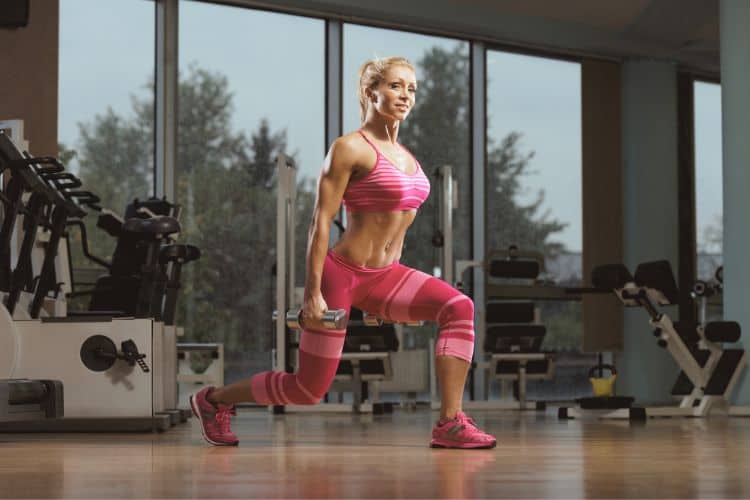
Step one foot backward and lower into a comfortable reverse lunge before returning to standing. Alternate legs for approximately one minute.
Reverse lunges prepare your hips and legs for the lower-body movements coming later in the workout. Use a smaller range of motion if necessary.
Spend approximately one minute preparing your shoulders and upper body. Perform gentle arm circles in both directions, followed by controlled torso rotations.
Avoid aggressively twisting your lower back. The movement should feel smooth and comfortable.
Finish the warm-up with one minute of low-impact jumping jacks. Step one foot out to the side while raising your arms, return to the center, and repeat on the opposite side.
If you prefer higher-impact exercise, gradually transition to regular jumping jacks during the final 20 to 30 seconds.
The first circuit introduces larger movements that quickly engage several muscle groups. Complete each exercise for 40 seconds, recover for 20 seconds, and repeat the circuit twice.
Stand with your feet around shoulder-width apart and perform a controlled squat. As you return to standing, drive one knee upward toward your chest. Squat again and repeat with the opposite knee.
This movement combines lower-body strength with core engagement and cardiovascular conditioning. Keep the movement controlled rather than rushing through repetitions.
Begin in a high plank with your hands underneath your shoulders. Bring one knee toward your chest and then switch legs.
You can perform mountain climbers slowly for a low-impact version or alternate your legs quickly for a more demanding cardio interval. Keep your hips relatively stable and press firmly through your hands.
Step backward into a reverse lunge, return to standing, and alternate sides. Maintain a tall upper body and keep the front knee tracking in the same general direction as your toes.
To increase difficulty, hold dumbbells by your sides. Beginners can perform bodyweight repetitions or lightly hold a chair for balance.
Place your hands on the floor or an elevated surface, step one foot backward followed by the other, hold a brief plank, step forward, and stand.
More advanced exercisers can jump both feet backward and forward and add a small jump at the top. The modified version still provides a challenging full-body interval without requiring jumping.
The second circuit shifts more attention toward muscular endurance while maintaining an elevated training pace.
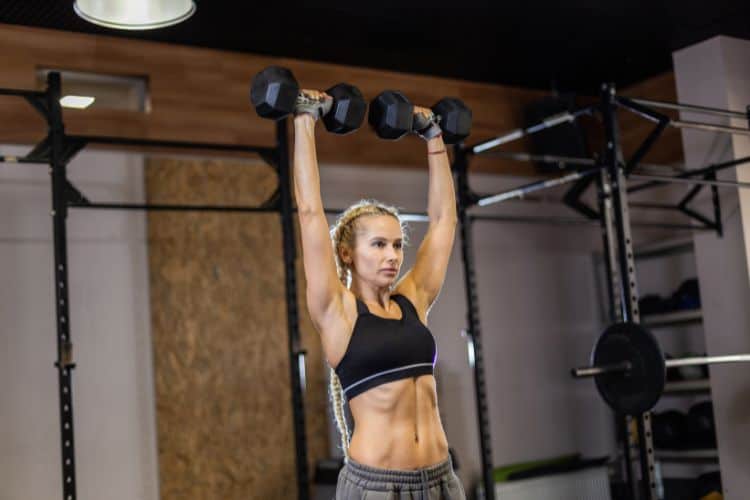
Perform a squat while holding dumbbells at shoulder height. As you stand, press the dumbbells overhead. Lower the weights back to your shoulders and repeat.
If you do not have dumbbells, perform the same motion using bodyweight and intentionally reach your arms overhead.
Choose weights that allow you to maintain control throughout the interval. Avoid using momentum simply to move heavier dumbbells.
Start in a plank position with your hands slightly wider than shoulder-width apart. Lower your chest toward the floor while maintaining a strong torso, then press yourself back upward.
Push-ups can be performed from the knees or with your hands elevated on a stable bench, countertop, or sturdy piece of furniture. Choose the variation that lets you maintain good alignment.
Step one leg diagonally behind the other and lower into a comfortable lunge. Return to standing and switch sides.
Keep most of your control through the front leg and avoid forcing an excessively deep range of motion. If curtsy lunges feel uncomfortable, replace them with standard reverse lunges.
Begin in a high plank. Lift one hand and tap the opposite shoulder before returning your hand to the floor. Alternate sides while attempting to minimize rotation through your hips.
Widen your foot position for additional stability. You can also perform the exercise with your hands elevated to reduce difficulty.
The final portion of the workout is designed to provide a short burst of cardio before cooling down.
Run or march in place while lifting your knees. Pump your arms naturally and keep your posture upright.
For a low-impact version, eliminate jumping and perform powerful alternating knee drives.
Step laterally from one side to the other while allowing the trailing foot to move slightly behind you. Increase the speed when comfortable.
Advanced exercisers can turn the movement into skater jumps. Beginners can keep both movements controlled and low impact.
Stand with your knees slightly bent and quickly alternate your feet against the floor. Keep your steps small and light.
You do not need a large training area. The objective is quick movement while maintaining an athletic position.
Place your hands on the floor, step or jump your feet backward into a plank, bring your feet forward, and stand.
Unlike a traditional burpee, you do not need to perform a push-up or jump. This makes the movement easier to modify while still challenging the whole body.
Once the final interval is complete, gradually reduce your intensity instead of stopping suddenly. Walk slowly around the room or march gently in place while allowing your breathing to settle.
Follow with comfortable stretches for the quadriceps, hamstrings, calves, hips, chest, and shoulders. Hold each stretch without bouncing and avoid forcing your body into uncomfortable positions.
The cool-down can also provide a useful mental transition. Instead of immediately returning to a busy schedule, spend a few minutes allowing your heart rate and breathing to gradually return toward normal.
A workout does not need jumping to be challenging. Low-impact HIIT can be an excellent option when you live in an apartment, exercise early in the morning, want a quieter workout, or simply prefer keeping both feet closer to the floor.
Replace jumping jacks with step jacks, high knees with high-knee marches, skater jumps with lateral steps, and jumping burpees with step-back burpees.
You can increase the challenge without adding impact by using controlled tempos. For example, lower into a squat for three seconds and stand in one second. You can also add resistance with dumbbells or increase the work interval slightly.
Low impact should not be confused with low effort. Controlled resistance exercises can create a demanding workout without repeated jumping.
If you are new to HIIT, begin conservatively. You do not need to match the speed of someone who has been interval training for years.
Try working for 20 to 30 seconds and recovering for 30 to 40 seconds. Once that structure feels manageable, gradually increase the work period.
Exercise selection is equally important. Start with bodyweight squats, reverse lunges, incline push-ups, marches, step jacks, and elevated mountain climbers. These movements allow you to learn proper technique before progressing toward faster or more complex variations.
Consistency matters more than completing the hardest possible workout. A routine you can realistically repeat is generally more useful than an extremely demanding session that leaves you unwilling to train again.
HIIT does not need to be performed every day. Because challenging interval workouts place demands on your muscles and cardiovascular system, recovery should be part of your training schedule.
Many people can incorporate approximately two or three HIIT sessions per week while using other days for strength training, walking, mobility work, cycling, yoga, or general recreational activity.
Your ideal schedule depends on your current fitness level, training intensity, sleep, recovery, and other physical activity. If you are performing resistance-based HIIT with challenging dumbbells, those sessions should also be considered when planning muscular recovery.
More exercise is not automatically better. Sustainable training balances effort with recovery.
Finding a completely empty 30-minute period can be difficult, so it often helps to treat exercise like another scheduled commitment.
Choose your workout time in advance whenever possible. Put your shoes and workout clothes somewhere accessible, decide which routine you will perform, and prepare any dumbbells or equipment beforehand. Removing small decisions makes it easier to begin when your workout window arrives.
Morning workouts can work well because unexpected responsibilities have had less opportunity to disrupt the day. However, there is nothing inherently superior about exercising in the morning. If lunchtime or evening fits your schedule better, use the time you are most likely to maintain consistently.
On extremely busy days, remember that a shorter session still counts. Completing 10 or 20 minutes of purposeful movement can be more practical than skipping exercise because you cannot complete the entire planned workout.
Your body gradually adapts when you repeatedly perform the same workout. Progression helps maintain an appropriate challenge.
One option is increasing resistance. If you currently perform squats and lunges using only bodyweight, introduce dumbbells. Once those weights become manageable, gradually increase resistance.
Another option is changing interval duration. You might progress from 30 seconds of work and 30 seconds of rest to 40 seconds of work and 20 seconds of rest.
Exercise variations can also become more challenging. Incline push-ups can progress toward floor push-ups, marching knee drives can become high knees, and step-back burpees can eventually become regular burpees if higher-impact training is appropriate for you.
Change one variable at a time so that progression remains manageable.
Although HIIT can include strength exercises, dedicated resistance training remains valuable when building strength and muscle is an important goal.
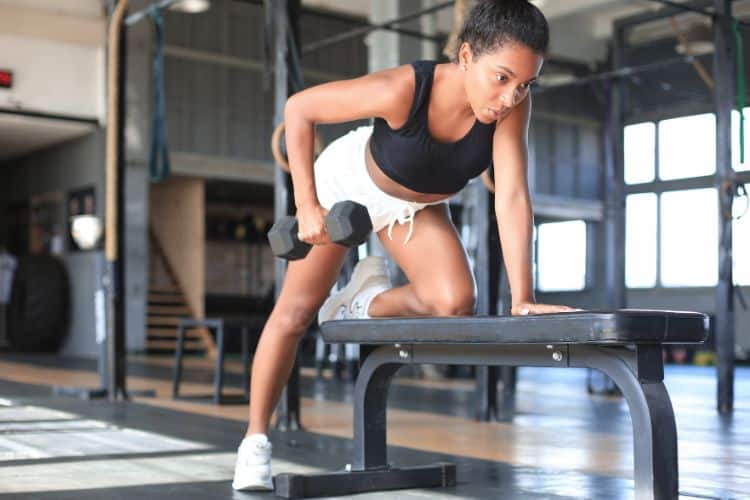
You might perform two 30-minute HIIT workouts per week and two separate strength sessions. Another option is designing HIIT workouts around resistance exercises such as goblet squats, dumbbell rows, Romanian deadlifts, overhead presses, and lunges.
The key difference is intent. During traditional strength training, you typically use heavier resistance and take longer recovery periods. During HIIT, exercises are performed within shorter intervals with limited rest.
Combining both approaches can provide a balanced weekly fitness routine.
Exercise works best when it is supported by adequate nutrition, hydration, and recovery. You do not need a complicated diet simply because you are performing HIIT workouts.
Focus on balanced meals containing quality protein sources, carbohydrates, fruits, vegetables, and healthy fats. Protein supports muscle maintenance and recovery, while carbohydrates can help provide energy for demanding training.
Drink water regularly throughout the day rather than attempting to compensate immediately before your workout. Your hydration needs vary according to body size, activity level, temperature, and how much you sweat.
Avoid treating exercise as punishment for eating. A more sustainable approach is viewing training and nutrition as complementary habits that support fitness and overall well-being.
One common mistake is performing every interval at maximum speed. Faster repetitions are not necessarily better repetitions. When fatigue causes your squat depth, plank position, or lunge stability to deteriorate, reduce the pace.
Another mistake is selecting exercises that are unnecessarily complicated. HIIT works perfectly well with basic movements. Squats, lunges, push-ups, step jacks, mountain climbers, and planks can create a complete workout.
Skipping the warm-up can also make the transition into high-intensity exercise unnecessarily abrupt. Even when time is limited, several minutes of progressive movement can prepare you for the main session.
Finally, avoid comparing your performance with someone else’s workout. Your appropriate pace depends on your current ability and training history.
Fitness routines rarely unfold perfectly every week. Children get sick, work schedules change, appointments appear, and nights of poor sleep happen. Building flexibility into your routine can help prevent one missed workout from becoming several weeks away from exercise.
Create a minimum workout option for particularly hectic days. For example, if you cannot complete the full 30-minute session, perform the five-minute warm-up and one or two circuits.
You can also divide exercise into smaller periods when necessary. Ten minutes in the morning and another short session later in the day can still contribute to your overall activity.
The objective is not perfection. It is creating a fitness routine that can coexist with real life.
Thirty minutes can provide plenty of time for a productive workout, especially when the session includes a warm-up, structured intervals, and a cool-down. Workout quality, intensity, consistency, and progression matter more than simply extending the session.
Yes. Squats, lunges, push-ups, mountain climbers, planks, step jacks, and burpee variations can all be performed using bodyweight. Dumbbells are optional for increasing resistance.
Yes, provided the workout is adjusted appropriately. Beginners can use lower-impact movements, shorter work periods, longer rest intervals, and easier exercise variations.
Daily high-intensity training is unnecessary for most people. Recovery allows your body to adapt to training. Mix HIIT with strength work, walking, mobility, and easier activity rather than making every workout highly intense.
Perform the warm-up and one or two circuits. A shorter workout can still be worthwhile, and maintaining your exercise habit can make it easier to return to longer sessions when your schedule permits.
A busy schedule does not mean exercise has to disappear completely. 30 minute HIIT workouts for busy moms provide a flexible way to combine cardio, strength, and full-body movement without spending hours at the gym.
Start with a short warm-up, move through simple exercises using manageable work-to-rest intervals, and finish with a gradual cool-down. Modify jumping exercises when necessary, increase resistance as you become stronger, and adjust the session according to your energy and experience level.
Most importantly, build a routine that works with your life rather than constantly fighting against it. Some days you may complete the entire 30-minute workout. Other days, 10 or 15 minutes may be all you can realistically manage. Both contribute to maintaining an active lifestyle.
With consistent practice, sensible progression, and adequate recovery, a 30 minute HIIT workout at home can become a convenient part of a busy weekly schedule—helping you get a challenging full-body workout completed before moving on to everything else your day requires.
To keep building a consistent fitness routine even when your schedule is packed, explore more time-efficient workouts from Women’s Fit Club. Start with this 30 Minute Full Body HIIT Workout at Home for Beginners when you need an accessible home routine, or try the 30-Minute Full Body At-Home HIIT Routine for another full-body option. If you’re new to interval training, the HIIT for Beginners 30-Minute Full-Body Workout Plan provides an easy starting point. You can also add variety with this 30 Minute HIIT Cardio Workout or follow the 30 Day Beginner HIIT Workout Plan when you’re ready to turn your short workouts into a longer-term fitness routine.
Stay up to date on the latest women’s health, fitness and lifestyle trends and tips.
