


Sign up for workout ideas, training advice, reviews of the latest gear and more.
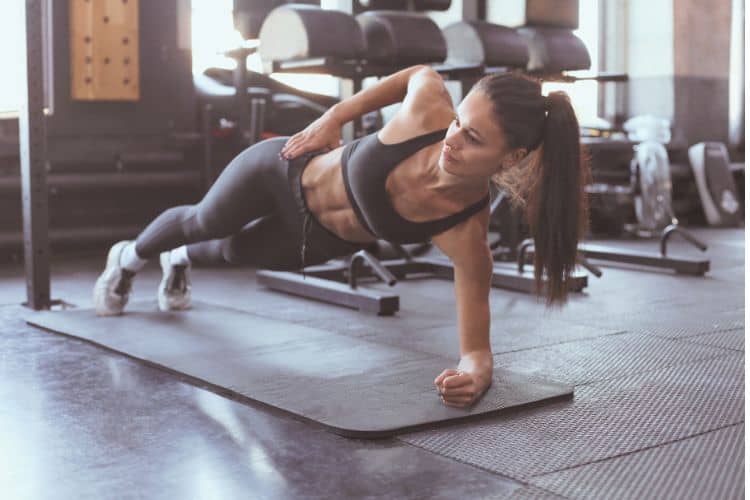
A 30 minute slow weighted workout is an effective way to build strength, improve muscle control, and make lighter weights feel surprisingly challenging. Instead of rushing through repetitions, this training method uses a controlled tempo to keep your muscles working for longer. The result is a focused full-body workout that can help you improve strength and muscular endurance without spending hours exercising.
Slow weight training is suitable for beginners, experienced exercisers, and anyone who wants to improve exercise form. It can be especially helpful when you work out at home and have access to only a limited selection of dumbbells. By slowing down the lifting and lowering phases of each repetition, you can create more muscular tension without immediately reaching for heavier weights.
This 30 minute slow weighted workout targets the legs, glutes, back, chest, shoulders, arms, and core. All you need is a pair of dumbbells, enough room to move safely, and a commitment to performing every repetition with control.
A slow weighted workout is a form of resistance training in which each repetition is performed at a deliberate pace. A standard repetition might take two seconds, but a slow-tempo repetition can last five to eight seconds or longer.
For this workout, most exercises use a 3-1-2 tempo. Lower the weight for three seconds, pause for one second at the hardest or deepest position, and then lift the weight for two seconds. A dumbbell squat, for example, involves lowering for three seconds, pausing at the bottom for one second, and standing over two seconds.
The precise timing does not need to be perfect. The goal is to eliminate momentum and remain in control throughout the entire movement. You should feel your muscles doing the work rather than allowing speed, bouncing, or swinging to move the weights.
Time under tension describes how long a muscle remains under stress during a set. Slowing down each repetition substantially increases this time, even when you perform fewer repetitions.
Ten fast squats might take approximately 20 seconds. Eight controlled squats using a six-second tempo could keep your muscles working for nearly 50 seconds. That additional tension can make a moderate dumbbell feel much heavier by the end of the set.
Moving slowly gives you time to notice your positioning. You can pay attention to your knees, hips, spine, shoulders, and grip during every phase of an exercise.
Better control is especially valuable for beginners learning basic strength exercises. It can also help experienced exercisers correct habits that developed from moving too quickly. You may discover that an exercise feels completely different when you remove momentum and focus on proper alignment.
You do not always need heavier dumbbells to make a workout more difficult. Slower repetitions, longer pauses, and a greater range of motion can increase the challenge without increasing the load.
This makes slow weighted workouts practical for home training. If your dumbbells have become too easy during traditional workouts, changing your tempo can create a new challenge while you consider investing in additional weights.
Slow resistance training strengthens the connection between your mind and the muscles performing an exercise. During a row, for example, you can focus on drawing the shoulder blade toward the spine instead of simply pulling the dumbbell upward.
This awareness may help you recruit the intended muscles more effectively. It can be particularly helpful during glute exercises, back movements, and core training, where other muscles sometimes take over.
Controlled resistance training avoids many of the sudden movements found in high-impact workouts. There is no jumping, sprinting, or rushing between repetitions in this routine.
That does not mean slow training is automatically appropriate for every injury or health condition. However, its controlled, low-impact format can be a useful option for people who prefer a steadier workout. Consult a qualified healthcare professional if you have pain, an injury, or a condition that could affect your ability to exercise safely.
You need one pair of dumbbells for this 30 minute slow weighted workout. Adjustable dumbbells are convenient, but fixed-weight dumbbells work equally well.
Your ideal weight will depend on the exercise. Lower-body movements such as squats and Romanian deadlifts usually allow a heavier weight than lateral raises or overhead presses. If you have several pairs available, keep a lighter and a heavier pair nearby.
Beginners should choose weights they can control without losing their posture. The final few repetitions should feel challenging, but you should still be able to maintain the prescribed tempo. A mat is optional but may make floor exercises more comfortable.
Choose a weight that allows you to complete each working interval with approximately two good repetitions left in reserve. You should feel challenged near the end of the interval without needing to speed up, shorten the movement, or compromise your form.
Your weight may be too heavy if you cannot complete the lowering phase slowly. Other warning signs include holding your breath, arching your lower back, using momentum, or allowing the weights to drop quickly.
Your weight may be too light if you finish the interval without noticeable muscular fatigue. Before buying heavier weights, try slowing the movement further, increasing the pause, or improving your range of motion.
The workout includes a five-minute warm-up, four five-minute strength blocks, and a five-minute cool-down. Each strength block contains two exercises.
Perform the first exercise for 40 seconds, rest for 20 seconds, perform the second exercise for 40 seconds, and rest for 20 seconds. Repeat the two-exercise sequence until the five-minute block is complete. Move slowly enough to complete approximately five to eight high-quality repetitions during each working interval.
Follow a 3-1-2 tempo whenever practical:
Breathing should remain steady. Inhale during the easier or lowering phase, then exhale during the most demanding part of the movement.
Begin with 60 seconds of marching in place. Let your arms swing naturally and gradually increase the height of your knees. The purpose is to increase circulation without creating fatigue.
Continue with 60 seconds of alternating step-back lunges without weights. Take a comfortable step backward, gently bend both knees, and return to standing. Keep the movement shallow if your hips or knees need more time to warm up.
Perform 60 seconds of bodyweight good mornings. Place your hands behind your head or across your chest, soften your knees, and push your hips backward. Keep your spine neutral as your torso leans forward, then squeeze your glutes to stand.
Use the fourth minute for alternating arm circles and reaches. Circle your arms forward for 20 seconds, backward for 20 seconds, and finish with slow overhead reaches.
Complete the warm-up with 60 seconds of controlled bodyweight squats. Lower for approximately three seconds and stand at a comfortable speed. This final minute introduces the slow tempo you will use during the weighted portion.
Hold one dumbbell at your chest or a dumbbell in each hand. Position your feet approximately shoulder-width apart, with your toes turned slightly outward. Brace your core and keep your chest comfortably lifted.
Lower your hips over three seconds while allowing your knees to track in the same direction as your toes. Pause for one second at the bottom without relaxing. Press through your feet and stand over two seconds, finishing with your hips and knees extended.
Avoid bouncing out of the bottom position. Your depth should be determined by your mobility and your ability to maintain good posture. A shallow controlled squat is more useful than a deep squat performed with a rounded back or collapsing knees.
Hold a dumbbell in each hand and hinge forward from your hips. Keep your back neutral, your knees slightly bent, and your neck in line with your spine. Let the weights hang beneath your shoulders.
Pull the dumbbells toward your ribs over two seconds. Pause at the top and gently draw your shoulder blades together. Lower the weights over three seconds until your arms are extended.
Do not jerk your torso upward to move the dumbbells. If you cannot keep your body still, reduce the weight. Focus on using your upper back rather than allowing your arms to perform all the work.
Stand with your feet approximately hip-width apart and hold the dumbbells in front of your thighs. Soften your knees and brace your abdominal muscles.
Push your hips backward over three seconds while guiding the dumbbells down the front of your legs. Stop when you feel a strong stretch in your hamstrings and can still maintain a neutral spine. Pause briefly, then press through your feet and drive your hips forward over two seconds.
The Romanian deadlift is a hip-hinge movement rather than a squat. Your hips should travel backward while your shins remain relatively vertical. Keep the dumbbells close to your legs to reduce unnecessary strain on your lower back.
Lie on your back with your knees bent and your feet planted on the floor. Hold a dumbbell in each hand above your chest, keeping your wrists stacked over your elbows.
Lower the weights over three seconds until your upper arms lightly touch the floor. Pause without allowing the elbows to crash down. Press the dumbbells upward over two seconds, stopping before the weights collide.
Keep your ribs controlled and avoid excessively arching your back. The floor limits the movement of your shoulders, making this an accessible alternative to a bench press. You should feel the chest, shoulders, and triceps working together.
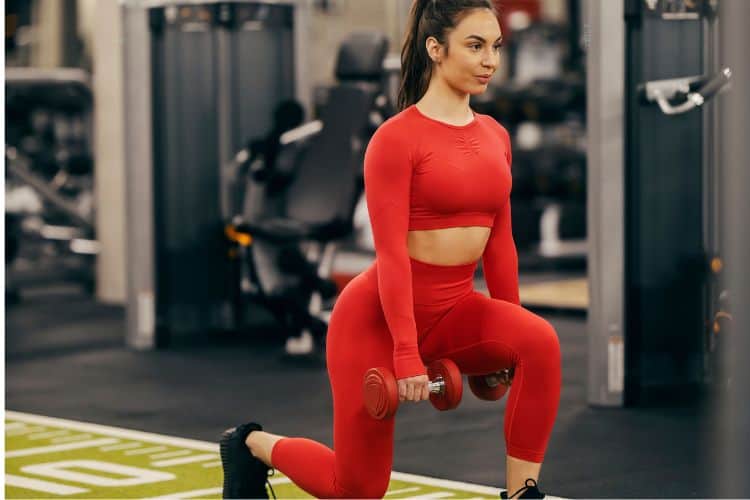
Hold the dumbbells at your sides and stand tall with your feet approximately hip-width apart. Step one foot backward and lower both knees over three seconds. Pause briefly near the bottom, then press through the front foot and return to standing over two seconds.
Alternate legs with every repetition. Keep most of your pressure through the front foot and avoid pushing excessively from the back leg. Your front knee should track over your toes rather than collapsing inward.
If balance is difficult, perform stationary split squats instead. You can also hold one dumbbell in the hand opposite your front leg while using a wall or sturdy chair for light support.
Stand or sit with a dumbbell in each hand at shoulder height. Brace your core and keep your wrists positioned over your elbows.
Press the weights overhead over two seconds without leaning backward. Pause with the dumbbells above your shoulders, then lower them for three seconds. Finish when your elbows return to a comfortable position slightly below shoulder height.
If your lower back begins to arch, reduce the weight or perform the exercise while seated. You can also alternate arms, which lowers the total demand while requiring your core to resist rotation.
Lie on your back with your knees bent and your feet planted approximately hip-width apart. Place one dumbbell horizontally across your hips and support it with both hands.
Press through your feet and raise your hips over two seconds. Pause at the top and contract your glutes without overextending your lower back. Lower your hips toward the floor over three seconds.
Keep your abdominal muscles gently braced. Your knees should remain aligned with your feet throughout the exercise. To make the movement harder without adding weight, extend the pause at the top to two or three seconds.
Stand tall while holding one dumbbell in each hand. Curl the dumbbells toward your shoulders over two seconds while keeping your elbows close to your sides. Lower them over three seconds.
After the curl, bring one dumbbell overhead using both hands. Bend your elbows and lower the dumbbell behind your head for three seconds. Pause briefly, then straighten your arms over two seconds.
Alternate between one controlled curl and one overhead triceps extension. If changing positions takes too much time, perform curls during the first round and triceps extensions during the second.
Begin your cool-down by walking slowly in place for one minute. Allow your breathing and heart rate to settle gradually.
Spend the second minute performing a gentle standing quadriceps stretch. Hold each side for approximately 30 seconds while keeping your knees close together. Use a wall for balance if necessary.
During the third minute, stretch your hamstrings. Place one heel slightly in front of you, soften the opposite knee, and hinge forward with a neutral spine. Switch sides after 30 seconds.
Use the fourth minute for a chest and shoulder stretch. Clasp your hands behind your back if comfortable, gently extend your arms, and lift your chest without forcing the position.
Finish with slow breathing. Inhale through your nose for approximately four seconds and exhale for six seconds. Relax your shoulders and let the tension leave your hands, jaw, and abdominal muscles.
Counting quietly can help you maintain the correct speed. Think “one, two, three” during the lowering phase, hold for “one,” and lift for “one, two.” A timer with interval alerts allows you to concentrate on each repetition without watching the clock.
Maintain muscular tension during the pauses. A pause is not an opportunity to rest by locking your joints or collapsing into the bottom position. Stay active and ready to reverse the movement with control.
Stop the set if your technique changes significantly. Because every repetition lasts longer, you may complete fewer repetitions than you would in a conventional workout. That is expected. Quality is the priority.
One common mistake is starting slowly and then speeding up as the muscles become tired. If you cannot maintain the tempo, take a short break or choose a lighter weight.
Another mistake is confusing slow movement with extremely small movement. Continue using a comfortable, functional range of motion unless an injury or mobility limitation requires an adjustment. The goal is to control the movement, not shorten it unnecessarily.
Avoid holding your breath. Exhale as you push, pull, or stand, and inhale as you return to the starting position. If you cannot breathe steadily, the weight may be too demanding.
Do not turn every workout into slow training immediately. Your body still needs time to recover from the increased muscular tension. Introduce this method gradually and observe how you feel during the following 24 to 48 hours.
Most people can perform this 30 minute slow weighted workout two or three times per week on nonconsecutive days. This schedule provides regular strength training while allowing time for recovery.
Beginners may start with two weekly sessions. On other days, consider walking, mobility exercises, gentle cycling, or another activity you enjoy. More experienced exercisers can use the routine as one full-body day within a broader training plan.
Your recovery needs depend on your weights, effort, training experience, sleep, nutrition, and other physical activities. Give a muscle group additional rest if it remains unusually sore or your performance declines.
Use the same weights for the first few sessions while learning the tempo. Once you can complete every interval with consistent form, increase one variable at a time.
You could add a small amount of weight, extend the working intervals, increase the lowering phase from three to four seconds, or add another round. You can also increase the range of motion where appropriate.
Record the dumbbell weights you use for each exercise. Written notes make it easier to identify genuine improvement instead of relying on memory. Even a small increase in weight, control, range of motion, or completed repetitions is meaningful progress.
Slow weight training can support a fat-loss plan by helping you maintain or develop muscle while increasing your overall physical activity. However, one workout cannot target fat from a specific area, and slower repetitions do not automatically produce greater fat loss than every other training method.
Sustainable fat loss depends on your overall energy balance, eating habits, sleep, stress management, and activity level. Strength training is valuable because it supports muscle retention and improves physical function while you work toward changes in body composition.
Combine this workout with regular daily movement and balanced meals that provide adequate protein, fiber, and nutrients. Avoid treating exercise as punishment for eating. Consistency is more effective than extreme workouts that are difficult to maintain.
A 30 minute slow weighted workout proves that effective strength training does not need to be fast, complicated, or filled with high-impact movements. By slowing every repetition, you remove momentum and ask your muscles to work throughout the entire range of motion.
The workout’s squats, rows, deadlifts, presses, lunges, glute bridges, curls, and triceps extensions create a balanced full-body routine. The deliberate tempo also encourages better posture, body awareness, and exercise technique.
Start with manageable dumbbells and treat each repetition as a chance to practice control. As your strength improves, gradually increase the resistance or extend the tempo. Thirty focused minutes performed consistently can provide a challenging and rewarding foundation for long-term strength.
For more ways to build strength with controlled resistance training, try this 30 Minute Full Body Dumbbell Workout at Home or increase the challenge with the 35 Minute Full Body Dumbbell Strength Workout. You can also review the Best Full Body Dumbbell Workout For Strength And Fat Loss for additional exercise ideas. Women who want a straightforward strength routine can explore the Best Full Body Strength Workout For Women, while women in their 50s can follow this adaptable Dumbbell Workout For Women Over 50.
Stay up to date on the latest women’s health, fitness and lifestyle trends and tips.
