


Sign up for workout ideas, training advice, reviews of the latest gear and more.




If you want a fast, challenging workout that combines cardio and strength without spending hours exercising, this 35 minute HIIT workout for belly fat can be an effective addition to your weekly fitness routine. High-intensity interval training, commonly known as HIIT, alternates short periods of demanding exercise with controlled recovery periods. This approach can help you burn calories, improve cardiovascular fitness, strengthen major muscle groups, and support overall fat loss.
It is important to understand that exercise cannot selectively burn fat from only the stomach. Your body determines where it stores and loses fat based on factors including genetics, hormones, activity level, nutrition, sleep, and overall energy balance. However, a consistent HIIT workout for belly fat can increase total calorie expenditure while strengthening your abdominal and core muscles. Combined with balanced nutrition, strength training, daily movement, and adequate recovery, HIIT can contribute to reducing overall body fat and developing a stronger, more defined midsection.
The workout below requires approximately 35 minutes and can be performed at home with little or no equipment. It combines full-body exercises with core-focused movements to create an efficient routine for women looking to improve conditioning, strength, and body composition.
HIIT workouts are popular for fat-loss programs because they allow you to perform a substantial amount of work in a relatively short period. Instead of exercising continuously at one intensity, you alternate challenging intervals with recovery periods.
During the harder intervals, your heart rate rises and your muscles require more energy. The recovery intervals allow you to partially recover before repeating another challenging round. This combination creates a demanding cardiovascular and muscular workout without requiring a lengthy gym session.
A 35 minute HIIT workout for belly fat is particularly useful because it provides enough time for a warm-up, several training circuits, focused abdominal exercises, and a cooldown. Thirty-five minutes can also be easier to fit into a busy schedule than longer workouts, making consistency more realistic.
HIIT alone is not a shortcut for belly fat loss. Long-term results depend heavily on your overall lifestyle. Think of HIIT as one component of a complete fitness strategy rather than a method for targeting abdominal fat directly.
One of the biggest advantages of HIIT is efficiency. Within a relatively short workout, you can train your cardiovascular system while challenging multiple muscle groups.
Full-body HIIT exercises such as squats, lunges, mountain climbers, push-ups, and burpees require several muscles to work simultaneously. Compound movements generally demand more energy than exercises involving only one small muscle group.
HIIT can also improve cardiovascular conditioning. As your fitness improves, you may notice that activities such as climbing stairs, walking uphill, jogging, or completing other workouts become easier.
Another important benefit is adaptability. Beginners can use low-impact variations and longer recovery periods, while experienced exercisers can increase speed, resistance, or work duration.
When the workout includes planks, mountain climbers, knee drives, and similar exercises, it also provides significant core training. A stronger core can improve stability, posture, balance, and exercise technique.
You do not need complicated gym equipment to complete this workout. A small open area, supportive athletic shoes, comfortable workout clothing, water, and an exercise mat are enough for most people.
A timer or interval-training app can make the session easier because you will not have to constantly watch the clock. If you want additional resistance, you can incorporate dumbbells into selected movements such as squats or reverse lunges, but weights are optional.
Beginners should start with bodyweight resistance until they feel comfortable with the exercises and interval format.
This workout is divided into a five-minute warm-up, approximately 25 minutes of HIIT training, and a five-minute cooldown.
For most of the workout, perform each exercise for 40 seconds followed by 20 seconds of recovery. Complete the exercises in each circuit and repeat the circuit before progressing to the next section.
The objective is not simply to move as quickly as possible. Maintain controlled technique while working at an intensity appropriate for your fitness level. If your form begins to deteriorate, reduce your speed or use the low-impact modification.
Never underestimate the importance of warming up before high-intensity exercise. The warm-up gradually increases your heart rate, prepares your joints for movement, and activates the muscles you will use during the workout.
Begin with an easy march in place. Gradually lift your knees higher while naturally swinging your arms. If you are comfortable with impact, transition into a light jog.
Keep your shoulders relaxed and maintain an upright posture. The purpose of the first minute is simply to begin increasing circulation and preparing your body for more demanding movement.
Stand with your feet approximately shoulder-width apart. Push your hips backward and bend your knees as you lower into a comfortable squat.
Press through your feet to return to standing.
Keep your chest lifted and knees tracking in the same general direction as your toes. Perform the movement slowly during the warm-up rather than trying to complete as many repetitions as possible.
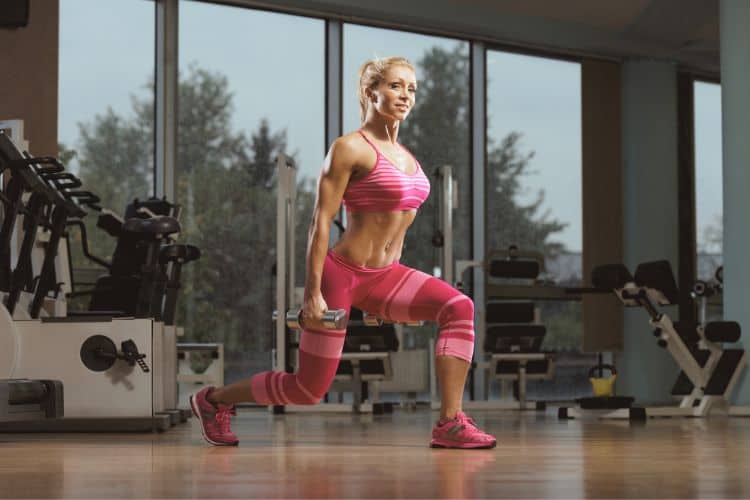
Step one foot backward and lower into a reverse lunge. Push through your front foot and return to standing before switching sides.
Reverse lunges warm up your glutes, quadriceps, hamstrings, hips, and core while preparing your legs for the harder exercises later in the workout.
Stand tall and bring one knee toward your chest while driving your opposite arm forward. Alternate sides at a comfortable pace.
Gradually increase your speed throughout the minute. Keep your abdominal muscles engaged and avoid leaning excessively backward.
Perform traditional jumping jacks or use step jacks if you prefer a lower-impact option. Continue moving steadily for the entire minute.
By the end of the warm-up, you should feel warmer and slightly out of breath without feeling exhausted.
The first circuit focuses on large muscle groups and cardiovascular conditioning. Perform each movement for 40 seconds and rest for approximately 20 seconds before moving to the next exercise.
Begin with your feet shoulder-width apart and lower into a squat. As you return to standing, drive your right knee upward toward your torso.
Perform another squat and drive your left knee upward.
This movement combines lower-body strength with core engagement. Keep your torso controlled and squeeze your abdominal muscles as the knee rises.
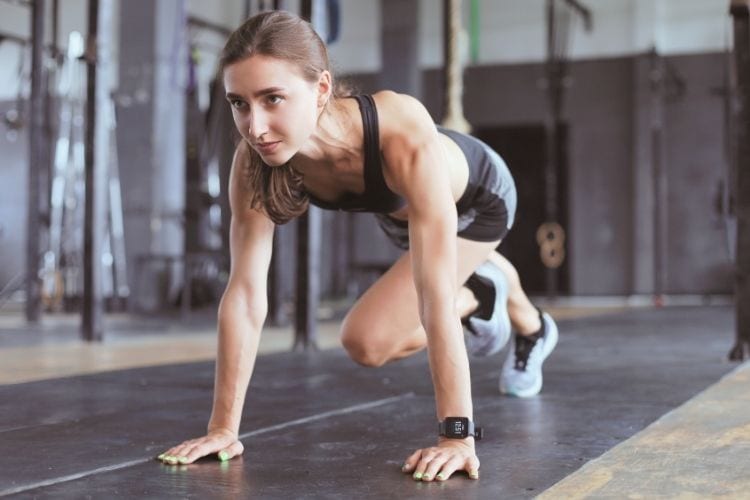
Begin in a high plank position with your hands underneath your shoulders. Bring one knee toward your chest and then switch legs.
Continue alternating at a controlled but challenging pace.
Keep your hips relatively stable and maintain tension through your core. Beginners can slow the movement down and step each foot forward instead of rapidly switching legs.
Step your right foot backward into a reverse lunge. As you return to standing, drive the same knee forward and upward.
Alternate sides or complete several repetitions on one side before switching.
The exercise challenges your legs while requiring your core to stabilize your body during the knee drive.
Start in a high plank position with your feet slightly wider than hip-width apart. Lift one hand and tap the opposite shoulder.
Place your hand back on the floor and repeat with the other side.
Try to prevent your hips from rotating excessively. Moving slowly can actually make this exercise more challenging because your core must stabilize your torso for longer.
Finish the circuit with high knees. Run or march in place while driving your knees upward.
Use your arms to create rhythm and keep your posture tall.
For a low-impact variation, eliminate the running motion and perform powerful alternating knee drives instead.
Repeat the circuit before progressing to the next section.
The second section combines cardiovascular exercises with movements that place additional emphasis on your abdominal muscles.
Begin standing and lower your hands toward the floor. Jump or step your feet backward into a plank position.
Return your feet toward your hands and stand.
Advanced exercisers can add a jump at the top. Beginners can step backward and forward one foot at a time to reduce impact.
Burpees are demanding because they involve the upper body, lower body, and core while quickly increasing heart rate.
Lie on your back with your hands lightly behind your head. Bring one knee toward your chest while rotating your opposite shoulder toward it.
Switch sides in a controlled pedaling motion.
Avoid pulling on your neck. Think about rotating through your torso and contracting your abdominal muscles.
Stand tall and step or jump laterally from side to side. Allow your opposite leg to travel behind you as you move.
Keep your knees slightly bent and use your arms naturally for balance.
Beginners can perform wide side steps instead of jumping. More experienced exercisers can increase the distance of each lateral jump.
Place your forearms on the floor with your elbows positioned underneath your shoulders. Extend your legs and create a straight line from your head through your heels.
Brace your abdominal muscles while keeping your hips from dropping excessively.
If necessary, perform the plank with your knees on the floor.
Stand with your knees slightly bent and quickly alternate your feet against the floor.
Keep your steps short and light while maintaining an athletic stance. Your goal is to increase your heart rate without losing control of your posture.
Repeat the complete circuit.
The final HIIT section combines powerful lower-body movements with abdominal exercises to finish the workout.
Begin with your feet together. Jump your feet outward and lower into a partial squat before jumping back together.
For a low-impact alternative, step one foot outward at a time while lowering into a shallow squat.
Keep your knees soft and land quietly if performing the jumping version.
Begin in a high plank position. Drive your right knee toward your chest, return it to the starting position, and repeat with your left knee.
Compared with mountain climbers, perform these repetitions slightly more deliberately and concentrate on contracting your abdominal muscles.
Stand tall and step one leg diagonally behind the opposite leg. Lower into a comfortable lunge and then return to standing.
Alternate sides.
Curtsy lunges challenge the glutes and legs from a different angle while requiring your core to maintain stability.
Lie on your back with your arms extended upward and your knees bent above your hips.
Slowly lower one arm behind your head while extending the opposite leg toward the floor. Return to the starting position and switch sides.
Keep your lower back gently supported against the floor. Controlled repetitions are more valuable than rushing through this movement.
Finish with bodyweight squats performed at a faster but controlled tempo.
Lower into each squat and drive upward strongly. Maintain proper knee alignment and keep your chest lifted.
During the final seconds, increase your pace only if you can maintain good technique.
After completing the high-intensity intervals, gradually bring your heart rate down rather than stopping abruptly.
Spend the first minute walking slowly around the room while taking controlled breaths. Follow with gentle stretches for the quadriceps, hamstrings, glutes, calves, shoulders, chest, and hips.
Hold each stretch comfortably without bouncing. Your breathing should gradually return toward normal.
The cooldown can also be an opportunity to evaluate the workout. If certain movements caused discomfort rather than normal muscular fatigue, modify or replace them during your next session.
More HIIT is not automatically better. Because high-intensity workouts are physically demanding, your body needs adequate recovery between sessions.
For many people, two to three HIIT sessions per week can provide plenty of cardiovascular training while leaving room for strength workouts and recovery. Beginners may want to start with one or two sessions and gradually increase their training frequency.
On non-HIIT days, consider strength training, walking, cycling, Pilates, yoga, or other lower-intensity activities.
Combining different forms of exercise can help prevent boredom and reduce the repetitive stress associated with performing the same high-impact movements every day.
You do not need to complete every exercise at maximum intensity to benefit from HIIT.
Beginners can use a 30-second work period followed by 30 seconds of recovery instead of the 40/20 structure. Another option is performing 20 to 30 seconds of exercise followed by enough rest to regain control of your breathing.
Replace jumping exercises with stepping variations whenever necessary. Jumping jacks can become step jacks, high knees can become standing knee drives, and burpees can be performed without jumping.
You can also reduce your range of motion during squats and lunges until your strength and mobility improve.
Consistency is more important than making your first workout extremely difficult.
Once the standard workout becomes easier, you can gradually increase the challenge.
One approach is to increase the work interval while reducing recovery. For example, you might progress from 40 seconds of work and 20 seconds of rest to 45 seconds of work and 15 seconds of recovery.
You can also incorporate dumbbells into squats and lunges. Additional resistance increases muscular demand and can help make the workout more strength-focused.
Another option is to improve movement quality. Deeper controlled squats, stronger knee drives, more stable planks, and better range of motion can increase training quality without simply trying to move faster.
Progress gradually rather than changing every variable at once.
Even an excellent 35 minute HIIT workout for belly fat cannot compensate for consistently consuming more energy than your body requires.
Fat loss generally requires an appropriate calorie deficit over time. However, extremely restrictive diets are unnecessary and can make it difficult to maintain energy for exercise.
Build meals around nutrient-dense foods such as lean proteins, vegetables, fruits, whole grains, legumes, healthy fats, and other minimally processed foods you enjoy.
Protein is especially useful for active individuals because it supports muscle repair and can help meals feel more satisfying.
Hydration also matters. Drink water regularly throughout the day, particularly before and after demanding workouts.
Rather than searching for foods that supposedly “burn belly fat,” focus on sustainable eating habits you can maintain consistently.
HIIT can be useful for conditioning and calorie expenditure, but strength training deserves an important place in a well-rounded fat-loss program.
Resistance training helps maintain and build lean muscle. You can strength train with dumbbells, barbells, resistance bands, machines, kettlebells, or your own body weight.
Consider combining two or three weekly strength workouts with one to three HIIT sessions depending on your experience, schedule, and recovery.
This approach allows you to train for both strength and cardiovascular fitness instead of relying entirely on high-intensity cardio.
Not every workout needs to leave you exhausted.
Daily walking can increase your overall activity and calorie expenditure without creating the same recovery demands as HIIT. It is also accessible to many fitness levels and can be incorporated into your day in short sessions.
Try taking a walk after meals, walking during lunch breaks, using stairs when practical, or scheduling an evening walk.
Combining structured workouts with increased everyday movement is often more sustainable than attempting intense exercise every day.
One common mistake is sacrificing exercise form for speed. HIIT encourages intensity, but moving faster is not useful if your technique becomes unsafe or ineffective.
Another mistake is skipping recovery. If you perform HIIT every day while also strength training aggressively, fatigue may accumulate and negatively affect your performance.
Avoid treating every workout like a competition. Your intensity should match your current conditioning level.
Finally, do not judge your progress only by body weight. Changes in waist measurements, fitness, strength, workout performance, energy levels, and how your clothes fit can provide additional indicators of progress.
A HIIT workout can support belly fat reduction indirectly by helping create the conditions necessary for overall fat loss. It increases physical activity and calorie expenditure while improving cardiovascular fitness.
What it cannot do is force your body to remove fat specifically from your stomach.
Your abdominal muscles may become stronger from exercises such as planks, bicycle crunches, mountain climbers, and dead bugs, but visible definition depends significantly on overall body-fat levels.
The most effective strategy is therefore a combination of regular exercise, appropriate nutrition, adequate protein, daily movement, sufficient sleep, and patience.
Choose workout days that realistically fit your schedule instead of creating an overly ambitious routine that becomes difficult to maintain.
For example, you might perform this 35-minute HIIT workout on Monday and Thursday while strength training on Tuesday, Friday, and Saturday. Wednesday could include light walking or mobility work, while Sunday could be a complete rest day.
Your exact schedule does not need to look like anyone else’s.
Track your workouts so you can see improvements over time. You might notice that you can complete more repetitions, recover faster between intervals, maintain better plank positions, or use more challenging exercise variations.
Those improvements are meaningful signs that your fitness is progressing.
A 35 minute HIIT workout for belly fat can provide an efficient combination of cardio, strength, and core training in a single session. By alternating challenging exercise intervals with short recovery periods, you can train your entire body while improving cardiovascular conditioning and increasing overall activity.
Remember that belly fat cannot be spot-reduced through abdominal exercises or HIIT alone. Sustainable fat loss occurs through consistent habits that support overall body-fat reduction. Combine this workout with balanced nutrition, regular strength training, daily movement, adequate sleep, hydration, and sufficient recovery.
Start at an intensity appropriate for your current fitness level and progress gradually. Beginners can eliminate jumping movements, shorten work intervals, and increase recovery periods. More experienced exercisers can increase resistance or interval intensity.
The best workout is not necessarily the hardest one. It is the workout you can perform safely, progressively, and consistently enough to support your long-term fitness goals.
To add more variety to your 35 minute HIIT workout for belly fat, explore these related workouts from Women’s Fit Club. Try the 35 Minute HIIT Workout for Fat Loss for another calorie-burning session, or switch things up with this joint-friendly 30 Minute Low Impact HIIT Workout. For total-body conditioning, follow the 30 Minute Full Body Fat Burn HIIT Workout, then progress to the 40 Minute Full Body HIIT Workout when you want a longer challenge. You can also build a consistent weekly routine with this 7 Day HIIT Workout for Total Body Fat Loss. These workouts complement your belly-fat-focused HIIT routine by helping you increase activity, improve endurance, build strength, and support overall fat loss.
Stay up to date on the latest women’s health, fitness and lifestyle trends and tips.
