


Sign up for workout ideas, training advice, reviews of the latest gear and more.

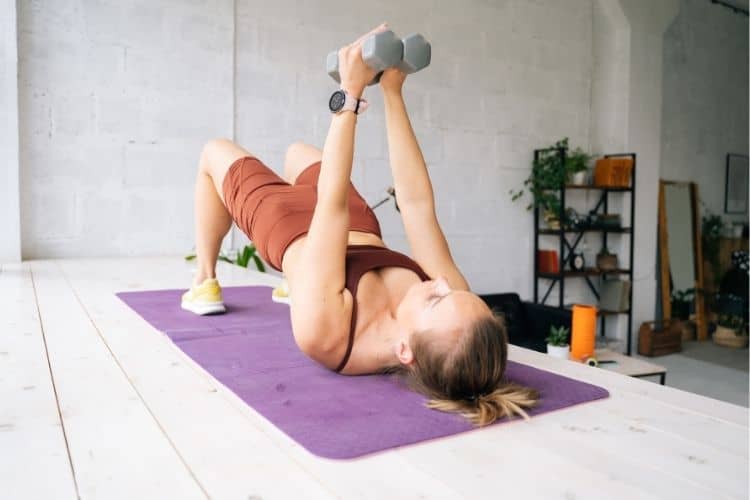
If your goal is to lose belly fat while becoming stronger and more defined, a 45 minute dumbbell workout for belly fat can be an efficient addition to your weekly fitness routine. Dumbbells allow you to combine resistance training with faster-paced compound exercises that work multiple muscle groups, raise your heart rate, and help increase total calorie expenditure.
One important point should be clear from the beginning: abdominal exercises alone cannot selectively burn fat from your stomach. Your body determines where fat is lost based on factors such as genetics, overall body composition, lifestyle, and energy balance. A more effective strategy is to reduce overall body fat through consistent exercise, appropriate nutrition, adequate sleep, and sustainable daily habits.
This 45-minute dumbbell workout combines squats, presses, rows, lunges, deadlifts, carries, and core exercises to create a challenging full-body session. Instead of spending the entire workout performing crunches, you will train large muscle groups while also challenging your abdominal muscles to stabilize your body.
Resistance training is useful during a fat-loss program because it helps maintain and build lean muscle while increasing the amount of physical work performed during your workouts. Dumbbell exercises are particularly convenient because they can be performed at home or in the gym and easily adjusted for different fitness levels.
Compound dumbbell exercises require several muscle groups to work together. A dumbbell squat to press, for example, trains the legs, glutes, shoulders, arms, and core within one movement. A dumbbell Romanian deadlift targets the hamstrings and glutes while requiring the abdominal and back muscles to stabilize the torso.
The result is a workout that can provide both strength and conditioning benefits.
Many workouts are promoted as exercises that “melt belly fat,” but fat loss does not work by simply exercising the body part where you want to become leaner.
Performing hundreds of crunches may strengthen your abdominal muscles, but those exercises cannot guarantee that fat will specifically disappear from your stomach.
Instead, focus on creating an overall fitness program that includes strength training, cardiovascular activity, nutritious eating habits, sufficient protein, good sleep, and regular daily movement.
As your overall body-fat percentage decreases, abdominal definition may gradually become more noticeable.
This workout is organized into a short warm-up followed by several dumbbell training circuits and a core-focused finishing section. The goal is to keep the session moving without sacrificing exercise technique.
A practical 45-minute structure is:
5 minutes: Dynamic warm-up
10 minutes: Full-body strength circuit
10 minutes: Lower-body dumbbell circuit
10 minutes: Upper-body and conditioning circuit
7 minutes: Dumbbell core circuit
3 minutes: Cooldown
Rest approximately 20 to 60 seconds between exercises depending on your fitness level. Beginners can use longer recovery periods, while experienced exercisers can shorten the rest periods when appropriate.
The objective is not simply to move as quickly as possible. Controlled repetitions and proper form should remain the priority.
Spend approximately five minutes preparing your muscles and joints before picking up heavier dumbbells.
Begin with approximately one minute of marching or jogging gently in place. Follow with bodyweight squats, alternating reverse lunges, arm circles, hip hinges, and torso rotations.
You can finish the warm-up with several slow bodyweight good mornings and squat-to-reach movements.
The purpose of the warm-up is to gradually increase your heart rate and practice the movement patterns you will perform during the workout.
Avoid turning the warm-up into a high-intensity workout of its own. You should feel warmer and more mobile without becoming exhausted.
The first working section uses large compound movements to immediately involve several major muscle groups.
Perform each exercise for approximately 40 seconds followed by 20 seconds to transition or recover. Complete two rounds of the five exercises.
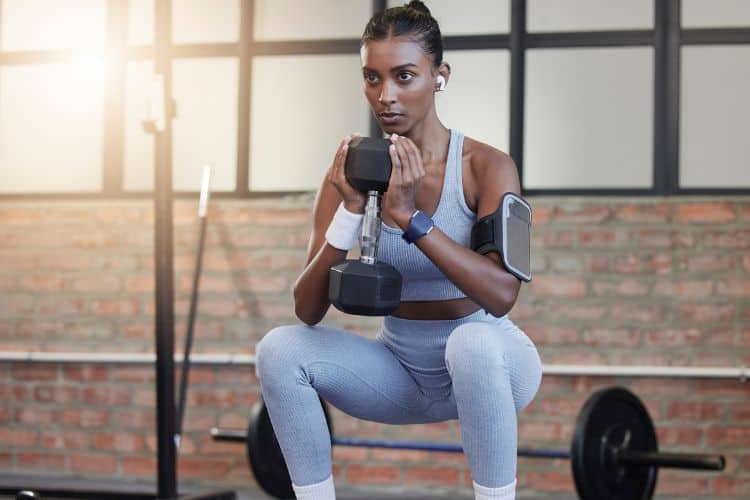
Hold one dumbbell vertically against your chest. Position your feet approximately shoulder-width apart and brace your core.
Push your hips slightly backward and bend your knees as you lower into a squat. Keep your chest tall and knees tracking in the same general direction as your toes.
Drive through your feet to return to standing.
Goblet squats primarily train the quadriceps and glutes while your core works to maintain an upright torso.
Hold a dumbbell in each hand with your arms extended in front of your thighs.
Maintain a soft bend in your knees and push your hips backward. Keep your spine neutral while lowering the dumbbells along your legs until you feel tension through your hamstrings.
Squeeze your glutes and drive your hips forward to stand.
Avoid turning the movement into a squat. Most of the motion should come from hinging at your hips.
Hold the dumbbells near shoulder height and lower into a controlled squat.
As you stand, press both dumbbells overhead. Lower them back toward your shoulders before beginning the next repetition.
This compound exercise combines lower-body and upper-body training, making it an efficient movement when workout time is limited.
Choose lighter dumbbells than you would normally use for squats because your shoulders may become the limiting muscle group.
Stand holding one dumbbell in each hand.
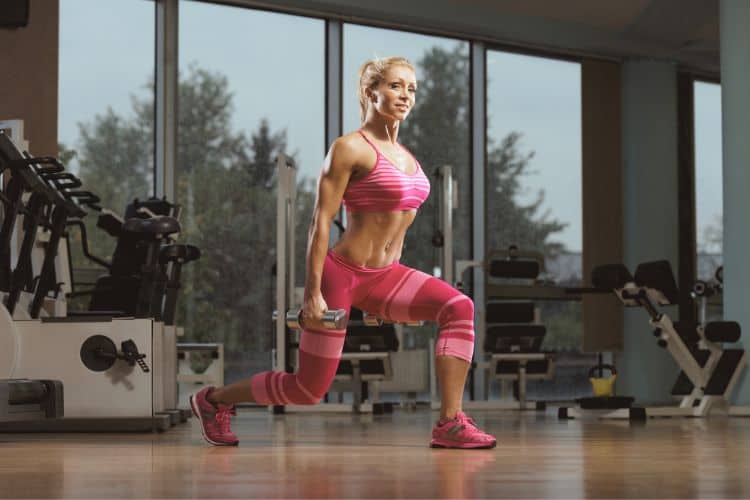
Step one foot backward and lower into a reverse lunge while keeping your front foot firmly planted. Push through the front leg and return to standing before switching sides.
Reverse lunges train the quadriceps, hamstrings, and glutes while challenging balance and core stability.
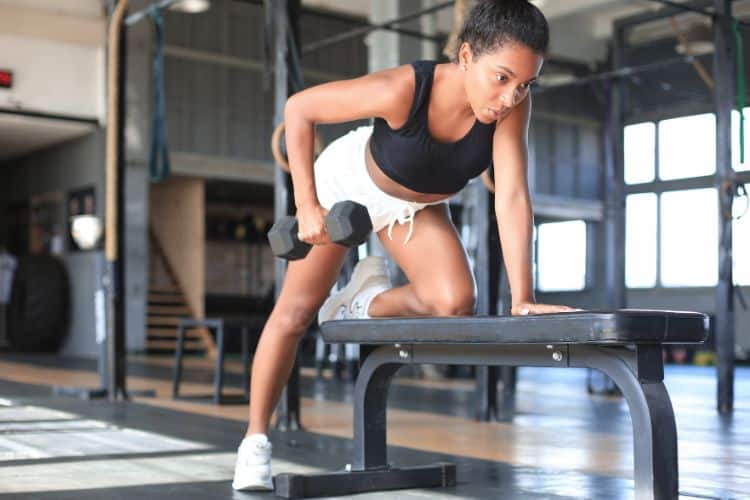
Hold a dumbbell in each hand and hinge forward from your hips.
Keep your back neutral and pull the dumbbells toward the sides of your torso. Pause briefly before lowering the weights under control.
Think about pulling your elbows backward rather than simply lifting the dumbbells with your hands.
Your legs and glutes contain some of the largest muscle groups in your body, making lower-body compound exercises valuable for a full-body training program.
Perform 45 seconds of work followed by approximately 15 seconds of transition time. Complete two rounds.
Hold the dumbbells at shoulder height and stand with your feet approximately shoulder-width apart.
Brace your abdominal muscles and lower into a squat while maintaining a tall torso. Push through your feet to return to standing.
Select a load that allows you to maintain consistent technique throughout the interval.
If you have sufficient room, perform alternating walking lunges while holding dumbbells beside your body.
For smaller workout spaces, perform stationary split squats or alternating reverse lunges instead.
Keep your front foot planted firmly and avoid rushing between repetitions.
Take a wider-than-shoulder-width stance and hold one heavy dumbbell vertically between your hands.
Lower your hips while keeping your chest upright, then drive through your feet to return to standing.
The wider stance changes the emphasis slightly and provides another way to train the lower body.
Lie on your back with your knees bent and feet planted on the floor. Position one dumbbell carefully across your hips.
Brace your core and squeeze your glutes as you lift your hips. Pause briefly at the top before lowering under control.
Avoid excessively arching your lower back at the top of the movement.
Place two dumbbells beside your legs and stand tall with your core engaged.
Push your hips backward while bending your knees enough to lower the weights safely. Maintain control and keep the dumbbells close to your body.
Drive through your feet and extend your hips to return to standing.
The next section combines upper-body strength exercises with movements that can raise your heart rate.
Use weights you can control even as fatigue increases.
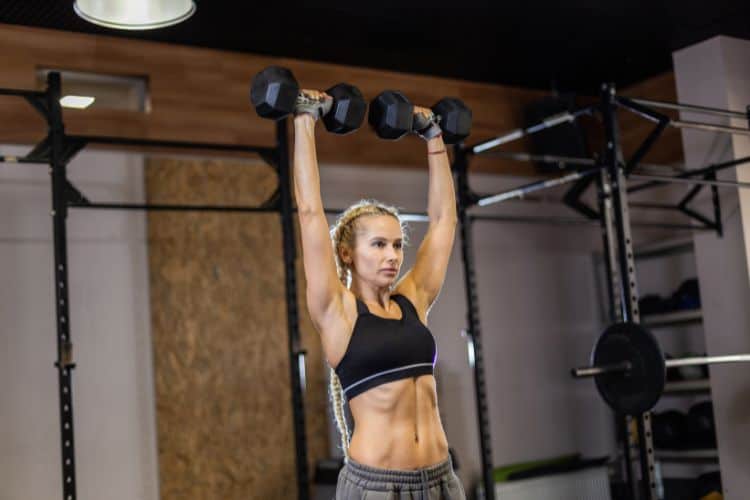
Hold the dumbbells at shoulder height.
Bend your knees slightly and use a small amount of leg drive to help press the weights overhead. Finish with your arms extended before carefully lowering the dumbbells.
Because the push press uses both the upper and lower body, it can be more demanding than a traditional shoulder press.
Begin in a high plank with your hands supported on dumbbells. Position your feet wider for additional stability.
Brace your abdominal muscles and row one dumbbell toward your torso while resisting the temptation to rotate your hips excessively.
Lower the weight and alternate sides.
If this variation is too difficult, perform regular bent-over dumbbell rows instead.
Hold the dumbbells near your shoulders and perform a squat.
Drive upward from the squat and use the momentum from your legs to press the dumbbells overhead.
Thrusters can quickly become demanding, so choose relatively light dumbbells and maintain a controlled pace.
Lie on your back with a dumbbell in each hand.
Bend your elbows and position your upper arms against or slightly above the floor. Press the dumbbells upward until your arms are extended, then lower them under control.
The floor press trains the chest, shoulders, and triceps without requiring a workout bench.
Stand holding moderately heavy dumbbells beside your body.
Maintain a tall posture and slowly lift one knee followed by the other as though marching in place.
Avoid leaning from side to side. Your abdominal muscles should remain engaged as they resist movement while you support the dumbbells.
After approximately 35 minutes of full-body resistance training, finish with a focused core circuit.
Core exercises will not directly remove stomach fat, but developing stronger abdominal and trunk muscles can improve stability and exercise performance.
Lie on your back with your knees bent approximately 90 degrees.
Hold one dumbbell above your chest with both hands or use a light dumbbell in each hand if appropriate.
Slowly extend one leg while maintaining abdominal tension and keeping your lower back in a comfortable, controlled position. Return and alternate sides.
Sit with your knees bent and hold one dumbbell with both hands.
Lean backward slightly while maintaining a long spine. Rotate your torso carefully from side to side.
Keep the movement controlled rather than swinging the dumbbell with momentum.
Begin in a high plank with a dumbbell positioned on the floor beside one hand.
Reach underneath your body with the opposite hand and slowly drag the dumbbell across the floor.
Alternate sides while trying to keep your hips relatively square to the ground.
Hold one moderately heavy dumbbell beside your body with one hand.
Stand tall without leaning toward or away from the weight. Your obliques and deeper core muscles must work to prevent lateral movement.
Switch sides halfway through the interval.
Lie on your back with your knees bent and hold a light dumbbell carefully against your chest.
Contract your abdominal muscles to lift your shoulders slightly from the floor before slowly lowering.
You do not need to perform a full sit-up. Focus on controlled abdominal contraction.
Use the final three minutes to gradually bring your breathing and heart rate down.
Walk slowly around your workout area before performing gentle stretches for your quadriceps, hamstrings, glutes, chest, shoulders, and back.
Take slow breaths and avoid forcing yourself into uncomfortable stretching positions.
The cooldown does not need to be complicated. Its primary purpose is to transition gradually from challenging exercise back to your normal activity level.
The correct dumbbell weight depends on your current strength, experience, and the exercise being performed.
Your weights should feel challenging toward the final repetitions while still allowing you to maintain proper technique.
For example, you will probably be able to use heavier dumbbells for Romanian deadlifts than for shoulder presses or thrusters. Trying to use one weight for every exercise may make some movements too easy and others unnecessarily difficult.
If possible, keep two or three dumbbell weight options available.
Beginners should prioritize learning the exercises before worrying about lifting heavier weights. Once you can consistently complete the recommended intervals with good technique, gradually increase resistance.
For many people, performing this workout two or three times per week can provide plenty of training stimulus when combined with appropriate recovery.
You do not necessarily need to perform the exact same workout every day to lose belly fat faster.
Your muscles require recovery following challenging resistance-training sessions. On other days, you can incorporate walking, cycling, swimming, mobility work, or other activities you enjoy.
A balanced weekly schedule might include three full-body strength workouts and several days of moderate activity, with at least one easier recovery day.
Your exact schedule should depend on your training experience, recovery, and overall activity level.
Exercise is only one part of reducing overall body fat. Nutrition can have a major influence on whether you consistently maintain the energy balance necessary for fat loss.
Focus primarily on nutrient-dense foods that help you feel satisfied while supporting your workouts.
Protein-rich foods can be particularly useful because protein supports muscle maintenance and recovery. Depending on your preferences, protein sources can include eggs, fish, poultry, lean meat, Greek yogurt, cottage cheese, beans, lentils, tofu, and other minimally processed options.
Include vegetables, fruits, whole grains, healthy fats, and sufficient fluids as part of a balanced diet.
You do not need to eliminate carbohydrates or follow an extreme diet to make progress. Sustainable eating habits that you can maintain consistently are generally more useful than temporary restrictive plans.
A 45-minute workout is valuable, but what you do during the remaining hours of the day matters too.
Walking is one of the simplest ways to increase daily physical activity without adding another extremely demanding workout.
Try taking short walks after meals, using stairs when practical, parking farther from entrances, or adding a longer outdoor walk to your daily routine.
These seemingly small amounts of movement can accumulate significantly throughout the week.
Your body gradually adapts to repeated training. If you perform exactly the same workout using the same dumbbells for months, progress may eventually slow.
Progressive overload means gradually increasing the challenge placed on your muscles.
You can accomplish this by increasing dumbbell weight, completing additional repetitions, improving your range of motion, slowing the lowering portion of an exercise, reducing unnecessary rest, or improving exercise technique.
You do not need to increase everything simultaneously.
For example, begin by improving your form. Once the workout becomes easier, increase your repetitions. When you can comfortably perform the upper end of your desired repetition range, consider using slightly heavier dumbbells.
Small improvements made consistently can produce meaningful changes over time.
One common mistake is selecting weights that are too heavy because the workout is supposed to feel intense. Excessive weight can cause technique to deteriorate and may prevent you from completing the workout effectively.
Another mistake is performing repetitions too quickly.
Controlled resistance training should not become uncontrolled swinging simply because you want to raise your heart rate. Let the compound exercises create the conditioning challenge while maintaining proper form.
Avoid skipping recovery as well. More exercise is not automatically better. Training quality, nutrition, sleep, and consistency all contribute to long-term results.
Finally, avoid judging progress solely by your body weight. Changes in strength, waist measurements, workout performance, clothing fit, energy levels, and body composition can provide additional ways to evaluate progress.
Yes, but beginners should modify the workout according to their current ability.
Start with lighter dumbbells and consider working for 30 seconds followed by 30 seconds of rest rather than using longer work intervals.
You can also complete only one round of certain circuits while learning the movements.
Replace complicated exercises when necessary. For example, substitute bent-over rows for renegade rows or regular squats for dumbbell thrusters.
There is no advantage to performing an advanced exercise before you can control the basic movement pattern.
As your strength and conditioning improve, gradually increase your training volume and intensity.
There is no universal timeline for losing stomach fat.
Progress depends on numerous factors, including your starting body composition, nutrition, physical activity, training consistency, genetics, sleep, stress, and the size of your calorie deficit.
Instead of trying to transform your body within a few days, focus on building habits that can be repeated for months.
Completing regular dumbbell workouts, walking more frequently, improving food quality, eating adequate protein, and getting enough sleep may not sound as exciting as a rapid belly-fat solution, but these habits provide a much more realistic foundation for long-term progress.
A 45 minute dumbbell workout for belly fat should not revolve around endless crunches. A better approach is to train your entire body with challenging compound movements while using targeted core exercises to improve abdominal strength and stability.
This workout combines squats, Romanian deadlifts, lunges, rows, presses, thrusters, carries, and core exercises into one efficient session that can be performed at home or in the gym.
Remember that losing belly fat ultimately requires reducing overall body fat rather than trying to spot-reduce one area. Combine regular strength training with daily movement, balanced nutrition, sufficient protein, quality sleep, and consistent recovery.
Most importantly, focus on progression rather than perfection. Start with dumbbell weights you can control, master the exercises, and gradually increase the challenge as you become stronger. When repeated consistently as part of a sustainable fitness routine, this 45-minute full-body dumbbell workout can help you build strength, improve conditioning, and support your long-term fat-loss goals.
For more workouts that complement this 45-minute dumbbell workout for belly fat, explore our 45-Minute Full-Body Dumbbell Strength Training Workout for a strength-focused session, or try this 45-Minute Workout To Target Stubborn Belly Fat for another full-body approach. If you want a shorter routine, the 30-Minute Full-Body Dumbbell Workout For Strength And Fat Loss combines compound exercises with efficient conditioning. You can also follow our 14-Day Dumbbell Workout Plan For Fat Loss to create a more structured training schedule, or add variety with this 30-Minute Dumbbell HIIT Workout For a Full-Body Burn. Together, these workouts can help you build strength, increase your overall activity, and support your long-term fat-loss goals.
Stay up to date on the latest women’s health, fitness and lifestyle trends and tips.
