


Sign up for workout ideas, training advice, reviews of the latest gear and more.




Finding an effective workout you can do in a small living space without disturbing your neighbors can feel challenging, especially when many high-intensity interval training routines rely on jumping, running, and other high-impact movements. Fortunately, a 45 minute full body apartment HIIT workout can deliver an intense combination of cardio and strength training without requiring a large room, expensive equipment, or excessive jumping.
This apartment-friendly HIIT workout is designed to train your legs, glutes, core, arms, shoulders, chest, and back while keeping movements controlled and relatively quiet. By alternating challenging work intervals with short recovery periods, you can increase your heart rate while building muscular endurance and improving overall fitness.
Whether you are exercising in your living room, bedroom, condo, or another limited space, this 45 minute apartment HIIT workout provides a practical way to complete a full-body training session at home. All you need is enough floor space to comfortably perform exercises such as squats, lunges, planks, and push-ups.
High-intensity interval training, commonly called HIIT, involves alternating periods of challenging exercise with periods of rest or lower-intensity activity. Instead of maintaining the same pace throughout your workout, HIIT allows you to repeatedly increase your effort and then recover before beginning another interval.
An apartment HIIT workout follows the same basic principle but modifies traditional HIIT exercises to reduce noise and impact. Rather than performing jump squats, burpees with jumps, jumping lunges, or high knees, you can use controlled squats, reverse lunges, squat-to-knee drives, plank variations, and other low-impact exercises.
Low impact does not necessarily mean low intensity. Moving continuously, shortening rest periods, increasing your range of motion, and performing exercises with proper muscular control can make an apartment workout surprisingly challenging.
This approach is particularly useful when you want to exercise early in the morning, late at night, or in a building where excessive jumping could disturb neighbors.
A major advantage of a 45 minute full body HIIT workout at home is efficiency. Instead of training individual muscle groups on separate days, you can incorporate movements targeting several areas of your body into one workout.
Full-body HIIT also combines cardiovascular conditioning with muscular endurance. Squats and lunges challenge your lower body, push-ups train your upper body, and plank variations strengthen your core. When these exercises are performed with limited recovery, your cardiovascular system is challenged at the same time.
Another benefit is convenience. There is no commute to the gym and very little setup. Apartment-friendly HIIT can also be adjusted to different fitness levels. Beginners can slow the movements and take longer recovery periods, while experienced exercisers can increase their pace, use deeper ranges of motion, or add light dumbbells when appropriate.
Consistency is often easier when workouts are convenient. Having a complete routine that can be performed at home gives you another training option on days when going to the gym is impractical.
This routine combines a warm-up, several full-body HIIT circuits, short recovery periods, and a cooldown. The goal is to maintain a challenging but controlled effort rather than simply moving as quickly as possible.
For most of the workout, use a 40-second work and 20-second recovery format. Perform each movement for approximately 40 seconds and use the remaining 20 seconds to recover and prepare for the next exercise.
Keep your movements controlled, particularly if reducing apartment noise is important. Soft foot placement and deliberate transitions can make the routine considerably quieter.
The workout is structured approximately as follows:
5 minutes: Dynamic warm-up
10 minutes: Lower-body HIIT circuit
10 minutes: Upper-body and core HIIT circuit
10 minutes: Full-body conditioning circuit
5 minutes: Final HIIT finisher
5 minutes: Cooldown and mobility
Together, these sections create a complete 45 minute full body apartment HIIT workout.
Never underestimate the importance of warming up before HIIT. Your warm-up gradually increases your heart rate and prepares your muscles and joints for the movements ahead.
Begin by marching in place for approximately one minute. Drive your arms naturally while lifting your knees to a comfortable height. Keep your abdominal muscles lightly engaged and land softly through your feet.
Gradually increase your marching pace as your body becomes warmer.
Stand with your feet approximately hip-width apart and place your hands behind your head or across your chest. Push your hips backward while maintaining a neutral spine. Lower your torso until you feel tension through your hamstrings and then squeeze your glutes as you return to standing.
Step one foot backward and lower into a comfortable lunge. Push through your front foot to return to standing before switching sides. Keep the movement slow during the warm-up.
Lower into a bodyweight squat and then stand while reaching your arms overhead. This movement warms up the hips, legs, shoulders, and upper back.
From standing, hinge forward and carefully walk your hands across the floor until you reach a high-plank position. Pause briefly and then walk your hands back toward your feet before standing.
After approximately five minutes, you should feel warmer and ready to begin the main workout.
The first main circuit concentrates on the legs and glutes while increasing your heart rate without requiring jumping.
Perform each exercise for approximately 40 seconds followed by 20 seconds of recovery. Complete two rounds.
Stand with your feet roughly shoulder-width apart. Push your hips backward while bending your knees and lowering into a squat. Keep your chest lifted and knees tracking in the same general direction as your toes.
Push through your feet and squeeze your glutes as you return to standing.
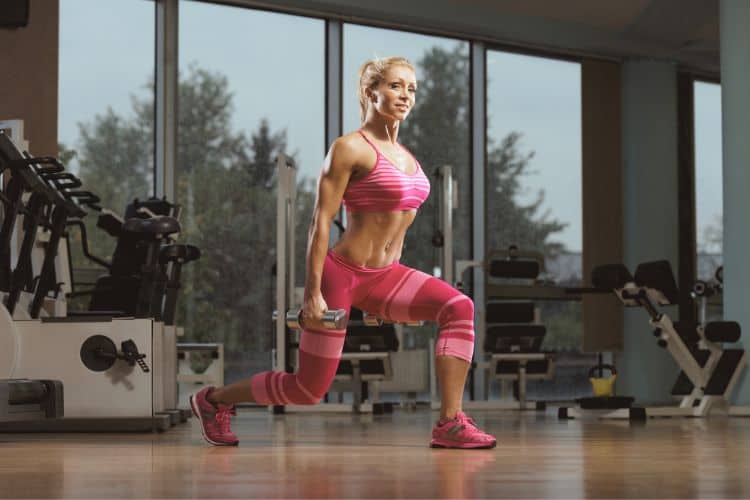
Step backward rather than forward to make the exercise easier to control in a limited space. Lower your back knee toward the floor while keeping your front foot firmly planted.
Return to standing and alternate legs.
Perform a squat and, as you stand, drive one knee toward your chest. Squat again and repeat with the opposite knee.
This exercise increases the cardiovascular demand while remaining quieter than jump squats.
Step to one side and push your hips backward while bending the working knee. Keep your opposite leg relatively straight. Push through the bent leg to return to the center before changing sides.
Lateral lunges add side-to-side movement and challenge the inner thighs, glutes, and quadriceps.
Lie on your back with your knees bent and feet planted on the floor. Drive through your feet and squeeze your glutes as you raise your hips.
Pause briefly at the top before lowering under control. Avoid excessively arching your lower back.
Repeat the five exercises for a second round.
The second circuit shifts more attention toward the chest, shoulders, arms, and core while continuing to challenge your cardiovascular fitness.
Complete each exercise for 40 seconds followed by approximately 20 seconds of recovery. Repeat the circuit twice.
Begin in a high-plank position with your hands slightly wider than shoulder width. Bend your elbows and lower your chest toward the floor before pressing back to the starting position.
If standard push-ups are too difficult, perform them with your knees on the floor or place your hands on a stable elevated surface.
Start in a high plank. Lift one hand and gently touch the opposite shoulder. Return your hand to the floor and switch sides.
Try to prevent your hips from rotating excessively. Moving slowly can actually make the exercise more challenging because your core must work harder to stabilize your body.
Place your forearms on the floor with your elbows underneath your shoulders. Extend your legs behind you and create a relatively straight line from your shoulders to your heels.
Brace your abdominal muscles while continuing to breathe normally.
From a high plank, bring one knee toward your chest and then return it to the starting position. Alternate legs without hopping.
Controlled mountain climbers are excellent for an apartment HIIT routine because they challenge the core while raising your heart rate without creating much noise.
Begin in a high plank and push your hips upward and backward into a downward-dog position. Return to your plank and repeat.
The movement challenges your shoulders and core while adding some mobility for your hamstrings and upper body.
Complete the circuit twice.
Your third circuit combines lower-body, upper-body, and core exercises to create a challenging full-body conditioning section.
Perform a controlled squat. As you stand, rise onto the balls of your feet and squeeze your calves before lowering your heels.
The calf raise adds intensity without requiring a jump.
Step one leg backward into a reverse lunge. As you stand, bring that same knee forward toward your chest.
Alternate legs throughout the interval or switch halfway through.
Stand with your feet comfortably apart. Hinge forward, place your hands on the floor, and walk into a high plank. Perform a push-up, walk your hands back toward your feet, and stand.
Remove the push-up if necessary.
Begin on your hands and knees. Lift your knees slightly above the floor while maintaining a neutral back. Touch one hand to your opposite shoulder and alternate.
This exercise creates significant core tension without needing much room.
Traditional burpees can be extremely noisy in an apartment. Instead, squat down and place your hands on the floor. Step one foot backward followed by the other until you reach a plank. Step your feet forward individually and stand.
Reach overhead instead of jumping.
Complete the five movements twice.
The final five minutes are designed to challenge your conditioning when your muscles are already fatigued.
Perform each exercise for approximately 40 seconds and recover for 20 seconds.
Perform controlled squats at a quicker but manageable pace. Your technique should remain consistent even as fatigue increases.
Alternate driving your knees upward while bringing your opposite arm down toward the knee. Move quickly without bouncing excessively on the floor.
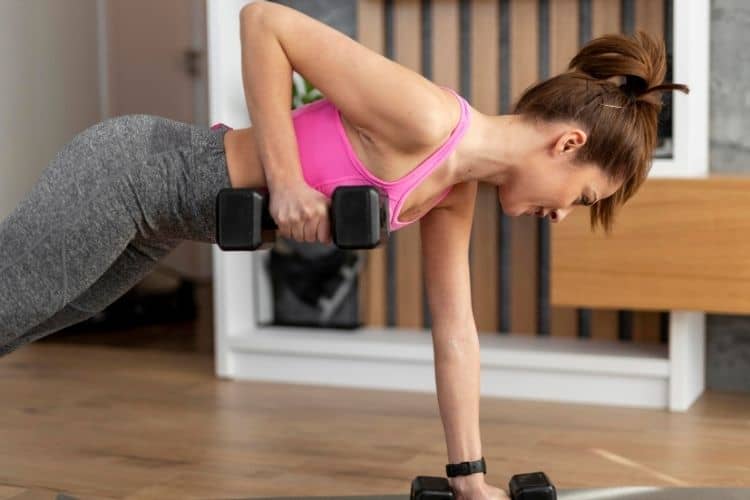
From a high plank, alternate bringing each knee toward your chest. Keep the movement controlled and your hips relatively stable.
Continue alternating reverse lunges while maintaining an upright torso. Reduce your range of motion if your technique begins to deteriorate.
Finish with another interval of step-back burpees. Maintain a steady pace throughout the interval rather than starting too quickly and stopping early.
After completing the final interval, transition directly into your cooldown.
Allow your heart rate to gradually decrease rather than immediately sitting down after the workout.
Walk slowly around your apartment or march gently in place for approximately one minute. Follow this with comfortable stretches for the quadriceps, hamstrings, calves, hip flexors, chest, and shoulders.
Hold each stretch without bouncing and continue breathing normally.
The cooldown is also an opportunity to notice how your body responded to the workout. Mild muscular fatigue is expected, but sharp or unusual pain is a reason to stop and reassess your exercise selection or technique.
One of the most important considerations when exercising in an apartment is controlling impact.
Focus on soft landings and deliberate foot placement. Rather than allowing your heels to slam into the floor, maintain control as your feet make contact.
An exercise mat can provide cushioning for floor exercises and may reduce some sound, although it should be stable enough that it does not slide during movement.
Avoid exercises requiring repeated jumping if noise is a concern. Jump squats can become regular squats, jumping lunges can become reverse lunges, and traditional burpees can become step-back burpees.
These modifications allow you to maintain the structure of HIIT without turning your workout into a disturbance for the people living below you.
If you are new to exercise, completing all 45 minutes at maximum intensity is unnecessary. Start by slowing the pace and increasing your recovery time.
For example, beginners can use 30 seconds of exercise followed by 30 seconds of rest. This provides more time to recover and focus on technique.
Push-ups can be performed from the knees or against a stable elevated surface. Planks can be shortened, and lunges can be performed with a smaller range of motion.
You can also complete one round of each circuit instead of two and gradually increase your workout duration over several weeks.
Progress should come from improved technique, greater control, and increased training capacity rather than forcing yourself through movements when your form has deteriorated.
Once the standard routine becomes manageable, there are several ways to increase the difficulty without adding jumping.
One option is to increase the work interval. Moving from 40 seconds of work to 45 or 50 seconds while maintaining the same recovery period increases overall training density.
You can also slow down strength-focused exercises. Taking three seconds to lower into a squat, lunge, or push-up increases time under tension and can make a bodyweight exercise considerably more difficult.
Another option is adding dumbbells to exercises such as squats, reverse lunges, lateral lunges, and glute bridges if you have suitable weights and enough experience to use them safely.
More advanced exercisers can also reduce recovery periods, but quality movement should remain the priority.
How frequently you perform HIIT depends on your training experience, recovery, exercise intensity, and other workouts.
Because HIIT can be demanding, you do not necessarily need to perform intense sessions every day. Many people can combine a few weekly HIIT workouts with strength training, walking, mobility sessions, or other moderate exercise.
Pay attention to your performance from workout to workout. If you consistently feel unusually fatigued or your exercise quality is declining, additional recovery may be more productive than adding another intense session.
Sleep, nutrition, hydration, and rest all contribute to your ability to recover from challenging workouts.
A full body apartment HIIT workout can be part of a fat-loss program because it provides physical activity and increases energy expenditure. However, no individual workout can specifically remove fat from one area of your body.
Long-term fat loss is influenced by your overall calorie balance, nutrition habits, daily activity, sleep, and consistency.
Combining HIIT with resistance training and regular daily movement can create a balanced fitness routine. Nutrition should also provide adequate protein and nutrient-dense foods to support recovery and help maintain muscle.
Rather than judging progress by how exhausted one workout makes you feel, focus on what you can consistently maintain over weeks and months.
You do not need a large home gym to train your entire body. Many effective exercises require only enough space for your body to move comfortably.
Squats and lunges train the lower body. Push-ups and plank variations challenge the upper body. Glute bridges strengthen the posterior chain, while knee drives and controlled burpees add cardiovascular intensity.
The key is exercise selection and organization. When several movements are combined into timed intervals with limited recovery, even a relatively small collection of exercises can create a demanding workout.
That makes this 45 minute full body apartment HIIT workout particularly practical for people who want an efficient home exercise routine.
Consistency should be your first priority. One extremely difficult workout followed by a long period of inactivity is generally less useful than maintaining a realistic weekly exercise schedule.
Technique also matters. Squat with control, stabilize your torso during lunges, and maintain proper plank alignment. Faster movement is not automatically better movement.
Try tracking simple performance indicators such as how many quality repetitions you can perform during an interval, how long you can maintain proper plank form, or whether you can complete the workout using slightly shorter recovery periods.
These measurements provide a clearer picture of improving fitness than simply trying to become more exhausted every session.
A 45 minute full body apartment HIIT workout proves that effective home training does not have to involve jumping around your living room or owning an extensive collection of fitness equipment. By using controlled bodyweight movements, timed intervals, and smart exercise combinations, you can challenge your cardiovascular system and train major muscle groups while keeping impact relatively low.
The combination of squats, lunges, push-ups, planks, glute bridges, knee drives, and low-impact burpees creates a balanced routine that can be adjusted for beginners or more experienced exercisers.
Start at an intensity you can control, prioritize good technique, and gradually progress as your fitness improves. With consistency, apartment-friendly HIIT can become a convenient and challenging part of your weekly fitness routine—without needing a gym or upsetting the neighbors downstairs.
For more workout ideas to complement your 45 minute full body apartment HIIT workout, try this 45-Minute Functional HIIT Circuit for another total-body challenge, or switch things up with this 30-Minute Full Body At-Home HIIT Routine when you need a shorter home session. Beginners can build their conditioning with this 30-Minute Full Body HIIT Workout at Home for Beginners, while women looking to combine cardio with resistance work can use this 30-Minute Full Body HIIT Strength Training Workout. For days when you want a longer, higher-intensity option, add this 45-Minute Full Body HIIT Workout for Fat Loss and Lean Muscle to your weekly routine. These workouts give you several ways to build strength, improve endurance, and keep your at-home HIIT training varied and challenging.
Stay up to date on the latest women’s health, fitness and lifestyle trends and tips.
