


Sign up for workout ideas, training advice, reviews of the latest gear and more.

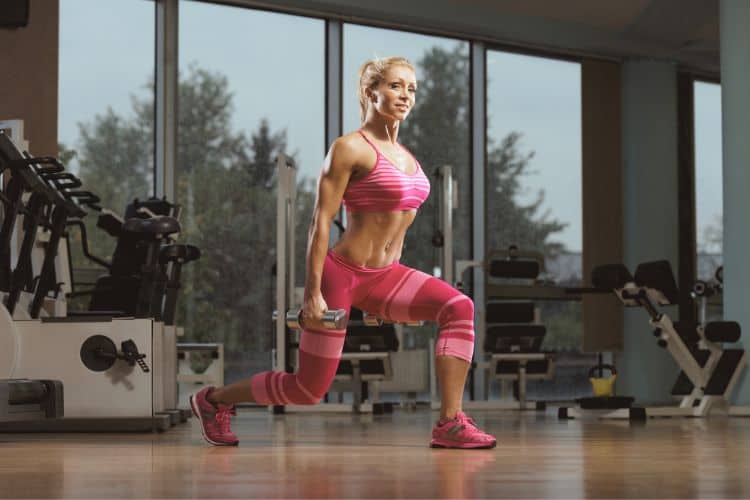




A 45 minute HIIT core workout is a powerful way to combine cardiovascular conditioning with focused abdominal and core training in one efficient session. Instead of spending an entire workout performing traditional crunches, this routine uses high-intensity intervals, dynamic core exercises, and controlled strength movements to challenge your abs while keeping your entire body active.
Your core is responsible for much more than creating visible abdominal definition. The muscles surrounding your abdomen, hips, lower back, and pelvis help stabilize your spine and transfer force between your upper and lower body. A strong core can support better posture, improve exercise technique, and make everyday movements such as lifting, carrying, twisting, and climbing stairs feel easier.
HIIT, or high-intensity interval training, adds another dimension to core training by alternating challenging periods of exercise with short recovery intervals. This format can elevate your heart rate while allowing you to train multiple movement patterns without needing a long workout.
This 45 minute HIIT core workout combines a warm-up, several targeted circuits, and a cooldown to create a complete training session. Most exercises require only your body weight, making the workout suitable for home training, the gym, or anywhere you have enough space to move comfortably.
A HIIT core workout combines high-intensity cardiovascular movements with exercises designed to strengthen the muscles that stabilize your torso. Instead of separating cardio and abdominal training into different sessions, you alternate between exercises that raise your heart rate and movements that directly challenge your core.
The core includes the rectus abdominis, transverse abdominis, internal and external obliques, spinal stabilizers, pelvic muscles, and several muscles surrounding the hips. Training these muscles through different movement patterns creates a more complete routine than relying exclusively on crunches or sit-ups.
During this 45-minute workout, you will perform exercises involving stabilization, rotation, anti-rotation, hip flexion, full-body conditioning, and controlled trunk movement. The goal is to maintain good form while working at an intensity appropriate for your fitness level.
One of the biggest benefits of combining HIIT and core exercises is training efficiency. You can work on cardiovascular fitness, muscular endurance, coordination, and core strength during the same session.
Core-focused HIIT also requires your abdominal muscles to work while your arms and legs are moving. This closely resembles how your core functions during running, sports, strength training, and everyday activities.
Core strength is important because your torso provides a stable foundation for movement. Exercises such as planks, mountain climbers, dead bugs, and plank shoulder taps teach your core to resist unwanted movement while your limbs are active.
Improving this ability may help you maintain better positioning during squats, lunges, presses, rows, and many other exercises.
Traditional abdominal workouts often involve extended periods on the floor. HIIT introduces exercises such as high knees, squat thrusts, mountain climbers, and skater movements that engage larger muscle groups.
Alternating these movements with core exercises keeps the workout challenging without requiring you to perform 45 straight minutes of high-impact cardio.
Holding a plank for a few seconds is one thing. Maintaining core stability repeatedly throughout an entire workout requires significantly more muscular endurance.
Over time, consistent core training can make it easier to maintain good posture and positioning during longer workouts and everyday physical activities.
Another advantage of this 45 minute HIIT core workout is that you do not need expensive equipment. A comfortable exercise mat is helpful for floor exercises, but the routine can otherwise be completed using your body weight.
The workout is divided into five sections so you can gradually increase the intensity before finishing with a cooldown.
Use approximately the following structure:
5 minutes: Dynamic warm-up
8 minutes: Core activation circuit
10 minutes: HIIT core circuit
10 minutes: Strength and stability circuit
7 minutes: Core conditioning finisher
5 minutes: Cooldown and stretching
During the working circuits, a useful starting format is 40 seconds of exercise followed by 20 seconds of rest. Beginners can use 30 seconds of exercise and 30 seconds of recovery. More experienced exercisers can increase the working interval while maintaining proper technique.
Quality movement should remain the priority. If your form starts breaking down, take additional recovery rather than forcing yourself through the interval.
A proper warm-up prepares your joints and muscles for faster, more demanding movements. Start gradually rather than immediately performing maximum-effort intervals.
Begin by marching in place while bringing one knee toward your torso at a time. Keep your chest upright and lightly brace your abdominal muscles. Gradually increase the pace as your body warms up.
Continue for approximately one minute.
Stand tall and bring your right knee toward your left elbow. Return to the starting position and alternate sides.
Avoid aggressively rounding your back. Instead, think about rotating through your torso while maintaining control.
Continue for approximately one minute.
Stand with your feet approximately shoulder-width apart. Push your hips backward and bend your knees into a comfortable squat. As you stand, reach your arms overhead.
This movement warms up your hips, legs, shoulders, and trunk simultaneously.
Continue for approximately one minute.
From standing, hinge forward and place your hands on the floor. Walk your hands forward until you reach a high plank position. Pause briefly before walking your hands back toward your feet.
Move slowly and keep your core engaged as you reach the plank.
Continue for approximately one minute.
Finish the warm-up in a high plank position. Bring one knee toward your chest, return it, and switch sides.
Focus on stability rather than speed. Keep your hips relatively level while pressing firmly through your hands.
Continue for approximately one minute.
Now that your body is warm, the first circuit focuses on activating your abdominal muscles and establishing control before the faster HIIT exercises begin.
Perform each exercise for approximately 40 seconds followed by 20 seconds of transition or recovery. Complete two rounds of the four exercises.
Lie on your back with your arms extended toward the ceiling and your knees bent. Slowly extend your opposite arm and leg away from your body while maintaining a controlled torso position.
Return to the starting position and alternate sides.
The dead bug is especially useful because it teaches you to move your limbs without losing core stability.
Place your forearms on the floor with your elbows underneath your shoulders. Extend your legs behind you and create a straight line through your torso.
Brace your abdominal muscles while avoiding excessive sagging or lifting through the hips.
If necessary, perform the plank with your knees on the floor.
Lie on your back and bring one knee toward your torso while rotating your opposite shoulder toward it. Switch sides in a controlled cycling motion.
Avoid pulling aggressively on your neck. Think about creating the rotation through your torso.
Begin on your hands and knees. Extend your right arm forward while extending your left leg backward. Pause before returning to the starting position and switching sides.
Keep your hips facing the floor and resist rotating through your torso.
The second section increases the cardiovascular intensity while continuing to challenge your abdominal muscles.
Complete two rounds of five exercises using approximately 40 seconds of work and 20 seconds of recovery.
Begin in a high plank and alternate driving your knees toward your chest.
Keep your shoulders positioned over your hands and avoid allowing your hips to bounce excessively. Move quickly only if you can maintain a stable trunk.
Stand tall and rapidly alternate lifting your knees toward hip height.
Pump your arms naturally and land lightly. For a lower-impact variation, perform fast marching knee drives instead.
Begin in a high plank. Lift one hand and tap the opposite shoulder before returning your hand to the floor.
Alternate sides while trying to keep your hips as still as possible. Widen your feet if you need additional stability.
From standing, squat down and place your hands on the floor. Step or jump your feet backward into a plank. Bring your feet forward and stand.
You can increase intensity by moving faster or adding a small jump at the top. For lower impact, step backward and forward one foot at a time.
Begin in a high plank and bring your right knee toward your left elbow. Return to plank and alternate sides.
The diagonal movement increases involvement from the obliques while maintaining the cardiovascular challenge of traditional mountain climbers.
After the faster HIIT section, transition into controlled core strength exercises. The pace may decrease, but the muscular challenge should remain high.
Complete two rounds of the following five exercises.
Lie on your side with your forearm positioned underneath your shoulder. Lift your hips away from the floor and maintain a straight line through your torso.
Perform approximately half of the interval on each side.
Beginners can keep the lower knee on the floor for additional support.
Lie on your back with your knees bent. Bring your knees toward your torso while gently lifting your hips from the floor.
Lower slowly rather than using momentum. Controlled repetitions are usually more effective than rushing through the movement.
Begin on your hands and knees with your wrists underneath your shoulders and knees underneath your hips.
Lift your knees a few inches from the floor and hold the position while keeping your back stable.
This exercise can create significant abdominal tension without requiring large spinal movements.
Lie on your back with your knees bent and feet on the floor. Slightly lift your shoulders and alternate reaching your right hand toward your right heel and your left hand toward your left heel.
Keep the movement controlled while maintaining tension through your abdominal muscles.
Begin in a high plank and slowly bring one knee toward your chest. Pause briefly before returning to the plank and switching sides.
Unlike fast mountain climbers, this version emphasizes control and stability.
The final working section combines cardiovascular exercises with abdominal movements for a challenging finish.
Use 40 seconds of work followed by 20 seconds of recovery. Continue cycling through the exercises until approximately seven minutes have passed.
Step or jump laterally from side to side while maintaining a slight bend in your knees.
Reach your opposite arm across your body to encourage controlled torso rotation.
Begin in a high plank and jump your feet apart and together while keeping your upper body stable.
For a low-impact version, step one foot outward at a time.
Stand tall and bring one knee upward toward the same-side elbow while contracting through the side of your torso.
Alternate sides or complete half of the interval on each side.
Return to mountain climbers for one final cardiovascular challenge. Maintain a strong plank position while alternating your knees forward.
Speed should never come at the expense of technique.
Finish with a controlled forearm plank.
Rather than simply surviving the interval, focus on actively tightening your abdominal muscles, glutes, and legs while maintaining steady breathing.
After completing the HIIT portion, gradually reduce your activity rather than stopping abruptly.
Spend approximately five minutes performing comfortable stretches and relaxed movements.
Start with slow walking or marching until your breathing begins returning toward normal. Follow with a gentle cobra-style abdominal stretch, child’s pose, hip flexor stretch, seated torso rotation, and slow overhead reaches.
Avoid forcing your body into uncomfortable positions. The cooldown should feel restorative after the demanding intervals.
Beginners do not need to perform every interval at maximum intensity. The workout can easily be adjusted while maintaining the same overall structure.
Try working for 30 seconds and resting for 30 seconds. Replace jumping exercises with stepping variations and perform planks from your knees when necessary.
For example, high knees can become marching knee drives, plank jacks can become alternating plank step-outs, and squat thrusts can be performed by stepping into and out of the plank.
You can also shorten the session initially. Completing 20 to 30 minutes with good form may be more productive than struggling through 45 minutes with deteriorating technique.
Gradually increase the duration and intensity as your conditioning improves.
Experienced exercisers can increase the difficulty without completely changing the routine.
One option is to extend working intervals to 45 or 50 seconds while shortening recovery periods. Another option is to increase the speed of cardiovascular exercises while keeping controlled core movements slow.
You can also introduce resistance to appropriate exercises. A light dumbbell can be used during standing knee drives or controlled rotational movements, although maintaining proper technique should remain the priority.
Avoid making every exercise more difficult simultaneously. Changing one variable at a time makes it easier to manage fatigue and track progress.
For many people, performing a demanding HIIT core workout two or three times per week provides plenty of training stimulus when combined with other forms of exercise.
Your ideal frequency depends on your training experience, recovery, sleep, overall workout schedule, and intensity.
Remember that your abdominal muscles participate in many compound exercises. Squats, deadlifts, lunges, push-ups, rows, overhead presses, and loaded carries can all challenge the core.
More core training is not automatically better. Allowing adequate recovery can help you maintain better performance during future workouts.
A common reason people search for HIIT abdominal workouts is to reduce belly fat. Core exercises can strengthen and develop your abdominal muscles, but they cannot selectively force your body to lose fat from your stomach.
Body-fat reduction generally occurs through overall energy balance, nutrition, physical activity, sleep, and long-term consistency. Where fat comes off first is influenced by individual factors.
HIIT can contribute to overall physical activity and energy expenditure, while strength training can help preserve and develop muscle. Combining these strategies with sustainable nutrition habits is typically more practical than relying on hundreds of daily abdominal exercises.
The best reason to perform core exercises is to build stronger, more capable muscles. Changes in body composition can be pursued through your broader fitness and nutrition strategy.
One common mistake is prioritizing speed over technique. HIIT encourages faster movement, but moving quickly with poor positioning can reduce exercise quality.
Another mistake is allowing the lower back to excessively arch during floor exercises. When performing movements such as dead bugs or leg-based abdominal exercises, focus on maintaining controlled core tension.
Plank exercises also frequently become less effective when the hips sag toward the floor or rise excessively. Think about creating a long, strong position from your shoulders through your hips.
Finally, avoid holding your breath. Your core needs tension, but you should still breathe throughout each exercise.
Consistency matters more than completing one extremely difficult workout. A well-structured routine performed regularly can be more useful than occasionally pushing yourself to exhaustion.
Track simple indicators of progress. You might notice that you can maintain a plank longer, complete more controlled repetitions, recover faster between intervals, or use fewer exercise modifications.
Combine core workouts with full-body resistance training, regular walking or cardiovascular activity, balanced nutrition, sufficient protein, hydration, and quality sleep.
These habits support overall fitness far more effectively than focusing exclusively on abdominal exercises.
HIIT is demanding and may not be appropriate for everyone. If you are new to exercise, returning after a long break, pregnant or postpartum, recovering from an injury or surgery, or managing a condition that affects your ability to exercise safely, consider getting individualized guidance before beginning high-intensity training.
Stop exercising if you experience sharp pain, dizziness, chest pain, or unusual shortness of breath. Exercise should be challenging, but it should not require you to ignore warning signs from your body.
A 45 minute HIIT core workout offers an efficient way to train your abdominal muscles while improving cardiovascular fitness and full-body muscular endurance. By combining planks, mountain climbers, dead bugs, knee drives, reverse crunches, and other functional movements, you can challenge your core through multiple movement patterns instead of relying on one type of abdominal exercise.
The key is adjusting the intensity to match your current fitness level. Beginners can use longer recovery periods and low-impact modifications, while experienced exercisers can increase work intervals or progress selected exercises.
Most importantly, focus on controlled movement and consistent training. Your core plays an important role in nearly everything you do, from strength training and sports to posture and everyday movement. Building a stronger core can therefore benefit much more than the appearance of your abs.
Use this 45 minute HIIT core workout as a standalone conditioning session or incorporate it into your weekly fitness routine alongside strength training, walking, cardio, mobility work, and appropriate recovery. With patience and progressive training, you can improve core stability, endurance, conditioning, and overall workout performance.
Want to keep building your strength, endurance, and core fitness after completing this 45-minute HIIT core workout? Explore our 45-Minute Full Body HIIT Workout for Fat Loss and Lean Muscle for another challenging longer session, or try this 35-Minute Full Body HIIT Workout for Women when you need something slightly shorter. Beginners can start with our 30-Minute HIIT Workout for Beginners, while anyone looking for a complete training approach can follow our Best HIIT Workout Plan for Women. For even more workout variety, check out our 40-Minute Full Body HIIT Workout for Strength and Cardio to challenge your entire body while improving cardiovascular endurance.
Stay up to date on the latest women’s health, fitness and lifestyle trends and tips.
