


Sign up for workout ideas, training advice, reviews of the latest gear and more.

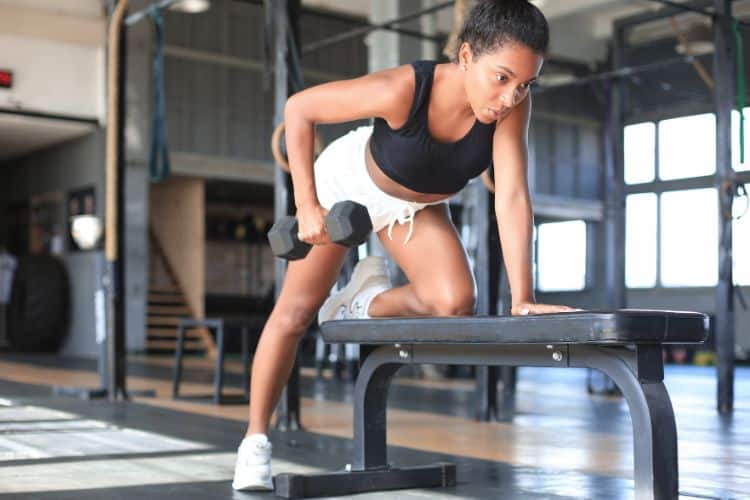
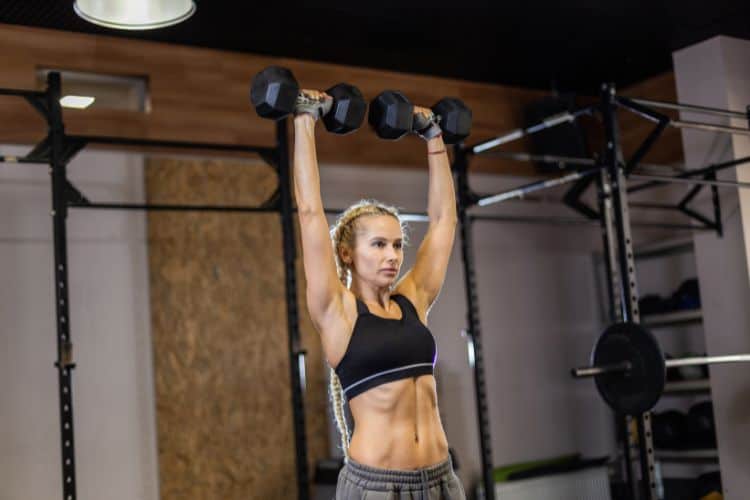
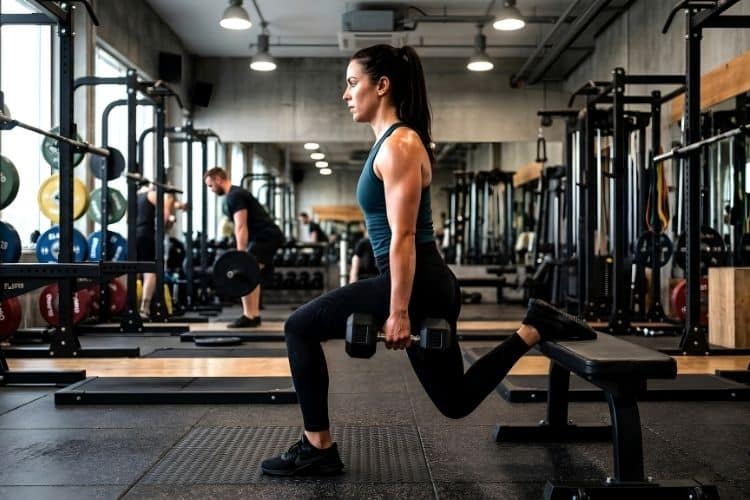
Building stronger, more muscular legs does not require a gym packed with machines or an elaborate collection of equipment. With a pair of dumbbells, smart exercise selection, progressive overload, and 45 focused minutes, you can create an effective lower-body workout that challenges your quads, hamstrings, glutes, calves, and supporting muscles. This 45 minute muscle building dumbbell leg workout is designed for anyone who wants to increase lower-body strength and muscle while keeping training straightforward and efficient.
Dumbbells are particularly useful for leg training because they allow you to perform squats, lunges, Romanian deadlifts, split squats, hip-dominant movements, and unilateral exercises without requiring a barbell setup. They can also make home workouts significantly more challenging as you become stronger.
The key to muscle building is not simply completing exercises for 45 minutes. Your muscles need sufficient resistance, quality repetitions, progressive overload, adequate recovery, and consistent nutrition. This workout combines those principles into a practical lower-body routine you can perform at home or in the gym.
A 45-minute workout provides enough time to train the major lower-body muscle groups thoroughly without turning the session into an unnecessarily long endurance workout. You can include heavy compound exercises at the beginning, unilateral movements in the middle, and higher-repetition accessory exercises toward the end.
Your legs contain some of the largest muscles in your body. The quadriceps extend the knee, the hamstrings help flex the knee and extend the hip, while the glutes play a major role in hip extension and lower-body power. Your calves and smaller stabilizing muscles also contribute to balance and movement.
A properly structured dumbbell leg workout challenges these muscles through several movement patterns rather than relying on endless repetitions of one exercise.
For muscle growth, focus on making your working sets genuinely challenging while maintaining good technique. The final few repetitions should require significant effort, but you should still be able to control the dumbbells and complete each repetition without dramatically changing your form.
The main equipment you need is a pair of dumbbells. Ideally, you will have access to several weights because different exercises require different resistance levels. You may be able to Romanian deadlift substantially more weight than you can comfortably use for Bulgarian split squats, for example.
If you train at home with only one pair of dumbbells, you can still increase difficulty by slowing your repetitions, adding pauses, increasing repetitions, shortening rest periods, or performing more unilateral exercises.
A bench, sturdy chair, or exercise step is useful for Bulgarian split squats and elevated movements, although modifications can be performed without one.
Choose dumbbells that allow you to complete your prescribed repetitions with good technique while making the final repetitions challenging.
The workout can be divided into approximately five minutes of warming up followed by roughly 35 minutes of resistance training and a short cooldown.
The primary exercises are performed first because these movements recruit large amounts of muscle and generally allow you to use heavier weights. Later exercises emphasize unilateral strength, muscle isolation, and metabolic fatigue.
Rest approximately 60 to 90 seconds between most working sets. For demanding exercises such as goblet squats and Romanian deadlifts, you may need closer to 90 seconds. For lighter accessory exercises, 30 to 60 seconds may be sufficient.
Do not sacrifice your performance simply to make the workout faster. Muscle building depends on productive sets, not on keeping your heart rate as high as possible.
Spend approximately five minutes preparing your hips, knees, ankles, hamstrings, quadriceps, and glutes for the workout.
Start with one minute of bodyweight squats. Keep your feet approximately shoulder-width apart, sit your hips down and back, and practice moving through a comfortable range of motion.
Follow with alternating reverse lunges for approximately one minute. Step backward under control and gently lower your rear knee toward the floor.
Next, perform bodyweight good mornings for one minute. Place your hands behind your head, maintain a neutral spine, and push your hips backward until you feel tension through your hamstrings.
Spend another minute alternating between glute bridges and standing knee raises. Finish with approximately one minute of dynamic movement such as lateral lunges, leg swings, or additional slow squats.
The purpose of the warm-up is preparation rather than exhaustion. You should feel warmer and more mobile when you begin your first weighted exercise.
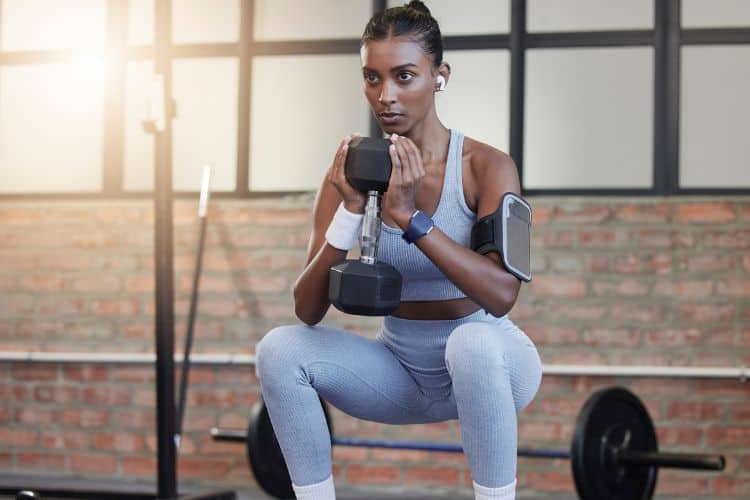
Goblet squats are the first major exercise in this 45 minute dumbbell leg workout because they train the quads, glutes, hamstrings, and core simultaneously.
Hold one dumbbell vertically against your chest. Position your feet around shoulder-width apart with your toes slightly turned outward if that feels comfortable. Brace your core and lower yourself by bending your knees and hips.
Descend as far as you can while maintaining control and keeping your heels grounded. Drive through your feet to return to the standing position.
Avoid rushing through your repetitions. Lower the weight for approximately two to three seconds and then stand with controlled force.
If 12 repetitions become relatively easy, increase your dumbbell weight. When heavier dumbbells are unavailable, add a pause at the bottom of each squat or perform additional repetitions.
Dumbbell Romanian deadlifts emphasize your hamstrings and glutes while strengthening the posterior chain.
Hold a dumbbell in each hand in front of your thighs. Stand tall with your knees slightly bent. Push your hips backward while allowing the dumbbells to travel down the front of your legs.
Keep the weights relatively close to your body. Continue lowering until you feel significant tension through your hamstrings without losing your neutral spinal position.
Drive your hips forward and squeeze your glutes as you return to standing.
One common mistake is turning the Romanian deadlift into a squat. Your knees should remain slightly bent, but the primary movement should occur at the hips.
Another mistake is attempting to lower the dumbbells all the way to the floor. Your ideal range of motion depends on your mobility and body proportions. Stop when you have achieved a strong hamstring stretch while maintaining good posture.
Bulgarian split squats are one of the most demanding exercises in this muscle-building leg workout. Because each leg works independently, you can create substantial muscular tension without needing extremely heavy dumbbells.
Stand a short distance in front of a bench or sturdy chair. Place the top of your rear foot on the elevated surface while keeping your front foot firmly planted.
Hold a dumbbell in each hand and lower your body toward the floor. Your front leg should perform most of the work.
Drive through your front foot to return to the starting position.
A slightly longer stance and forward torso angle can increase glute involvement, while a more upright position may emphasize the quadriceps.
If balance is difficult, perform standard dumbbell split squats with both feet on the floor before progressing to the elevated version.
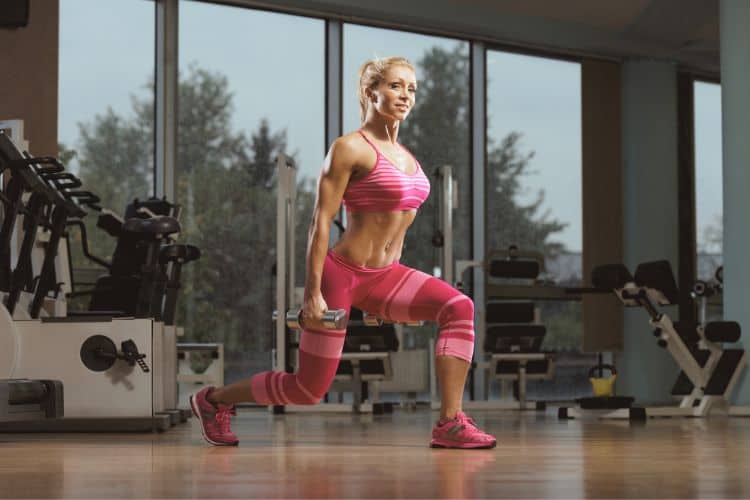
Reverse lunges continue challenging your quads and glutes while adding another unilateral movement to the workout.
Hold your dumbbells at your sides and stand with your feet approximately hip-width apart. Step one foot backward and lower your rear knee toward the floor.
Push through your front foot and return to standing.
You can alternate legs with every repetition or complete all repetitions on one side before switching.
Keep your movements controlled. Taking an excessively short step can place unnecessary stress on your front knee, while stepping too far backward may make maintaining balance difficult.
Choose a comfortable stride that allows both knees to bend naturally.
Dumbbell sumo squats add additional volume for your glutes, quads, and inner thighs.
Stand with your feet wider than shoulder-width apart and point your toes slightly outward. Hold one heavy dumbbell vertically with both hands.
Brace your core and lower your hips toward the floor. Keep your knees tracking in the same general direction as your toes.
Push through your feet and return to standing while squeezing your glutes.
Because sumo squats come later in the workout, you may not need the same amount of weight you could use when completely fresh. Focus on maintaining tension and controlling every repetition.
Step-ups develop unilateral leg strength and can place significant demand on the glutes and quadriceps.
Stand in front of a stable bench or exercise step while holding dumbbells at your sides. Place one foot completely on the elevated surface.
Drive through that foot and bring your body upward until you are standing on the platform. Lower yourself slowly and repeat.
Avoid aggressively pushing off your trailing leg. The leg positioned on the platform should perform most of the work.
If the platform is too high, you may struggle to maintain good positioning. Choose a height that allows you to perform controlled repetitions.
If you do not have an appropriate stable platform, replace step-ups with stationary split squats.
After several demanding standing exercises, dumbbell glute bridges allow you to continue training your glutes without requiring as much balance or coordination.
Lie on your back with your knees bent and feet planted on the floor. Place a dumbbell securely across your hips and support it with both hands.
Brace your core and drive through your feet as you raise your hips. Squeeze your glutes at the top without excessively arching your lower back.
Lower your hips under control and repeat.
For additional difficulty, pause for one or two seconds at the top of each repetition.
Finish the resistance portion of the workout with standing dumbbell calf raises.
Hold your dumbbells at your sides and stand with your feet approximately hip-width apart. Slowly rise onto the balls of your feet and squeeze your calves at the top.
Lower your heels under control before beginning the next repetition.
Avoid bouncing through the movement. Calf raises become significantly more challenging when you use a complete range of motion and pause briefly at the top.
If balance is an issue, hold one dumbbell and lightly support yourself with your free hand.
There is no single ideal dumbbell weight for everyone. Your appropriate resistance depends on your strength, experience, exercise selection, and targeted repetition range.
Instead of choosing weights according to an arbitrary number, evaluate the difficulty of your working sets.
If your target is 8 to 12 repetitions and you finish 12 repetitions knowing you could easily perform another eight, the weight is probably too light for that particular set. If you cannot reach eight controlled repetitions, the weight may be too heavy.
A practical goal is to finish most muscle-building sets with approximately one to three good repetitions potentially remaining.
Your resistance will also vary between exercises. Romanian deadlifts may require significantly heavier dumbbells than reverse lunges or Bulgarian split squats.
Progressive overload is one of the most important principles for building muscle. Your body adapts to training, so your workouts need to gradually become more challenging.
The simplest strategy is increasing your dumbbell weight. However, increasing resistance is not the only option.
Suppose you perform goblet squats with 30 pounds for 8 repetitions during your first workout. Over several sessions, you might progress to 10 repetitions and eventually 12 repetitions using the same weight. Once you can comfortably complete the top of your repetition range, you could move to a heavier dumbbell and begin again near the lower end of the range.
You can also progress by improving technique, increasing range of motion, slowing the eccentric portion of an exercise, adding pauses, or completing more quality repetitions.
Track your exercises, weights, repetitions, and sets. A simple workout log makes it much easier to determine whether you are actually progressing.
Many people can train their lower body approximately two or three times per week depending on workout volume, training experience, recovery, and overall program structure.
You do not necessarily need to repeat this exact 45-minute workout three times every week. You could perform this muscle-building session once or twice and use another lower-body workout with different exercises or repetition ranges.
Recovery is essential because muscle growth occurs between training sessions as your body repairs and adapts to the training stimulus.
If your legs remain extremely sore and your performance has significantly declined, additional recovery may be appropriate before another demanding lower-body workout.
Limited dumbbell weight does not automatically make your workout ineffective.
One strategy is slowing the eccentric portion of each repetition. Take three or four seconds to lower yourself during squats, split squats, and lunges.
You can also introduce pauses. Hold the bottom of a squat for two seconds before standing or pause at the top of a glute bridge.
Unilateral exercises are another excellent option because one leg must perform most of the work. Bulgarian split squats, lunges, step-ups, and single-leg Romanian deadlifts can make moderate dumbbells feel surprisingly challenging.
Increasing your range of motion where comfortable can also increase muscular demand.
The objective is to make the target muscles work harder rather than simply accumulating hundreds of easy repetitions.
Fast, uncontrolled repetitions may allow you to complete more reps, but they can reduce the quality of the muscular stimulus. Control the lowering portion of each exercise and maintain consistent technique.
If every set feels easy, your muscles may not receive enough resistance to encourage meaningful adaptation. Gradually increase the challenge as your strength improves.
The opposite problem is loading exercises beyond your ability to control them. More weight is useful only when you can perform the exercise properly.
A leg workout should not consist exclusively of squat variations. Include hip-hinge exercises such as Romanian deadlifts to train your posterior chain.
Training one leg at a time can expose strength differences and increase the challenge without requiring enormous dumbbells. Split squats, lunges, and step-ups deserve a place in a well-rounded dumbbell leg program.
Training provides the stimulus for muscle growth, but recovery supports the adaptation.
Eating adequate protein throughout the day can support muscle repair and growth. Protein-rich options include eggs, fish, poultry, lean meats, Greek yogurt, cottage cheese, tofu, beans, lentils, and other foods that fit your dietary preferences.
Total calorie intake also matters. Consistently eating far below your body’s energy requirements can make maximizing muscle growth more difficult.
Carbohydrates can provide useful energy for demanding lower-body training sessions, while dietary fats support general health and normal physiological functions.
Hydration and sleep should not be overlooked. Consistently getting adequate sleep can support workout performance and recovery.
Rather than looking for one perfect muscle-building food or supplement, focus on consistent training combined with a balanced eating pattern that supports your overall energy and protein needs.
After completing the workout, spend several minutes gradually bringing your session to an end.
Walk around slowly and allow your breathing to return toward normal. You can then perform gentle stretches for your quadriceps, hamstrings, glutes, hip flexors, and calves.
Hold each stretch comfortably without aggressively forcing your range of motion.
The cooldown does not need to be complicated. Its primary purpose is to transition out of your training session and give you an opportunity to relax after a demanding lower-body workout.
This 45 minute muscle building dumbbell leg workout can easily fit into a larger strength-training routine.
For example, Monday could focus on lower-body strength using this workout. Tuesday could target the upper body, followed by recovery or light activity on Wednesday. Thursday could include another lower-body session with different exercises or slightly different repetition ranges. Friday could be another upper-body workout, while the weekend could include recovery, walking, mobility work, or another activity you enjoy.
The exact schedule matters less than maintaining enough consistency to progressively challenge your muscles while allowing adequate recovery.
Beginners may need fewer weekly sessions, while experienced lifters may tolerate greater training frequency and volume.
Dumbbells can absolutely provide enough resistance to stimulate lower-body muscle growth, particularly when exercises become progressively more challenging. Squats, Romanian deadlifts, lunges, split squats, step-ups, and glute bridges can collectively train the major muscles of the lower body.
As you become significantly stronger, access to heavier dumbbells becomes increasingly useful.
Yes. Workout duration alone does not determine muscle growth. A focused 45-minute session containing challenging resistance exercises can provide substantial training volume without requiring hours in the gym.
No. Your lower-body muscles need recovery after challenging resistance training. Training legs every day can interfere with recovery and performance for many people.
Dumbbell squats are excellent, but combining them with hip hinges and unilateral exercises produces a more complete workout. Romanian deadlifts emphasize your hamstrings and glutes, while lunges and split squats provide additional unilateral training.
Beginners can use the same general structure with lighter weights, fewer sets, and simpler exercise variations. Bulgarian split squats can be replaced with regular split squats, while step-ups can be replaced with reverse lunges if necessary.
A productive leg workout does not have to involve complicated equipment or hours in the gym. This 45 minute muscle building dumbbell leg workout combines squats, Romanian deadlifts, Bulgarian split squats, reverse lunges, sumo squats, step-ups, glute bridges, and calf raises to challenge the major muscles throughout your lower body.
The most important factor is what happens over the weeks and months that follow. Choose resistance that challenges you, prioritize good technique, track your repetitions and weights, and gradually apply progressive overload as you become stronger.
Combine consistent dumbbell training with sufficient protein, balanced nutrition, sleep, and recovery. Instead of constantly searching for new exercises, give your body time to improve at fundamental movements and progressively make those movements more challenging.
With consistent effort, a pair of dumbbells and 45 focused minutes can provide a powerful foundation for developing stronger, more muscular legs at home or in the gym.
To get even more from your 45 minute muscle building dumbbell leg workout, explore more lower-body training guides from Women’s Fit Club. Add variety to your routine with the 25 Best Dumbbell Leg Workouts to Build Strength and Power, or try this 45 Minute Dumbbell Leg Workout for Strength and Power for another challenging leg-day option. If you need a shorter training session, the 30 Minute Dumbbell Leg Workout to Build Muscle and Burn Fat combines strength and conditioning in less time. You can also target your entire lower body with this 30 Minute Lower Body Dumbbell Workout, or build a complete weekly routine around the Dumbbell Workout Plan for Women.
Stay up to date on the latest women’s health, fitness and lifestyle trends and tips.
