


Sign up for workout ideas, training advice, reviews of the latest gear and more.

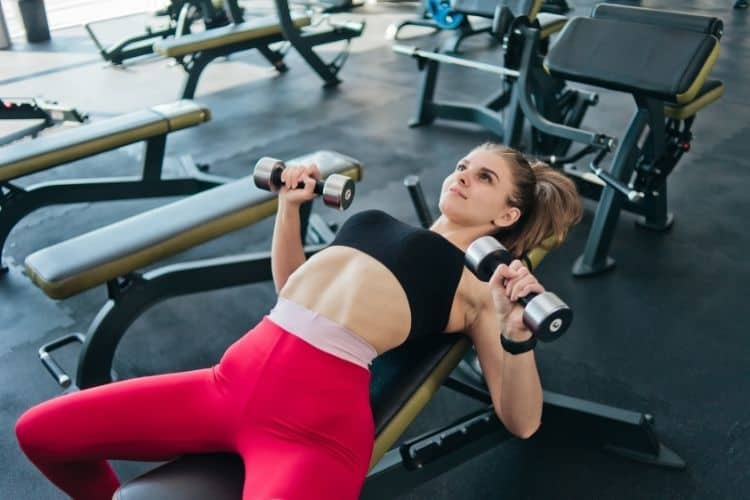
A 5 day strength training with dumbbells routine is one of the most practical ways to build muscle, improve overall strength, increase muscular endurance, and create a consistent weekly fitness schedule without relying on complicated gym equipment. With a suitable pair of dumbbells and enough space to move comfortably, you can train nearly every major muscle group through presses, rows, squats, lunges, hinges, curls, extensions, and loaded core exercises.
Dumbbells are especially useful for strength training because each side of the body has to contribute to the movement. Unlike some machines that guide the weight along a fixed path, dumbbells require you to control the resistance throughout the exercise. This can help develop coordination, stability, and balanced strength while giving you plenty of options for adjusting your workouts.
This 5 day dumbbell strength training plan organizes the week into upper-body, lower-body, and full-body sessions so that you can train consistently while allowing previously worked muscles time to recover. Whether you exercise at home or in the gym, the routine can be adapted to your current strength level by changing the dumbbell weight, repetitions, sets, tempo, or rest periods.
Following a structured five-day routine gives your workouts a clear purpose. Instead of choosing random exercises each time you train, you know which muscle groups you are targeting and can track your progress from week to week.
One of the biggest benefits is training frequency. Dividing your workouts across five days allows you to perform enough exercises for each major muscle group without trying to squeeze everything into one extremely long workout.
Dumbbells also provide an impressive amount of exercise variety. The same equipment can be used for chest presses, shoulder presses, rows, Romanian deadlifts, goblet squats, split squats, lunges, curls, triceps extensions, carries, and many other exercises.
Another advantage is accessibility. A dumbbell strength workout can be performed in a commercial gym, home gym, garage, spare room, or other suitable exercise space. Adjustable dumbbells can make the setup even more convenient because you can increase or decrease resistance without storing a large collection of weights.
This workout uses a simple weekly split designed to distribute training volume across the entire body.
Day 1: Chest and triceps
Day 2: Back and biceps
Day 3: Legs and glutes
Day 4: Shoulders and core
Day 5: Full-body strength
The remaining two days can be used for rest, mobility work, easy walking, or another form of light activity.
You don’t necessarily have to train Monday through Friday. For example, you could complete three workouts, take a rest day, complete the remaining two workouts, and then take another rest day. Your schedule should provide enough recovery for you to maintain good exercise technique and productive training sessions.
Select dumbbells that allow you to perform each repetition with controlled technique while still making the final few repetitions of the set challenging.
For larger compound exercises such as squats, deadlifts, presses, and rows, you will generally be able to use heavier dumbbells than you can for isolation exercises such as lateral raises or curls.
A useful starting range for many exercises is approximately 6 to 12 repetitions for 3 to 4 sets. However, the exact number isn’t as important as consistently using an appropriate resistance and gradually progressing.
Avoid selecting weights simply because they seem impressive. A weight that forces you to shorten the range of motion, swing the dumbbells, or lose control is probably too heavy for the intended exercise.
Spend approximately five to ten minutes preparing your body before beginning the main workout. Start with light movement to gradually raise your heart rate, followed by dynamic movements related to the exercises you are about to perform.
For an upper-body workout, your warm-up might include arm circles, shoulder rotations, scapular movements, and very light presses or rows.
Before lower-body training, consider bodyweight squats, reverse lunges, hip hinges, glute bridges, and leg swings.
You can also perform one or two lighter warm-up sets before your first major strength exercise. These sets help you practice the movement before progressing to your working weight.
The first day concentrates on pushing movements targeting the chest and triceps while also involving the shoulders.
Perform 4 sets of 6 to 10 repetitions.
Lie on a flat bench while holding a dumbbell in each hand. Position the weights near chest level and keep your feet firmly planted. Press the dumbbells upward until your arms are extended without aggressively locking the elbows.
Lower the dumbbells under control and repeat.
If you are training at home without a bench, substitute the dumbbell floor press.
Perform 3 sets of 8 to 12 repetitions.
Set an adjustable bench to a moderate incline. Press the dumbbells upward while keeping your shoulder blades stable against the bench.
Control the lowering portion instead of allowing the weights to drop quickly.
Perform 3 sets of 10 to 12 repetitions.
Hold the dumbbells together over your chest and maintain inward pressure between them while pressing upward. This variation creates continuous tension through the chest while still training the triceps.
Perform 3 sets of 10 to 15 repetitions.
Hold one dumbbell securely with both hands overhead. Bend your elbows to lower the weight behind your head and then extend your arms to return to the starting position.
Keep your upper arms relatively stable throughout the movement.
Finish with 3 sets of 12 to 15 repetitions.
Hinge forward while maintaining a stable torso. Keep your upper arms close to your sides and extend the elbows until the arms straighten. Return slowly to the starting position.
Day two focuses primarily on pulling exercises. Strong back muscles contribute to upper-body strength, posture, shoulder stability, and performance during many other movements.
Perform 4 sets of 6 to 10 repetitions.
Hold a dumbbell in each hand and hinge forward at your hips while maintaining a neutral spine. Pull the dumbbells toward your torso while driving your elbows backward.
Lower the weights slowly until your arms are extended.
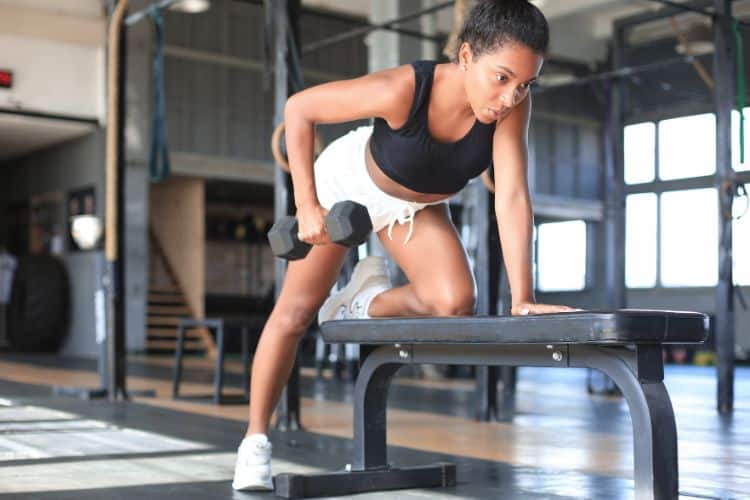
Perform 3 sets of 8 to 12 repetitions per side.
Support yourself on a bench or another stable surface. Row one dumbbell toward your hip while keeping your torso controlled.
The unilateral setup allows you to concentrate on each side individually.
Perform 3 sets of 10 to 15 repetitions.
Use relatively light dumbbells. Hinge forward and raise the weights outward until your arms are approximately aligned with your torso.
Avoid using momentum to swing the dumbbells upward.
Perform 3 sets of 8 to 12 repetitions per arm.
Stand tall and curl one dumbbell toward your shoulder while keeping your upper arm relatively stationary. Lower the weight before alternating sides.
Perform 3 sets of 10 to 12 repetitions.
Hold the dumbbells with your palms facing inward. Curl the weights while maintaining the neutral grip.
Hammer curls provide another useful way to train the elbow flexors and forearms.
Lower-body training should be an important part of any balanced 5 day dumbbell workout plan. This session uses squat, hinge, and lunge patterns to target the quadriceps, hamstrings, glutes, and supporting lower-body muscles.
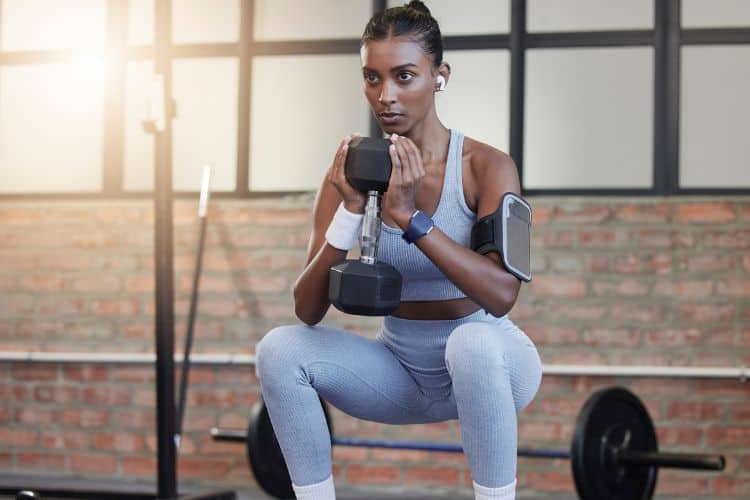
Perform 4 sets of 8 to 12 repetitions.
Hold one dumbbell vertically in front of your chest. Sit your hips down while bending your knees and keeping your torso controlled.
Push through your feet to return to standing.
Perform 4 sets of 8 to 12 repetitions.
Hold two dumbbells in front of your thighs. Push your hips backward while maintaining a neutral spine and slightly bent knees.
Lower the dumbbells until you feel strong tension through your hamstrings, then drive your hips forward to stand.
The movement should primarily come from the hip hinge rather than turning the exercise into a squat.
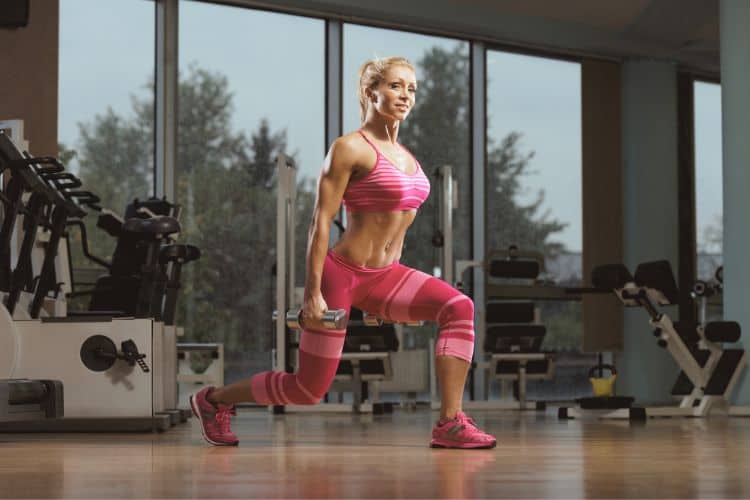
Perform 3 sets of 8 to 12 repetitions per leg.
Hold the dumbbells by your sides and step backward. Lower yourself under control before pushing through the front foot to return to standing.
Alternate legs or complete all repetitions on one side before switching.
Perform 3 sets of 8 to 10 repetitions per leg.
Place your rear foot on a secure bench or elevated surface. Lower your body by bending your front knee and hip before pushing back upward.
Because this exercise can be demanding, begin with lighter dumbbells until you are comfortable with the movement.
Perform 3 sets of 12 to 15 repetitions.
Lie on your back with your knees bent and position a dumbbell securely across your hips. Drive through your feet and raise your hips by contracting your glutes.
Pause briefly near the top before lowering under control.
Day four combines shoulder strength with core training. The shoulders are involved in many upper-body exercises, so controlled technique is especially important.
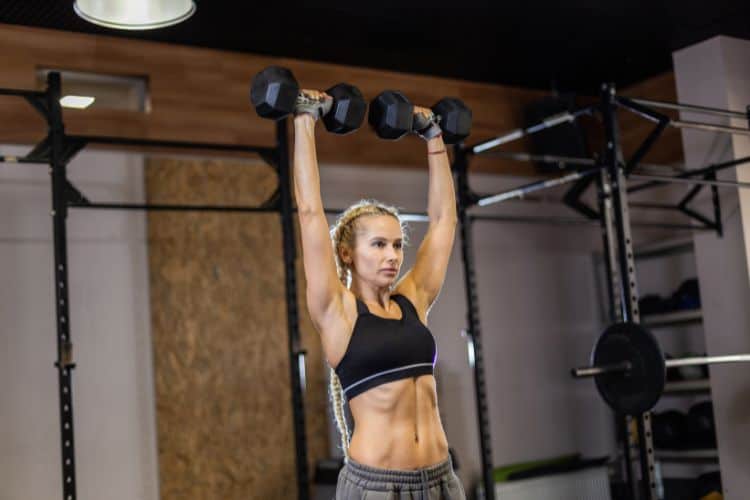
Perform 4 sets of 6 to 10 repetitions.
Hold the dumbbells around shoulder height and press them overhead. Keep your torso stable and avoid excessively arching your lower back.
Lower the weights under control.
Perform 3 sets of 10 to 15 repetitions.
Hold lighter dumbbells beside your body and raise your arms outward until approximately shoulder height.
Keep the movement controlled rather than swinging the weights.
Perform 3 sets of 10 to 12 repetitions.
Raise one or both dumbbells in front of your body until approximately shoulder height before lowering them slowly.
Because your front deltoids already receive significant work from pressing exercises, you may reduce or skip this movement if your shoulders need additional recovery.
Perform 3 sets of 12 to 15 repetitions.
Hinge forward and raise the dumbbells outward while concentrating on the rear shoulders and upper back.
Perform 3 sets of 12 to 20 controlled repetitions.
Sit with your torso slightly leaned backward while holding one dumbbell. Rotate your torso from side to side while maintaining abdominal tension.
Perform 3 rounds of 30 to 60 seconds per side.
Hold one heavy dumbbell beside your body and walk while keeping your torso upright. Resist the tendency to lean toward the weighted side.
Suitcase carries train the core through anti-lateral-flexion while also challenging your grip.
The final training day combines several major movement patterns into a full-body session.
Because many muscles have already been trained during the previous four workouts, you don’t necessarily need to use your maximum dumbbell weight. Concentrate on high-quality repetitions and controlled technique.
Perform 3 sets of 8 to 10 repetitions.
Hold the dumbbells at shoulder height, perform a squat, and then drive upward into an overhead press.
This compound movement trains the legs, glutes, shoulders, arms, and core.
Perform 3 sets of 8 to 10 repetitions.
Perform a controlled hip hinge and, while maintaining the hinged position, row the dumbbells toward your torso. Lower the dumbbells and return to standing.
Perform 3 sets of 10 repetitions per leg.
Keep your chest tall and step backward into a controlled lunge. Push through the front foot to return to your starting position.
Perform 3 sets of 8 to 12 repetitions.
Lie on the floor with one dumbbell in each hand. Lower your upper arms until they gently contact the floor and then press the weights upward.
Perform 3 sets of 6 to 10 repetitions per side.
Begin in a plank position with your hands supported on dumbbells. Row one dumbbell toward your torso while resisting rotation through your hips.
Use lighter weights if necessary to maintain a stable plank.
Finish with 3 rounds of 30 to 60 seconds.
Hold a challenging dumbbell in each hand and walk with controlled steps while maintaining tall posture and a strong grip.
Most sessions in this 5 day strength training with dumbbells program can be completed in approximately 40 to 60 minutes.
Compound exercises generally require longer rest periods because they involve more muscle mass and heavier resistance. Consider resting approximately 90 seconds to three minutes between challenging strength sets.
Isolation exercises may require only 45 to 90 seconds.
Don’t reduce rest periods simply to finish faster if doing so causes your strength or exercise technique to deteriorate significantly.
Your body needs an increasing training challenge if you want to continue making progress. This principle is known as progressive overload.
Adding heavier dumbbells is one way to progress, but it isn’t the only method.
Suppose you currently perform three sets of eight goblet squats with a particular dumbbell. Over several workouts, you could gradually increase your repetitions until you can comfortably complete three sets of twelve. At that point, you might increase the weight and return toward the lower end of the repetition range.
You can also progress by improving your technique, increasing your range of motion, adding a set, slowing the lowering phase, or performing more total repetitions with the same weight.
Keep a training log containing your exercises, dumbbell weights, sets, and repetitions. Tracking these numbers makes it much easier to determine whether your strength is improving.
There isn’t one perfect dumbbell weight for everyone. Your ideal resistance depends on your current strength, training experience, exercise selection, and repetition target.
You may need several weights because your legs and back can generally handle considerably more resistance than smaller muscles involved in exercises such as lateral raises.
Adjustable dumbbells are useful for a 5 day dumbbell strength workout because they allow you to make smaller resistance changes between exercises.
Beginners should prioritize learning correct movement patterns before aggressively increasing resistance. More experienced lifters can gradually use heavier dumbbells as long as they maintain control and appropriate technique.
Training five days per week makes recovery particularly important.
Aim to maintain a consistent sleep schedule and give your body enough time away from challenging strength sessions. Nutrition should also support your activity level with adequate calories, protein, carbohydrates, fats, fluids, vitamins, and minerals.
You don’t have to remain completely inactive on rest days. Walking, gentle mobility work, stretching, or other comfortable low-intensity activities can be included if they help you feel recovered.
Pay attention to the difference between normal muscular fatigue and persistent pain. Sharp or unusual pain is a reason to stop the exercise and determine what is causing the problem rather than trying to push through it.
One common mistake is increasing dumbbell weight too quickly. Progressive overload should be gradual. Adding resistance before you can control the current weight can reduce exercise quality.
Another mistake is performing every set to complete muscular failure. Challenging training is important, but constantly exhausting every muscle can make recovery more difficult when you’re exercising five days per week.
Ignoring lower-body training is another problem. Dumbbells aren’t only for arms and shoulders. Squats, lunges, split squats, Romanian deadlifts, step-ups, and other lower-body dumbbell exercises can provide a substantial strength challenge.
Finally, avoid changing the entire workout every week. Exercise variety can be useful, but repeating major movements gives you an opportunity to measure improvement.
Beginners can use this routine, but five training days may be more than some new lifters initially need.
If you’re completely new to resistance training, consider starting with three or four weekly sessions and gradually progressing toward five days as your conditioning, technique, and recovery improve.
You can also begin this program with fewer sets. Instead of performing four sets of an exercise, start with two or three and gradually add training volume.
The objective isn’t simply to complete as much exercise as possible. Productive strength training requires a balance between training stimulus and recovery.
If your dumbbells eventually become too light, several strategies can make your exercises more challenging.
Slow down the eccentric or lowering portion of each repetition. For example, take three or four seconds to lower yourself during a goblet squat.
You can also incorporate pauses. Holding the bottom of a split squat or pausing the dumbbells near your chest during a press eliminates some momentum and increases the difficulty.
Unilateral exercises are another excellent option. Single-leg Romanian deadlifts, Bulgarian split squats, single-arm rows, and one-arm presses can provide a substantial challenge without requiring extremely heavy dumbbells.
Increasing repetitions can also help when heavier weights aren’t available, provided you can continue performing the exercise safely and with controlled form.
A straightforward schedule could look like this:
Monday: Chest and triceps
Tuesday: Back and biceps
Wednesday: Legs and glutes
Thursday: Rest
Friday: Shoulders and core
Saturday: Full-body dumbbell strength
Sunday: Rest
This setup places a recovery day after three consecutive training sessions and another recovery day after the final workout.
Another option is training Monday through Friday and resting Saturday and Sunday. Choose the structure that best matches your schedule and ability to recover.
Training provides the stimulus for adaptation, while nutrition helps provide the energy and nutrients needed to support recovery.
Protein is particularly important for people performing resistance training because it supplies amino acids used in muscle protein synthesis. Include quality protein sources throughout your day based on your dietary preferences.
Carbohydrates can provide useful energy for demanding workouts, while dietary fats contribute to overall nutrition and numerous physiological functions.
Hydration matters as well. Drink fluids regularly throughout the day and pay additional attention to hydration when exercising in warm environments or during longer training sessions.
Nutrition doesn’t need to be complicated. A consistent eating pattern built around nutrient-dense foods, adequate protein, appropriate portions, and sufficient hydration can complement your strength-training routine.
Consider following the program consistently for approximately six to eight weeks before making major changes.
This gives you enough time to practice the exercises, establish baseline numbers, and gradually improve your performance.
You don’t necessarily need to replace every exercise after eight weeks. If you’re still progressing and enjoying the routine, you can continue using it.
Alternatively, change selected movements while preserving the major movement patterns. For example, replace goblet squats with dumbbell front squats or alternate dumbbell bench presses with neutral-grip presses.
Consistency combined with gradual progression is generally more useful than constantly searching for an entirely new workout.
A 5 day strength training with dumbbells routine can provide a simple yet challenging approach to developing total-body strength. By dividing the week into chest and triceps, back and biceps, legs and glutes, shoulders and core, and full-body training, you can give every major muscle group focused attention while maintaining an organized weekly schedule.
Start with dumbbell weights you can control, concentrate on good exercise technique, and gradually increase the challenge as you become stronger. Record your sets, repetitions, and weights so that you can measure progress instead of guessing.
Most importantly, remember that more weight isn’t automatically better. Consistent workouts, appropriate resistance, progressive overload, adequate recovery, and sound nutrition work together.
Whether you’re training at home with adjustable dumbbells or using a full dumbbell rack at the gym, this 5 day dumbbell strength training plan gives you a repeatable framework that can be adjusted as your fitness and strength improve.
To get even more from this 5 day strength training with dumbbells plan, explore these related workouts on Women’s Fit Club. Start with the Dumbbell Workout Plan for Women for another structured weekly approach, or use the 30-Minute Dumbbell Strength Workout when you need a shorter strength session. You can also add variety with the 35-Minute Progressive Dumbbell Workout Plan, build total-body strength with the 45-Minute Full Body Dumbbell Strength Training Workout, or switch to the 3-Day Dumbbell Workout at Home when you need a schedule with additional recovery days. These dumbbell workouts provide several ways to adjust your training volume, workout length, and weekly frequency while continuing to build strength and muscle.
Stay up to date on the latest women’s health, fitness and lifestyle trends and tips.
