


Sign up for workout ideas, training advice, reviews of the latest gear and more.


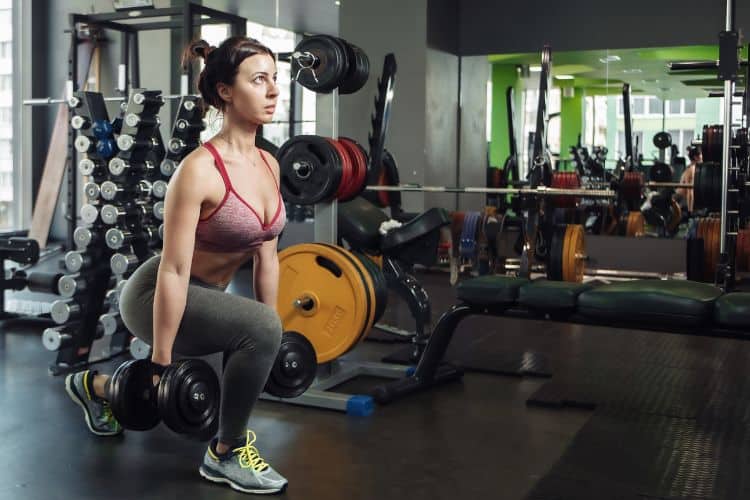

A new season is the perfect opportunity to refresh your fitness routine, establish healthier habits, and become stronger before the busy holiday months arrive. This 6-week fall dumbbell workout challenge provides a structured, progressive plan that women can complete at home or in the gym with minimal equipment. It combines full-body strength training, muscle-building exercises, conditioning, and recovery to help improve strength, endurance, balance, and overall fitness.
The challenge includes three primary dumbbell workouts each week, making it realistic for women with demanding schedules. Each session takes approximately 30 to 45 minutes. Instead of repeating the same workout for six weeks, you will gradually increase the difficulty through additional repetitions, heavier weights, slower exercise tempos, and more challenging movement combinations.
Whether you are returning to exercise after a break or looking for a focused seasonal program, this fall dumbbell workout challenge can help you develop consistency without spending hours in the gym. All you need is a pair of dumbbells, a small exercise area, supportive shoes, and a commitment to making progress one workout at a time.
A six-week program is long enough to produce noticeable improvements but short enough to feel manageable. During the first few weeks, your body learns the movements and adapts to regular training. As the challenge continues, you can gradually lift more weight, perform additional repetitions, and complete workouts with better control.
Dumbbells are particularly effective because they allow each side of the body to work independently. This can help identify and improve strength imbalances that may be hidden during barbell or machine exercises. Dumbbell movements also require your stabilizing muscles to remain active, which may improve balance, coordination, and core strength.
Consistent resistance training supports lean muscle development and helps preserve muscle mass while losing weight. Strength training can also improve bone health, mobility, posture, and confidence in everyday activities. Carrying groceries, climbing stairs, lifting boxes, and performing household tasks may become easier as your strength improves.
The seasonal structure provides an additional motivational benefit. Rather than approaching fall as a time to become less active, you can use the changing season as a six-week reset. Completing three workouts every week creates a routine that can carry into winter and the holiday season.
You can complete this challenge with one pair of dumbbells, but having two or three different weight options will make the program more effective. A lighter pair is useful for shoulder exercises and smaller muscle groups, while a moderate or heavier pair can be used for squats, deadlifts, rows, and lower-body movements.
Beginners may want to start with dumbbells that allow them to perform approximately 10 to 15 controlled repetitions. The final two or three repetitions should feel challenging without causing form to break down. More experienced participants can select heavier weights that make the target repetition range demanding while still allowing every repetition to be completed safely.
An exercise mat can make floor exercises more comfortable, and a stable chair or bench may be used for support or exercise modifications. Keep water nearby and wear comfortable clothing that allows you to move freely. Before beginning, make sure your workout area is free from obstacles.
Complete three strength workouts each week with at least one recovery day between sessions whenever possible. A Monday, Wednesday, and Friday schedule works well, but Tuesday, Thursday, and Saturday can be equally effective. Choose days that fit your lifestyle so you are more likely to remain consistent.
Workout A emphasizes the lower body and core. Workout B focuses on the upper body and posture-supporting muscles. Workout C combines full-body exercises with conditioning. This structure trains all major muscle groups while giving each area time to recover.
On non-strength-training days, you can rest or perform low-intensity activities such as walking, mobility exercises, yoga, or gentle cycling. One or two fall walks each week can increase your overall activity without placing excessive stress on your muscles. Avoid turning every recovery day into another intense workout, because strength and muscle improvements occur when the body has time to repair.
Begin every workout with five to eight minutes of movement. A proper warm-up gradually increases your heart rate, improves joint mobility, and prepares your muscles for resistance training.
Start with one minute of marching in place or light jogging. Continue with bodyweight squats, alternating reverse lunges, arm circles, hip hinges, torso rotations, and shoulder rolls. Perform approximately eight to 10 repetitions of each movement. You can then complete one light practice set of the first exercise in your workout.
The warm-up should make you feel prepared rather than tired. Move through a comfortable range of motion and use controlled movements. If your body feels particularly stiff, spend additional time warming up the hips, shoulders, ankles, or other areas that need attention.
Begin with the dumbbell goblet squat. Hold one dumbbell close to your chest, keep your feet approximately shoulder-width apart, and lower your hips while maintaining a tall chest. Push through your feet to return to standing. This movement strengthens the quadriceps, glutes, hamstrings, and core.
Next, perform dumbbell Romanian deadlifts. Hold the weights in front of your thighs, soften your knees, and push your hips backward. Lower the dumbbells along your legs until you feel tension in your hamstrings, then squeeze your glutes as you stand. Keep your back neutral and avoid turning the movement into a squat.
Continue with alternating reverse lunges. Step one foot backward, lower both knees with control, and drive through the front foot to stand. You can hold the dumbbells at your sides or complete the movement without weights when learning proper form.
Finish the strength portion with dumbbell glute bridges. Lie on your back with your knees bent, place one dumbbell across your hips, and lift your hips by squeezing your glutes. Pause briefly at the top before lowering slowly. Complete the workout with dead bugs or a dumbbell-supported plank to challenge your abdominal muscles.
Start Workout B with the dumbbell floor press. Lie on your back with a dumbbell in each hand, bend your elbows, and press the weights above your chest. Lower your upper arms carefully until they touch the floor, then press upward again. This exercise targets the chest, shoulders, and triceps.
Follow the press with bent-over dumbbell rows. Hinge forward from your hips while keeping your spine neutral. Pull the dumbbells toward your ribs, squeeze your shoulder blades together, and lower the weights slowly. Rows strengthen the back, arms, and muscles that support healthy posture.
Next, perform standing or seated dumbbell shoulder presses. Begin with the weights near shoulder height and press them overhead without excessively arching your lower back. Use lighter weights if necessary to maintain control.
Complete alternating dumbbell biceps curls followed by overhead triceps extensions. During curls, keep your elbows close to your torso and avoid swinging the weights. For the triceps extension, hold one dumbbell overhead, bend your elbows to lower it behind your head, and extend your arms carefully. Finish the session with a dumbbell suitcase hold or suitcase march to strengthen your grip and core.
Workout C begins with dumbbell squat-to-press exercises. Hold the weights near your shoulders, perform a squat, and press the dumbbells overhead as you stand. If the combined movement affects your form, complete a squat and a separate shoulder press instead.
Move into dumbbell deadlifts followed by alternating rows. Stand the weights back up before beginning each row if maintaining the hinged position feels difficult. The goal is to engage the glutes, hamstrings, back, arms, and core without rushing.
Next, perform dumbbell step-back lunges with a biceps curl. Step backward into the lunge, return to standing, and complete the curl. This movement increases coordination while working several major muscle groups.
Finish with dumbbell swings or fast dumbbell deadlifts using one weight. A dumbbell swing should be driven by the hips rather than lifted with the arms. Beginners who have not learned the hip-hinge technique should perform controlled deadlifts instead. End the workout with a low-impact conditioning movement such as farmer’s carries, marching with dumbbells, or quick bodyweight step-outs.
The first week focuses on learning each exercise and selecting appropriate dumbbell weights. Complete two sets of 10 repetitions for each strength exercise. For alternating movements, perform 10 repetitions on each side. Rest for 60 to 90 seconds between sets.
Move slowly and concentrate on technique. Keep your core engaged, maintain a neutral spine, and avoid using momentum to lift the weights. Your first week should feel productive, but it should not leave you completely exhausted.
Write down the weights you use for every exercise. This creates a starting point for the rest of the challenge. If you can easily perform several more repetitions at the end of a set, the weight may be too light. If you cannot complete the target repetitions with proper form, select a lighter weight.
During Week 2, complete three sets of 10 repetitions for the primary exercises. You may continue using two sets for smaller movements such as biceps curls, triceps extensions, and core exercises if needed.
Try to make your repetitions more consistent. Lower each dumbbell under control instead of allowing gravity to do the work. A controlled lowering phase increases the amount of time your muscles remain under tension and can make moderate weights more challenging.
Pay attention to your recovery between sessions. Some muscle soreness is common when beginning a new routine, but sharp or persistent pain is not. Adjust exercises or rest longer if your body needs additional recovery.
Increase most exercises to 12 repetitions during Week 3 while continuing to complete three sets. The extra repetitions increase the training volume without requiring an immediate jump in dumbbell weight.
For movements that already feel easy, consider increasing the weight instead of adding repetitions. For example, you might continue performing 10 goblet squats with a heavier dumbbell while completing 12 repetitions of lighter shoulder exercises.
Your final repetitions should require effort, but your technique should remain stable. Stop the set if you are unable to control the dumbbells or maintain the correct position. Quality repetitions are more valuable than forcing yourself to reach an arbitrary number.
Week 4 introduces progressive overload by increasing resistance. Choose slightly heavier dumbbells for at least two major exercises in each workout. Squats, deadlifts, rows, presses, and lunges are excellent movements for a gradual weight increase.
Return to three sets of eight to 10 repetitions when using heavier weights. Rest for up to 90 seconds between demanding sets. Longer rest periods allow your muscles to recover so you can maintain good form during the next set.
You do not need to increase every dumbbell at once. Upper-body exercises often progress more slowly than lower-body movements. Small increases are still meaningful, especially for shoulder, biceps, and triceps exercises.
During Week 5, use a slower tempo to increase the challenge. Take approximately three seconds to lower the weight during squats, deadlifts, rows, floor presses, and lunges. Pause briefly at the most difficult point, then return to the starting position with control.
Complete three sets of 10 repetitions for most exercises. The slower pace may require you to use the same weight as Week 4 or reduce it slightly. This is not a step backward. Tempo training increases muscular tension and encourages you to improve body awareness.
Avoid holding your breath during slow repetitions. Inhale during the lowering portion and exhale during the most challenging part of the movement. If you become lightheaded, stop, breathe normally, and rest before continuing.
The final week combines the skills you developed throughout the program. Complete three sets of 10 to 12 repetitions for each exercise using a challenging but manageable weight. Reduce your rest period to approximately 45 to 60 seconds when you can do so without sacrificing form.
During Workout C, complete the exercises as a full-body circuit. Perform one set of each movement consecutively, rest for 60 to 90 seconds, and repeat the circuit three times. Move with purpose, but do not race through the exercises.
At the end of Week 6, compare your current weights, repetitions, and confidence with your Week 1 starting point. You may notice that exercises feel smoother, your posture has improved, or you can use heavier dumbbells. These are meaningful results even if changes on the scale are modest.
The correct weight depends on the exercise, your experience, and your current strength. You will usually be able to use heavier dumbbells for lower-body exercises than for shoulder or arm movements.
Use the final repetitions of each set as your guide. If you finish the set and feel as though you could have performed six or more additional repetitions, increase the weight or slow your tempo. If your form fails before reaching the target range, reduce the weight.
A useful goal is to finish most sets with approximately two controlled repetitions still possible. This creates an effective training stimulus without requiring you to exercise to complete muscular failure. Beginners should prioritize repeatable technique and gradual progress.
Beginners can complete two workouts per week during the first two weeks before advancing to three sessions. Start with one or two sets of each movement and gradually add volume as your body adapts.
Use bodyweight squats or chair squats instead of weighted goblet squats. Hold onto a stable surface while performing reverse lunges, or replace them with stationary split squats. Perform shoulder presses while seated if standing makes it difficult to stabilize your torso.
You can also extend your rest periods to two minutes. There is no penalty for taking additional recovery time. The purpose of the challenge is to become stronger and more consistent, not to compete with someone else’s pace.
Your workouts provide the stimulus for improvement, but nutrition and recovery support the results. Include a source of protein in regular meals to support muscle repair. Helpful options include eggs, Greek yogurt, cottage cheese, chicken, turkey, fish, tofu, beans, lentils, and protein-rich smoothies.
Carbohydrates provide energy for challenging workouts. Oats, fruit, potatoes, rice, quinoa, and whole-grain foods can help fuel your training. Healthy fats from nuts, seeds, avocado, olive oil, and fatty fish support a balanced eating pattern.
Drink water throughout the day rather than waiting until your workout begins. Sleep is equally important because inadequate rest can affect energy, performance, hunger, and recovery. Aim for a consistent bedtime and create a calming evening routine when possible.
One common mistake is choosing weights based on ego instead of ability. A weight that is too heavy may shorten your range of motion and encourage momentum. Select resistance that allows controlled, repeatable movement.
Another mistake is completing every workout as quickly as possible. Strength exercises are not automatically more effective when performed faster. Controlled repetitions generally create better muscular tension and make it easier to maintain proper alignment.
Do not repeat the same easy workout for all six weeks. Your body needs a gradual increase in difficulty to continue adapting. Add repetitions, weight, sets, or slower tempos as directed by the program.
Finally, avoid ignoring pain. Muscle fatigue and mild soreness can occur, but sharp, sudden, or worsening pain is a signal to stop. Consult a qualified healthcare professional before beginning the challenge if you have an injury, medical condition, are pregnant, recently gave birth, or have concerns about exercise safety.
Treat each workout like an appointment. Add your sessions to your calendar and prepare your dumbbells, clothing, and water in advance. Removing small obstacles makes it easier to exercise on days when motivation is low.
Track completed workouts on a calendar and record your weights. Seeing a chain of successful sessions can encourage you to continue. You can also choose a simple fall reward for completing each week, such as a new book, a relaxing evening, or time spent on a favorite seasonal activity.
If you miss one workout, continue with the next scheduled session. Do not attempt to squeeze several missed workouts into a few days. Long-term progress comes from returning to your routine, not from maintaining a perfect record.
After the final week, take several days of lighter activity and evaluate your results. Consider improvements in strength, energy, exercise technique, endurance, and consistency. Progress includes more than changes in appearance.
You can repeat the program with heavier weights, progress to a four-day dumbbell split, or continue using the three weekly workouts. If you repeat the challenge, replace one or two exercises with appropriate variations to keep training engaging.
For example, goblet squats can progress to front-loaded dumbbell squats, floor presses can become bench presses, and standard Romanian deadlifts can advance to staggered-stance deadlifts. Change exercises gradually so you can continue tracking your performance.
This 6-week fall dumbbell workout challenge offers a practical way to build strength, improve fitness, and create a consistent routine before winter. With only three focused workouts per week, the program can fit into a busy schedule while still providing enough progression to produce meaningful results.
Begin with manageable dumbbells, master the movements, and gradually challenge yourself. Some workouts will feel stronger than others, but every completed session contributes to the habit you are building. By the end of six weeks, you can enter the next season feeling stronger, more capable, and ready to continue progressing.
To complement this 6-week fall dumbbell workout challenge, explore this 30 Minute Full Body Dumbbell Workout At Home for a convenient total-body session. Beginners can develop a solid foundation with these 10 Beginner Strength Training Exercises For Women, while those wanting to increase the difficulty can follow this One Hour Full Body Dumbbell Strength Workout. Add variety with these 25 Minute Dumbbell Workout Circuits or focus on lower-body development with this 30 Minute Dumbbell Workout For Stronger Legs.
Stay up to date on the latest women’s health, fitness and lifestyle trends and tips.
