



Sign up for workout ideas, training advice, reviews of the latest gear and more.

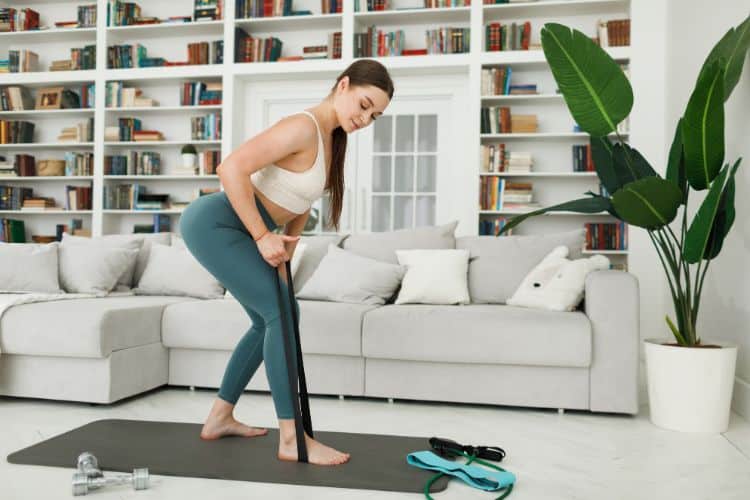


Back training is often overlooked in many home fitness routines, yet it plays one of the biggest roles in improving posture, preventing injuries, increasing upper body strength, and creating a balanced physique. Fortunately, you don’t need expensive gym equipment or heavy barbells to build a stronger back. A simple resistance band can effectively target every major muscle in your upper and lower back while providing constant tension throughout every movement. An at home resistance band back workout is ideal for beginners, intermediate exercisers, busy professionals, older adults, and experienced athletes looking for a joint-friendly training option. Resistance bands are lightweight, inexpensive, portable, and incredibly versatile. Whether your goal is building lean muscle, improving posture, increasing pulling strength, or reducing back pain caused by sitting all day, resistance band exercises can deliver excellent results.
Unlike traditional weights that rely on gravity, resistance bands increase tension as they stretch, forcing your muscles to stay engaged during the entire movement. This continuous resistance improves muscle activation while reducing stress on the joints, making resistance band workouts an excellent option for nearly every fitness level.
In this guide, you’ll learn exactly how to perform an effective at home resistance band back workout, understand which muscles you’re training, discover proper exercise techniques, avoid common mistakes, and follow a complete workout routine that can be performed in less than 45 minutes.
Many people focus heavily on chest, shoulders, and arms while neglecting the muscles behind their body. Over time, this imbalance often leads to rounded shoulders, neck pain, poor posture, and decreased athletic performance.
Training your back helps restore muscular balance while improving everyday movements like lifting groceries, carrying children, climbing stairs, and even sitting comfortably at your desk.
Some of the biggest benefits include:
Resistance bands make these benefits accessible without requiring a gym membership.
Knowing which muscles you’re targeting helps improve your exercise technique and overall results.
The lats are the largest muscles in your back. They help create the popular V-shaped appearance while assisting with pulling movements, climbing, rowing, and lifting.
Exercises targeting the lats include:
Located between the shoulder blades, the rhomboids improve posture by pulling the shoulders backward.
Strong rhomboids help reduce rounded shoulders caused by sitting at a computer for long periods.
Best exercises include:
The trapezius extends from your neck down your mid-back.
Its responsibilities include:
Band face pulls and high rows work the traps exceptionally well.
Although technically part of the shoulders, the rear delts are heavily involved during pulling exercises.
Strong rear shoulders improve posture and shoulder health.
These muscles run alongside the spine and help maintain proper posture while supporting the lower back.
Exercises like good mornings and band deadlifts strengthen this area effectively.
Many people underestimate resistance bands because they don’t look as impressive as heavy barbells or cable machines. However, research consistently shows that properly selected resistance bands can stimulate muscle growth similarly to traditional free weights.
Resistance bands provide several unique advantages.
Unlike dumbbells that become easier during portions of a movement, resistance bands continually increase tension.
This means your muscles stay activated throughout every repetition.
Because the resistance gradually increases instead of abruptly loading your joints, band exercises are often easier on the shoulders, elbows, and wrists.
This makes them ideal for:
One complete resistance band set usually costs less than a single pair of dumbbells.
Most sets include multiple resistance levels, allowing progressive overload without purchasing additional equipment.
Resistance bands fit inside a backpack, suitcase, or desk drawer.
They’re perfect for:
Not every resistance band is the same.
Choosing the appropriate resistance allows you to challenge your muscles without sacrificing proper technique.
Ideal for:
Perfect for:
Best for:
A quality resistance band set gives you flexibility to adjust intensity as you become stronger.
Never skip your warm-up.
Five to ten minutes of movement prepares your muscles while increasing blood flow and reducing injury risk.
Perform:
30 seconds forward
30 seconds backward
20 repetitions
15 repetitions
10 repetitions
20 repetitions
15 slow repetitions
Perform each exercise with controlled movements.
Rest 45–60 seconds between sets.
This foundational exercise strengthens nearly every muscle in the back.
Stand on the center of the resistance band with feet shoulder-width apart.
Hold one handle in each hand.
Bend forward approximately 45 degrees while keeping your spine neutral.
Pull your elbows toward your hips.
Squeeze your shoulder blades together.
Lower slowly.
Sets: 3–4
Reps: 10–15
This movement mimics the popular gym machine while targeting the lats.
Anchor the resistance band securely above your head.
Grab both handles.
Sit or kneel.
Pull the handles toward your upper chest.
Drive your elbows downward.
Pause briefly before returning slowly.
Sets: 3
Reps: 12–15
Sit on the floor with your legs extended.
Loop the band around your feet.
Maintain an upright posture.
Pull your elbows backward.
Keep your chest lifted.
Squeeze your shoulder blades together before returning under control.
Sets: 3
Reps: 12–15
This isolation exercise emphasizes the lat muscles while improving shoulder stability.
Stand facing the anchor point.
Hold both handles.
Keep your arms nearly straight.
Pull the band toward your thighs.
Avoid bending your elbows excessively.
Pause and slowly return.
Sets: 3
Reps: 15
The face pull is one of the best exercises for strengthening the upper back, rear deltoids, rhomboids, and rotator cuff muscles. It is especially helpful for improving posture and preventing shoulder injuries caused by excessive pressing exercises or prolonged sitting.
Secure the resistance band slightly above head height.
Stand facing the anchor point while holding both handles.
Step backward until there is tension in the band.
Pull the handles toward your face while keeping your elbows high and wide.
Focus on squeezing your shoulder blades together.
Slowly return to the starting position.
Sets: 3
Reps: 12–15
Although simple, this movement is incredibly effective for correcting rounded shoulders and strengthening the upper back.
Stand tall with your feet shoulder-width apart.
Hold the resistance band in front of your chest using an overhand grip.
Keep your elbows nearly straight.
Pull the band apart until your arms extend outward.
Pause while squeezing your shoulder blades.
Return slowly.
Sets: 3
Reps: 15–20
Training one side at a time helps eliminate muscle imbalances while increasing core activation.
Anchor the resistance band securely.
Stand sideways to the anchor.
Grab one handle.
Pull your elbow toward your hip.
Pause and squeeze your back muscles.
Return under control.
Complete all repetitions before switching sides.
Sets: 3
Reps: 12 each side
Reverse flyes target the rear shoulders and upper back while improving shoulder mobility.
Stand on the middle of the resistance band.
Hold the handles with your palms facing each other.
Slightly bend your knees and hinge at the hips.
Raise your arms outward until they reach shoulder height.
Avoid shrugging your shoulders.
Slowly lower the band.
Sets: 3
Reps: 12–15
This movement strengthens the entire posterior chain, including the lower back, glutes, and hamstrings.
Stand on the resistance band.
Hold both handles.
Keep your chest lifted.
Push your hips backward.
Lower until you feel a stretch in your hamstrings.
Drive your hips forward to stand tall.
Sets: 3
Reps: 10–15
Good mornings are excellent for improving spinal stability and strengthening the lower back.
Stand on the resistance band.
Loop the band across your upper shoulders.
Keep your knees slightly bent.
Hinge at your hips while maintaining a neutral spine.
Return by squeezing your glutes.
Sets: 3
Reps: 12–15
After learning each exercise individually, combine them into one complete workout.
| Exercise | Sets | Reps |
|---|---|---|
| Bent Over Row | 3–4 | 10–15 |
| Lat Pulldown | 3 | 12–15 |
| Seated Row | 3 | 12–15 |
| Straight Arm Pulldown | 3 | 15 |
| Face Pull | 3 | 12–15 |
| Pull Apart | 3 | 15–20 |
| Single Arm Row | 3 | 12 each |
| Reverse Fly | 3 | 12–15 |
| Deadlift | 3 | 10–15 |
| Good Morning | 3 | 12–15 |
This workout takes approximately 35 to 45 minutes depending on your rest periods.
Training your back two or three times per week provides enough stimulus for muscle growth while allowing adequate recovery.
Complete Full Resistance Band Back Workout
Lower Body
Walking, Stretching, or Yoga
Resistance Band Back Workout
Chest, Shoulders, and Arms
Full Body Resistance Band Circuit
Recovery Day
Getting stronger with resistance bands requires more than simply completing repetitions. Focus on quality movement and progressive overload.
Control both the lifting and lowering phases.
Avoid using momentum.
At the top of every repetition, actively squeeze your shoulder blades together.
Mind-muscle connection significantly improves muscle activation.
Allow the muscles to fully stretch before beginning the next repetition.
Never rush through your sets.
Once you can comfortably complete 15 repetitions with excellent form, move to a stronger resistance band or combine two bands for additional tension.
Training consistently over several weeks is far more effective than doing one intense workout occasionally.
Aim for two to three back workouts each week while following a balanced strength-training program.
Even though resistance band exercises are beginner-friendly, poor technique can limit your progress.
If you cannot complete the movement with proper form, choose a lighter band.
Good technique always beats heavy resistance.
Keep your spine neutral throughout rowing and hinging exercises.
Avoid slouching during repetitions.
Many people accidentally use their upper traps instead of their lats and rhomboids.
Keep your shoulders down and away from your ears during pulling movements.
Fast repetitions reduce muscle tension and increase injury risk.
Perform every repetition slowly and under control.
Exhale while pulling the band.
Inhale as you slowly return to the starting position.
Proper breathing improves performance and stability.
Your muscles grow while recovering, not during the workout.
Get adequate sleep, eat enough protein, and allow at least one day of rest between intense back sessions.
If you’re new to resistance training, start with a simple routine that emphasizes proper technique and controlled movement. Focus on learning each exercise before increasing resistance.
| Exercise | Sets | Reps |
|---|---|---|
| Resistance Band Bent Over Row | 2 | 10–12 |
| Resistance Band Pull Apart | 2 | 15 |
| Seated Resistance Band Row | 2 | 10–12 |
| Face Pull | 2 | 12 |
| Good Morning | 2 | 12 |
Rest for 60–90 seconds between sets. Perform this workout 2–3 times per week.
Once you’ve mastered the basics, increase the volume and intensity by using a heavier resistance band and adding more exercises.
This routine helps build muscular endurance and lean muscle mass while improving posture and upper-body strength.
For experienced exercisers, challenge your muscles by increasing time under tension and reducing rest periods.
Rest only 30–45 seconds between sets to increase training intensity.
Muscles become stronger only when they are continually challenged. Progressive overload is the key to long-term progress, even when training at home.
Move from a light band to a medium or heavy band as exercises become easier.
Gradually increase from 10 repetitions to 15 or even 20 before changing resistance.
Increase from two sets to three or four sets over time.
Take three seconds to lower the band during each repetition. This increases time under tension and stimulates muscle growth.
Shorter rest periods improve muscular endurance and cardiovascular fitness.
Exercise alone isn’t enough to build muscle. Proper nutrition supports recovery, muscle repair, and long-term strength gains.
Aim to include a quality protein source with each meal.
Excellent choices include:
A general guideline is 1.2–2.0 grams of protein per kilogram of body weight daily, depending on your activity level and goals.
Carbohydrates provide the energy needed for effective workouts.
Choose:
Healthy fats support hormone production and overall health.
Examples include:
Water supports muscle performance and recovery.
Aim for at least 2–3 liters of water daily, increasing intake during hot weather or intense workouts.
Recovery is where your muscles rebuild and become stronger.
To maximize results:
Yes. When used consistently with proper resistance and progressive overload, resistance bands can effectively build muscle strength and size. The continuous tension they provide challenges your muscles throughout each repetition.
Most people benefit from training their back 2–3 times per week, allowing at least one day of recovery between sessions.
Neither is inherently better—they simply provide different types of resistance. Resistance bands offer constant tension and are highly portable, while dumbbells provide fixed resistance. Both can be effective for building strength.
Absolutely. Resistance bands are one of the safest and most beginner-friendly pieces of exercise equipment because they allow you to start with light resistance and gradually progress.
Yes. Exercises such as face pulls, pull-aparts, rows, and reverse flyes strengthen the muscles responsible for keeping your shoulders back and your spine aligned.
With consistent training, proper nutrition, and adequate recovery, many people notice improvements in strength and posture within 4–6 weeks, while visible muscle definition may take 8–12 weeks or longer depending on individual factors.
An at home resistance band back workout is one of the most effective ways to strengthen your upper body without needing a gym or expensive equipment. By targeting the lats, rhomboids, trapezius, rear deltoids, and lower back, resistance bands help improve posture, increase functional strength, reduce injury risk, and create balanced muscle development.
The key to success is consistency. Focus on proper form, gradually increase resistance, fuel your body with nutritious foods, and prioritize recovery. Even a few well-planned back workouts each week can lead to significant improvements in strength, mobility, and confidence.
Whether you’re just beginning your fitness journey or looking for a convenient way to maintain your progress at home, resistance bands provide a versatile and effective training solution. Stick with the workout plan outlined in this guide, challenge yourself progressively, and you’ll be well on your way to building a stronger, healthier back from the comfort of your own home.
If you enjoyed this at home resistance band back workout, continue building strength with these popular workouts from Women’s Fit Club. Start by improving your overall fitness with our 30 Minute Home Strength Workout, continue building strength with these popular workouts from Women’s Fit Club. Start by improving your overall fitness with our 30 Minute Strength Workout: Full Body Training at Home or Gym, then add resistance training using our 30 Minute At Home Dumbbell Workout. If you’re new to lifting, our 30 Minute Beginner Strength Workout is the perfect place to start.
Stay up to date on the latest women’s health, fitness and lifestyle trends and tips.
