


Sign up for workout ideas, training advice, reviews of the latest gear and more.


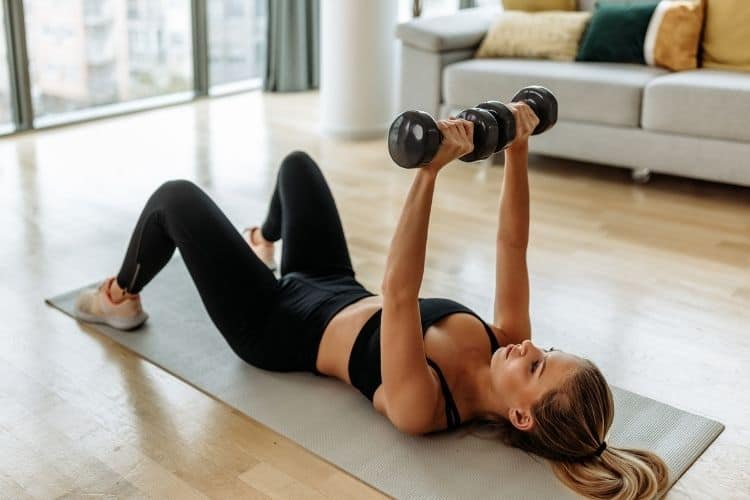


A 30 minute HIIT low impact workout is a great way to increase your heart rate, strengthen your entire body, and improve cardiovascular fitness without relying on jumping, running, or other high-impact movements. Low-impact high-intensity interval training combines challenging periods of exercise with short recovery periods while keeping at least one foot on the floor during most movements. The result is a workout that can still feel intense while reducing the repeated impact associated with traditional HIIT exercises such as burpees, jump squats, and jumping lunges.
This best 30 minute HIIT low impact workout is designed to train your legs, glutes, core, shoulders, arms, and cardiovascular system in one efficient session. It requires no equipment, which makes it convenient for home workouts, apartment workouts, travel, or days when you simply want an effective workout without going to the gym.
Low-impact does not automatically mean easy. By using controlled movements, large ranges of motion, faster—but still manageable—tempos, and short recovery periods, you can create a challenging workout without jumping. The key is choosing movements that allow you to work hard while maintaining proper form.
A low impact HIIT workout uses the basic structure of high-intensity interval training while replacing high-impact exercises with joint-friendlier alternatives. Instead of repeatedly jumping or landing, you perform exercises such as squats, reverse lunges, standing knee drives, step jacks, punches, walkouts, and controlled mountain climbers.
HIIT generally alternates challenging periods of exercise with easier recovery periods. During the working interval, you increase your effort. During recovery, you slow down enough to prepare for the next movement.
The intensity of low-impact HIIT comes from effort rather than impact. You can increase the challenge by moving through a larger range of motion, performing controlled repetitions efficiently, engaging more muscle groups at once, or slightly shortening your recovery periods as your fitness improves.
For beginners, low-impact intervals can also provide an approachable introduction to HIIT. More experienced exercisers can make the same movements demanding by increasing tempo, adding resistance, or focusing on powerful full-body movement.
One of the biggest advantages of a 30 minute low impact HIIT workout is efficiency. Instead of separating cardio and strength-oriented exercises into completely different sessions, you can combine elements of both within one workout.
A properly structured low-impact HIIT workout can target several major muscle groups during the same session. Squats and lunges challenge the lower body, punches and reaches involve the upper body, and exercises such as standing knee drives and mountain climbers require continuous core engagement.
Compound exercises are especially useful when you only have 30 minutes because they involve several joints and muscle groups simultaneously.
You do not need jumping exercises to elevate your heart rate. Fast marching, step jacks, squat reaches, knee drives, lateral steps, and controlled mountain climbers can all create a cardiovascular challenge.
Using your arms aggressively can make these exercises even more demanding. For example, driving your arms during a power march can increase whole-body effort compared with casually marching in place.
This routine requires very little space and no specialized equipment. A small open area where you can comfortably step forward, backward, and sideways should be sufficient.
That makes the workout useful for busy mornings, lunch breaks, evening exercise sessions, apartment workouts, and travel.
Every exercise can be adjusted according to your fitness level.
Beginners can move more slowly, reduce their range of motion, or extend recovery periods. Intermediate exercisers can maintain a quicker tempo. Advanced exercisers can increase muscular tension, add light dumbbells to appropriate exercises, or use deeper ranges of motion when comfortable.
This workout is divided into a warm-up, three HIIT circuits, and a short cooldown.
The main intervals use approximately 40 seconds of work followed by 20 seconds of recovery or transition time. You can adjust those intervals according to your current conditioning.
If you are new to interval training, consider starting with 30 seconds of exercise followed by 30 seconds of recovery. Once that feels manageable, gradually progress toward longer working periods.
The goal is not to perform every interval at maximum possible speed. Instead, choose an intensity that challenges you while allowing you to maintain controlled technique throughout the workout.
Never underestimate the importance of warming up before HIIT. Your warm-up gradually increases your heart rate, prepares your muscles for movement, and gives you an opportunity to assess how your body feels before increasing intensity.
Begin with a comfortable march. Stand tall, gently brace your core, and swing your arms naturally. Gradually lift your knees slightly higher as your body warms up.
Step your right foot sideways while raising your arms overhead. Return to the center and repeat with your left foot. Continue alternating sides.
Think of this as a jumping jack without the jump.
Stand tall and bring one knee toward your chest. Lower it and repeat on the opposite side. Add an opposite-arm reach to increase upper-body movement.
Place your feet approximately shoulder-width apart. Push your hips backward and bend your knees as you lower into a comfortable squat. Drive through your feet to return to standing.
Keep your chest lifted and use a depth that allows you to maintain good control.
Step from side to side while swinging your arms comfortably. Gradually increase your pace during the final 20 to 30 seconds.
You should now feel warmer and ready for the main workout.
The first circuit focuses on cardiovascular conditioning while gradually increasing the intensity.
March quickly in place while driving your arms forward and backward. Lift your knees higher than during the warm-up and maintain an upright posture.
Your feet remain close to the floor, but your upper body should be active.
Perform alternating side steps while sweeping your arms overhead.
To increase intensity, make your steps wider and move your arms faster. To decrease intensity, keep your steps smaller and your hands below shoulder level.
Step one foot slightly backward and drive that knee forward toward your torso. Alternate sides while maintaining a steady rhythm.
Engage your abdominal muscles as the knee comes forward instead of simply swinging the leg.
Step your right foot toward the right and bring your left foot behind you. Then move in the opposite direction.
Swing your arms naturally across your body while keeping the movement controlled.
Lower into a comfortable squat. As you stand, extend your arms overhead.
Avoid jumping at the top. Instead, squeeze your glutes and reach upward before immediately beginning the next repetition.
Complete the circuit and repeat according to your available time and conditioning level.
The second portion of this 30 minute low impact HIIT workout emphasizes the legs, glutes, and core.
Perform a bodyweight squat. As you stand, bring your right knee toward your chest. Squat again and bring your left knee upward.
The combination creates continuous lower-body work while adding core involvement.
Stand with your feet approximately hip-width apart. Step one foot backward and lower into a comfortable reverse lunge. Push through your front foot to return to standing and switch sides.
Keep your front knee tracking in line with your toes and maintain an upright torso.
If lunges are uncomfortable, substitute alternating backward toe taps or shallow split squats.
Stand tall with your hands lightly behind your head or near your temples. Bring your right knee toward your left elbow while rotating through your torso. Return to standing and switch sides.
Avoid pulling on your neck. The rotation should come from your torso.
Begin in a partial squat. Step sideways while maintaining tension through your legs, then bring your opposite foot toward the first foot.
Continue moving from side to side.
Stay slightly lower to increase the muscular challenge, or stand taller between steps for an easier variation.
Reach both hands overhead toward one side. Drive the opposite knee upward while bringing your hands toward the knee.
Perform several repetitions before switching sides or alternate continuously.
Focus on contracting the side of your torso during each repetition.
The final circuit combines upper-body, lower-body, and core movements to finish the workout.
Lower into a squat and return to standing. Perform two controlled punches in front of your body.
Keep your abdominal muscles engaged as you punch and avoid locking your elbows.
Stand with your knees slightly bent. Hinge forward and place your hands on the floor. Walk your hands forward until you reach a strong plank position.
Pause briefly before walking your hands back toward your feet and returning to standing.
If reaching the floor is uncomfortable, perform the exercise using a sturdy elevated surface such as a bench or countertop.
Begin in a high plank position. Bring one knee toward your chest, return it to the starting position, and switch sides.
Rather than racing through repetitions, maintain abdominal tension and controlled movement.
An elevated version with your hands on a stable bench or countertop can reduce the difficulty.
Step backward into a reverse lunge. Push through your front foot and bring the back knee forward as you stand.
Complete the movement without jumping.
You can alternate legs every repetition or complete several repetitions on one side before switching.
Finish the circuit with continuous alternating punches while stepping from side to side.
Keep your knees slightly bent and rotate gently through your torso. Punch quickly while maintaining control.
This exercise allows you to finish with a cardiovascular challenge without needing high-impact movements.
After completing the final interval, gradually decrease your activity instead of immediately stopping.
Spend approximately one minute walking slowly in place while taking controlled breaths. Allow your heart rate to begin settling.
Follow with gentle stretches for the major muscle groups you trained.
Stretch your quadriceps by bringing one heel toward your glutes while holding onto a wall or chair for balance if necessary. Stretch your hamstrings with a gentle hip hinge. Open your chest by bringing your arms behind your body comfortably, and finish with slow shoulder rolls and relaxed breathing.
Avoid forcing stretches. The goal is to transition from exercise back toward a resting state.
Low-impact HIIT should feel challenging, but intensity is individual.
A useful approach is the rate of perceived exertion, or RPE, scale from 1 to 10. During harder intervals, many exercisers may aim for approximately 7 or 8 out of 10, while recovery periods should feel noticeably easier.
You should still be able to maintain your exercise technique. If your form starts breaking down significantly, reduce your speed or modify the movement.
Remember that HIIT does not require an all-out effort during every interval. Sustainable, controlled intensity is more useful than moving so quickly that technique deteriorates.
If you are a beginner, returning to exercise, or simply having a lower-energy day, modify the routine instead of skipping movement completely.
Use smaller steps during lateral movements, perform shallower squats, replace reverse lunges with backward toe taps, and perform walkouts or mountain climbers against an elevated surface.
You can also change the intervals.
Try 30 seconds of exercise followed by 30 seconds of recovery. Another option is 20 seconds of work followed by 40 seconds of recovery while you learn each movement.
Progress gradually rather than trying to match someone else’s workout intensity.
Low-impact exercise can become surprisingly challenging without adding jumps.
Start by increasing your range of motion. Squat slightly deeper if your mobility and technique allow it, take larger lateral steps, or drive your knees higher during standing cardio exercises.
Next, increase your movement speed without sacrificing control.
You can also shorten recovery periods. For example, progress from 40 seconds of exercise and 20 seconds of rest to 45 seconds of exercise and 15 seconds of rest.
Resistance is another option. Light dumbbells can be incorporated into selected movements such as squats, reverse lunges, and controlled upper-body exercises when appropriate.
However, avoid sacrificing technique simply to increase intensity.
A low impact HIIT workout for weight loss can contribute to an overall weight-management program because physical activity increases energy expenditure and can help improve fitness.
However, no individual workout guarantees fat loss.
Long-term changes in body weight are influenced by several factors, including overall calorie intake, physical activity, sleep, stress, genetics, and consistency.
Rather than focusing exclusively on how many calories one 30-minute workout might burn, consider how easily you can maintain your routine over weeks and months.
A workout you consistently perform is generally more useful than an extremely difficult program you abandon after several sessions.
The appropriate frequency depends on your fitness level, recovery, and overall exercise schedule.
For many people, two or three HIIT-style sessions per week can provide plenty of cardiovascular challenge when combined with other activities such as strength training, walking, cycling, mobility work, or moderate-intensity cardio.
Beginners may start with one or two sessions each week.
Avoid assuming that more HIIT is always better. Your body needs adequate recovery, especially if you are also performing resistance training.
Pay attention to persistent soreness, unusual fatigue, declining workout performance, or difficulty recovering between sessions. These can be signs that you need additional rest or a temporary reduction in training intensity.
One common mistake is confusing speed with intensity. Moving as quickly as possible is not automatically better. Controlled repetitions with good technique should remain the priority.
Another mistake is eliminating recovery periods because the exercises are low impact. Low impact describes the mechanical impact of the movement, not necessarily its cardiovascular difficulty.
Skipping the warm-up is another problem. Even though there are no jumps in this routine, your muscles and joints still benefit from gradually preparing for exercise.
Finally, avoid comparing your range of motion with someone else’s. Your squat depth, lunge depth, step length, and exercise speed should reflect your current mobility and fitness.
You can combine this workout with strength training and lower-intensity activities throughout the week.
For example, Monday could include the 30-minute low-impact HIIT routine. Tuesday could focus on strength training. Wednesday could be walking or mobility work. Thursday could include another low-impact HIIT workout, followed by strength training on Friday.
Saturday might include an easy walk, bike ride, yoga session, or other enjoyable activity, while Sunday can be used for rest or gentle movement.
The exact schedule is less important than creating a routine that provides both training and adequate recovery.
Low-impact HIIT can appeal to a wide range of exercisers.
Beginners may appreciate having cardio exercises that do not require jumping. Apartment dwellers can train without repeated jumping and heavy landings. Experienced exercisers may use low-impact HIIT on days when they want cardiovascular training with less pounding than running or plyometric workouts.
However, “low impact” does not mean an exercise is automatically appropriate for every person or every injury. Anyone with an injury, significant joint pain, medical condition, or concerns about beginning vigorous exercise should seek individualized guidance from an appropriate healthcare professional.
Stop exercising if you experience chest pain, severe shortness of breath, faintness, or unusual pain.
Consistency should be your first priority. Completing a manageable workout regularly is more productive than performing one exhausting workout followed by a long break.
Focus on movement quality during every repetition. Keep your core engaged, maintain controlled knee alignment during squats and lunges, and avoid rushing through exercises simply to complete more repetitions.
Your recovery habits matter as well. Adequate sleep, hydration, balanced nutrition, and rest between demanding workouts can support exercise performance.
It can also help to track simple indicators of progress. Perhaps you can complete more controlled repetitions during a 40-second interval, maintain better posture, use a deeper squat, or recover more quickly between rounds.
Progress is not limited to body weight or calories burned.
Thirty minutes can be enough for a productive workout, especially when the session combines full-body movements with structured intervals. Workout quality, consistency, and your broader weekly activity are more important than making every session extremely long.
Yes, the exercises can be modified for beginners. Start with slower movement, shorter working intervals, longer recovery periods, and comfortable ranges of motion.
No. This routine can be performed using only your body weight. Optional resistance can be added later if you want additional strength challenges.
No. Impact and intensity are different. A workout can avoid jumping while still challenging your cardiovascular system and muscles.
Daily HIIT is unnecessary for most people. Recovery is an important part of training. Combining HIIT with strength training, walking, mobility work, and rest can create a more balanced routine.
The best 30 minute HIIT low impact workout does not need complicated equipment, explosive jumping, or an enormous amount of space. A well-designed combination of squats, step jacks, reverse lunges, knee drives, walkouts, mountain climbers, punches, and lateral movements can provide an efficient full-body workout while keeping impact relatively low.
Start with a five-minute warm-up, progress through cardiovascular, lower-body, core, and full-body intervals, and finish with a gradual cooldown. Adjust the work-to-rest ratio and movement difficulty according to your fitness level.
Most importantly, focus on consistency and progression. As your fitness improves, increase your movement quality, range of motion, pace, resistance, or working intervals gradually. With regular practice, a 30-minute low-impact HIIT routine can become a convenient part of a balanced fitness program that supports cardiovascular fitness, strength, endurance, and an active lifestyle.
For more joint-friendly workouts and HIIT ideas, explore our 30 Minute Low Impact HIIT Workout to Burn Fat for another full-body, no-jumping option, or try this 30 Minute Full Body HIIT Workout at Home for Beginners when you want a beginner-friendly routine you can do anywhere. If you’re just getting started, our HIIT for Beginners 30-Minute Full-Body Workout Plan can help you build endurance gradually. You can also learn how to modify your training safely with our Is HIIT Good for Beginners? guide, or switch things up with a 30-Minute Low Impact HIIT Treadmill Workout for a walking-based cardio session that keeps the workout challenging without running or jumping.
Stay up to date on the latest women’s health, fitness and lifestyle trends and tips.
