


Sign up for workout ideas, training advice, reviews of the latest gear and more.

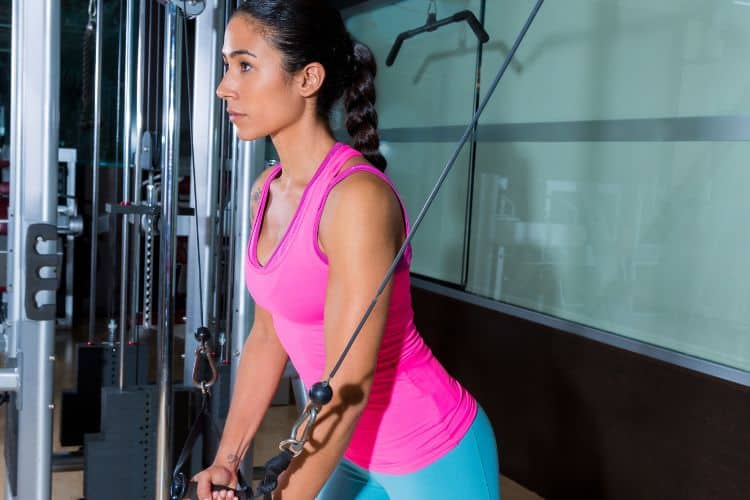
A cable fly chest press workout is an effective way to train the chest with continuous resistance while combining two complementary movement patterns: pressing and flying. While traditional dumbbell and barbell exercises remain valuable for building upper-body strength, cable machines offer a different type of resistance that can help you maintain tension on the chest muscles throughout each repetition. By combining cable chest presses with cable fly variations, you can create a complete chest workout that targets strength, muscle development, control, and definition.
Cable exercises are also highly adaptable. You can change the pulley height, bench angle, body position, resistance, grip, and range of motion to emphasize different areas of the chest. This makes a cable fly chest press workout useful for beginners learning proper chest mechanics as well as experienced lifters looking for additional training volume and exercise variety.
The key is not simply moving as much weight as possible. Effective cable chest training depends on controlled repetitions, proper shoulder positioning, an appropriate range of motion, and intentionally using the chest rather than allowing the shoulders and triceps to dominate. This guide explains how to build a complete cable fly and chest press routine while getting more from every repetition.
A cable fly chest press workout combines cable pressing exercises with cable fly movements. Both train the pectoral muscles, but they challenge them through different movement patterns.
During a cable chest press, the elbows bend and straighten as you push the handles away from your torso. This is a compound movement involving the chest, triceps, and front deltoids. Because several muscle groups contribute, chest presses generally allow you to use more resistance.
A cable fly uses a wider, sweeping arm movement. Instead of significantly bending and straightening your elbows, you maintain a slight elbow bend and bring your arms toward one another. The movement primarily involves horizontal adduction at the shoulder and places greater emphasis on the chest.
Combining these exercises gives you the benefits of heavier pressing movements and more isolated chest work within the same training session.
The primary muscles trained during a cable fly chest press workout are the pectoralis major muscles, which make up most of the visible chest. The pectoralis major contributes to bringing the upper arm across the body and plays an important role in pressing movements.
The smaller pectoralis minor sits underneath the pectoralis major and contributes to shoulder-girdle movement and stability.
Your anterior deltoids, located at the front of the shoulders, assist during pressing and fly movements. The triceps are especially active during cable chest presses because they extend the elbows as you push the handles forward.
Your core also contributes during standing cable exercises. Your abdominal muscles, obliques, glutes, and other stabilizing muscles help keep your torso steady against the pull of the cables.
One major advantage of cables is continuous resistance. With free weights, the challenge can change considerably depending on the position of the weight relative to gravity. Cable resistance follows the direction of the pulley, allowing you to maintain tension through a larger portion of the exercise.
During a cable fly, for example, the chest can remain challenged as the hands approach one another. This makes cables particularly useful for controlled chest isolation work.
Changing the pulley position changes the direction of resistance. High-to-low cable movements can emphasize a different portion of the chest than low-to-high movements.
You do not need dozens of exercises to train your chest effectively. A few carefully selected cable movements performed from different angles can provide substantial training variety.
Cable stacks usually allow quick weight changes. This is particularly useful when performing supersets, drop sets, warm-up sets, or higher-repetition finishing exercises.
Instead of changing plates or collecting multiple pairs of dumbbells, you can simply move the selector pin.
Cables encourage smooth, deliberate movement. Because the resistance remains connected to the pulley system, you can focus on controlling both the pressing phase and the return.
Slowing down the return portion of each repetition can make relatively moderate resistance challenging without requiring extremely heavy loads.
Position two cable pulleys around mid-chest height. Attach individual handles and stand between the cable towers facing away from the machine.
Grab the handles and step forward until there is tension in the cables. Use a staggered stance for stability. Position your hands near chest level with your elbows slightly behind or approximately in line with your torso, depending on your shoulder mobility.
Brace your core and keep your rib cage controlled. Press the handles forward until your arms are extended without aggressively locking your elbows.
Pause briefly before slowly returning the handles toward your chest.
Avoid allowing the cables to pull your shoulders excessively backward. The goal is to achieve a comfortable chest stretch while maintaining control of the shoulder joints.
For muscle-building workouts, approximately 8–12 controlled repetitions per set can work well, although effective resistance-training programs can use a wider range of repetitions.
Set both pulleys approximately around shoulder or chest height and attach individual handles.
Stand in the center of the machine, grab both handles, and step slightly forward. Begin with your arms opened to your sides and maintain a small bend in your elbows.
Bring your hands together in front of your chest using a wide hugging motion.
Focus on moving your upper arms across your torso rather than turning the exercise into a press. Your elbow angle should remain relatively consistent throughout the repetition.
Briefly contract your chest when your hands come together before slowly opening your arms.
Stop the return when you feel a comfortable chest stretch. Going farther is not automatically better, particularly if excessive range causes discomfort in the front of your shoulders.
A well-designed cable fly chest press workout can include heavier presses at the beginning followed by controlled fly variations and higher-repetition finishing work.
Start with approximately five to ten minutes of general movement and upper-body preparation. You can also perform several light sets of cable presses before beginning your working sets.
Perform 4 sets of 8–12 repetitions.
Use a challenging resistance that still allows controlled repetitions. Keep your torso stable and avoid turning the exercise into a full-body push.
Rest approximately 60–90 seconds between sets.
Perform 3 sets of 10–15 repetitions.
Keep the resistance moderate and emphasize smooth movement. Allow the chest to stretch comfortably before bringing your hands back together.
Avoid chasing heavy weights on this exercise. Maintaining the fly movement pattern is more important than moving a large portion of the weight stack.
Perform 3 sets of 10–15 repetitions.
Move the pulleys toward the bottom of the cable machine. Bring the handles upward and inward toward the upper portion of your chest.
Keep your shoulders down and avoid shrugging as your hands rise.
The low-to-high angle can be a useful variation when you want to include more clavicular or upper-chest-focused work.
Perform 3 sets of 10–15 repetitions.
Move the pulleys above shoulder level. Bring the handles downward and inward in a controlled arc.
Do not bend excessively at your waist or turn the movement into a pulldown. The arms should continue moving primarily through a fly pattern.
Perform 3 sets of 10–12 repetitions per side.
Using one cable at a time increases the stability demands of the exercise. Your torso will naturally want to rotate toward the cable machine, so brace your abdominal muscles and maintain a stable position.
Use less resistance than you would during a two-arm cable press.
Finish with 2–3 sets of 15–20 repetitions using relatively light resistance.
Perform every repetition slowly and concentrate on maintaining tension in your chest. Stop the set when your technique begins to deteriorate rather than forcing poor-quality repetitions.
Cable presses and cable flys are sometimes treated as interchangeable chest exercises, but each serves a different purpose.
The cable chest press is a compound movement. Your chest produces much of the force, while your triceps and anterior deltoids assist. This generally makes the press a better option for using heavier resistance and developing pressing strength.
The cable fly reduces elbow movement and emphasizes bringing the upper arms toward the center of the body. Because the triceps contribute less, the chest performs a larger share of the targeted movement.
There is no need to choose one over the other. Combining them is exactly what makes a cable fly chest press workout effective.
Cable height can influence the direction in which you apply resistance.
A mid-height cable position is ideal for traditional chest presses and horizontal flys. The movement travels primarily forward and inward.
Setting the cables lower creates an upward resistance angle. Low-to-high flys are commonly used when emphasizing the upper portion of the chest.
Setting the cables higher creates a downward movement angle. High-to-low flys can complement horizontal and low-to-high variations.
Rather than trying to find one perfect cable position, adjust the pulleys based on your height, comfort, and the movement you are performing.
Use enough resistance to challenge the targeted repetition range while preserving good technique.
If you are aiming for 10 repetitions but could easily complete another 10, the resistance may be too light. If your technique begins breaking down after four or five repetitions, the resistance is probably too heavy for that particular set.
The final repetitions should feel challenging, but you should still be able to control the cable handles.
This is especially important with fly exercises. Excessive weight frequently causes people to bend their elbows more and transform the movement into an awkward press.
More weight does not automatically produce better chest training. Heavy resistance becomes counterproductive when you have to shorten the range of motion, swing your torso, shrug your shoulders, or dramatically change your elbow position.
Use resistance you can control.
As you press or fly the handles together, avoid aggressively rounding your shoulders forward just to gain additional range.
Maintain a strong torso position and allow the chest muscles to perform the movement.
A deeper stretch is not always a more effective stretch.
Allow your arms to open until you feel comfortable tension through your chest. If you feel significant stress in the front of your shoulders, reduce the range of motion.
If your elbows bend substantially as the handles move toward your chest and straighten as they move forward, you are performing more of a press than a fly.
Maintain a relatively consistent elbow angle during fly variations.
Fast repetitions often reduce control and make it harder to maintain consistent muscular tension.
Try pressing or flying the handles together under control and taking approximately two to three seconds to return to the starting position.
Progressive overload remains important even when training primarily with cables. Over time, your muscles need an appropriate reason to adapt.
Increasing weight is one way to progress, but it is not the only method.
You can perform additional repetitions with the same resistance, add a set, improve your range of motion, slow down your repetitions, reduce unnecessary momentum, or improve your technique.
For example, suppose you perform three sets of 10 cable chest presses with 40 pounds per side. Instead of immediately increasing the weight, you might work toward three sets of 12 controlled repetitions. Once you can complete those repetitions comfortably with good technique, you can increase the resistance slightly and repeat the process.
Recording your workouts can make progression easier to manage.
Beginners do not need all six exercises from the full routine.
Start with a standing cable chest press for 3 sets of 10–12 repetitions, followed by a mid-height cable fly for 3 sets of 10–15 repetitions and a low-to-high cable fly for 2 sets of 12–15 repetitions.
This gives you three exercises and eight total working sets, which can be enough to practice the movement patterns without creating excessive workout volume.
Concentrate on learning proper technique before increasing resistance.
If you want a shorter workout, you can pair cable presses and flys together.
Perform 8–10 cable chest presses and then immediately perform 10–15 cable flys. Rest for approximately 60–90 seconds before repeating the combination.
Complete three or four rounds.
Because the chest is already working during the presses, you will probably need lighter resistance during the fly portion of the superset.
A second superset can combine low-to-high flys with single-arm cable presses for additional training variety.
Training frequency depends on your overall workout program, recovery, experience level, and weekly training volume.
Many people can effectively train the chest around two times per week, provided the total number of sets and exercise intensity are appropriate.
Instead of performing one extremely long chest workout and then waiting an entire week, you might divide your training volume between two sessions.
For example, one workout could emphasize presses and another could include more cable fly variations. This approach also gives you more opportunities to practice the exercises and improve your technique.
Yes. Cable exercises can contribute to muscle growth when they provide sufficient resistance, are performed through an appropriate range of motion, and are progressively overloaded over time.
Your muscles respond to mechanical tension rather than whether the resistance comes from a barbell, dumbbell, cable stack, or another properly used training tool.
Nutrition and recovery matter as well. Consuming adequate protein and overall nutrition while getting enough sleep can support your body’s recovery from resistance training.
Consistency is particularly important. One demanding chest session will not transform your physique, but months of progressively challenging training can produce meaningful changes.
Always inspect the cable machine before training and make sure handles are securely attached. Keep your hands away from the weight stack while the machine is being used.
Warm up with lighter resistance before heavier working sets.
During chest exercises, maintain a controlled range of motion and avoid aggressively forcing your shoulders into uncomfortable positions.
Muscular effort and fatigue are normal during resistance training, but sharp or unusual pain is a reason to stop the exercise. If an exercise repeatedly causes pain, consider having your technique assessed by a qualified fitness or healthcare professional before continuing.
A cable fly chest press workout provides an effective combination of compound pressing and targeted chest isolation. Cable chest presses allow you to use challenging resistance while involving the triceps and shoulders, while cable fly variations let you focus more directly on bringing the upper arms across the body.
A complete workout can begin with standing cable chest presses before progressing to mid-height, low-to-high, and high-to-low fly variations. Single-arm presses can add a stability challenge, while higher-repetition flys make an effective finishing exercise.
The most important factor is quality. Select resistance that allows you to maintain control, use a comfortable range of motion, and gradually progress your performance. Instead of simply trying to move heavier weight every workout, aim for better repetitions, stronger control, and sustainable improvements over time.
When combined with consistent resistance training, appropriate recovery, and supportive nutrition, cable chest exercises can become a valuable part of a balanced upper-body program. Whether you are new to cable machines or looking for a fresh alternative to your usual dumbbell and barbell chest exercises, combining cable flys and cable chest presses gives you a versatile approach to building a stronger, more muscular chest.
To get even more from your cable fly chest press workout, explore these complementary chest-training guides from Women’s Fit Club. Start with the Best Cable Fly for Chest Workout to learn additional cable angles and variations for keeping tension on your pecs. You can also incorporate the Best Machine Chest Workout for more machine-based exercises that complement cable presses and flys. If you want to add free weights to your routine, try this 30-Minute Dumbbell Chest Workout or the 35-Minute Barbell Chest Workout for additional strength and progressive-overload options. Beginners can also follow the 25-Minute Chest Workout for Beginners to build proper form, confidence, and upper-body strength before progressing to more advanced cable chest workouts.
Stay up to date on the latest women’s health, fitness and lifestyle trends and tips.
