


Sign up for workout ideas, training advice, reviews of the latest gear and more.

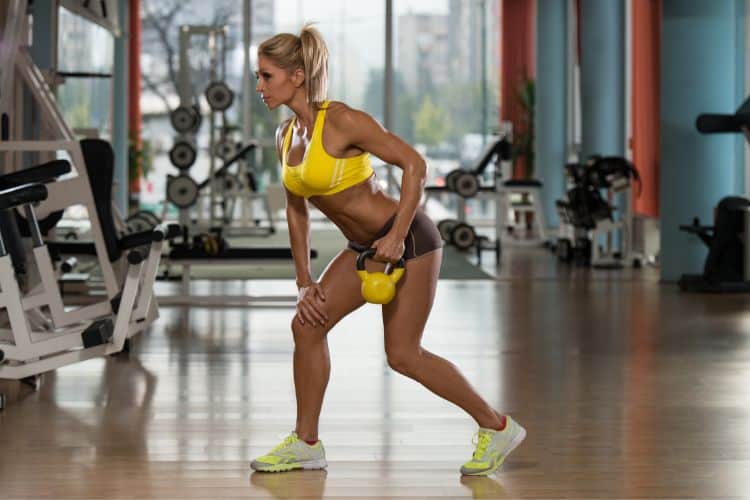
A full body kettlebell strength and mobility workout can help adults over 40 build muscle, improve joint function, strengthen the core, and maintain the physical confidence needed for everyday life. Rather than treating strength and flexibility as separate goals, kettlebell training combines them through controlled, functional movements that challenge multiple muscle groups at once.
After age 40, maintaining lean muscle, balance, mobility, and bone strength becomes increasingly important. However, an effective workout does not need to involve punishing exercises or hours in the gym. With one or two kettlebells and approximately 35 to 45 minutes, you can train your legs, glutes, back, chest, shoulders, arms, and core while also improving how comfortably your body moves.
This full body kettlebell workout for people over 40 focuses on controlled strength exercises, joint-friendly mobility drills, and practical movement patterns. It can be performed at home or in the gym and modified to match your current fitness level.
Kettlebells are especially useful for adults over 40 because they support several fitness goals within a single workout. A kettlebell can be used for traditional strength exercises, dynamic power movements, core training, balance drills, and loaded mobility work.
The kettlebell’s handle also allows the weight to move around the body in ways that are difficult to reproduce with many other types of resistance. This design encourages the muscles of the core, hips, shoulders, and upper back to work together. The result is functional strength that can carry over to climbing stairs, carrying groceries, lifting household objects, and participating in recreational activities.
Strength training becomes increasingly valuable as we age because muscle mass and strength may gradually decline without regular resistance exercise. Consistent kettlebell workouts can help preserve lean muscle while supporting stronger bones and healthier joints. Mobility work complements this training by helping you maintain usable ranges of motion.
The goal is not simply to become more flexible. It is to become strong and controlled within the ranges of motion your daily life requires.
Most healthy adults can perform this full body kettlebell workout two or three times per week. Leave at least one recovery day between demanding sessions, especially if you are new to kettlebell training.
For example, you could complete the workout on Monday and Thursday, or on Monday, Wednesday, and Friday. On the days between strength sessions, consider walking, gentle cycling, swimming, yoga, or a short mobility routine.
Recovery needs vary from person to person. Training experience, sleep, nutrition, stress, injuries, and other physical activities all influence how often you should exercise. If your joints feel unusually sore or your performance continues to decline from one session to the next, you may need additional recovery.
Quality is more important than frequency. Two well-performed kettlebell workouts each week can be more productive than completing four rushed sessions with poor technique.
Select a kettlebell that allows you to perform every repetition with stable, controlled form. The last few repetitions of a set should feel challenging, but they should not force you to shorten your range of motion or lose your balance.
Different exercises may require different kettlebell weights. You may be able to use a heavier weight for deadlifts and squats while needing a lighter kettlebell for overhead presses, halos, and windmills. If only one kettlebell is available, choose a moderately light weight and increase the challenge through slower repetitions, pauses, or additional sets.
Beginners should spend time learning the movement patterns before trying to lift heavier weights. A lighter kettlebell provides an opportunity to practice bracing the core, hinging at the hips, and controlling the shoulders.
If you have a medical condition, significant joint pain, or a previous injury, consult a qualified healthcare professional before beginning a new exercise program.
This kettlebell strength and mobility workout begins with a dynamic warm-up, followed by two full body strength circuits and a mobility-focused finisher. Allow approximately 35 to 45 minutes for the complete session.
Perform each strength exercise for 8 to 12 controlled repetitions unless otherwise noted. Complete two or three rounds of each circuit, resting for approximately 30 to 60 seconds between exercises and 60 to 90 seconds between rounds.
Beginners can start with two rounds and longer rest periods. More experienced exercisers can complete three or four rounds, use a heavier kettlebell, or add a brief loaded carry after each circuit.
A good warm-up should gradually increase your body temperature while preparing the hips, spine, shoulders, and core for strength training. Spend five to eight minutes moving slowly through the following exercises.
Stand tall with your feet approximately hip-width apart and hold a light kettlebell in one hand. Pass it behind your body to the opposite hand and continue moving it in a circle around your waist.
Keep your torso tall, your ribs stacked over your pelvis, and your abdominal muscles gently engaged. Complete eight to ten circles in each direction. This drill warms up the shoulders, arms, hands, and core while introducing controlled movement around the body.
Place the kettlebell on the floor in front of you. Stand with your feet between hip-width and shoulder-width apart. Push your hips backward while maintaining a long, neutral spine, then reach toward the kettlebell handle.
You do not need to lift the weight during the first few repetitions. Focus on feeling tension in the hamstrings while keeping your feet firmly connected to the floor. Complete eight to ten repetitions.
Hold the sides of a light kettlebell close to your chest. Lower into a comfortable squat and pause near the bottom. Gently shift your weight from side to side without allowing your knees or feet to collapse inward.
Keep your chest lifted and breathe slowly. Perform three to five controlled shifts on each side before standing. This movement helps prepare the hips, ankles, and inner thighs for squatting.
Hold a light kettlebell upside down by the sides of the handle. Slowly guide it around your head while keeping your chin level and your ribs down.
Make the circle only as large as your shoulders can comfortably control. Complete five circles in each direction. Avoid forcing the kettlebell behind your head if you have limited shoulder mobility.
Complete all four exercises in order. Rest as needed, then repeat the circuit for two or three total rounds.
Hold the kettlebell close to your chest with both hands. Position your feet at a comfortable width with your toes pointing slightly outward. Brace your core, bend your knees, and sit your hips down between your legs.
Lower only as far as you can while keeping your heels grounded and your spine controlled. Press through your whole foot to return to standing, squeezing your glutes at the top without leaning backward.
Perform 8 to 12 repetitions. The goblet squat strengthens the quadriceps, hamstrings, glutes, and core while encouraging mobility through the hips and ankles.
Lie on your back with your knees bent and your feet flat on the floor. Hold the kettlebell in one hand with your forearm vertical and your upper arm resting lightly against the floor.
Brace your abdomen and press the kettlebell toward the ceiling. Lower it slowly until your upper arm returns to the floor. Complete 8 to 10 repetitions before switching sides.
The floor press strengthens the chest, triceps, and shoulders while limiting excessive movement at the shoulder joint. Keep your wrist straight and avoid allowing the kettlebell to pull your arm backward.
Hold the kettlebell in front of your thighs with both hands. Soften your knees and push your hips backward as the kettlebell travels toward the floor. Keep the weight close to your legs.
Stop when you feel tension through the hamstrings or when you can no longer maintain a neutral spine. Drive your feet into the floor and push your hips forward to stand.
Perform 10 to 12 repetitions. This exercise strengthens the glutes, hamstrings, back, and core while reinforcing a safe lifting pattern for daily activities.
Kneel with one knee on a padded surface and place the opposite foot in front of you. Hold the kettlebell at shoulder height on the same side as the kneeling leg.
Tighten your glutes and core before pressing the kettlebell overhead. Finish with your arm aligned near your ear without arching your lower back. Lower the weight slowly and complete 6 to 10 repetitions before changing sides.
The half-kneeling position helps develop hip stability, shoulder strength, posture, and core control. If overhead pressing causes pain, replace it with another set of floor presses.
The second circuit emphasizes pulling strength, balance, hip stability, and total-body coordination. Complete two or three rounds.
Place one hand on a sturdy bench, chair, or other stable surface. Hold the kettlebell in the opposite hand and hinge forward from your hips.
Pull the kettlebell toward the side of your waist while keeping your shoulder away from your ear. Pause briefly at the top, then lower the weight with control.
Perform 8 to 12 repetitions on each side. Rows strengthen the upper back, arms, and rear shoulders, which can support better posture and balance out pressing exercises.
Hold the kettlebell at your chest in the goblet position. Step one foot backward and lower your rear knee toward the floor. Keep most of your pressure through the front foot.
Push through the front foot to return to standing. Alternate sides or complete all repetitions on one side before switching. Aim for 6 to 10 repetitions per leg.
Reverse lunges strengthen the glutes, quadriceps, hamstrings, and core while challenging balance. If lunges are uncomfortable, perform supported split squats or repeat goblet squats.
Hold the kettlebell beside your body in one hand as though carrying a suitcase. Stand tall without leaning toward or away from the weight.
Slowly lift one knee, lower it, and then lift the other. Continue marching for 20 to 30 seconds before changing hands. Move deliberately and keep your pelvis level.
This exercise strengthens the obliques, hips, grip, and deep core muscles. It also develops the stability needed for walking and carrying objects.
Lie on your back with your knees bent and feet planted on the floor. Carefully position the kettlebell across the front of your hips, holding it securely with both hands.
Brace your core and press through your heels to lift your hips. Pause while squeezing your glutes, then lower slowly. Avoid overextending your lower back at the top.
Complete 10 to 15 repetitions. The glute bridge strengthens the hips and posterior chain without requiring a large range of motion at the knees.
Kettlebell swings can improve power, conditioning, and hip strength, but they require proper instruction and a reliable hip-hinge pattern. They are not simply fast squats or front raises.
If you already know how to perform swings safely, complete three sets of 10 to 15 repetitions after the strength circuits. Allow enough rest between sets to maintain crisp technique.
Drive the movement with your hips rather than lifting the kettlebell with your arms. Keep your spine neutral and stop the set if you begin to squat the weight, round your back, or lose control of your breathing.
Beginners can continue practicing Romanian deadlifts until the hip hinge feels natural. Swings are optional and are not required to receive the benefits of this workout.
Finish the session with five to eight minutes of slow mobility work. Use a light kettlebell and remain within a comfortable, pain-free range.
Begin in a half-kneeling position with one foot forward. Gently tuck your pelvis and squeeze the glute on the kneeling side. You should feel a mild stretch through the front of that hip.
Hold a light kettlebell at your chest or perform the movement without weight. Reach the arm on the kneeling side overhead and slightly toward the opposite side. Hold for 20 to 30 seconds before switching.
Stand with your feet wider than hip-width apart and hold a light kettlebell overhead. Turn your toes slightly away from the loaded side.
Keep your eyes on the kettlebell as you push your hips toward the loaded side and slide your free hand down the opposite leg. Move only as far as you can control before returning to standing.
Perform four to six repetitions per side. The windmill challenges shoulder stability, core strength, hip mobility, and thoracic rotation. Beginners can hold the kettlebell at the chest or practice without weight.
Sit comfortably on the floor, a bench, or a chair while holding a light kettlebell close to your chest. Inhale slowly through your nose, allowing your rib cage to expand. Exhale fully without collapsing your posture.
Continue for five slow breaths. This simple drill helps transition the body from a demanding workout into recovery.
Progress does not always require a heavier kettlebell. You can improve the workout by performing repetitions with greater control, using a fuller pain-free range of motion, adding a set, shortening rest periods slightly, or introducing pauses during difficult portions of an exercise.
Begin by choosing one method of progression. For example, if you can perform two sets of eight goblet squats with excellent form, gradually build toward two sets of 12. You could then add a third set or move to a slightly heavier kettlebell.
Avoid changing several variables at once. Gradual progression gives your muscles, joints, and connective tissues time to adapt.
Keep a simple workout log that records your kettlebell weight, repetitions, sets, and how the session felt. This makes it easier to recognize progress and avoid increasing the difficulty too quickly.
One of the most common mistakes is choosing a weight that is too heavy. A challenging kettlebell can be productive, but only when you can control it through the entire movement.
Another mistake is rushing repetitions. Momentum can hide weaknesses and reduce the mobility benefits of the workout. Except for ballistic exercises such as swings, use a controlled tempo and briefly pause when needed.
Do not ignore discomfort that feels sharp, sudden, or concentrated within a joint. Muscle fatigue is expected during strength training, but pain is a signal to stop and reassess the exercise.
Finally, avoid comparing your kettlebell weight or range of motion with someone else’s. Your best training approach depends on your mobility, limb proportions, experience, and injury history.
Your results will depend on more than the workout itself. Protein-rich meals can support muscle recovery, while adequate hydration can help you feel and perform better during training. Consistent sleep is also essential for energy, recovery, and exercise performance.
Regular walking is an excellent companion to kettlebell strength training. It adds low-impact activity without placing excessive stress on the body. Brief mobility breaks during the day can also help reduce stiffness caused by long periods of sitting.
Most importantly, create a schedule you can maintain. A realistic program completed consistently will produce better long-term results than an overly demanding routine that you abandon after several weeks.
A full body kettlebell strength and mobility workout for adults over 40 can provide an efficient, adaptable way to stay strong and move well. Exercises such as goblet squats, Romanian deadlifts, rows, presses, lunges, carries, and windmills train the body through practical movement patterns while building stability and coordination.
Start with a manageable kettlebell, prioritize precise technique, and progress gradually. You do not need to leave every workout exhausted. The purpose is to challenge your body enough to encourage improvement while allowing you to recover and return stronger.
With two or three consistent sessions per week, this kettlebell workout can help support muscle strength, joint mobility, balance, posture, and confidence for the years ahead.
To continue building strength, flexibility, and confidence after 40, try this 30 Minute Full Body Kettlebell Workout or follow the progressive schedule in our 4 Week Kettlebell Workout Challenge. You can complement your kettlebell sessions with this Full Body Strength Training Plan For Women Over 40, improve everyday movement with these Full Body Functional Exercises For Strength And Mobility, and use these Mobility Exercises To Stay Active And Flexible on recovery days.
Stay up to date on the latest women’s health, fitness and lifestyle trends and tips.
