


Sign up for workout ideas, training advice, reviews of the latest gear and more.


You do not need a fully equipped gym or a large collection of weights to build a stronger, more balanced body. A full-body single-dumbbell unilateral workout challenges every major muscle group using only one dumbbell and a small amount of space. Because most exercises train one side at a time, this workout can also improve core stability, coordination, balance, and muscular symmetry.
Unilateral training means performing an exercise with one arm or one leg at a time. Instead of allowing your stronger side to compensate for your weaker side, each side must complete its own work. This makes a single-dumbbell workout especially useful for identifying strength differences and gradually correcting muscular imbalances.
The workout below combines squats, hinges, presses, rows, lunges, and loaded core exercises. You can perform it at home, in a small apartment, while traveling, or at the gym when equipment is limited. Adjust the dumbbell weight, repetitions, range of motion, and number of rounds to match your current fitness level.
Training with one dumbbell may appear simple, but it creates a unique challenge. When you hold weight on only one side of your body, your core must resist unwanted leaning and rotation. This means your abdominal muscles, obliques, lower back, hips, and smaller stabilizing muscles remain active during exercises that might otherwise focus primarily on the arms or legs.
A single-dumbbell unilateral workout is also efficient. You can train your lower body, upper body, and core without moving between several pieces of equipment. This makes the workout a practical choice for busy days when you want a complete strength session without spending an hour in the gym.
Unilateral exercises can help improve coordination because each side works independently. Over time, this may help you feel more stable during everyday activities such as climbing stairs, carrying groceries, lifting objects, or stepping over obstacles. Athletes may also benefit because many sports and recreational activities require strength while standing on or pushing through one leg.
Another important benefit is the opportunity to focus on exercise quality. When you work one side at a time, you can pay closer attention to your posture, range of motion, and muscle engagement. If one side feels less stable or becomes tired more quickly, you can use that information to guide your training.
This single-dumbbell workout trains the quadriceps, hamstrings, glutes, calves, chest, back, shoulders, arms, and core. The goblet-style and offset squat variations emphasize the legs and glutes, while Romanian deadlifts train the hamstrings and posterior chain. Rows target the upper back and biceps, while overhead presses strengthen the shoulders and triceps.
Lunges and split-stance exercises challenge the hips and legs independently. Loaded carries and offset positions make the core work to maintain a tall, controlled posture. Because the dumbbell is placed on only one side during many movements, your obliques must prevent your torso from bending or twisting.
The result is a true full-body workout rather than a collection of isolated exercises. Nearly every movement requires several muscle groups to work together, making the routine useful for functional strength, muscle development, balance, and general conditioning.
Select a dumbbell that allows you to complete every repetition with controlled technique. The final two or three repetitions of a set should feel challenging, but you should still be able to maintain proper posture and a full, pain-free range of motion.
Beginners may want to start with a lighter dumbbell while learning the movements. If your shoulders are less developed than your legs, choose a weight you can safely press overhead. You can make lower-body exercises more challenging by adding repetitions, slowing the lowering phase, pausing at the bottom, or performing additional rounds.
More experienced exercisers can use a moderately heavy dumbbell and work within a lower repetition range. However, the dumbbell should not be so heavy that you rotate during rows, lean excessively during presses, or lose balance during lunges.
If the weight feels different from one exercise to another, make adjustments through tempo rather than sacrificing form. For example, use a slower three-second lowering phase during squats or deadlifts. This increases muscular tension even when you only have one relatively light dumbbell available.
Perform the workout two or three times per week with at least one recovery day between sessions. Complete each exercise for the recommended repetitions on the right side and then repeat on the left side. Rest for approximately 20 to 40 seconds between exercises and 60 to 90 seconds between rounds.
Beginners can complete two rounds. Intermediate exercisers can perform three rounds, while advanced participants may complete four or five rounds. One complete session should take approximately 30 to 45 minutes, depending on your rest periods and number of rounds.
Move with control instead of racing through the exercises. The purpose is to create muscular tension while maintaining a stable torso and balanced position.
Begin with five to eight minutes of dynamic movement. A proper warm-up gradually raises your heart rate, moves the major joints through comfortable ranges of motion, and prepares your core for offset loading.
Start with marching in place, arm circles, hip circles, bodyweight good mornings, alternating reverse lunges, and slow bodyweight squats. Complete approximately 30 seconds of each movement. You can then practice a few repetitions of the workout exercises without the dumbbell.
During the warm-up, pay attention to how each side feels. Mild stiffness may improve as you move, but sharp pain is a reason to stop or modify the exercise. The warm-up should leave you feeling prepared rather than exhausted.
Hold the dumbbell at your right shoulder with your elbow pointing slightly forward. Position your feet approximately shoulder-width apart and keep your chest tall. Brace your core as though preparing for someone to gently push against your stomach.
Push your hips back slightly, bend your knees, and lower into a squat. Keep both feet firmly planted and avoid leaning toward or away from the dumbbell. Drive through your feet to return to the standing position.
Complete 10 to 15 repetitions before moving the dumbbell to your left shoulder. The offset load forces your core to work harder than it would during a traditional centered goblet squat.
If you are a beginner, squat to a chair or bench. Advanced exercisers can pause for two seconds at the bottom of each repetition or use a slow three-second descent.
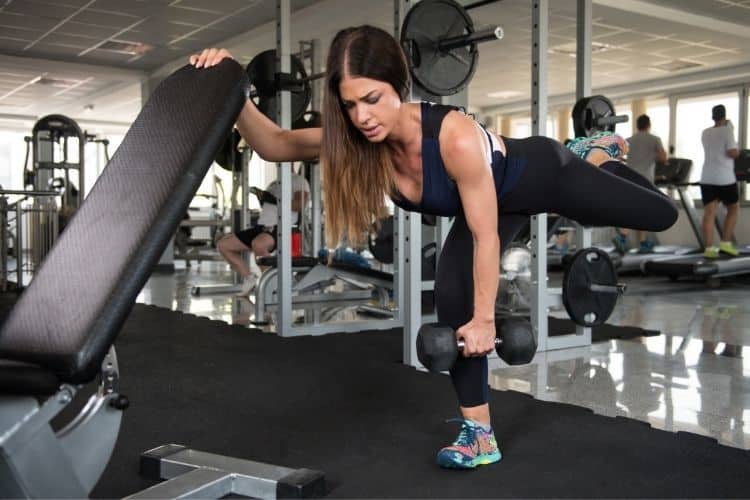
Hold the dumbbell in your right hand and place most of your weight on your left leg. Keep a slight bend in the standing knee. Extend your right leg behind you as you hinge forward from the hips.
Lower the dumbbell toward the floor while keeping your back neutral and your hips relatively square. Stop when you feel tension in the hamstring of your standing leg or when your torso is close to parallel with the floor. Squeeze your glute and drive through your standing foot to return upright.
Perform 8 to 12 repetitions and then switch sides. Holding the dumbbell in the hand opposite the working leg generally creates a greater balance and core challenge.
If balance is difficult, keep the toes of your back foot lightly touching the floor in a kickstand position. You can also place your free hand on a wall or sturdy chair.
Stand in a staggered position with your left foot forward and the dumbbell in your right hand. Hinge at your hips while keeping your spine long. Rest your left forearm lightly on your left thigh if you need additional support.
Pull the dumbbell toward your hip by driving your elbow backward. Pause briefly at the top and squeeze your upper-back muscles. Lower the weight slowly until your arm is extended without allowing your shoulder to collapse toward the floor.
Complete 10 to 15 repetitions and then change sides. Keep your hips and shoulders facing the floor throughout the set. Avoid twisting your torso to lift the weight because this reduces the work performed by the back muscles.
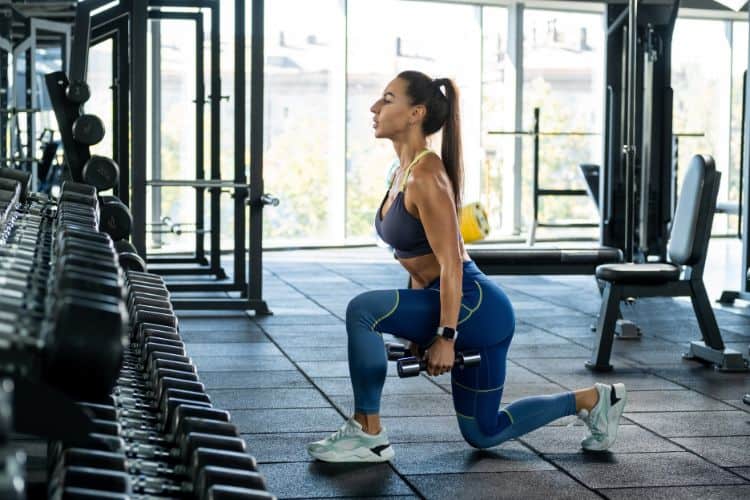
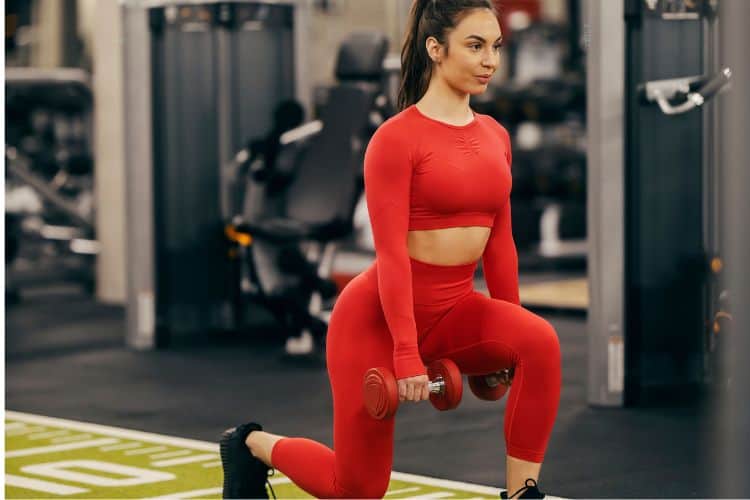
Hold the dumbbell in your right hand at your side. Step backward with your right foot and lower into a reverse lunge. Your front knee should track in the same general direction as your toes while your back knee moves toward the floor.
Press through your left foot and bring your right foot forward to return to standing. Complete 8 to 12 repetitions before holding the dumbbell in your left hand and training the opposite leg.
The dumbbell is held opposite the working front leg, which increases the demand on the glutes and lateral core. Move slowly and maintain a tall torso. If you need an easier variation, reduce your range of motion or hold a split stance while moving straight up and down.
Kneel with your right knee on a padded surface and your left foot planted in front of you. Hold the dumbbell at your right shoulder. Squeeze your right glute and brace your core to keep your ribs positioned over your pelvis.
Press the dumbbell overhead without leaning backward or shifting to the side. Finish with your arm extended comfortably above your shoulder. Lower the dumbbell under control and repeat for 8 to 12 repetitions before changing sides.
The half-kneeling position limits the amount of momentum you can use and encourages better core engagement. If kneeling is uncomfortable, perform the press while seated on a sturdy chair or standing with your feet shoulder-width apart.
Lie on your back with your knees bent and feet on the floor. Hold the dumbbell in your right hand with your upper arm resting lightly on the floor. Position your elbow at approximately a 30- to 45-degree angle away from your torso.
Press the dumbbell upward until your arm is extended above your chest. Lower it slowly until the back of your upper arm gently touches the floor. Complete 10 to 15 repetitions and repeat with your left arm.
Keep your abdominal muscles engaged so that your torso does not rotate as you press. The floor limits the depth of the movement, making this an approachable pressing variation for many people. Do not bounce your arm off the floor between repetitions.
Hold the dumbbell at your right shoulder or down in front of your body. Step to the left, push your hips backward, and bend your left knee. Keep your right leg extended while maintaining contact between both feet and the floor.
Drive through your left foot to return to the starting position. Complete 8 to 12 repetitions and then switch the dumbbell position and movement direction.
Lateral lunges train the inner thighs, glutes, and hips in a side-to-side movement pattern. Begin with a shorter step and shallow range of motion if the exercise is unfamiliar. Keep the knee of the working leg aligned with the toes.
Place the dumbbell on the floor between your feet. Stand with your feet slightly wider than hip-width apart. Push your hips backward, bend your knees, and grasp the dumbbell with your right hand.
Stand by driving through your legs and extending your hips. As you reach a tall position, pull the dumbbell toward your chest while leading with your elbow. Lower the dumbbell under control and repeat for 8 to 12 repetitions before switching arms.
This compound exercise trains the legs, glutes, back, shoulders, and core. Keep the dumbbell close to your body and generate the initial movement through your lower body rather than pulling only with your arm. Beginners can remove the high pull and perform a one-arm dumbbell deadlift.
Begin in a high plank with the dumbbell on the floor outside your right hand. Position your feet wider than shoulder-width to create a stable base. Reach underneath your body with your left hand and drag the dumbbell across the floor.
Place your left hand back on the floor, stabilize your body, and then use your right hand to drag the dumbbell in the opposite direction. Continue alternating for 6 to 10 drags per side.
Try to keep your hips facing the floor throughout the exercise. The goal is not to move the dumbbell quickly but to resist rotation. If a full plank is too difficult, perform the exercise with your knees on the floor or place your hands on an elevated surface.
Stand tall while holding the dumbbell in your right hand at your side. Keep your shoulders level, brace your core, and lift one knee toward hip height. Lower the foot and repeat with the opposite leg as though marching in place.
Continue for 30 to 45 seconds before switching the dumbbell to your left hand. Avoid leaning toward the weight or lifting the opposite shoulder. Imagine balancing a glass of water on top of your head.
The suitcase march is a simple but effective unilateral core exercise. It strengthens the muscles that resist lateral bending while also challenging balance and hip stability. Advanced exercisers can march more slowly or pause with each knee elevated.
Beginners should prioritize control, consistency, and comfortable movement. Start with two rounds and perform the lower end of the recommended repetition range. Rest for up to 60 seconds between exercises if needed.
Use kickstand positions during single-leg exercises and hold onto a stable support when balance is challenging. You can also perform lunges with a smaller range of motion or replace them with supported split squats.
Do not worry if one side feels less coordinated. Begin each unilateral exercise with the weaker side, and then complete the same number of repetitions with the stronger side. Avoid giving the weaker side excessive extra work during your first few sessions.
When the workout becomes easier, increase the dumbbell weight if another weight is available. You can also add repetitions until you reach the top of the suggested range and then add another round.
Slower repetitions offer another effective progression. Lower the dumbbell for three or four seconds, pause briefly in the most challenging position, and return to the starting position with control. This approach increases time under tension without requiring heavier equipment.
You can also shorten your rest periods to increase the cardiovascular demand, but only if you can maintain proper technique. For strength and muscle development, adequate rest and controlled repetitions are usually more valuable than moving as quickly as possible.
One common mistake is selecting a dumbbell that is too heavy. Excessive weight can cause your body to lean, twist, or use momentum. If you cannot control the lowering portion of an exercise, reduce the weight or use an easier variation.
Another mistake is allowing the dominant side to complete more repetitions. Keep the workload equal by counting each set carefully. Start with the weaker side and allow it to determine how many repetitions you complete.
Moving too quickly can also reduce the effectiveness of the workout. Unilateral training requires concentration and control. Pause when needed, reset your position, and focus on creating stable, repeatable movement.
Finally, do not force a painful range of motion. Muscular effort is expected, but sharp or worsening pain is not. Modify or stop any movement that causes discomfort, especially if you have an existing joint or back condition.
Complete this full-body single-dumbbell unilateral workout two or three nonconsecutive days per week. For example, you could train on Monday and Thursday or on Monday, Wednesday, and Friday.
Give your muscles time to recover by getting adequate sleep, eating balanced meals, consuming enough protein, and staying hydrated. Light walking, mobility work, or gentle stretching can be performed on recovery days.
Progress comes from gradually increasing the challenge while allowing your body to adapt. Track the dumbbell weight, repetitions, rounds, and exercise modifications used during each session. When you can complete every set with consistent technique, increase one training variable at a time.
A full-body single-dumbbell unilateral workout proves that effective strength training does not require a room full of equipment. One dumbbell can challenge your legs, glutes, back, chest, shoulders, arms, and core while improving balance and coordination.
The key is to perform each movement deliberately. Keep your core engaged, control the dumbbell, and give both sides of your body equal attention. Start with a manageable number of rounds and progress by adding repetitions, slowing your tempo, reducing rest periods, or using a heavier dumbbell.
Whether you are exercising at home, returning to strength training, or looking for a convenient full-body routine, this unilateral workout offers a practical way to become stronger and more stable. Consistent practice will make the exercises feel smoother while helping you develop balanced, functional strength from head to toe.
Continue building strength with the One Hour Full Body Dumbbell Strength Workout or choose this 30 Minute Full Body Dumbbell Workout At Home when you need a shorter session. Beginners can develop a solid foundation with the 30 Minute Full Body Dumbbell Workout Plan, while busy women can try these Full Body Dumbbell Exercises For a 15 Minute Workout. For more exercise variety and ways to train every major muscle group, explore the Best Full Body Dumbbell Exercises For Women.
Stay up to date on the latest women’s health, fitness and lifestyle trends and tips.
