


Sign up for workout ideas, training advice, reviews of the latest gear and more.

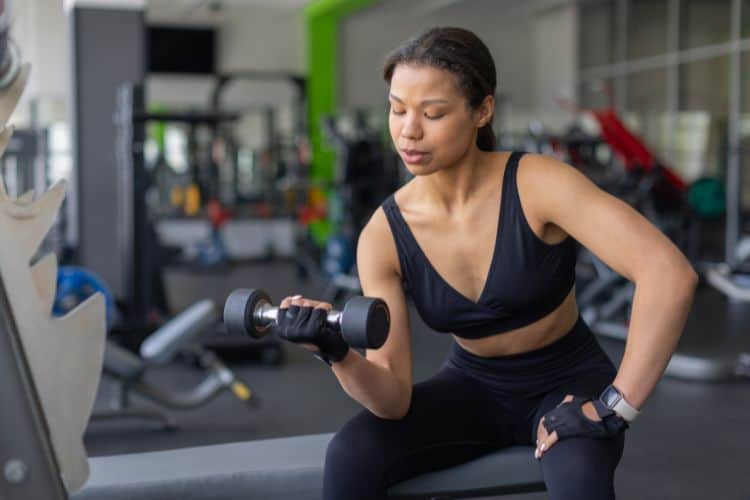
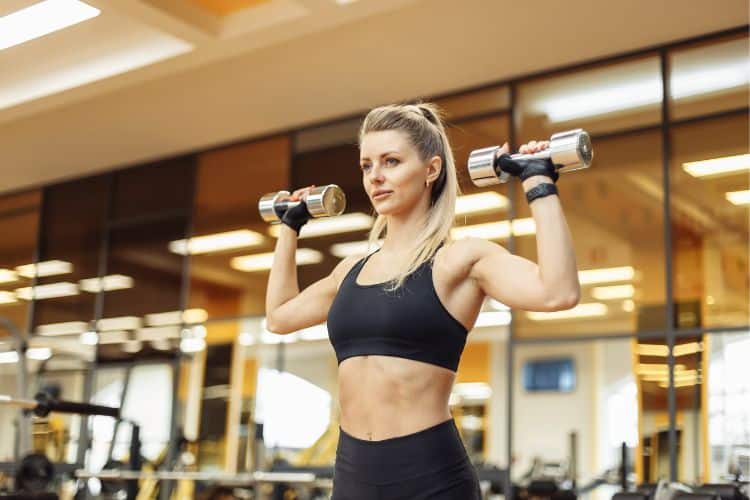
Grip strength plays an important role in everyday life, especially for women over 50. Strong hands and forearms make it easier to carry groceries, open jars, lift weights, hold gardening tools, move furniture, and perform household tasks. Improving your grip can also help you feel more confident during strength training because you can securely hold dumbbells, kettlebells, resistance bands, and other exercise equipment. Grip strength may gradually decline with age if the hands, wrists, and forearms are not regularly challenged. Hormonal changes, reduced muscle mass, joint stiffness, and a less active lifestyle can all contribute to weaker hands. Fortunately, grip strength can be improved at almost any age with a consistent and well-designed grip strength workout exercises routine for women.
This grip strength workout for women over 50 combines simple exercises that train the hands, fingers, wrists, forearms, and upper body. Most movements can be performed at home with dumbbells, a resistance band, a towel, or common household items. Whether you are new to strength training or already exercise regularly, these exercises can help you develop a stronger, more functional grip.
Grip strength is about more than squeezing an object. It reflects how effectively the muscles in your fingers, hands, wrists, and forearms work together. These muscles support countless everyday movements, from carrying a suitcase to holding a coffee mug.
After age 50, maintaining strength becomes increasingly important. Adults naturally begin to lose muscle mass as they get older, particularly when resistance training is not part of their routine. Because the muscles of the hands and forearms are relatively small, changes in grip strength may become noticeable during ordinary activities.
A stronger grip can make everyday tasks feel safer and easier. It can also improve your performance during other exercises. For example, your legs and back may be strong enough to perform a heavy dumbbell deadlift, but you might have to stop early if your hands cannot hold the weights. Building grip strength helps prevent your hands from becoming the limiting factor.
Grip training also strengthens the muscles surrounding the wrist. This may improve wrist stability during pushing and pulling exercises, including rows, chest presses, shoulder presses, and modified push-ups.
Grip strength is not a single ability. Several types of gripping actions are used throughout daily life and exercise. A balanced workout should train more than one type.
Crush grip is the strength used when closing your fingers around an object. You use it when squeezing a hand gripper, holding a dumbbell, shaking someone’s hand, or opening a tight container.
Support grip allows you to hold an object for an extended period. Carrying grocery bags, holding dumbbells during walking lunges, and gripping a suitcase are examples. Farmer’s carries are one of the most effective exercises for developing support grip.
Pinch grip involves holding an object between the fingers and thumb without wrapping the entire hand around it. Picking up a book by its edge or holding two weight plates together uses pinch strength.
Your wrist and forearm muscles stabilize your hands while you grip. Wrist curls, reverse wrist curls, and controlled rotations help strengthen these supporting muscles. Training them can make your entire grip feel more stable.
You do not need an expensive collection of equipment to train your grip. A pair of dumbbells is useful because the handles naturally challenge your hands while allowing you to train the rest of your body.
Resistance bands, a small towel, tennis balls, books, water bottles, and reusable grocery bags can also be used. If you have access to a gym, weight plates, cable machines, kettlebells, and pull-up bars provide additional options.
Choose equipment that you can control without experiencing sharp pain. The final repetitions should feel challenging, but you should not need to twist your wrist or use poor posture to finish a set.
Most women can train their grip two or three times per week. Because the hands and forearms are involved in many upper-body exercises, they may already receive some training during your regular workouts. Adding a short, focused grip routine can provide the extra challenge needed to make progress.
Allow at least one day of recovery between demanding grip sessions. If you complete a heavy back workout with rows and deadlifts, your hands and forearms may need additional rest before another intense grip workout.
Beginners can start with one or two sets of each exercise. As strength improves, progress to two or three sets. A complete session may take approximately 20 to 30 minutes.
A brief warm-up can prepare the joints and muscles for exercise. Begin by opening and closing your hands 15 to 20 times. Spread your fingers as wide as possible before gently making a fist.
Next, perform slow wrist circles for 20 to 30 seconds in each direction. Keep the movement smooth rather than forcing your wrists through an uncomfortable range of motion.
Extend one arm in front of you with your palm facing upward. Use your other hand to gently draw the fingers down until you feel a mild stretch through the forearm. Hold for 10 to 15 seconds before switching sides. Repeat with the palm facing downward.
Finish the warm-up by shaking out your hands and performing 10 light squeezes with a tennis ball or rolled towel.
Perform the following exercises in order. Rest for approximately 30 to 60 seconds between sets. Use a lighter resistance during your first session so you can learn the movements and observe how your hands and wrists respond.
Hold a tennis ball, stress ball, or rolled pair of socks in one hand. Slowly squeeze it as firmly as you comfortably can. Hold the squeeze for two or three seconds before gradually releasing.
Complete 10 to 15 repetitions per hand for two or three sets. Avoid rushing the movement. A controlled squeeze and release keeps the hand muscles working through the full repetition.
If a standard tennis ball feels too firm, begin with a softer foam ball. When 15 repetitions become easy, use a firmer ball or hold each squeeze for five seconds.
Stand tall while holding a dumbbell in each hand. Keep your shoulders down and back, brace your core, and allow your arms to remain straight beside your body. Walk slowly for 20 to 40 seconds while maintaining an upright posture.
Complete three rounds. Choose weights that challenge your grip by the end of each round without pulling your shoulders forward.
If you have limited space, march in place while holding the dumbbells. You can also stand still and perform a timed hold. This exercise strengthens your support grip while training your shoulders, core, legs, and posture.
Sit on a chair or bench while holding a light dumbbell in each hand. Rest your forearms on your thighs with your palms facing upward and your wrists extending slightly beyond your knees.
Slowly lower the dumbbells toward your fingertips. Curl your fingers around the handles and bend your wrists upward. Pause briefly before returning to the starting position.
Perform 10 to 15 repetitions for two or three sets. Keep your forearms in contact with your thighs so the movement comes from the wrists.
Remain seated with your forearms supported on your thighs, but turn your palms toward the floor. Hold light dumbbells and slowly raise the backs of your hands toward your forearms. Lower the weights with control.
Complete 10 to 15 repetitions for two or three sets. Reverse wrist curls often require much lighter weights than traditional wrist curls. Even one- or two-pound dumbbells can be enough when you are beginning.
This exercise trains the muscles along the top of the forearms and supports balanced wrist strength.
Hold one dumbbell beside your body as if you were carrying a suitcase. Stand tall without leaning toward or away from the weight. Keep your abdominal muscles engaged and your shoulders level.
Maintain the hold for 20 to 30 seconds before switching sides. Complete two or three rounds per arm.
In addition to grip strength, the suitcase hold challenges your core because you must resist being pulled sideways. Increase the weight or duration gradually as your strength improves.
Hold a small towel horizontally in front of your body. Twist one hand forward and the other backward as if you were wringing water from the towel. Maintain tension for three to five seconds before relaxing.
Reverse the direction of the twist and repeat. Complete eight to 12 repetitions in each direction for two sets.
This equipment-free exercise strengthens the hands and forearms while training wrist rotation. You can increase the difficulty by using a thicker towel or twisting it more firmly.
Choose a hardcover book that you can hold securely. Stand or sit while pinching the book between your fingers and thumb. Keep your wrist straight and hold the book beside your body for 15 to 30 seconds.
Switch hands and repeat. Complete two or three rounds per side. A weight plate can be used instead if you are training at a gym.
Start with a thinner or lighter book. As your pinch grip becomes stronger, increase the book’s thickness or extend the holding time.
Place a small resistance band around your fingertips. Begin with your fingers together and slowly spread them apart against the band’s resistance. Pause before returning to the starting position.
Perform 12 to 20 repetitions for two or three sets. This movement trains the muscles that open the hand. These muscles are often overlooked because most grip exercises focus on squeezing or closing the fingers.
If you do not have a small exercise band, a thick elastic band can work, provided it is not so tight that it causes pain or restricts circulation.
Stand or sit while holding dumbbells with your palms facing each other. Bend your elbows and curl the weights toward your shoulders. Slowly lower the dumbbells for approximately three seconds.
Perform eight to 12 repetitions for two or three sets. Keep your wrists straight and your elbows close to your sides.
Hammer curls strengthen the biceps while also targeting the forearms. The neutral hand position can feel more comfortable than a palms-up curl for some women.
If you have access to a secure pull-up bar, hold the bar with both hands. Beginners can keep their feet on the floor or on a stable step so the legs support part of their body weight. More advanced exercisers can briefly lift their feet and hang freely.
Begin with 10 to 20 seconds and complete two or three rounds. Keep your shoulders active rather than allowing your body to hang without control.
Skip this exercise if overhead positions cause shoulder discomfort. Farmer’s carries and dumbbell holds can provide similar grip benefits without requiring an overhead position.
A simple weekly routine can help you develop consistency without overworking your hands. Perform this workout on two nonconsecutive days each week.
On the first day, complete tennis ball squeezes, farmer’s carries, seated wrist curls, reverse wrist curls, and finger extensions. On the second day, perform suitcase holds, towel wrings, book pinch holds, hammer curls, and supported bar holds.
Begin with two sets per exercise. After two or three weeks, add a third set to movements that feel comfortable. You can also integrate grip exercises into your regular workouts. For example, complete farmer’s carries after a lower-body session or add wrist exercises after your upper-body workout.
Your muscles need gradually increasing challenges to continue getting stronger. However, grip training does not require you to increase the weight every week.
You can progress by holding a weight longer, adding repetitions, slowing the lowering phase, using a thicker object, or reducing assistance during a supported hang. Change only one factor at a time so you can monitor how your hands and wrists respond.
For example, if you currently perform a farmer’s carry with 10-pound dumbbells for 20 seconds, try extending the walk to 30 seconds before choosing heavier weights. Once you can maintain good posture for every round, increase each dumbbell by a small amount.
Keep a workout log that records the weight, repetitions, sets, and holding times. Tracking these details makes gradual improvement easier to recognize.
Women with arthritis, previous wrist injuries, carpal tunnel symptoms, or hand pain may need to modify grip exercises. Training should feel challenging in the muscles, but it should not produce sharp pain, numbness, tingling, or increased joint swelling.
Use softer objects for squeezing and begin with short holds. Dumbbells with thicker or padded handles may feel more comfortable. You can also wrap a small towel around a narrow handle to make it easier to hold.
Avoid squeezing as hard as possible during every repetition. Moderate effort may be more appropriate when your joints are sensitive. Warm water, gentle hand movements, and a longer warm-up may help reduce stiffness before exercise.
If you have persistent hand or wrist symptoms, osteoporosis-related restrictions, or a recent injury, consult a qualified healthcare professional or physical therapist before beginning a new exercise program.
One common mistake is doing too much too soon. The small muscles and connective tissues of the hands and wrists need time to adapt. Excessive squeezing, carrying, or hanging can lead to soreness that interferes with daily activities.
Another mistake is allowing the wrist to bend during heavy holds. Try to keep your wrist in a neutral position rather than letting it collapse forward or backward.
Poor posture can also reduce the effectiveness of grip exercises. During carries and holds, keep your chest lifted, shoulders relaxed, and core gently braced. Avoid shrugging the weights toward your ears.
Finally, do not train only your dominant hand. Complete the same number of sets and repetitions on both sides. If one hand is weaker, allow it to determine the resistance rather than giving the stronger hand extra work.
Structured workouts are important, but everyday activities can provide additional practice. Carry reusable shopping bags for a comfortable distance, work in the garden, knead dough, use hand tools, or carry a laundry basket with both hands.
Opening containers, folding heavy towels, and using a spray bottle can also engage the hands. These activities should complement your workouts rather than replace progressive resistance training.
When performing strength exercises, avoid using lifting straps unless they are necessary for a specific goal. Holding dumbbells and kettlebells without straps allows your grip to develop naturally. If your grip limits an important lower-body exercise, straps may occasionally help, but dedicated grip training should still be included elsewhere in your routine.
Many women notice that everyday tasks begin to feel easier within four to eight weeks of consistent training. The exact timeline depends on your starting strength, workout frequency, recovery, health, and exercise intensity.
Progress may appear in small ways. You might carry groceries farther, use a heavier dumbbell, open a container more easily, or hold a farmer’s carry longer. These practical improvements are valuable signs that your training is working.
Consistency matters more than completing an exhausting workout. Two focused sessions every week can produce better long-term results than training intensely for a few days and then stopping because your hands are overly sore.
Your hands and forearms need recovery just like larger muscle groups. Mild muscular fatigue is normal, but significant pain is a sign to reduce the resistance or volume.
After training, gently open and close your hands and stretch your forearms. Avoid aggressive stretching, especially if your wrists feel irritated. Adequate sleep, hydration, and balanced nutrition also support muscle recovery.
Protein-rich foods such as eggs, yogurt, fish, chicken, beans, lentils, tofu, and cottage cheese can help support muscle maintenance when included as part of a balanced diet.
A grip strength workout for women over 50 can improve much more than the strength of your hands. It can support greater independence, improve confidence with weights, enhance wrist stability, and make daily activities easier.
Begin with simple exercises such as ball squeezes, farmer’s carries, wrist curls, towel wrings, and pinch holds. Train two or three times per week, focus on controlled movements, and increase the challenge gradually.
Your grip may be a small part of your overall fitness routine, but it has a significant effect on how effectively you lift, carry, pull, and perform daily tasks. With consistent practice and appropriate progression, stronger hands and forearms can become an important part of staying capable, active, and confident after 50.
Strengthen your entire body while improving your grip with the Best Dumbbell Workout For Women Over 50. You can also create a balanced weekly routine with these Full Body Workouts For Adults Over 50. If you are new to resistance exercise, start with these Beginner Strength-Training Exercises For Women before progressing to the Best Full Body Dumbbell Exercises For Women. For more functional movements that challenge your hands, forearms, and major muscle groups together, explore this Full Body Compound Training Plan For Women.
Stay up to date on the latest women’s health, fitness and lifestyle trends and tips.
