


Sign up for workout ideas, training advice, reviews of the latest gear and more.

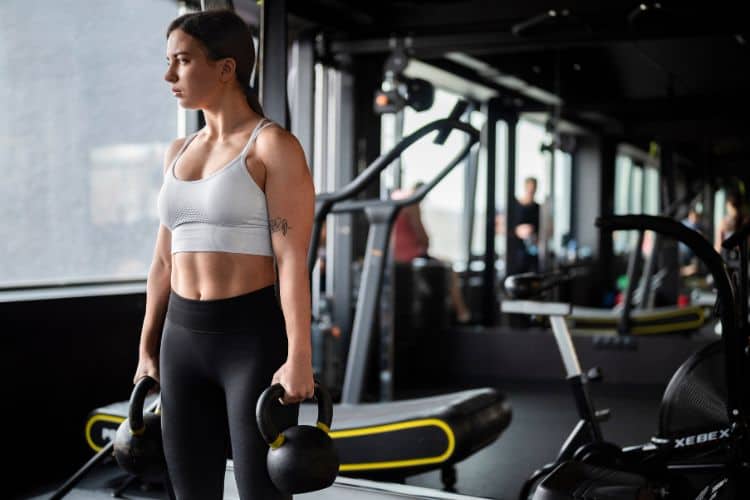
A strong core does much more than help define your midsection. Your core stabilizes your spine, supports good posture, transfers force between your upper and lower body, and helps you move safely during everyday activities. One of the most practical ways to strengthen these muscles is the kettlebell suitcase carry. This deceptively simple exercise challenges your entire body while placing special emphasis on your obliques, deep abdominal muscles, lower back, hips, grip, and shoulders.
The suitcase carry gets its name from the way you hold a kettlebell at your side, much like carrying a heavy suitcase. Because the weight is positioned on only one side of your body, your core must resist the urge to lean or rotate. This makes the movement an effective anti-lateral-flexion exercise, meaning your abdominal muscles work to keep your torso upright instead of bending sideways.
This 30-minute kettlebell suitcase carry workout combines loaded carries with strength and stability exercises. It is suitable for home or gym training and can be adjusted for beginners, intermediate exercisers, and experienced lifters. You only need one kettlebell and enough open space to walk safely.
A kettlebell suitcase carry workout trains the body in a way that closely resembles real-life movement. Carrying groceries, lifting luggage, holding a child, and moving objects around the house all require the body to stabilize an uneven load. Practicing loaded carries can help prepare your muscles for these daily demands.
The main benefit of the suitcase carry is improved core stability. Unlike a crunch, which involves bending the spine, the suitcase carry teaches the core to prevent unwanted movement. The abdominal muscles brace to keep the ribs stacked over the pelvis while the obliques prevent the torso from leaning toward the kettlebell.
Suitcase carries also strengthen the hands and forearms. Grip strength is important for nearly every pulling exercise, including rows, deadlifts, and pull-ups. A stronger grip can make it easier to control weights and complete daily tasks that involve holding, lifting, or carrying objects.
The exercise also encourages better posture and shoulder stability. When performed correctly, you must keep your shoulders level and avoid allowing the kettlebell to pull one shoulder downward. The muscles surrounding the shoulder blade work to maintain a controlled position while your upper back supports an upright posture.
Because you are walking while carrying the weight, the exercise also trains the hips, glutes, and legs. Each step requires balance and pelvic control. When suitcase carries are combined with kettlebell strength exercises, they create an efficient full-body workout that can improve strength, coordination, and muscular endurance.
The suitcase carry primarily targets the core, but it should not be viewed as an abdominal-only exercise. The obliques on both sides of the torso help keep the body vertical, while the transverse abdominis creates tension around the midsection. The spinal erectors along the back support the spine, and the quadratus lumborum helps stabilize the pelvis and lower back.
The forearm and hand muscles work continuously to maintain a secure grip on the kettlebell. The shoulders, upper back, and latissimus dorsi also contribute by keeping the weight controlled and the shoulder joint stable.
As you walk, the glutes help keep the pelvis level. The quadriceps, hamstrings, calves, and smaller muscles around the feet and ankles support each step. This combination of muscle activity makes the suitcase carry a highly functional core-strengthening movement.
Choose a kettlebell that feels challenging but allows you to remain completely upright. The ideal weight will vary based on your experience, grip strength, body size, and the distance or time of each carry.
A beginner might start with a kettlebell weighing approximately 8 to 18 pounds. An intermediate exerciser may use 18 to 35 pounds, while an experienced lifter may be comfortable with a heavier load. These ranges are only general suggestions. Proper technique should determine the weight you use.
The kettlebell is too heavy if you must lean to the side, hike one hip, shrug your shoulder, shorten your steps excessively, or rush to finish the interval. It may be too light if you can complete every carry without feeling your core or grip working. Select a weight that makes the final seconds difficult while still allowing you to maintain good posture.
Place the kettlebell on the floor beside one foot. Push your hips back, bend your knees slightly, and reach down to grasp the handle. Brace your abdomen before standing by driving through your feet and extending your hips. Avoid bending sideways to pick up the weight.
Stand tall with the kettlebell hanging naturally at your side. Keep your shoulders level, chest comfortably lifted, and ribs aligned over your pelvis. Your arm should remain straight without aggressively locking the elbow. Keep the kettlebell slightly away from your thigh so that it does not repeatedly strike your leg.
Begin walking with slow, controlled steps. Keep your head facing forward and resist the urge to lean away from or toward the weight. Your hips should remain level as your arms and shoulders stay controlled. Breathe steadily without completely releasing the tension in your abdomen.
At the end of the interval, stop walking before putting the kettlebell down. Hinge at your hips, bend your knees, and lower it under control. Repeat the exercise on the other side for an equal amount of time.
This workout includes a five-minute warm-up, three six-minute training circuits, short recovery periods, and a cooldown. You will alternate suitcase carries with exercises that strengthen the hips, legs, shoulders, and core.
Complete each exercise for 40 seconds and rest or transition for 20 seconds. Each circuit contains three exercises and is repeated twice, producing six minutes of work. Rest for 30 seconds after each circuit before continuing. If you are a beginner, use 30 seconds of exercise and 30 seconds of recovery.
Begin with one minute of marching in place. Stand tall, gently brace your core, and swing your arms naturally. Gradually raise your knees higher as your body becomes warmer.
Continue with one minute of bodyweight good mornings. Place your hands behind your head or across your chest, soften your knees, and push your hips backward. Keep your back neutral before squeezing your glutes to return to standing.
Perform alternating reverse lunges for one minute. Step one foot backward, lower only as far as you can control, and push through the front foot to stand. Hold a stable surface if additional balance support is needed.
Spend the fourth minute performing standing knee lifts with a gentle abdominal brace. Raise one knee at a time without leaning backward or rounding your spine. Finish the warm-up with one minute of shoulder rolls, controlled arm circles, and side-to-side steps.
Hold the kettlebell in your right hand and walk for 40 seconds. Focus on staying tall without shifting your torso. Imagine balancing a glass of water on your head while keeping both shoulders the same distance from the floor.
Rest for 20 seconds and prepare to change sides.
Carry the kettlebell in your left hand for 40 seconds. Take smooth steps and keep the kettlebell from swinging. Press your feet firmly into the floor and maintain steady abdominal tension.
Rest for 20 seconds before beginning the next movement.
Hold the kettlebell close to your chest with both hands. Position your feet approximately shoulder-width apart and turn your toes slightly outward. Push your hips down and back while keeping your chest lifted. Descend to a comfortable depth, then drive through your feet to stand.
Continue for 40 seconds and recover for 20 seconds. Repeat all three exercises once more to complete the six-minute circuit. Rest for 30 seconds before starting Circuit Two.
Hold the kettlebell in your right hand and stand with your feet approximately hip-width apart. Slowly lift your left knee, lower it, and then lift your right knee. Continue marching without allowing your body to lean or your hips to shift.
The suitcase march is useful when you do not have enough space for a walking carry. Moving slowly increases the balance challenge and forces your core to control every change in position.
Move the kettlebell to your left hand and repeat the slow march. Keep your shoulders relaxed and level. Do not lift your knees so high that your lower back rounds. A controlled knee lift is more valuable than trying to achieve maximum height.
Hold the kettlebell with both hands in front of your thighs. Keep your knees slightly bent and push your hips backward as the kettlebell moves toward the floor. Maintain a neutral back and keep the weight close to your legs. Stop when you feel tension through the hamstrings, then squeeze your glutes to stand.
Avoid turning the Romanian deadlift into a squat. The movement should come primarily from hinging at the hips. Complete 40 seconds of controlled repetitions, rest for 20 seconds, and repeat the entire circuit. Recover for 30 seconds afterward.
Carry the kettlebell in your right hand and take three controlled steps. Pause for approximately two seconds without losing your posture, then take another three steps. Continue this pattern for the full interval.
The pauses remove momentum and force your core to stabilize the weight from a stationary position. Keep breathing behind the abdominal brace instead of holding your breath for the entire set.
Switch the kettlebell to your left hand and repeat the same three-step pattern. Make each pause deliberate. Check that your head, rib cage, and pelvis remain stacked rather than drifting sideways.
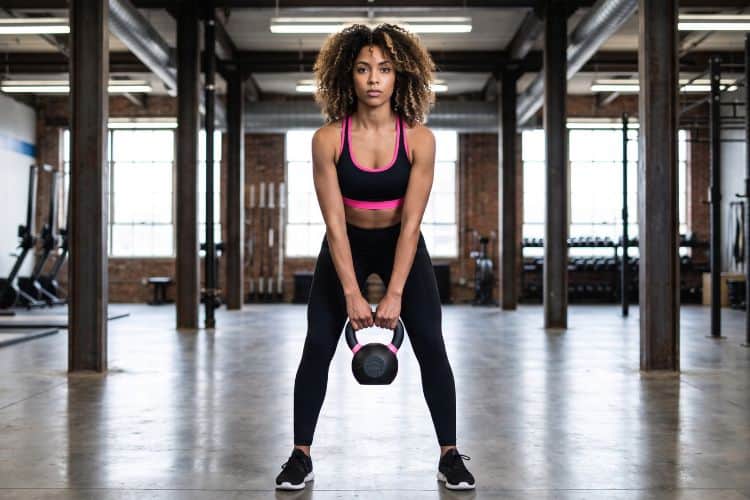
Place the kettlebell between your feet. Hinge at the hips and grasp the handle with both hands. Stand by extending your hips, then guide the kettlebell upward toward chest height while keeping your elbows higher than your hands. Lower it under control and return to the hip-hinge position.
This exercise should be powered primarily by the hips rather than by aggressively pulling with the arms. If the high pull feels uncomfortable for your shoulders, replace it with a standard kettlebell deadlift. Complete the circuit twice and then rest for 30 seconds.
Finish the main workout with alternating suitcase carries. Carry the kettlebell in your right hand for 30 seconds, switch to your left hand for 30 seconds, and repeat the sequence once.
Try to maintain the same walking speed and posture throughout the entire two minutes. If your grip begins to fail, safely set the kettlebell down, shake out your hand, and resume when ready. Do not sacrifice spinal alignment simply to avoid taking a short break.
Spend the final few minutes gradually lowering your heart rate. Walk slowly without weight while taking calm breaths. Follow this with a gentle hip-flexor stretch, hamstring stretch, and upper-back stretch.
You can also perform a child’s pose or lie on your back with your knees bent while practicing relaxed breathing. Inhale through your nose and allow your abdomen and rib cage to expand. Exhale slowly and release unnecessary tension from your shoulders and lower back.
The cooldown does not need to be intense. Its purpose is to help you transition out of the workout and notice how your body feels.
One of the most common mistakes is leaning in the opposite direction to compensate for the weight. This reduces the stability challenge and may place unnecessary stress on the lower back. Use a lighter kettlebell if you cannot keep your torso vertical.
The kettlebell should remain relatively still as you walk. Excessive swinging can pull the shoulder and torso out of position. Slow down, shorten your stride slightly, and focus on controlling the weight with your grip, shoulder, and upper back.
Your shoulder should remain stable rather than pulled tightly toward your ear. Think about creating space between your shoulder and your ear while maintaining enough upper-back tension to control the kettlebell.
Rushing often hides poor balance and allows momentum to take over. Controlled steps make the exercise more effective because your core must stabilize your body during every phase of the walk.
Bracing does not mean holding your breath throughout a long carry. Take controlled breaths while maintaining tension around your midsection. Exhale slowly through pursed lips if that helps you keep your ribs and pelvis aligned.
Beginners can shorten each working interval to 20 or 30 seconds and increase the recovery period. You may also perform the workout with a lighter kettlebell or complete only one round of each circuit.
If walking feels unsteady, practice a stationary suitcase hold. Stand with the kettlebell at your side for 15 to 30 seconds while maintaining level shoulders and hips. Once you can hold the position confidently, add slow marching and eventually progress to walking carries.
You can also keep your free hand near a stable support when practicing suitcase marches. Avoid using that support unless you lose your balance, because the goal is still to let your core perform the stabilizing work.
Increase the kettlebell weight gradually once you can complete every interval with consistent posture. A modest increase is usually enough to create a meaningful new challenge.
You can also lengthen the carry intervals, reduce rest periods, or walk a greater distance. Another option is to perform offset carries by holding one kettlebell in the suitcase position and a lighter kettlebell at shoulder height on the opposite side. This is an advanced variation and should only be used after mastering the basic carry.
Walking more slowly can also increase difficulty. Deliberate steps and brief single-leg pauses require greater balance, hip stability, and core control without requiring a heavier kettlebell.
Most people can include suitcase carries in their routine two or three times per week. They can be performed as part of a dedicated core workout, after a strength-training session, or during a full-body circuit.
Allow enough recovery between demanding sessions, especially if you use a heavy kettlebell. Your grip, obliques, shoulders, and lower back may need time to recover even if you do not experience the same muscle soreness associated with traditional abdominal exercises.
Progress gradually by changing only one training variable at a time. You might increase the weight, duration, distance, or number of rounds, but increasing everything simultaneously can make it difficult to maintain proper form.
Yes. Suitcase carries train the core to resist side bending and rotation while the body is moving. This type of stability is important for lifting, walking, exercising, and completing everyday activities safely.
Suitcase carries engage the muscles that support the lower back, but they should not cause sharp pain or significant discomfort. People with an existing back injury or medical condition should consult a qualified healthcare professional before beginning loaded carries.
Always train both sides for the same amount of time or distance. Starting with the weaker side may help you give it your best effort. Match that performance on the stronger side rather than completing extra work that could reinforce an imbalance.
This workout can contribute to an active lifestyle and increase energy expenditure, but fat loss depends largely on overall activity, nutrition, sleep, and consistency. Loaded carries are especially valuable because they build useful strength while involving many muscles at once.
Yes. A dumbbell can replace the kettlebell if that is what you have available. The balance and feel will be slightly different, but the same posture, bracing, walking, and safety principles apply.
The 30-minute kettlebell suitcase carry workout offers a practical alternative to performing endless crunches. It teaches your core to stabilize your body against an uneven load while strengthening your grip, shoulders, hips, and legs. These benefits can carry over to other exercises and everyday movements.
Focus on posture and control rather than choosing the heaviest possible kettlebell. Keep your shoulders level, ribs stacked over your pelvis, and steps deliberate. With regular practice and gradual progression, suitcase carries can become one of the most effective and functional exercises in your core-strengthening routine.
Build a more complete kettlebell training routine by exploring the Best Kettlebell Core Exercises For Women to improve stability and abdominal strength. You can complement suitcase carries with this 30 Minute Full Body Kettlebell Workout or develop better control with the 30 Minute Anti Rotation Abs Workout. For additional strength exercises, try these Kettlebell Deadlift Variations and the Best Kettlebell Leg Exercises For Strength And Power to strengthen your glutes, legs, posterior chain, and core.
Stay up to date on the latest women’s health, fitness and lifestyle trends and tips.
