


Sign up for workout ideas, training advice, reviews of the latest gear and more.


A strength and core superset workout for women is an efficient way to build lean muscle, improve stability, and train the entire body without spending hours in the gym. Instead of completing all your sets for one exercise before moving to the next, this workout pairs a strength exercise with a complementary core movement. You perform the two exercises back-to-back, rest briefly, and then repeat the combination.
Superset training can help you accomplish more work in less time while keeping your muscles challenged. By alternating traditional strength exercises with targeted core movements, you can train your legs, glutes, back, chest, shoulders, arms, and abdominal muscles in one organized session. The approach is suitable for women who exercise at home or in the gym and can be modified for beginner, intermediate, and advanced fitness levels.
This full-body routine uses dumbbells and bodyweight exercises. Choose weights that allow you to maintain proper form while making the last two or three repetitions of each set feel challenging.
A superset consists of two exercises performed consecutively with little or no rest between them. After completing both exercises, you take a short recovery period before beginning the next round. In this workout, every superset combines a strength-building movement with an exercise that trains the core.
For example, you may perform dumbbell squats followed immediately by dead bugs. The squats strengthen the lower body, while the dead bugs train abdominal control and spinal stability. Pairing the exercises keeps the workout moving without asking the same muscle group to perform two demanding movements in a row.
The core includes more than the visible abdominal muscles. It also involves the obliques, deep abdominal muscles, diaphragm, pelvic floor, lower-back muscles, and the muscles surrounding the hips. These muscles work together to stabilize the spine and transfer force between the upper and lower body.
A well-designed strength and core superset workout does not simply add crunches between lifting exercises. It includes different core functions, such as resisting extension, controlling rotation, maintaining a neutral spine, and stabilizing the body during movement.
Most everyday activities require several muscle groups to work together. Carrying groceries, lifting a child, climbing stairs, and moving furniture all depend on leg strength, upper-body strength, and core stability.
Compound exercises such as squats, rows, presses, and Romanian deadlifts train multiple muscles at the same time. Adding core exercises can improve your ability to control your torso while the arms and legs move. This makes the workout useful for both physical performance and daily life.
Supersets reduce unnecessary downtime between exercises. While one muscle group recovers, you train another area of the body. This structure allows you to complete a productive strength session in approximately 35 to 45 minutes.
However, moving efficiently does not mean rushing. You should still use controlled repetitions and rest when your form begins to deteriorate. The goal is to use your workout time wisely while maintaining good technique.
A stronger core helps support the spine and maintain proper body alignment. It can also improve your control during squats, lunges, rows, and overhead presses.
Exercises such as planks, bird dogs, dead bugs, and suitcase marches teach the core to stabilize the torso rather than relying only on repeated spinal bending. Consistent core training may also make it easier to maintain an upright posture during daily activities.
Strength training helps preserve and build lean muscle tissue. Increasing or maintaining muscle can support overall metabolic health and improve body composition when combined with balanced nutrition, sufficient protein, regular movement, and adequate recovery.
A superset workout may also keep your heart rate moderately elevated because the rest periods are shorter than they are during traditional straight-set training. Nevertheless, strength training should not be turned into uncontrolled cardio. Using proper resistance and completing high-quality repetitions remain the priorities.
You will need a pair of dumbbells and enough floor space to perform exercises such as planks and dead bugs. An exercise mat is optional but can make floor movements more comfortable.
If you have access to several dumbbell weights, use heavier weights for lower-body exercises and lighter weights for shoulder or core movements. If you only have one pair, adjust the difficulty by slowing the lowering portion of each repetition, adding a pause, or changing the number of repetitions.
Beginners can perform the workout using light dumbbells or bodyweight. More experienced women may need heavier weights to make the strength exercises sufficiently challenging.
Complete each pair of exercises for three rounds before moving to the next superset. Perform the first exercise, transition directly to the second exercise, and then rest for 45 to 75 seconds.
Use the following general structure:
The complete workout contains five supersets. Beginners may start with two rounds of each pair, while experienced exercisers can complete three or four rounds.
Spend five to seven minutes preparing your joints and muscles before lifting. Begin with light movement, such as marching in place or walking, to gradually increase your heart rate.
Continue with bodyweight squats, alternating reverse lunges, arm circles, hip hinges, and standing torso rotations. Finish with several slow bird dogs or dead bugs to activate the core.
Your warm-up should help you feel mobile and prepared without causing fatigue. Use controlled movements and focus on the areas that tend to feel stiff. If the first working set still feels awkward, treat it as an additional warm-up set and use a lighter weight.
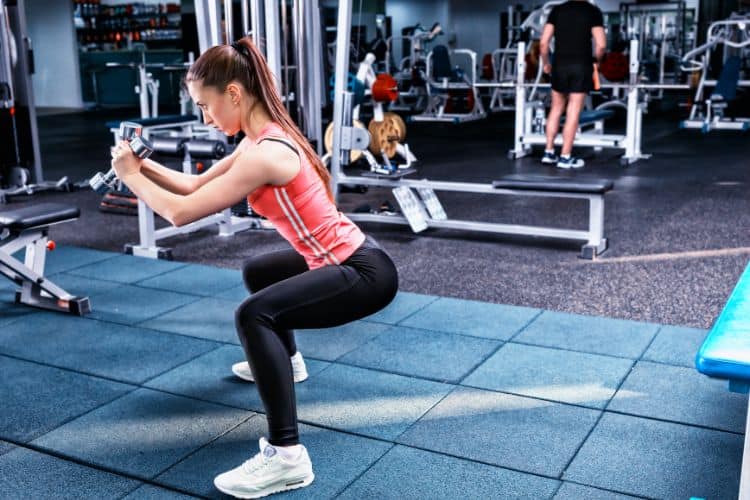
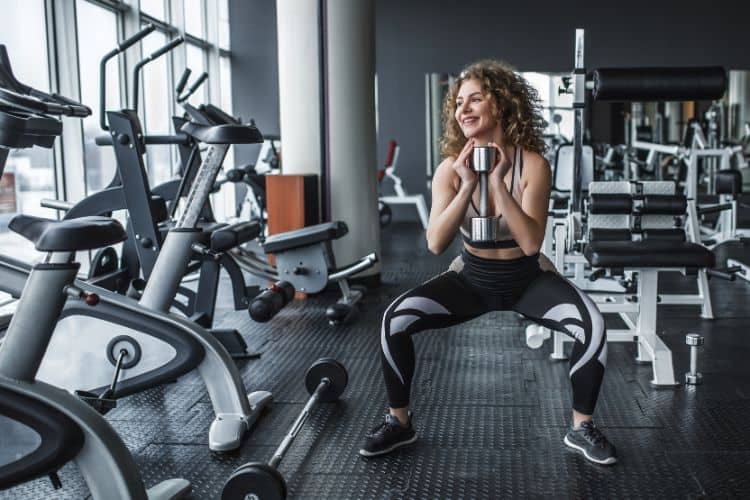
Hold one dumbbell vertically against your chest, or hold two dumbbells at your shoulders. Stand with your feet approximately shoulder-width apart and point your toes slightly outward.
Brace your core and sit your hips down between your legs. Keep your chest lifted and allow your knees to track in the same direction as your toes. Descend as far as you can while maintaining control, and then drive through your feet to stand.
Complete 10 to 12 repetitions. This exercise primarily trains the quadriceps and glutes while also involving the hamstrings and core.
Avoid allowing your knees to collapse inward or your heels to rise from the floor. If your range of motion is limited, squat to a bench or chair and gradually work toward a deeper position.
Lie on your back with your arms extended toward the ceiling and your knees bent above your hips. Gently press your lower back toward the floor and brace your abdominal muscles.
Slowly extend your right leg and lower your left arm without allowing your lower back to arch. Return to the starting position and switch sides. Complete 8 to 10 controlled repetitions per side.
Move only as far as you can while keeping your torso stable. Shortening the reach makes the exercise easier, while holding a light dumbbell can increase the challenge.
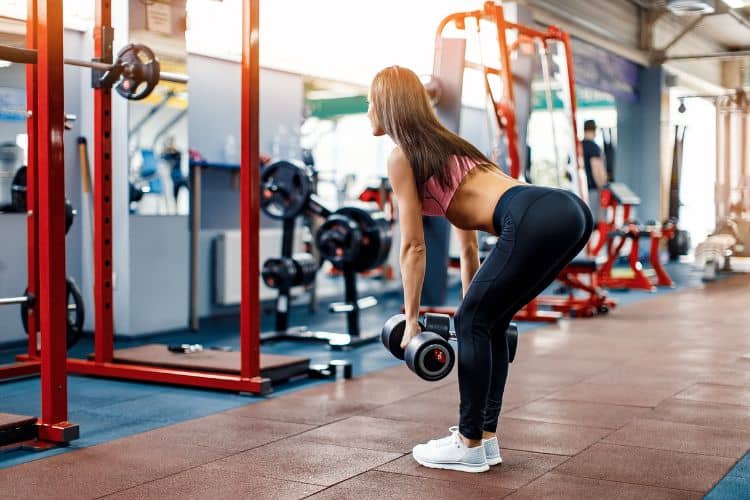
Stand with your feet hip-width apart and hold the dumbbells in front of your thighs. Soften your knees, pull your shoulders back, and brace your core.
Push your hips behind you while keeping the weights close to your legs. Lower the dumbbells until you feel tension through your hamstrings. Squeeze your glutes and drive your hips forward to return to standing.
Complete 8 to 12 repetitions. The Romanian deadlift strengthens the hamstrings, glutes, back, and gripping muscles.
The movement should come primarily from the hips rather than from squatting deeply. Keep your spine neutral and stop lowering the weights if your back begins to round.
Place your forearms on the floor with your elbows underneath your shoulders. Extend your legs behind you and create a straight line from your head to your heels.
Tighten your glutes and gently draw your ribs toward your pelvis. Hold the position for 20 to 45 seconds without allowing your lower back to sag.
Perform the plank with your knees on the floor if needed. Focus on total-body tension rather than trying to hold the position for as long as possible.
Stand tall with a dumbbell in each hand. Step one foot backward and lower your rear knee toward the floor. Keep most of your weight through the front foot and maintain an upright torso.
Push through the front foot to return to the starting position. Complete 8 to 10 repetitions on each side.
Reverse lunges train the glutes, quadriceps, hamstrings, and stabilizing muscles around the hips. Stepping backward may also feel more comfortable for some people than stepping forward.
Hold onto a stable surface and use bodyweight if balance is difficult. You can also perform all repetitions on one side before switching legs.
Lie on your side and position your elbow underneath your shoulder. Stack your legs or place your top foot in front of the bottom foot for additional stability.
Lift your hips and maintain a straight line through your shoulders, hips, and feet. Hold for 20 to 30 seconds before changing sides.
To modify the movement, bend your bottom knee and keep it on the floor. To make it harder, extend your top arm or slowly lift your top leg.
Lie on your back with your knees bent and your feet flat on the floor. Hold one dumbbell in each hand with your upper arms resting lightly against the floor.
Brace your core and press the dumbbells above your chest. Lower them under control until your upper arms gently touch the floor. Complete 8 to 12 repetitions.
The floor press trains the chest, triceps, and front of the shoulders. The floor limits the depth of the movement, making it a practical alternative when a workout bench is unavailable.
Keep your wrists stacked above your elbows and avoid forcefully bouncing your arms against the floor.
Begin on your hands and knees with your wrists beneath your shoulders and knees beneath your hips. Brace your core and extend your right arm and left leg.
Pause briefly while keeping your hips and shoulders square to the floor. Return to the starting position and repeat on the opposite side. Complete 8 to 10 repetitions per side.
Think about reaching long rather than lifting your arm and leg as high as possible. Excessive height can cause the lower back to arch and reduce the effectiveness of the exercise.
Place one hand on a bench, chair, or other stable surface. Hold a dumbbell in the opposite hand and hinge forward while keeping your back neutral.
Pull the dumbbell toward your hip by driving your elbow backward. Pause briefly, and then lower the weight until your arm is extended. Complete 10 to 12 repetitions before switching sides.
The row strengthens the upper back, rear shoulders, biceps, and muscles that support good posture. Avoid twisting your torso or shrugging your shoulder toward your ear.
Stand tall and hold one heavy dumbbell at your side as though you were carrying a suitcase. Brace your core and slowly lift one knee, lower it, and then lift the other knee.
Continue marching for 30 to 40 seconds before moving the dumbbell to the opposite hand. Resist the weight’s pull and keep your shoulders and hips level.
This exercise trains the obliques and deep core muscles while challenging balance and grip strength. Use a lighter weight or keep both feet on the ground if marching affects your posture.
Choose a weight that makes the final repetitions challenging without changing your technique. At the end of a set, you should generally feel that you could perform approximately two more good repetitions if necessary.
If you could easily complete five or more additional repetitions, the dumbbells may be too light for that exercise. If you cannot reach the minimum repetition target without swinging, holding your breath, or losing alignment, reduce the weight.
You will probably need different weights for different movements. The lower body can typically manage more resistance than the shoulders and arms. Treat weight selection as an exercise-specific decision instead of trying to use the same dumbbells for the entire session.
Beginners can complete two rounds of each superset and rest for 60 to 90 seconds between rounds. Start with bodyweight versions of the squats and lunges if necessary, and use light dumbbells for the remaining strength exercises.
Perform planks and side planks from the knees. For dead bugs and bird dogs, shorten the reach of the arms and legs until you can maintain a stable torso.
Learning the exercises is more important than completing the workout quickly. Stop each set before fatigue causes your technique to break down. As your confidence improves, add repetitions, increase the duration of the core exercises, or complete a third round.
Advanced exercisers can increase the dumbbell weight, complete four rounds, or reduce rest periods slightly. You can also use slower repetitions, such as lowering the weight for three seconds and lifting it in one controlled second.
Another option is to add a brief pause at the most difficult point of an exercise. Pause at the bottom of a squat, hold the top of a row, or maintain full-body tension during a plank.
Avoid changing every variable simultaneously. Increasing the weight, adding rounds, and shortening rest periods at the same time can make it difficult to identify what is improving and may compromise recovery.
Most women can perform this strength and core superset workout two or three times per week on nonconsecutive days. Allowing at least one recovery day between full-body sessions gives the muscles time to repair and adapt.
A weekly schedule could include this workout on Monday and Thursday, with walking, mobility work, Pilates, or moderate cardio on other days. If you lift three times per week, perform the workout on Monday, Wednesday, and Friday while adjusting the total number of sets according to your experience and recovery.
You do not need to train your abdominal muscles intensely every day. Like other muscle groups, the core benefits from appropriate training followed by sufficient recovery.
Repeating the same workout with the same resistance indefinitely may eventually stop producing noticeable improvements. Progressive overload means gradually increasing the training demand as your body becomes stronger.
You can apply progressive overload by adding weight, completing another repetition, increasing the plank duration, improving your range of motion, or adding a set. Even small improvements can be meaningful.
Keep a simple workout log that records the exercises, weights, repetitions, and number of rounds completed. When you can perform the top of the repetition range with excellent form, consider increasing the weight slightly.
Progress does not need to occur during every workout. Sleep, stress, nutrition, and previous training can affect performance. Evaluate your improvement across several weeks instead of judging it by a single session.
One common mistake is choosing weights that are too light because the workout moves quickly. While lighter weights may be appropriate initially, strength exercises should eventually provide enough resistance to challenge the target muscles.
Another mistake is transitioning so quickly that exercise form becomes careless. Take a few seconds to position your body correctly before beginning the second movement. Efficient training is valuable, but safe and controlled execution is more important.
Holding your breath throughout core exercises is another frequent issue. Breathe steadily while maintaining abdominal tension. Exhale through the difficult portion of a repetition and inhale during the easier phase.
Finally, avoid treating every workout as a maximum-effort test. Most sessions should be challenging but manageable. Consistency and gradual progression usually produce better long-term results than repeatedly training to exhaustion.
After the final superset, walk slowly or march in place until your breathing begins to return to normal. Follow with gentle stretches for the hips, hamstrings, chest, shoulders, and back.
Support your recovery by drinking enough fluids and eating balanced meals that provide protein, carbohydrates, healthy fats, and micronutrients. Protein helps support muscle repair, while carbohydrates replenish energy used during training.
Sleep also plays an important role in muscular recovery and exercise performance. If you experience persistent soreness, declining performance, or unusual fatigue, reduce the workout volume or take an additional recovery day.
Sharp pain, dizziness, or pain that worsens during a movement is a reason to stop exercising and seek guidance from a qualified healthcare or fitness professional.
A strength and core superset workout for women offers a practical way to build muscle, improve stability, and train the full body in one efficient session. Pairing squats, deadlifts, lunges, presses, and rows with purposeful core exercises creates a balanced routine that supports both fitness goals and everyday movement.
Begin with a level that matches your current ability, prioritize proper form, and record your workouts so you can progress gradually. With consistent training, appropriate resistance, balanced nutrition, and adequate recovery, this superset routine can become a valuable part of a sustainable strength-training program.
For more ways to build total-body strength and improve core stability, explore the 10 Best Strength Workouts For Women and add movements from these Best Core Exercises For women. Beginners can develop a solid foundation with the Top 10 Beginner Core Exercises, while more experienced exercisers can improve real-world stability with these Functional Ab Exercises. For an extended program that gradually increases the challenge, try this 30 Day Ab Workout Challenge alongside your weekly strength and core superset workouts.
Stay up to date on the latest women’s health, fitness and lifestyle trends and tips.
