


Sign up for workout ideas, training advice, reviews of the latest gear and more.




Choosing the right breakfast ideas before a workout can make a noticeable difference in how energized, strong, and comfortable you feel during exercise. Whether you are heading to the gym for strength training, completing a HIIT workout at home, going for a morning run, or doing a lower-impact session such as Pilates, your pre-workout breakfast provides your body with nutrients it can use to support the activity ahead.
The ideal breakfast before exercise does not need to be complicated. In many cases, a combination of carbohydrates, protein, fluids, and a moderate amount of fat can create a balanced meal. What matters most is choosing foods that work well with your digestion and matching the size of your breakfast to how soon you plan to exercise.
Below are practical pre-workout breakfast ideas for different schedules, workout styles, and appetites, along with tips for deciding what and when to eat before a morning workout.
After sleeping overnight, you may be starting your morning several hours after your last meal. Eating breakfast before exercising can provide carbohydrates for readily available energy while supplying protein and other nutrients that support your overall diet.
Carbohydrates are particularly useful because the body can store carbohydrate as glycogen in the muscles and liver. During exercise, especially moderate-to-high-intensity activity, carbohydrates can be an important source of fuel.
Protein is another useful component of a pre-workout breakfast. Including protein at breakfast can contribute toward your overall daily protein intake and provide amino acids around your training session.
That does not mean everyone must eat a large breakfast before exercising. Some people prefer a complete meal, while others feel better with a small snack. Timing, exercise intensity, workout duration, individual goals, and digestive tolerance can all influence the best choice.
A practical pre-workout breakfast generally emphasizes carbohydrates and includes some protein. Fat and fiber can also be part of a nutritious breakfast, although very large amounts immediately before intense exercise may feel uncomfortable for some people because they can slow digestion.
Good carbohydrate options include oatmeal, bananas, berries, whole-grain toast, cereal, rice, potatoes, and other fruits. Protein can come from Greek yogurt, eggs, cottage cheese, milk, soy milk, protein-rich oatmeal, tofu, or a protein smoothie.
Your portion size should generally increase as the amount of time between eating and training increases. If you have two or three hours before exercising, you may be comfortable eating a regular breakfast. If you are exercising in 30 minutes, a smaller and easier-to-digest option may work better.
Oatmeal is one of the most versatile breakfasts for morning workouts. Oats provide carbohydrates and fiber, while bananas contribute additional carbohydrates and natural sweetness.
Prepare oatmeal with milk or your preferred alternative, then add sliced banana and a serving of Greek yogurt. Cinnamon, berries, or a small amount of honey can add extra flavor.
This breakfast is particularly useful when you have enough time to digest a complete meal before exercising. Because oatmeal can be customized easily, you can increase or decrease the portion according to your appetite and workout.
When you want something quick, toast topped with banana and peanut butter offers an easy combination of carbohydrates, fat, and some protein.
Use one or two slices of bread depending on your energy needs. Spread a moderate amount of peanut butter over the toast and add sliced banana.
If your workout starts soon, keeping the peanut butter portion smaller may make the meal easier to digest. When you have more time before training, you can make the breakfast more substantial.
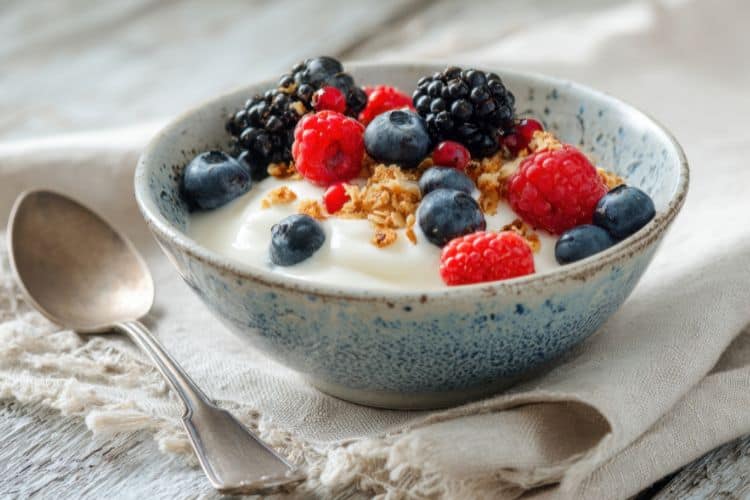
Greek yogurt with fruit and granola requires almost no preparation and works particularly well for busy mornings.
Place Greek yogurt in a bowl and add strawberries, blueberries, raspberries, or sliced banana. Finish with granola for additional carbohydrates and crunch.
You can adjust the amount of granola based on the workout ahead. A harder or longer training session may call for a larger carbohydrate portion than a short, easy workout.
Eggs and toast make a classic breakfast that can also work before exercise. Eggs provide high-quality protein, while toast supplies carbohydrates.
Try scrambled, boiled, or poached eggs alongside one or two slices of toast. Add fruit if you want additional carbohydrates.
Because eggs contain protein and some fat, this breakfast may be better when you have more time between breakfast and your workout rather than eating it immediately before intense exercise.
Smoothies can be especially convenient when you do not enjoy eating solid food early in the morning.
Blend banana, frozen berries, Greek yogurt or milk, and a small amount of oats. Add enough liquid to reach your preferred consistency.
A smoothie can be customized depending on how substantial you want breakfast to be. For a lighter option, keep the ingredient list simple. For a more filling meal when you have additional digestion time, include oats, yogurt, nut butter, or other nutrient-dense ingredients.
Cottage cheese is a protein-rich breakfast ingredient that pairs naturally with fruit.
Serve cottage cheese with pineapple, peaches, berries, or banana and add toast or another carbohydrate-rich food on the side.
This combination offers an easy way to balance protein and carbohydrates without preparing an elaborate meal.
Overnight oats are ideal when mornings are rushed because breakfast can be prepared the night before.
Combine oats, milk, Greek yogurt, chia seeds, and berries in a container and refrigerate overnight. By morning, the oats will have softened into a ready-to-eat breakfast.
If you plan on completing a demanding workout, adding banana or a small amount of honey can increase the carbohydrate content.
Not everyone has an hour or two between waking up and exercising. If you train shortly after getting out of bed, a smaller breakfast may be more practical.
A banana is one of the simplest pre-workout foods available. It provides carbohydrates in a portable, easy-to-prepare form.
Adding a small amount of peanut, almond, or another nut butter makes it more satisfying. Keep the portion modest when exercising shortly afterward.
If you are training soon and want something simple, toast with honey can provide carbohydrates without requiring much preparation.
Choose the bread you digest comfortably, toast it, and add a light drizzle of honey. A banana or another piece of fruit can be included when you need additional energy.
A small serving of yogurt with banana is another convenient option when there is limited time before exercise.
The banana supplies carbohydrates while the yogurt adds protein. This can work well for moderate morning workouts when a full breakfast feels too heavy.
Unsweetened applesauce is soft, convenient, and relatively easy to eat in the morning. Pairing it with yogurt creates a simple combination of carbohydrates and protein.
This is also a useful alternative for people who do not feel hungry enough for oatmeal, eggs, or a breakfast sandwich early in the day.
Resistance training sessions can be demanding, particularly when workouts involve compound exercises such as squats, deadlifts, presses, lunges, and rows.
A more substantial breakfast may be helpful when you have enough time to digest it.
Combine a bowl of oatmeal with one or two eggs and a serving of fruit for a well-rounded breakfast.
The oatmeal and fruit provide carbohydrates, while the eggs add protein. This can be an excellent option before a longer gym workout when you are eating roughly one to three hours beforehand.
Top toast with scrambled or poached eggs and a small serving of avocado.
The bread contributes carbohydrates, eggs supply protein, and avocado adds fat. Because the meal contains more fat than some lighter options, allow adequate digestion time before strenuous training.
Fruit can be added if you want more carbohydrates.
High-intensity workouts can be uncomfortable when performed immediately after a large meal. For HIIT, running, cycling, or other vigorous cardio, many people prefer a lighter breakfast.
Blend banana with milk, yogurt, oats, and cinnamon for a straightforward pre-cardio smoothie.
When your workout is close to breakfast, use a smaller serving of oats and avoid making the smoothie excessively large. If you have an hour or more before exercising, you can increase the portion.
Cereal can be an underrated pre-workout breakfast because it provides an easy source of carbohydrates.
Choose a cereal you enjoy and tolerate well, add milk or a milk alternative, and serve it with banana or berries. Look at the nutrition label when comparing cereals, since their amounts of fiber, added sugar, and protein can vary considerably.
When you have only about 30 minutes before exercising, simplicity becomes important. A large breakfast may not have enough time to digest comfortably.
Consider something small such as a banana, toast with honey, applesauce, a small yogurt, or a light smoothie.
At this point, the goal is not necessarily to fit an entire meal into the short window before training. You can eat a small snack beforehand and have a more substantial breakfast after the workout.
Pay attention to how your stomach responds. Some people can tolerate food close to exercise without difficulty, while others prefer a longer gap.
Having an hour to 90 minutes provides more flexibility.
You might choose oatmeal with banana, Greek yogurt with granola and fruit, eggs with toast, cereal and milk, cottage cheese with fruit, or a moderately sized smoothie.
Keep portions appropriate for the intensity of the workout. The meal should leave you feeling energized rather than overly full.
This timing window can work particularly well for people who wake up, eat breakfast, complete a few morning tasks, and then exercise.
With two or three hours available, you can usually eat a more complete breakfast.
For example, you could have eggs with whole-grain toast, oatmeal with Greek yogurt and berries, or a breakfast bowl containing potatoes, eggs, and vegetables.
Because you have additional digestion time, including more protein, fiber, and healthy fats may be comfortable.
A full breakfast can be especially useful before long workouts or demanding strength-training sessions.
Coffee is a common part of many morning routines, and caffeine is widely used before exercise. If you already tolerate coffee well, having coffee with breakfast before training may fit naturally into your routine.
However, caffeine affects people differently. Too much can cause nervousness, digestive discomfort, headaches, or interfere with sleep when consumed later in the day.
Coffee should also not replace water or breakfast when you need food and hydration.
Breakfast is only one part of preparing for exercise. Hydration matters as well.
You naturally go several hours without drinking while asleep, so having water after waking can help you begin replacing fluids before your workout.
You do not need to consume an enormous amount immediately before training. Drinking fluids gradually is often more comfortable than drinking a large quantity just before you start exercising.
Your fluid needs can increase when workouts are long, the environment is hot or humid, or you sweat heavily.
There is no universal list of foods that everyone must avoid before a workout. Digestive tolerance varies significantly from person to person.
However, very large meals and foods particularly high in fat or fiber can sometimes cause fullness, cramping, bloating, or digestive discomfort when eaten shortly before intense activity.
Spicy foods can also be problematic for some people.
Instead of eliminating nutritious foods unnecessarily, consider timing. A higher-fiber breakfast may work perfectly two hours before exercise but feel uncomfortable 20 minutes before a run.
There is no single breakfast schedule that works best for every person or every workout.
Some people enjoy exercising shortly after waking and eating breakfast afterward. Others notice that they have more energy when they eat something first.
The duration and intensity of your workout matter too. A gentle walk is different from an hour of strength training or high-intensity intervals.
If you consistently feel weak, unusually hungry, lightheaded, or unable to perform well when training without breakfast, experimenting with a small pre-workout meal or snack may be worthwhile.
Conversely, if a large breakfast makes you sluggish or uncomfortable, reduce the portion or allow additional digestion time.
You do not have to follow a specific recipe to create an effective breakfast before exercise.
Start with a carbohydrate source such as oatmeal, toast, cereal, banana, berries, potatoes, or another fruit. Then include a protein source such as Greek yogurt, eggs, cottage cheese, milk, soy foods, or another protein-rich food you enjoy.
Add healthy fats according to your preferences and digestion. Nut butter, nuts, seeds, avocado, and similar foods can contribute valuable nutrients, but large portions immediately before exercise may feel heavy for some people.
Finally, drink some water and adjust the meal size according to how long you have before training.
If weight management is one of your goals, you do not necessarily need special “diet” breakfast foods.
Instead, focus on a balanced overall eating pattern that matches your energy needs. Protein-rich breakfasts can be satisfying, while fruit, vegetables, whole grains, and other minimally processed foods can contribute valuable nutrients and fiber.
An example might be Greek yogurt with berries, banana, and a modest portion of granola. Another option is eggs with whole-grain toast and fruit.
Remember that one breakfast does not determine fat loss or weight gain. Your overall calorie intake, activity, nutrition habits, sleep, and consistency over time are much more important.
Preparing breakfast in advance can make morning workouts much easier.
Overnight oats can be refrigerated overnight. Hard-boiled eggs can be prepared ahead of time. Fruit can be washed and portioned, and smoothie ingredients can be placed into containers or freezer bags so they are ready to blend.
Keeping staples such as bananas, oats, yogurt, bread, eggs, cereal, frozen berries, and nut butter available gives you several quick breakfast combinations without needing a complicated recipe.
Meal preparation can also help you avoid skipping breakfast simply because you are short on time.
There is no single best breakfast for everyone. A good option provides enough energy for your workout while being comfortable to digest. Oatmeal with banana and Greek yogurt, eggs with toast and fruit, or yogurt with granola are all practical possibilities.
A banana can be sufficient before a short workout, particularly if you are exercising soon after waking and plan to eat a complete meal afterward. Longer or more demanding workouts may benefit from additional carbohydrates and protein.
Yes. Oatmeal is a popular pre-workout breakfast because it supplies carbohydrates and can easily be combined with protein-rich foods and fruit. Give yourself enough digestion time, especially if your oatmeal portion is large or high in fiber.
Eggs can fit well into a pre-workout breakfast. Because they primarily contribute protein and fat rather than large amounts of carbohydrate, pair them with toast, oatmeal, potatoes, or fruit when you want additional carbohydrate for training.
There is no exact waiting period that applies to everyone. Generally, larger meals require more digestion time than small snacks. Experiment with your meal size and timing to find a routine that lets you exercise comfortably.
The best breakfast ideas before a workout are simple, nutritious, and suited to your individual schedule. You do not need expensive supplements or elaborate recipes to prepare for a productive morning training session.
Oatmeal with banana, Greek yogurt with berries, eggs and toast, fruit smoothies, cottage cheese, cereal, and simple options such as banana with nut butter can all work depending on how much time you have before exercise.
When your workout is only 20 to 30 minutes away, choose something smaller and easier to digest. When you have one to three hours, you have more flexibility to enjoy a complete breakfast containing carbohydrates, protein, and other nutrient-rich foods.
Most importantly, pay attention to your own response. Your pre-workout breakfast should help you begin training feeling fueled and comfortable rather than hungry or excessively full. By experimenting with meal timing, portion sizes, and different foods, you can develop a morning nutrition routine that complements your workouts and supports consistent exercise.
Looking for more ways to fuel your workouts and build a healthier morning routine? Start with these Best Breakfast Foods To Eat Before a Workout For Energy for additional pre-workout meal combinations. When you’re short on time, try these 5-Minute Healthy Breakfast Recipes featuring convenient options such as Greek yogurt, oatmeal, toast, and smoothies. You can also prepare your mornings in advance with these Weekly Breakfast Meal Prep Ideas. Once your training session is complete, use these Best Breakfast Ideas To Eat After a Workout to support your post-workout nutrition. And if exercising early is challenging, these Morning Workout Motivation Tips can help you create a more consistent morning fitness routine.
Stay up to date on the latest women’s health, fitness and lifestyle trends and tips.
