


Sign up for workout ideas, training advice, reviews of the latest gear and more.

Starting a new workout routine after age 40 does not have to mean joining a gym, buying expensive equipment, or attempting complicated exercises. Calisthenics uses your body weight as resistance, making it one of the most accessible ways to improve strength, mobility, balance, and overall fitness. A beginner calisthenics workout for women over 40 can be performed at home and modified to suit almost any starting fitness level.
As women move through their 40s, maintaining muscle, bone strength, joint mobility, and balance becomes increasingly important. A thoughtfully designed bodyweight workout can help address all these areas while allowing you to progress at a comfortable pace. The objective is not to complete the hardest version of every exercise. It is to learn proper movement patterns, practice consistently, and gradually make the exercises more challenging as your strength improves.
This beginner workout combines pushing, pulling, squatting, hinging, core training, and balance exercises. Together, these movements create a practical full-body routine that can help you feel stronger during workouts and everyday activities.
Calisthenics can support a wide range of fitness goals, including building functional strength, improving muscle tone, managing body weight, and increasing confidence with exercise. Because many bodyweight movements resemble activities performed in daily life, the strength you develop can make tasks such as climbing stairs, carrying groceries, getting up from a chair, and lifting household items feel easier.
After age 40, adults may gradually lose muscle mass when strength training is not included in their routine. This loss can affect metabolism, physical independence, posture, and stability. Regular resistance exercise provides the muscles with a reason to remain strong. Although calisthenics may look simple, exercises such as squats, incline push-ups, glute bridges, and planks can provide meaningful resistance when they are performed with good form.
Calisthenics is also highly adaptable. A standard push-up may be too difficult for a beginner, but a wall push-up can provide an appropriate starting point. A deep squat may feel uncomfortable, but a controlled sit-to-stand exercise allows you to practice the same general movement pattern with additional support. These modifications make it possible to meet your body where it is today.
Women over 40 can build strength with calisthenics when exercises are performed consistently and progressively. The body responds to resistance by adapting, regardless of whether that resistance comes from dumbbells, machines, bands, or body weight.
The key is progressive overload, which means gradually increasing the challenge placed on the muscles. In calisthenics, this can be accomplished by performing more repetitions, adding another set, slowing the lowering phase, improving your range of motion, reducing assistance, or advancing to a more demanding exercise variation.
For example, you might begin with wall push-ups before progressing to push-ups against a countertop. Later, you may use a sturdy bench, perform push-ups from your knees, and eventually attempt standard floor push-ups. Each variation strengthens similar muscles, but the level of resistance changes.
Calisthenics can be especially effective for beginners because the exercises also develop body awareness and coordination. You learn to control your torso, maintain proper alignment, and move several joints together. These abilities create a valuable foundation for other forms of strength training.
This workout requires very little equipment. You will need a clear exercise area, comfortable clothing, supportive footwear if preferred, and a stable chair or bench. A wall or sturdy countertop can be used for modified push-ups. An exercise mat is optional but may make floor exercises more comfortable.
The chair should not have wheels and should be placed on a surface where it cannot slide. Avoid using lightweight furniture that may tip when you lean against it.
Perform the routine two or three times per week, leaving at least one recovery day between sessions when possible. Beginners can complete one or two rounds during the first week. As the exercises become more comfortable, progress toward three rounds.
If you have an injury, medical condition, significant joint pain, balance concerns, or have been inactive for an extended period, consult an appropriate healthcare professional before beginning a new exercise program.
A five- to eight-minute warm-up prepares your muscles and joints for the workout. It should gradually increase your body temperature without leaving you tired.
Begin by marching in place for approximately one minute. Keep your posture tall and allow your arms to swing naturally. Follow this with gentle shoulder rolls, performing several circles forward and backward. Continue with controlled arm swings, ankle circles, and easy side-to-side steps.
Next, perform eight to ten shallow bodyweight squats or chair sit-to-stands. Move slowly and use the chair for support if necessary. Finish with several hip hinges by pushing your hips backward while keeping your spine neutral. The warm-up should help you feel more mobile and prepared, not exhausted.
Complete each exercise for the suggested repetitions or time. Rest for approximately 30 to 60 seconds between exercises. After completing the full circuit, rest for one or two minutes before beginning the next round.
Start with one or two rounds if you are new to exercise. Gradually build toward three rounds as your fitness improves.
Chair squats strengthen the quadriceps, glutes, hamstrings, and core while helping you practice sitting and standing with control.
Stand in front of a stable chair with your feet approximately hip- to shoulder-width apart. Point your toes slightly outward if that feels natural. Brace your abdominal muscles and push your hips backward as you bend your knees. Lower yourself until your glutes gently touch the chair, but avoid dropping heavily into the seat.
Press through your feet and squeeze your glutes as you return to standing. Keep your chest lifted and allow your knees to track in the same direction as your toes.
If the exercise feels difficult, use your hands on the chair or your thighs for light assistance. To increase the challenge, tap the chair without fully sitting before standing again.
Incline push-ups train the chest, shoulders, triceps, and core. The more upright your body remains, the easier the exercise will be.
Place your hands against a wall slightly wider than shoulder-width apart. Walk your feet backward until your body forms a straight line from your head to your heels. Bend your elbows and bring your chest toward the wall while keeping your body controlled. Press through your palms to return to the starting position.
Avoid allowing your hips to sag or your lower back to arch excessively. Your elbows should move slightly away from your torso rather than pointing directly out to the sides.
When wall push-ups become easy, perform the movement against a sturdy countertop or other stable elevated surface.
Reverse lunges develop leg strength, hip stability, coordination, and balance. Stepping backward is often more comfortable for beginners than stepping forward.
Stand beside a chair or countertop and hold it lightly for support. Step one foot backward and bend both knees as far as your mobility comfortably allows. Keep most of your weight over the front leg. Press through the front foot to return to standing, and then repeat on the opposite side.
Your front knee should generally track over your foot rather than collapsing inward. You do not need to lower your back knee close to the floor. Use a short, comfortable range of motion while learning the exercise.
If reverse lunges do not feel right for your knees or balance, replace them with split-stance knee bends or another set of chair squats.
Glute bridges strengthen the glutes and hamstrings while encouraging better control around the hips and pelvis.
Lie on your back with your knees bent and your feet resting on the floor. Position your feet approximately hip-width apart. Gently brace your core, press through your feet, and lift your hips. Pause when your body creates a comfortable line from your shoulders toward your knees.
Squeeze your glutes at the top without forcing your lower back into an excessive arch. Lower your hips slowly and repeat. If your hamstrings cramp, bring your feet slightly closer to your body or reduce how high you lift.
As you become stronger, pause for two or three seconds at the top of every repetition.
Bird dogs train the core, back, glutes, shoulders, and coordination without requiring repetitive spinal bending.
Begin on your hands and knees with your hands under your shoulders and your knees below your hips. Brace your midsection and extend one arm forward. If you feel stable, extend the opposite leg behind you at the same time. Pause briefly and return both limbs to the starting position before changing sides.
Keep your hips facing the floor and avoid twisting your torso. The goal is controlled movement, not reaching as far as possible.
Beginners can move one limb at a time. Lift one arm, return it to the floor, and then extend the opposite leg.
Standing knee raises strengthen the hip flexors and core while helping improve single-leg balance.
Stand tall beside a chair or wall. Shift your weight onto one leg and raise the opposite knee toward your torso. Lower the foot with control and repeat. You can alternate sides or complete all repetitions on one side before switching.
Try not to lean backward as the knee rises. Keep your supporting knee soft rather than locked. Use as much assistance as necessary until your balance improves.
To make the exercise more challenging, reduce your hand support or pause with the knee raised for two seconds.
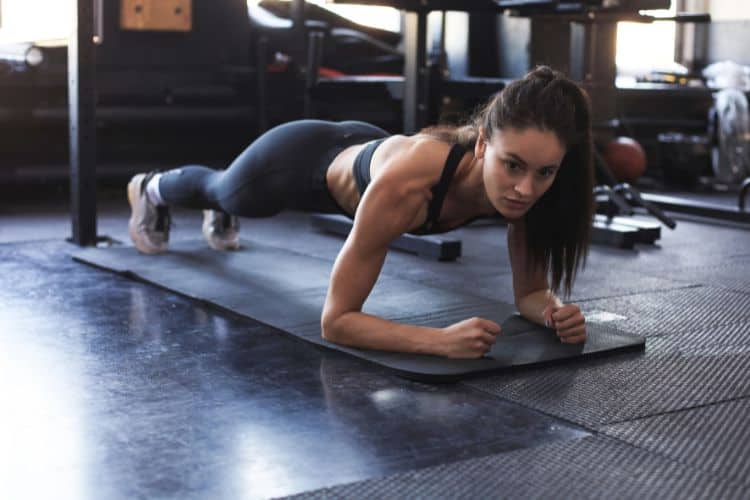
The incline plank builds core and shoulder strength while teaching you to stabilize your spine.
Place your forearms or hands against a wall, countertop, or sturdy bench. Walk your feet backward and create a straight line through your body. Tighten your abdominal muscles and glutes while breathing normally.
Avoid holding your breath or allowing your head and hips to drop. Begin with short holds and stop before your form deteriorates. Gradually work toward a 30- to 45-second hold.
A higher surface makes the exercise easier. A lower surface places more of your body weight over your arms and increases the challenge.
Calf raises strengthen the lower legs and ankles, which can support walking ability, balance, and stability.
Stand behind a chair and rest your hands lightly on the back for support. Press through the balls of your feet and raise your heels. Pause at the top before lowering slowly.
Keep your weight distributed across the front of each foot instead of rolling toward your outer toes. Once you can perform the exercise comfortably, try using less hand support or performing the movement one leg at a time.
A beginner does not need to train every day to make progress. Two or three full-body sessions each week can provide an effective starting point.
You might perform the calisthenics workout on Monday and Thursday during the first few weeks. On Tuesday and Saturday, include a walk, gentle cycling session, mobility routine, or another form of moderate activity you enjoy. Wednesday, Friday, and Sunday can be recovery days or light-activity days.
After your body adjusts, you could perform the workout on Monday, Wednesday, and Friday. The remaining days can include cardiovascular exercise, stretching, recreational activity, or rest.
Recovery is part of the program. Muscles need time to repair and adapt after resistance training. More exercise is not automatically better, especially when soreness, fatigue, or joint irritation affects your movement quality.
A workout must gradually become more challenging if you want to continue improving. However, increasing the difficulty too quickly can lead to excessive soreness or poor technique.
During the first two weeks, focus on learning the exercises. Complete one or two rounds and use easier modifications. During weeks three and four, work toward two complete rounds with consistent form. In weeks five and six, consider adding a third round or a few repetitions to selected exercises.
Once you reach the top of the repetition range with control, make one small adjustment. You might lower the incline used for push-ups, perform chair squats without fully sitting, or hold the plank for an additional five seconds.
You can also slow each repetition. Taking three seconds to lower into a squat increases the amount of time your muscles remain under tension. This can make a familiar exercise more demanding without requiring extra equipment.
Change only one or two variables at a time. This approach makes it easier to monitor how your body responds.
Advanced exercises are not necessarily more effective when they cannot be performed correctly. A controlled wall push-up can be more productive than an unstable floor push-up. Choose the variation that allows you to feel the intended muscles while maintaining good alignment.
It is common to unintentionally hold your breath during challenging movements. Try to exhale during the hardest portion of an exercise and inhale during the easier portion. Continue breathing steadily during planks and balance exercises.
Muscular effort and mild post-workout soreness can be normal, but sharp, sudden, or worsening pain should not be ignored. Stop or modify the movement causing discomfort. An exercise can often be replaced with another movement that trains similar muscles more comfortably.
Your starting point will depend on your exercise history, mobility, health, sleep, and other individual factors. Track your progress against your own earlier performance rather than someone else’s workout.
Strength develops during the recovery process, not only during the workout. Adequate sleep, balanced nutrition, hydration, and rest days all support progress.
Nutrition can influence energy, recovery, and body composition. Aim to build meals around protein-rich foods, vegetables or fruit, fiber-rich carbohydrates, and beneficial sources of fat.
Protein is especially important because it supplies the amino acids needed for muscle repair. Options may include eggs, Greek yogurt, cottage cheese, poultry, fish, lean meat, beans, lentils, tofu, or tempeh. Distributing protein across several meals may be more practical than trying to consume most of it at once.
Carbohydrates provide useful energy for exercise and daily activity. Whole grains, potatoes, fruit, beans, and other minimally processed foods can be included according to your needs and preferences. Hydration is also important, particularly when workouts are performed in warm conditions.
If weight loss is your goal, avoid making the workout unnecessarily punishing. Sustainable nutrition habits combined with regular strength training, cardiovascular activity, sleep, and patience are generally more useful than extreme short-term plans.
Some improvements can appear before visible physical changes. Within the first few weeks, you may notice better coordination, greater exercise confidence, and less difficulty completing the routine. Everyday tasks may also begin to feel easier.
More noticeable strength or muscle-definition changes generally require consistent training over a longer period. Progress depends on your starting point, training frequency, workout intensity, nutrition, sleep, stress, and recovery.
Instead of relying only on body weight, track useful performance markers. Record the number of push-ups you can complete, the plank duration you can maintain, the number of workout rounds performed, or the amount of support needed during balance exercises. These measurements can reveal meaningful progress that a bathroom scale cannot show.
A beginner calisthenics workout for women over 40 offers a practical way to build strength without a gym or a large collection of equipment. By practicing fundamental movements such as chair squats, incline push-ups, supported lunges, glute bridges, bird dogs, and planks, you can develop a stronger and more capable body.
Begin with manageable exercises, prioritize good form, and allow enough time for recovery. As your strength improves, add repetitions, sets, slower tempos, or more advanced variations. These gradual changes can keep the routine effective while reducing the temptation to progress too aggressively.
The best workout program is not the one that leaves you completely exhausted after one session. It is the one you can perform safely, consistently, and confidently for months. With patient progression and regular practice, calisthenics can become a sustainable part of staying active, strong, and independent throughout your 40s and beyond.
Continue developing your bodyweight strength with this 30 Minute Bodyweight Back Workout, which targets the postural muscles without weights. You can also use the Best Full Body Bodyweight Exercises For Women to add variety to your calisthenics routine. For additional beginner-friendly training, try this 30 Minute Beginner Strength Workout. Women who want to combine controlled movement with resistance training can explore this Strength And Pilates Workout For Women Over 40. As the exercises become easier, follow these Progressive Overload Tips For Women Over 40 to keep building strength safely.
Stay up to date on the latest women’s health, fitness and lifestyle trends and tips.
