



Sign up for workout ideas, training advice, reviews of the latest gear and more.


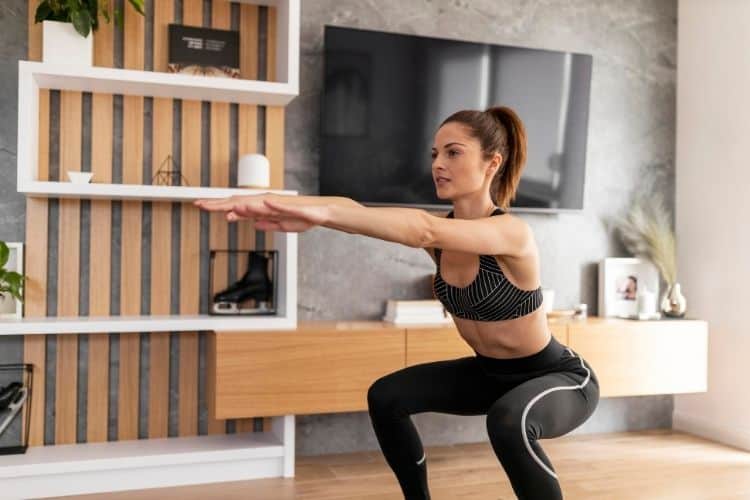
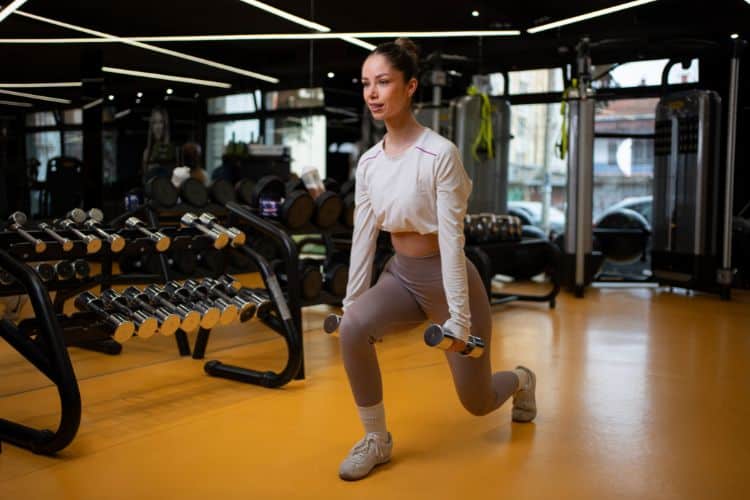
Fall is an ideal time to reset your fitness routine. The cooler weather, steadier schedules, and natural desire to establish healthy habits before the holidays can make autumn feel like a fresh beginning. This 4-week fall strength training plan for women provides a practical way to build strength, improve muscular endurance, and regain consistency without spending every day in the gym. The program uses three focused strength workouts each week, leaving enough time for recovery, walking, mobility, and the seasonal activities you enjoy.
The plan is suitable for beginner and intermediate exercisers and can be performed at home or in a gym. You will need dumbbells, a stable bench or chair, and enough open floor space to move comfortably. A resistance band is helpful but optional. The workouts emphasize fundamental movement patterns, including squatting, hinging, pushing, pulling, carrying, and core stabilization. Rather than changing every exercise each week, you will repeat key movements and gradually increase the challenge. This approach makes it easier to practice good form and see measurable progress.
Strength training supports much more than muscle definition. Regular resistance exercise can help women become stronger for everyday tasks, maintain healthy bones, improve balance, and preserve lean muscle over time. It can also make recreational activities—from hiking through colorful trails to carrying groceries or doing yardwork—feel easier. A structured fall workout plan gives these benefits a clear framework instead of leaving each training session to chance.
Autumn also offers a useful transition between summer and the busy holiday season. Following a four-week program now can establish a routine that remains manageable when calendars become crowded. Three weekly workouts are frequent enough to create momentum but flexible enough to fit around work, family, and social commitments. The objective is not to chase rapid transformation. It is to finish the month stronger, more confident, and ready to continue.
Complete three nonconsecutive strength workouts per week. A Monday-Wednesday-Friday or Tuesday-Thursday-Saturday schedule works well, but any arrangement that includes a recovery day between sessions is appropriate. Workout A focuses on the lower body and core, Workout B targets the upper body, and Workout C combines full-body exercises. Most sessions take approximately 35 to 50 minutes, including the warm-up.
During Week 1, concentrate on learning the exercises and selecting appropriate weights. Week 2 adds training volume, Week 3 increases intensity, and Week 4 brings the movements together in stronger, more confident sessions. On non-strength days, choose gentle activity such as walking, stretching, or easy cycling. Keep at least one day completely free from planned exercise.
Choose dumbbells that allow you to complete every repetition with controlled technique while making the final two or three repetitions feel challenging. You may need different weights for different exercises. For example, most women can use more resistance for a goblet squat or Romanian deadlift than for a lateral raise. If you only have one pair of dumbbells, slow the lowering phase, add a pause, or perform a few extra repetitions when the weight feels too light.
Use the “repetitions in reserve” method to judge effort. At the end of most sets, you should feel capable of completing about two more good repetitions. This keeps training productive without requiring you to reach failure. Stop the set if your form changes, you cannot control the weight, or you experience sharp pain. Anyone returning after an injury, managing a medical condition, or beginning exercise after a long break should consult an appropriate healthcare professional before starting.
Spend five to eight minutes preparing your muscles and joints. Begin with two minutes of brisk marching, easy treadmill walking, or another light activity. Follow with eight bodyweight squats, eight alternating reverse lunges or supported split squats, ten hip hinges, ten arm circles in each direction, and six bird dogs per side. Finish with one light practice set of the first two exercises in the workout.
The warm-up should make you feel mobile and ready rather than tired. Move through a comfortable range of motion and increase it gradually. On cold fall mornings, you may benefit from an extra few minutes of easy movement before lifting weights.
Workout A builds strength through the glutes, quadriceps, hamstrings, and core. Rest for 60 to 90 seconds between sets, taking up to two minutes after demanding lower-body movements if needed.
Hold one dumbbell vertically at your chest and stand with your feet about shoulder-width apart. Brace your core, sit your hips down between your legs, and keep your knees tracking in the direction of your toes. Push through your whole foot to stand. Perform 8 to 12 repetitions. Use a chair behind you as a depth target if you are learning the movement.
Hold the dumbbells in front of your thighs with soft knees. Push your hips backward while keeping the weights close to your legs and your spine neutral. Stop when you feel tension through your hamstrings, then drive your hips forward to stand. Perform 8 to 12 repetitions. Think about moving from the hips rather than turning the exercise into a squat.
Step one foot backward and lower both knees with control. Press through the front foot to return to standing, then repeat on the other side. Perform 8 to 10 repetitions per leg. Hold a wall or chair for balance, shorten the range of motion, or substitute supported split squats when necessary.
Lie on your back with bent knees and place a dumbbell carefully across your hips. Brace your abdomen, press through your feet, and lift your hips until your body forms a straight line from shoulders to knees. Pause while squeezing your glutes, then lower slowly. Perform 12 to 15 repetitions.
Lie on your back with your hips and knees bent to approximately 90 degrees and your arms extended toward the ceiling. Gently press your lower back toward the floor. Lower the opposite arm and leg without losing trunk position, return, and switch sides. Complete 6 to 10 repetitions per side.
Workout B develops the back, chest, shoulders, and arms while reinforcing stable posture. Complete every repetition through a comfortable range of motion, and avoid using momentum to move the dumbbells.
Support one hand on a bench or sturdy chair and hold a dumbbell in the opposite hand. Keep your back long as you pull the weight toward your hip. Pause briefly, lower it under control, and complete 10 to 12 repetitions per side. Keep your shoulder away from your ear throughout the movement.
Lie on the floor with a dumbbell in each hand and your knees bent. Position your upper arms at a comfortable angle from your torso. Press the weights above your chest, then lower until your upper arms gently contact the floor. Perform 8 to 12 repetitions. A bench press or elevated push-up is an effective alternative.
Sit tall with the dumbbells near shoulder height. Brace your core and press the weights overhead without excessively arching your lower back. Lower slowly and perform 8 to 10 repetitions. Use a neutral grip, with palms facing each other, if that feels more comfortable for your shoulders.
Lie on a bench or the floor and hold one dumbbell above your chest with both hands. Keeping a slight bend in your elbows, lower the weight behind your head only as far as you can control without arching your back. Bring the dumbbell back over your chest. Complete 10 to 12 repetitions.
Perform 10 to 12 controlled dumbbell curls, keeping your elbows close to your sides. Then hold one dumbbell with both hands and complete 10 to 12 overhead triceps extensions. If overhead work is uncomfortable, substitute dumbbell triceps kickbacks. Treat the two exercises as a paired set before resting.
Workout C trains several muscle groups in one efficient session. Prioritize control over speed. Rest for 60 to 90 seconds after each set or exercise pairing.
Stand with your feet wider than shoulder width and your toes turned slightly outward. Hold one dumbbell between your legs, brace your core, and lower into a squat while tracking your knees over your toes. Stand by pressing the floor away. Perform 10 to 12 repetitions.
Lie facedown on an inclined bench and pull the dumbbells toward your ribs. If no adjustable bench is available, repeat the supported one-arm row from Workout B. Complete 10 to 12 repetitions while keeping your neck relaxed.
Place one entire foot on a secure low step or bench. Drive through the elevated foot to stand, avoiding a forceful push from the trailing leg. Lower under control and perform 8 to 10 repetitions on each side. Begin without weights if balance or knee control is difficult.
Place your hands on a sturdy bench, countertop, or other stable elevated surface. Keep your body in a straight line as you lower your chest and press back up. Complete 8 to 15 repetitions. A higher surface makes the movement easier, while a lower surface increases the challenge.
Hold a heavy dumbbell in each hand and walk for 30 to 45 seconds with tall posture. When space is limited, march in place. You may also hold one weight on one side for a suitcase carry, switching sides halfway through. Keep your torso upright rather than leaning toward or away from the weight.
Hold a plank from your knees or toes for 20 to 40 seconds. Maintain a long line from your head through your hips and brace as though preparing for a gentle punch to the stomach. End the set before your hips drop or your lower back begins to arch.
Complete two sets of every exercise in Workouts A, B, and C. Use the lower end of each repetition range and moderate weights. Your goal is to learn the sequence, establish comfortable ranges of motion, and finish each workout feeling that you could have done a little more. Record the weights and repetitions you use so progress does not depend on memory.
Avoid judging the program by how sore you feel. Muscle soreness may occur when starting a new routine, but severe soreness is not required for improvement. A relaxed walk, regular meals, hydration, and adequate sleep can support recovery between sessions.
Increase most exercises from two sets to three sets. If completing three sets of every movement would make the workouts too long, add the third set to the first three exercises of each session and keep the remaining movements at two sets. Try to complete one or two more total repetitions with the same weight while maintaining form.
This week rewards consistency. Keep the three strength days on your calendar, even if one session needs to be shortened. A focused 25-minute workout is more valuable than repeatedly postponing the plan while waiting for a perfect hour.
Continue with three sets and increase the dumbbell weight on exercises where you reached the top of the repetition range during Week 2. A small increase is enough. After adding weight, your repetitions may return to the lower end of the prescribed range. That is normal and provides room to progress again.
If heavier dumbbells are unavailable, use a three-second lowering phase for squats, deadlifts, rows, and presses. You can also pause for one second in the most challenging part of an exercise. These techniques make familiar movements more demanding without adding more equipment. Maintain approximately two good repetitions in reserve rather than sacrificing technique.
In the final week, complete three strong sets of each exercise. Aim to improve one measurable detail from Week 3: use slightly more weight, perform one additional repetition, improve your range of motion, or complete the same work with cleaner control. You do not need to improve every variable at once.
At the end of Workout C, add an optional autumn finisher. Complete three rounds of 30 seconds of brisk marching or low-impact high knees, 10 bodyweight squats, and 30 seconds of farmer carries, resting for 30 to 45 seconds between rounds. Skip the finisher if your form is deteriorating or recovery has been difficult. The primary strength exercises remain the priority.
A balanced week might include lower-body strength on Monday, a 20- to 30-minute walk on Tuesday, upper-body strength on Wednesday, mobility or rest on Thursday, and full-body strength on Friday. Saturday can include an enjoyable seasonal activity such as hiking, cycling, or a longer walk, while Sunday remains a full rest day. Adjust the days to fit your life while protecting recovery between lifting sessions.
Cardio is optional and should complement the strength plan rather than leave you exhausted for the next workout. Two or three easy-to-moderate sessions of 20 to 30 minutes are enough for many women. If strength is your main goal, avoid placing your hardest cardio session immediately before Workout A or Workout C.
Strength gains depend on recovery as well as training. Build meals around a source of protein, colorful produce, satisfying carbohydrates, and healthy fats. Seasonal choices such as oatmeal with apples, Greek yogurt with pears, turkey and roasted vegetables, lentil soup, salmon with sweet potatoes, or a pumpkin smoothie can make supportive nutrition feel appropriate for fall rather than restrictive.
Protein needs vary, but distributing a meaningful protein source across meals can support muscle repair. Drink water regularly even when cooler temperatures reduce your sense of thirst. Sleep also matters: use the earlier autumn evenings as a cue to create a consistent wind-down routine and aim for a schedule that leaves you feeling restored.
Recovery does not mean remaining completely still. Light walking and gentle mobility can reduce stiffness and help you feel ready for the next session. However, persistent fatigue, declining performance, irritability, or unusually heavy soreness may indicate that you need extra rest or less training volume.
Use a notebook or phone note to record each exercise, weight, repetitions, and number of sets. You can also note your energy and any useful form cues. By Week 4, compare your numbers with Week 1. Progress may appear as a heavier goblet squat, more incline push-ups, a longer plank, better balance during lunges, or greater confidence with the routine.
Consider non-scale improvements too. You may notice that stairs feel easier, your posture is stronger, or carrying household items requires less effort. These practical changes are meaningful results. Body weight alone cannot show improvements in strength, technique, energy, or consistency.
The first mistake is beginning with weights that are too heavy. Challenging resistance is important, but it should not replace control. The second is progressing everything at once. Increase weight, repetitions, sets, or tempo gradually so you can identify what is working. The third is skipping rest days because the program feels motivating. Muscles adapt between workouts, making recovery part of the plan rather than time lost.
Another common error is comparing your exercise choices or dumbbell weights with someone else’s. Limb lengths, experience, equipment, sleep, and injury history all influence performance. Use your own training log as the relevant comparison. Finally, do not abandon the program after one disrupted week. If you miss a session, continue with the next scheduled workout instead of doubling up or restarting the entire month.
After Week 4, take two or three easier days and review your progress. If you enjoyed the plan, repeat it with slightly heavier weights or choose more challenging exercise variations. You could progress from a goblet squat to a two-dumbbell front squat, from an incline push-up to a lower incline, or from a supported row to a heavier bench-supported row.
Another option is to continue the three-day structure while changing the emphasis. For the next month, you might focus on building glute strength, improving upper-body pulling, or increasing your dumbbell loads. Keeping the familiar weekly framework reduces decision fatigue while allowing your workouts to evolve.
The best fall fitness routine is one you can repeat consistently. This 4-week fall strength training plan for women combines simple equipment, foundational exercises, planned progression, and realistic recovery. It does not require daily workouts or complicated methods. Three purposeful sessions per week can help you strengthen your entire body and establish habits that carry into winter.
Begin Week 1 with patience, record what you accomplish, and let gradual improvement guide the month. Some days will feel stronger than others, but every well-executed session contributes to the larger goal. By the end of four weeks, you will have more than a completed program—you will have a reliable strength-training structure you can continue adapting throughout the season.
Continue building a stronger, more consistent fitness routine with our 28-Day Strength Training Challenge, which uses progressive overload to improve strength and endurance. You can also try this balanced 4-Week Full-Body Workout Challenge or explore the Best Full-Body Strength Workout for Women for additional exercise ideas. If you are training with weights at home, these Full-Body Dumbbell Exercises for Women can help you expand your routine. Remember to balance challenging workouts with these Active Recovery Workouts to support muscle recovery and prepare your body for the next session.
Stay up to date on the latest women’s health, fitness and lifestyle trends and tips.
