


Sign up for workout ideas, training advice, reviews of the latest gear and more.

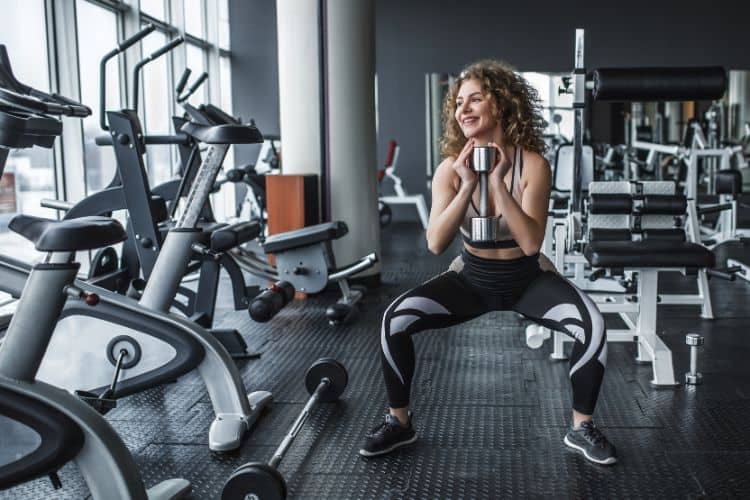
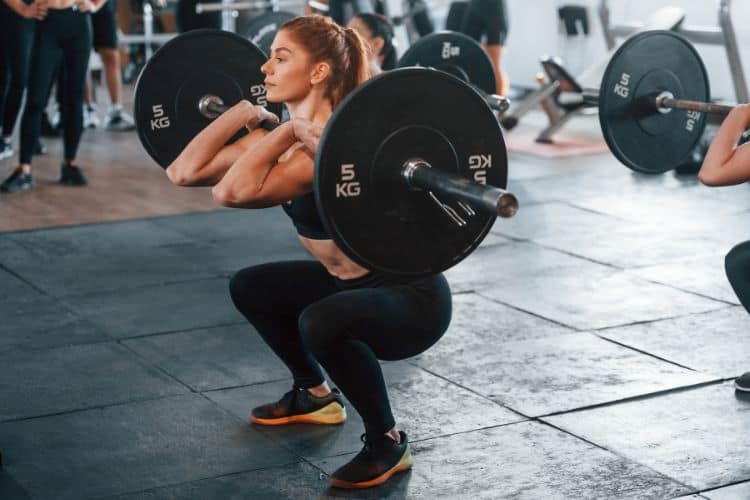
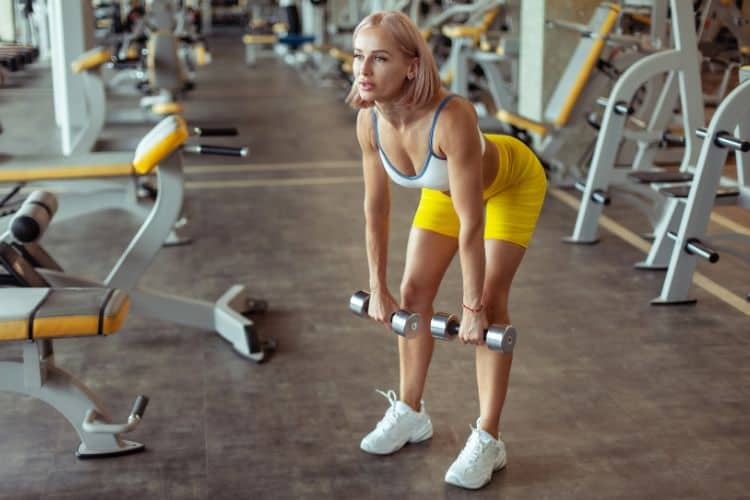
How heavy should women lift? The simplest answer is that women should lift a weight that feels challenging for the planned number of repetitions while still allowing every repetition to be completed with good form. There is no single dumbbell size, barbell weight, or universal standard that works for every woman. The right weight depends on the exercise, training experience, current strength, goals, injury history, and even how rested and well-fueled you feel that day.
Many women begin strength training with weights that are too light because they worry that lifting heavy will make them bulky, increase injury risk, or require advanced athletic ability. In reality, gradually lifting heavier weights is one of the most effective ways to build strength, preserve muscle, support bone health, and improve everyday function. “Heavy” is also relative. A weight that feels heavy to a beginner may be a warm-up weight for an experienced lifter, and the same person may use very different weights for a squat, shoulder raise, row, and biceps curl.
The goal is not to lift the heaviest weight in the room. It is to select enough resistance to make the target muscles work hard within a safe, controlled set. Once you understand how repetitions, form, effort, and progression fit together, choosing an appropriate weight becomes much easier.
Lifting heavy does not refer to one fixed number. It means using a load that is demanding relative to your own strength and the exercise you are performing. For example, a woman may consider a pair of 15-pound dumbbells heavy for an overhead press but use 35-pound dumbbells for a Romanian deadlift. Smaller muscles and isolation exercises usually require lighter weights, while compound exercises involving the legs, hips, back, and several joints can generally be performed with heavier loads.
Training intensity is often described as a percentage of your one-repetition maximum, or one-rep max—the most weight you could lift once with proper form. However, most recreational lifters do not need to test a true one-rep max. A more practical approach is to judge how many good repetitions you could still perform at the end of a set. These are called “reps in reserve.”
If you finish a set of 10 repetitions and could easily complete another 8 or 10, the weight is probably too light for building strength or muscle efficiently. If you barely finish the set and your posture breaks down, the weight is too heavy. For most working sets, ending with approximately 1 to 3 good repetitions left in reserve provides a productive balance between challenge, technique, and recovery.
The right weight should make the final few repetitions feel difficult without changing the movement pattern. Early repetitions will usually feel smooth, while the last two or three require concentration and effort. You should still be able to control both the lifting and lowering portions of the exercise, maintain a stable body position, and complete the intended range of motion.
A useful test is to choose a weight and perform the lower end of your target repetition range. If your program calls for 8 to 12 repetitions, complete 8 repetitions and assess your effort. If you could perform more than 12 or 13 with excellent form, increase the weight slightly. If you cannot reach 8 without swinging, rushing, shortening the range of motion, or holding your breath uncontrollably, reduce the weight.
The load is likely appropriate when the set feels challenging, the target muscles are doing most of the work, and your technique remains consistent from the first repetition to the last. Mild muscle fatigue is expected. Sharp pain, joint pain, dizziness, numbness, or sudden loss of control is not a normal sign of productive training and is a reason to stop.
During moderate working sets, you may not be able to hold a relaxed conversation, but you should remain in control of your breathing. More importantly, watch your technique. If you have to throw your body into a biceps curl, bounce out of a squat, excessively arch your back during a press, or drop the weight instead of lowering it deliberately, the resistance is probably beyond what you can currently manage.
Recording a set on your phone can help you see changes in posture or range of motion that are difficult to notice while exercising. A qualified personal trainer can also evaluate your technique and help you select appropriate starting loads.
Your goal influences the most useful repetition range and, therefore, the amount of weight you should use. Rep ranges overlap, and several approaches can produce results. The key is choosing a load that makes the selected range appropriately difficult.
For general fitness, begin with a weight you can lift for about 8 to 15 controlled repetitions. Most women can benefit from two or three sets per exercise and two or more strength-training sessions per week, depending on experience and recovery. Select a resistance that leaves roughly 2 or 3 repetitions in reserve at the end of each working set.
This approach is heavy enough to stimulate the muscles but manageable enough to practice technique. As your coordination and strength improve, increase the resistance gradually. General fitness training can include squats or sit-to-stands, hip hinges, rows, presses, step-ups, lunges, carries, and core exercises.
The “toned” look comes from developing muscle and, when desired, reducing enough body fat for that muscle definition to become visible. Very light weights performed for endless repetitions are not required. Muscle can grow across a broad range of repetitions, but sets of approximately 6 to 15 repetitions are practical for many exercises.
Choose a weight that brings you close to muscular fatigue near the end of the set, usually with 1 to 3 repetitions left in reserve. A compound lower-body exercise may be trained for 6 to 10 repetitions, while a lateral raise or triceps extension may feel better in the 10-to-20-repetition range. Consistent progression, sufficient protein, balanced nutrition, and recovery all contribute to muscle development.
If your main goal is strength, some of your training should include heavier loads for fewer repetitions. Sets of approximately 3 to 6 repetitions are common for major movements after you have developed sound technique. These sets require longer rest periods and careful attention to form.
Beginners do not need to rush into very low-repetition training. They often gain strength with moderate weights because almost any well-structured resistance training is a new stimulus. After building a foundation, heavier sets can be introduced gradually, ideally with safety equipment, a spotter, or qualified coaching when appropriate.
There is no special lightweight or heavyweight range that directly causes fat loss from a particular area. Fat loss is primarily influenced by overall energy balance, while strength training helps preserve or build muscle. Women pursuing fat loss should still use challenging resistance and aim to maintain or improve their performance over time.
Moderate repetition ranges such as 8 to 15 work well because they allow meaningful resistance, adequate training volume, and efficient sessions. Short rest periods may raise the heart rate, but they should not be so brief that form and load decline dramatically. Combining progressive strength training with suitable nutrition, regular movement, sleep, and cardio is generally more effective than turning every lifting session into a high-speed calorie-burning circuit.
Beginners should start light enough to learn each movement confidently, but the first weight selected does not need to remain permanent. During the first few sessions, practice with body weight, an empty bar, resistance bands, or light dumbbells. Once you can perform the exercise consistently, add resistance until the final repetitions feel challenging.
Someone completely new to lifting might begin with 5-to-10-pound dumbbells for smaller upper-body exercises and 10-to-25-pound dumbbells for lower-body patterns. These are only examples, not rules. Some beginners will need less, while others can safely start with more. Exercise choice, lever length, mobility, previous sports experience, and natural strength can create large differences between individuals.
Women will rarely use the same weight for every movement. Lower-body compound exercises typically allow the greatest loads because the glutes, quadriceps, hamstrings, and surrounding muscles work together. Deadlifts, squats, hip thrusts, and loaded carries may become much heavier than curls or shoulder raises.
Upper-body pushing exercises, such as chest presses, often use less weight than lower-body movements but more than isolation exercises. Rows and pulldowns may feel stronger than overhead presses because they recruit large back muscles. Exercises such as lateral raises, rear-delt flyes, and triceps extensions require comparatively light loads to maintain control.
Instead of comparing the numbers, evaluate each exercise separately. Keep a training log that records the exercise, weight, repetitions, sets, and approximate reps in reserve. Your own performance history is more useful than another person’s dumbbell size.
Begin with a brief warm-up and one easy practice set. Select a conservative weight and perform 8 repetitions using the full intended range of motion. Pause and estimate how many additional repetitions you could have completed without compromising technique.
If you could do five or more extra repetitions, increase the load by the smallest practical amount. If you could do two or three more, you have probably found a useful working weight. If you could not complete the eighth repetition cleanly, reduce the load. Repeat the process until the resistance matches your program’s target range.
For dumbbells, an increase of 2.5 to 5 pounds per hand may be appropriate depending on the movement. For barbell exercises, adding 5 to 10 pounds total is often a manageable step. Smaller increases are especially helpful for upper-body isolation exercises. Adjustable dumbbells, fractional plates, and resistance bands can make gradual progress easier.
Increase the weight when you can reach the top of your target repetition range for every planned set with stable form and more repetitions in reserve than intended. For example, suppose your program calls for three sets of 8 to 12 goblet squats. Once you can complete 12 repetitions in all three sets and still feel capable of doing several more, use a slightly heavier dumbbell during the next workout.
This method is known as double progression. First, you add repetitions within a defined range. After reaching the top of that range, you add weight and return to the lower end. It is simple, measurable, and effective for beginners and experienced lifters.
Progress does not always require adding weight. You can also improve by performing more controlled repetitions, using a greater pain-free range of motion, adding a set, improving stability, or completing the same work with better technique. Still, if your goal is greater strength or muscle, resistance should generally trend upward over weeks and months.
Lifting challenging weights does not suddenly create a bulky physique. Significant muscle growth requires consistent progressive training, adequate nutrition, favorable genetics, and time. Women typically have lower levels of testosterone than men, which makes rapid, dramatic muscle gain unlikely.
Strength training may make muscles feel firmer and improve shape, posture, and body composition. The exact visual result depends on training volume, food intake, genetics, and personal programming. If you prefer a certain look, you can adjust the number of sets devoted to different muscle groups, but avoiding challenging resistance altogether can make it harder to build the muscle definition many women want.
Women over 40, 50, and beyond can benefit greatly from resistance training. Age does not automatically require tiny weights. The appropriate load is still one that challenges the muscles while respecting current ability, joint comfort, health status, and recovery.
Starting gradually becomes especially important after a long period of inactivity. Use controlled repetitions, allow enough recovery between sessions, and increase one variable at a time. Women with osteoporosis, pelvic floor symptoms, uncontrolled blood pressure, recent surgery, significant joint problems, or other medical concerns should seek individualized guidance from a qualified healthcare professional before beginning or intensifying a program.
Hormonal changes around menopause can affect muscle mass, bone density, sleep, and recovery, making strength training especially valuable. A well-designed program should include lower-body, upper-body, pulling, pushing, hinging, carrying, and balance-related movements rather than focusing only on light arm exercises.
One common mistake is choosing a weight based on what another woman is lifting. Strength levels differ widely, and comparison can encourage unsafe jumps or unnecessarily light training. Another mistake is using the same dumbbells indefinitely. If a weight that was once challenging becomes easy and nothing else changes, your body has little reason to continue adapting.
Going too heavy is also a problem. Adding weight before mastering a movement may shift tension away from the target muscles and toward joints or compensating areas. Fast, uncontrolled repetitions can create the illusion of strength without providing the same muscular stimulus.
Finally, do not judge the quality of a workout only by soreness, sweat, or calories displayed on a watch. Productive strength training is measured more reliably through improvements in repetitions, load, range of motion, technique, and consistency.
Many women do well with two to four strength sessions per week. Beginners can train the full body two or three times weekly, leaving recovery time between sessions. More experienced lifters may use upper-body and lower-body days or another split that distributes weekly training volume.
Muscles need a sufficient training stimulus, but they also need recovery. Persistent declines in performance, disrupted sleep, unusual fatigue, irritability, or lingering joint discomfort may indicate that training volume or intensity needs adjustment. Recovery needs vary, so use performance and well-being—not a rigid calendar—as part of the decision.
Women should lift weights that are heavy enough to make the final repetitions of a set challenging while allowing proper form, controlled breathing, and a consistent range of motion. For most everyday training, select a weight that leaves about 1 to 3 good repetitions in reserve. Beginners can initially leave a little more room while learning technique, then increase resistance gradually.
Use your goal to guide the repetition range, assess each exercise individually, and track your performance. If you consistently exceed the top of your target range, add a small amount of weight. If your form breaks down before reaching the minimum repetitions, lighten the load. The ideal weight is not determined by gender, appearance, or someone else’s workout. It is the resistance that safely challenges you today and can be progressed over time.
Whether that means a 5-pound dumbbell for lateral raises, a 25-pound dumbbell for goblet squats, or a loaded barbell for deadlifts, the principle remains the same: train with intention, prioritize technique, and become gradually stronger. Heavy is personal—and the right amount is the one that helps you move forward safely and consistently.
Once you know how much weight to lift, put that knowledge into practice with this Dumbbell Workout for Beginners, which provides an accessible starting point for building strength. You can also explore these Beginner Strength-Training Exercises For Women to practice essential movement patterns before increasing your resistance. When you are ready to train your entire body, follow this Full-Body Dumbbell Workout Plan featuring efficient compound exercises. Women seeking a structured way to increase their weights can try the 28-Day Strength-Training Challenge, which gradually progresses training volume and intensity. For additional exercise ideas, review these Strength Workouts For Women designed to build muscle, improve fitness, and support fat loss.
Stay up to date on the latest women’s health, fitness and lifestyle trends and tips.
