


Sign up for workout ideas, training advice, reviews of the latest gear and more.


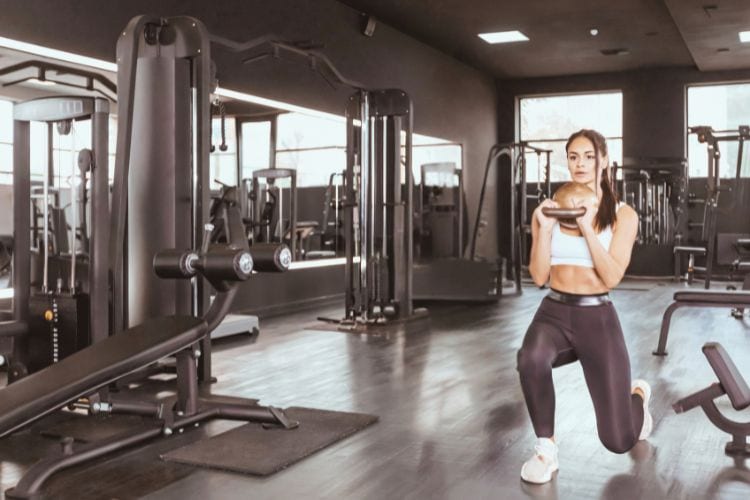


A kettlebell clean and press ladder workout turns one demanding movement into a practical strength session. Instead of trying to complete a long set while your grip and form fade, you build through short rungs: one clean and press per arm, then two, then three. You rest, reset, and repeat. The structure gives you enough practice to improve the lift while leaving room for quality reps.
The clean brings the kettlebell from a swing or hike into the rack position at your shoulder. The press takes it overhead with control. Together, they challenge your hips, legs, upper back, shoulders, trunk, and grip. Working one side at a time also asks your body to resist leaning or twisting. A ladder helps you manage that challenge without rushing.
This guide explains the technique, a complete workout, easier and harder options, and a simple way to progress. You need one kettlebell, a little space, and a weight you can press cleanly for several repetitions. If the movement is new, learn the clean and press separately before following the full ladder.
A ladder is a sequence of short sets with changing rep counts. In a 1–2–3 ladder, you perform one repetition on each side, pause, perform two on each side, pause, and finish with three on each side. That completes one ladder. A new ladder starts again at one rep, rather than continuing to four. Three complete 1–2–3 ladders produce 18 repetitions per arm because each ladder contains six reps per side.
The low-rep rungs offer frequent chances to check your technique. The last rung is challenging enough to build strength, yet short enough to keep the kettlebell moving with intent. Rest between rungs can be brief or generous depending on the load. Rest between complete ladders is usually longer. A ladder is a way to organize sets, not a race against the clock.
For this article, one repetition means cleaning the kettlebell to the rack, pressing it overhead, lowering it under control to the rack, and returning it safely to the start before the next clean. Some lifters prefer to keep the bell in the rack between presses. That becomes a clean plus multiple presses, which is a useful variation, but it changes how much cleaning practice you get. Use the same definition throughout a session so your progress is easy to track.
The clean and press involves several transitions. A rushed, long set can turn a smooth clean into a bell that slaps the forearm or a press that forces the ribs forward. Ladders break the work into manageable portions. Each new rung begins with an opportunity to set your feet, breathe, and make the next repetition as good as the first.
The clean asks the hips to drive the bell and the upper body to guide it into the rack. The strict press asks the shoulder and triceps to move the bell overhead while the trunk stays steady. Repeating these actions across several ladders creates meaningful training volume. Choose a bell that challenges the press without making you compensate. The press is generally the limiting portion of the combination.
One kettlebell can support a warm-up, the main ladder, and a short accessory block. You can adjust the session by changing the number of ladders, the top rung, or your rest periods. That makes the same template useful when you have 20 minutes or when you have more time for a full strength workout.
Use a kettlebell with enough room around you to clean and press without hitting furniture, people, or a low ceiling. Shoes that let you feel stable are helpful. Keep water nearby and a timer available for rest, but do not let the timer force sloppy repetitions.
Pick a weight you could strictly press for about five controlled repetitions on your weaker side when fresh. Your planned top rung is three, so this leaves some reserve. If you cannot press it overhead without leaning back, pushing with your legs, or changing your wrist position, choose a lighter bell. If you have two different weights, base the ladder on the heavier one only when both arms can handle it with the same clean technique.
A first-time kettlebell lifter may need to practice dead cleans from the floor and separate presses before combining them. A lighter weight does not make the workout ineffective. It lets you learn the path of the bell and accumulate precise repetitions. If no available kettlebell can be pressed safely, perform clean practice with one weight and a separate lighter dumbbell overhead press, or use a floor-level substitute such as a goblet squat while you build pressing capacity.
Stand with your feet about hip to shoulder width apart. Place the kettlebell slightly in front of you, hinge at the hips, bend your knees as needed, and take the handle with one hand. Keep your back in a comfortable, braced position and your shoulders roughly level. Hike the bell back between your legs, keeping it high and close rather than reaching it toward the floor.
Drive through your feet and extend your hips to move the kettlebell upward. Keep your elbow near your ribs as the bell approaches your body. Rather than flipping the bell over your hand, guide your hand around the handle so the bell settles quietly against your forearm. Finish tall in the rack position, with your wrist relatively straight, elbow close to your torso, and forearm angled across the front of your body. The bell should not crash onto your wrist.
Before pressing, exhale enough to set your rib cage over your pelvis, then take a comfortable breath and brace. Squeeze your glutes lightly and keep both feet grounded. Press the kettlebell upward while allowing your arm to travel in a path that feels natural for your shoulder. As the bell clears your head, move your head gently through so the weight finishes over your shoulder and midfoot. End with a straight arm you can control, without shrugging hard or arching your lower back.
Lower the bell slowly to the rack. Breathe and reset before the next repetition. If the ladder calls for a new clean on every rep, let the bell travel down into another backswing or park it on the floor and restart. Keep your free hand relaxed and away from the moving bell. Match the range of motion and pace on both sides, while letting the weaker side determine the load.
A painful forearm slap usually means the bell is looping far away and flipping over the hand. Keep it close and think of inserting your hand through the handle. If the kettlebell pulls you sideways in the rack, lower the weight and practice standing tall with your ribs stacked over your pelvis. If your press stalls and you bend your knees to finish, you have shifted into a push press. That is a valid exercise, but it is a different workout. Use a lighter load for this strict-press plan.
An overhead position should feel controlled, not pinchy or unstable. Stop the set if you cannot keep a secure grip or if pain changes your movement. People with a current shoulder, back, or cardiovascular condition should get individualized guidance before using heavy overhead work.
Spend about five to seven minutes preparing your hips, upper back, shoulders, and breathing. Start with easy marching or walking for one minute. Then perform six to eight bodyweight hip hinges, six slow squats, and a few comfortable shoulder circles in each direction. Add six alternating reaches from a quadruped position or standing upper-back rotations if they feel good.
Next, rehearse the kettlebell movements. Do five light deadlifts, three to five two-hand swings only if you already know the swing, and two or three light cleans per side. Hold each rack position briefly without leaning. Finish with two easy presses on each side using a lighter bell if available. If the clean itself is still unpredictable, spend the session practicing dead cleans and presses separately instead of moving into timed volume.
This is the main session for someone who already knows the basic clean and can press a kettlebell overhead with control. After the warm-up, complete three 1–2–3 ladders. In each rung, do the prescribed reps on your left side and the same number on your right. Start with your weaker side. One repetition includes one clean and one strict press. Set the bell down or switch hands safely between sides.
Rung 1: Complete one clean and press per arm. Rest approximately 30 to 60 seconds. Rung 2: Complete two clean and presses per arm. Rest approximately 45 to 75 seconds. Rung 3: Complete three clean and presses per arm. Rest approximately 90 to 150 seconds before beginning the next ladder at rung 1. Repeat the full sequence three times. Your total is 18 clean and presses per side, or 36 combined repetitions.
These rest ranges are guides. If your breathing is high, your grip is tired, or your next clean would be messy, rest longer. The workout usually takes around 15 to 20 minutes after the warm-up, depending on transitions and rest. Do not rush to fit the clock. A completed workout with crisp repetitions is more valuable than an extra ladder performed with a drifting press or a crashing clean.
To round out the session, perform two easy rounds of eight goblet squats and eight supported single-arm rows per side, resting as needed. Keep these accessory sets at a comfortable effort; the ladder is the main event. If your session must stay close to 20 minutes, skip the accessory work. Finish with a few minutes of easy walking and relaxed breathing.
If the standard ladder is too demanding, use a 1–2 ladder for two or three rounds. That produces three repetitions per arm per ladder, or six to nine per arm for the entire session. Rest 60 to 90 seconds after each rung and as long as needed between ladders. You can also clean the bell once and perform one or two presses from the rack if the repeated clean is the part that fatigues you. Record this as a separate variation so you do not compare its numbers directly with a clean on every rep.
For a new clean, begin each repetition with the bell parked on the floor in front of you. A dead clean removes the backswing and gives you a clear reset. Practice guiding the bell softly into the rack. Keep the press controlled and stop while you could still complete another good rep. You can train the lift without finishing every set at your limit.
If overhead pressing is uncomfortable, do not force it for the sake of completing the ladder. Practice the clean to a stable rack and pair it with a movement you can perform comfortably, such as a front-rack carry. An experienced coach or qualified clinician can help you work out why the press feels restricted or painful.
Once three 1–2–3 ladders feel consistent, progress one variable at a time. Add a fourth ladder for 24 repetitions per arm at the same weight. Alternatively, keep three ladders and use a 1–2–3–4 structure, which gives you 10 reps per arm per ladder and 30 per arm overall. That is a large jump in total work, so a single 1–2–3–4 ladder followed by a shorter ladder may be a better bridge.
Another option is to increase the kettlebell weight and return to two or three 1–2 ladders. A heavier bell may require longer rest and fewer total repetitions. Keep the clean quiet and the press strict. Do not make the workout harder by cutting rest until technique breaks. If you want a conditioning emphasis, use a lighter bell, retain the top rung of three, and keep rests modest while maintaining the same movement standards.
Two kettlebells change the demands considerably. A double clean and press asks more of your trunk, breathing, and grip, and it doubles the load overhead. Master the single-arm version first. Treat double-bell ladders as their own progression rather than simply swapping two bells into the single-arm plan.
For many people, one or two clean and press ladder sessions per week fit well within a broader strength routine. Leave at least a day between demanding overhead sessions, and consider what other pressing you do in the week. If you train full body three days per week, place this workout on one or two of those days and include lower-body work, pulling, and other movements across the week.
Keep a simple log of kettlebell weight, rung pattern, number of completed ladders, rest periods, and how the last presses looked. Progress when the bell moves smoothly across several sessions, not just when one unusually good day makes a heavier weight possible. If your recovery drops or the same weight suddenly feels much harder, repeat an easier week or reduce the volume before pushing upward again.
In week one, complete two 1–2–3 ladders, giving you 12 repetitions per arm. Focus on clean rack positions and unhurried presses. In week two, perform three ladders for 18 reps per arm. In week three, repeat three ladders and aim for slightly smoother transitions or more consistent rest rather than forcing a faster pace. In week four, add a fourth ladder only if every rep in the previous weeks stayed controlled. That reaches 24 repetitions per arm.
If your kettlebell already feels challenging, stay at two ladders for all four weeks and improve the quality of each repetition. Progression can mean cleaner mechanics, better balance, or steadier breathing. When you eventually move to a heavier bell, step the volume back to a 1–2 ladder or two 1–2–3 ladders and build again. The goal is a repeatable training pattern, not a weekly test of your maximum.
The first mistake is choosing the kettlebell by how easily you can clean it. Most people can clean more than they can strictly press. Test the press first. The second is treating every rung like a sprint. If you race to the next set while your breathing and grip are still unsettled, your later reps are likely to become inconsistent.
The third mistake is letting your strong side set the pace. Begin with the weaker side and match its repetitions on the stronger side. This keeps the session balanced without adding extra fatigued work to the side that needs more practice. Finally, do not confuse more repetitions with better progress. A fourth ladder only helps when your clean remains close, your wrist stays comfortable, and your overhead lockout remains controlled.
It trains several major regions at once: the hips and legs drive the clean, the upper back helps stabilize the rack, the shoulders and arms perform the press, and the trunk resists unwanted movement. However, one exercise does not cover every movement pattern. Add a squat, hinge, row, and appropriate lower-body work across your week for a more complete plan.
For the workout described here, yes: each rep includes a clean and a strict press. You may instead clean once and do multiple presses, especially when you want to emphasize overhead strength. Both are useful, but the second option has less clean practice and should be logged separately.
A 1–2 ladder with two or three rounds is a manageable starting point for someone who already has safe basic technique. If the clean or press is entirely new, spend time learning the parts before adding ladder volume. A qualified coach can help you develop a quiet clean and stable rack more quickly.
Choose a weight you can strictly press for about five clean reps on your weaker side when fresh. The third rep of each ladder should feel demanding but controlled. If you must lean back, bounce with your legs, or shorten the range of motion, the bell is too heavy for this version.
Yes, repeated full-body reps can raise your breathing rate, particularly when rests are shorter. Strength and technique remain the priorities in this workout plan. Use a manageable weight and stop each rung before fatigue changes your clean or press. For a dedicated conditioning session, adjust the load and structure deliberately rather than rushing a heavy strength ladder.
A kettlebell clean and press ladder workout gives you a clear route from practice to progress. Start with a bell you can press well, build through short 1–2–3 rungs, and rest enough to keep the next set strong. Three complete ladders provide a substantial session without requiring complicated equipment or a long exercise list.
Pay attention to the quality of the clean, the comfort of the rack, and the stability of the overhead finish. When those pieces remain consistent, add a ladder or move gradually to a heavier bell while returning to a shorter rep pattern. The best ladder is the one you can repeat with confidence, log accurately, and improve over time.
If you are learning the lift, start with this 30-Minute Full-Body Kettlebell Workout For Beginners to practice the clean and press alongside foundational movements. For help building a broader routine, read the Kettlebell Strength Training Guide For Women. Once your ladder technique feels steady, the 6-Week Kettlebell Program For Strength And Endurance offers a longer training structure. You can also try the 20-Minute Kettlebell Swing And Press Workout for another hip-hinge and overhead session, or use the 30-Minute Full-Body Kettlebell HIIT Workout when you want a more interval-focused day.
Stay up to date on the latest women’s health, fitness and lifestyle trends and tips.
