


Sign up for workout ideas, training advice, reviews of the latest gear and more.


A good seven-day fitness plan gives every day a purpose without asking you to train hard every day. This 7 day SplitLean workout uses a simple weekly split: three focused strength sessions, two conditioning sessions, one active recovery day, and one full rest day. The name describes the structure of the routine, not a promise that a single week will transform your body. If your goal is to feel stronger, improve your conditioning, and build a repeatable schedule, this plan gives you a place to start.
You can complete most sessions with a pair of dumbbells, a sturdy bench or chair, and enough floor space to move comfortably. The program also works in a gym with machines or barbells. Expect strength days to take about 35 to 45 minutes, conditioning days about 20 to 30 minutes, and the recovery session about 20 minutes. Treat the first seven days as a useful baseline. The bigger payoff comes from repeating the plan, adjusting it to your ability, and recovering well enough to train consistently.
A SplitLean workout combines a split training schedule with moderate conditioning. Rather than trying to do every exercise in one session, you distribute movement patterns across the week. Day one emphasizes legs, day two raises your heart rate at a manageable pace, day three trains the upper body, and day five returns to full-body strength. Two lighter days and a rest day help you arrive at the next workout ready to perform.
The word “lean” can be misleading if it suggests that a workout directly burns fat from a chosen body part. It does not. In this plan, it means pairing resistance exercise and cardiovascular work in a realistic routine. Body composition changes, if that is your goal, depend on longer-term training, food intake, sleep, and individual circumstances. You can also use the plan simply to improve strength, stamina, and confidence with exercise.
This plan is designed for adults who can perform basic movements such as squats, hip hinges, rows, and brisk walking. Beginners can use lighter loads, one or two sets, and lower-impact conditioning. More experienced exercisers can use heavier resistance or additional sets while keeping good technique. If you are returning after a long break, make the first week intentionally easy enough that you want to return for week two.
Choose weights that let you complete the listed reps with steady control and roughly two to three more good reps available at the end of each set. Your last reps should require attention without forcing you to twist, bounce, or hold your breath. For exercises performed one side at a time, complete the prescribed reps on each side. Rest 60 to 90 seconds between most sets; allow up to two minutes after harder squats or presses. During the conditioning sessions, use a pace that matches the day’s purpose rather than treating every interval as an all-out sprint.
Before strength training, spend five minutes warming up. Walk briskly or march in place, then perform a few unloaded squats, hip hinges, arm circles, and easy repetitions of the first exercise. Start your first loaded set lighter than your working sets if the movement is unfamiliar. Finish with a few minutes of relaxed walking and breathing. You do not need an elaborate warm-up, but you should feel prepared to move through a comfortable range of motion.
Keep a brief workout record. Write down the weights you used, the reps you completed, and how difficult the sets felt. Also notice whether you had enough energy to train again later in the week. Those details help you make sensible changes next time. If you only have 20 minutes, complete the warm-up and the first two strength exercises; a shorter session can still maintain the habit and train important movements.
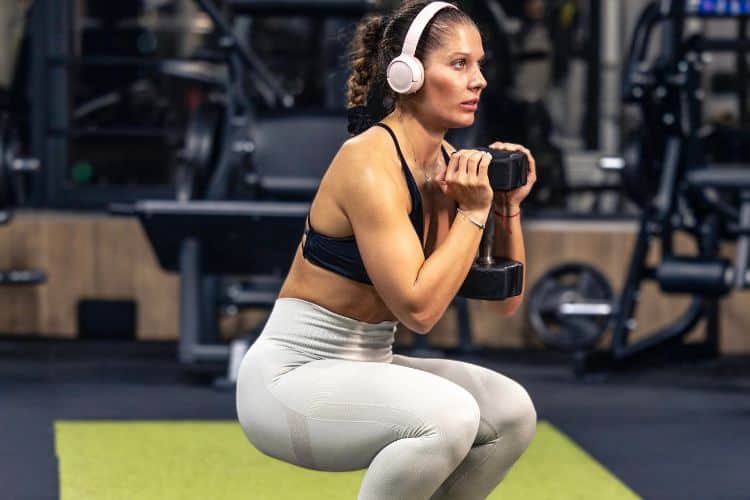
Start the week with a controlled lower-body session. After warming up, perform a goblet squat for three sets of eight to ten reps. Hold one dumbbell near your chest, keep your feet planted, and lower as far as you can while maintaining balance and a comfortable torso position. A chair squat is a useful starting variation. Follow with a dumbbell Romanian deadlift for three sets of eight to ten reps. Move your hips back, allow a slight knee bend, and keep the weights close to your legs as you stand tall again.
Next, perform reverse lunges for two sets of eight reps per side, holding onto a stable support if needed. Step backward far enough that you can bend both knees without losing control, then push through the front foot to return. If lunges bother your knees or balance, substitute low step-ups or another set of chair squats. Finish the lower-body work with glute bridges for two sets of 12 to 15 reps, pausing briefly at the top rather than arching your lower back.
For core work, hold a side plank for two rounds of 20 to 30 seconds per side. You can place the lower knee on the floor to reduce the challenge. Think of this session as practice in strong, repeatable movement. A weight you can control through the entire set serves you better than one that makes the final reps look completely different from the first.
Day two develops cardiovascular fitness while giving your legs a break from heavy loading. Choose brisk walking, cycling, an elliptical machine, or a low-impact home circuit. Begin with five easy minutes. Then alternate two minutes at a purposeful pace with one minute at a comfortable pace for seven rounds. End with four easy minutes. That makes a 30-minute session, including the warm-up and cool-down.
During the quicker intervals, you should breathe harder but remain in control; you do not need to sprint. If you are new to exercise, reduce the faster periods to one minute and keep the total session closer to 20 minutes. If you prefer a continuous walk, simply walk briskly for 20 to 30 minutes. The aim is to accumulate useful activity without turning tomorrow’s upper-body workout into a recovery struggle.
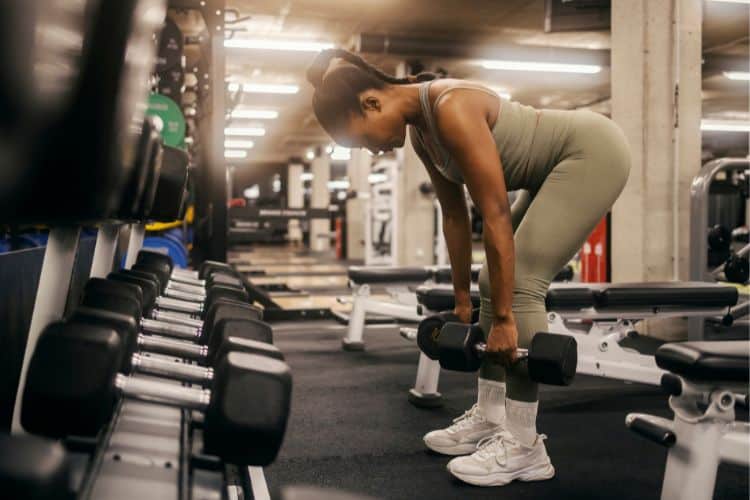
Warm up your shoulders with gentle arm circles, wall slides, and a few light rows. Begin with a dumbbell floor press or bench press for three sets of eight to 12 reps. Lower your arms under control, then press up without letting your shoulders roll forward. Next, perform a one-arm dumbbell row for three sets of eight to 12 reps per side. Support your free hand on a sturdy surface and draw the weight toward your hip while keeping your torso steady.
Follow with a standing dumbbell overhead press for two sets of eight to ten reps. Press through a range that feels comfortable; if overhead work bothers your shoulders, use an incline press or an additional floor press instead. Add two sets of 12 to 15 band pull-aparts or light reverse flyes to train the muscles around your upper back. Finish with two sets of eight to ten dead bugs per side, moving one arm and the opposite leg slowly while keeping your lower back comfortably supported.
Recovery day still has a purpose: it gives you a chance to move gently and assess how the first half of the week feels. Take an easy 15- to 25-minute walk, then spend five to ten minutes on comfortable mobility. Try a supported hip flexor stretch, gentle thoracic rotations, calf stretches, and slow shoulder circles. Stay within a range that feels useful rather than forcing a stretch.
If your legs feel sore, an easy walk can help you settle into a normal rhythm, but you do not need to “work out the soreness” with hard intervals. If you feel run down, take full rest instead. Recovery responds to the total demands of your life, including long workdays and interrupted sleep. A plan that permits a sensible adjustment is easier to maintain than one that treats every skipped mobility drill as failure.
Day five brings the main movement patterns back together. After warming up, perform dumbbell deadlifts for three sets of eight reps. Place the weights at your sides or in front of your legs, hinge at the hips, and stand up with a controlled leg and hip drive. Then do a split squat or supported stationary lunge for two sets of eight reps per side. Choose a stance that allows you to lower and rise without wobbling.
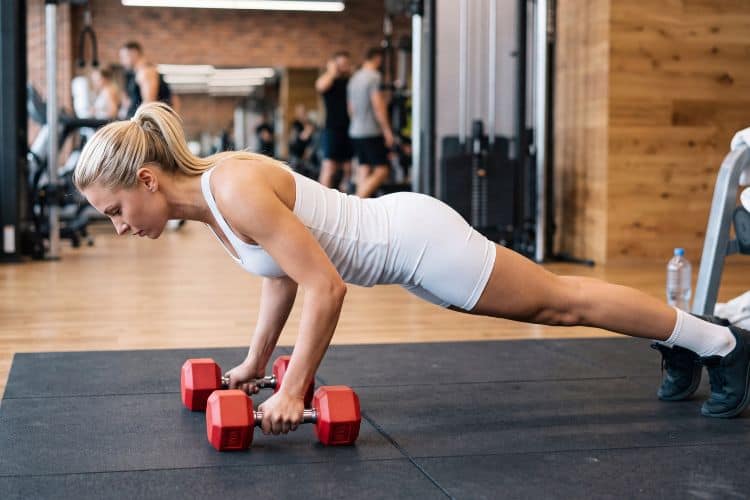
Next, perform an incline push-up against a sturdy counter or bench for three sets of six to 12 reps, followed by a seated cable row, resistance-band row, or dumbbell row for three sets of ten reps. Adjust the incline of your push-up so each rep remains smooth. For the row, draw your elbows back while keeping your shoulders away from your ears. Complete the session with two sets of 10 to 12 farmer carries of about 20 to 30 seconds each, walking tall with a dumbbell in each hand. If space is limited, hold the weights at your sides while marching slowly in place.
Your second conditioning day can be slightly more varied than day two, but it should still match your experience. Warm up for five minutes, then perform five rounds of two minutes of brisk walking, cycling, or marching and one minute at an easier pace. After the intervals, complete two rounds of bird dogs for eight slow reps per side and a front plank for 20 to 30 seconds. Finish with an easy cool-down. This session takes roughly 25 to 30 minutes.
Take a full rest day from planned training. Ordinary daily movement is fine, but there is no set or rep target. Use a few minutes to look at your workout notes and choose when the next week will begin. If this was your first week, repeating the same exercises is usually more useful than changing the entire routine immediately. Familiar movements make it easier to notice progress in control, repetitions, and confidence.
Rest is part of the plan because strength training creates a demand that the body needs time to recover from. Feeling eager to move on day seven is a good sign, but you do not have to turn that energy into another hard workout. If you want to walk, keep it comfortable. If your week became busy and you missed a session, resume with the next appropriate training day rather than trying to cram multiple demanding workouts into the rest day.
One week can show you whether the schedule fits; lasting progress requires more than one pass through it. Repeat the SplitLean workout for four to six weeks before judging how well it works for you. Keep the main exercises consistent so you have a fair comparison. When you can complete every set at the top of the rep range with reliable form, increase the weight by the smallest practical amount next time. If that increase is too large, keep the same weight and improve the quality or number of reps instead.
For example, if your goblet squat prescription is three sets of eight to ten, you might record eight reps per set in week one, nine in week two, and ten in week three. Once ten feels controlled across all three sets, try a heavier dumbbell and return to eight reps. Progress can also mean steadier balance, a smoother range of motion, or shorter recovery after the same walking intervals. It does not always require heavier equipment.
Start with one or two sets for each strength exercise and choose the shorter option for each conditioning day. Practice bodyweight squats to a chair, unloaded hip hinges, incline push-ups, and supported rows before you increase resistance. Allow longer rests when you need them. You might also spread the seven scheduled days over nine or ten calendar days by adding another rest day after a strength session. The sequence still works even when the calendar changes.
If you already train regularly, use three sets on the main strength moves and select weights that make the final few reps demanding while leaving technique intact. You can add a third set to the split squat or overhead press, or extend the brisk portions of a conditioning session. Keep the active recovery and full rest days. A more demanding version of the plan still needs room for you to perform well again next week.
Training works best when the rest of your routine supports it. Eat regular meals that provide a mix of protein-rich foods, fruits or vegetables, and satisfying sources of carbohydrate and fat. Hydrate according to your thirst, the weather, and how much you sweat. There is no special SplitLean menu or required supplement. If you want to change your body composition, avoid expecting a workout schedule alone to determine the outcome; your overall eating pattern matters too.
Yes. A pair of dumbbells covers most strength exercises, and walking or low-impact movements cover the conditioning days. For rows, use a secure band anchor or a supported dumbbell row. For push-ups, use a stable counter or bench. If you have only one dumbbell, complete loaded exercises one side at a time and give both sides equal work.
It can support muscle building when strength exercises provide enough challenge, you repeat the program over time, and you recover and eat adequately. A single week is an introduction, not a meaningful deadline for visible changes. Keep a record of reps and loads so you can see whether your training is gradually becoming more demanding.
You can add comfortable walking if you enjoy it and recover well. The two conditioning sessions provide a starting point; your overall activity also includes movement outside formal workouts. If extra cardio begins to make your strength sessions worse or leaves you persistently tired, reduce it and reassess the balance of your week.
Continue with the next planned workout when you can. Try to preserve the general alternation between harder sessions and easier days, even if the week runs longer than seven calendar days. One missed session does not erase the work you completed. The goal is to create a routine you can return to repeatedly.
The SplitLean workout works because its structure is clear: train the lower body, build aerobic capacity, train the upper body, recover, train the full body, condition again, and rest. The movements are adjustable, and the week has enough space for both effort and recovery. Choose loads you can control, make small changes based on your notes, and repeat the plan long enough to learn what helps you perform better. Your best seven-day fitness plan is the one you can use again next week.
If you are new to the movements in this plan, begin with the Beginner Dumbbell Workout Plan for Women. For another strength-day option, try the 30 Minute Full Body Dumbbell Workout. The Beginner Cardio Workout Routine offers ideas for your conditioning days, while the Recovery Workout for Women can help you plan lighter movement. When you are ready to build on this week, use the Progressive Overload Workout Plan for Women to guide gradual increases in your strength training.
Stay up to date on the latest women’s health, fitness and lifestyle trends and tips.
